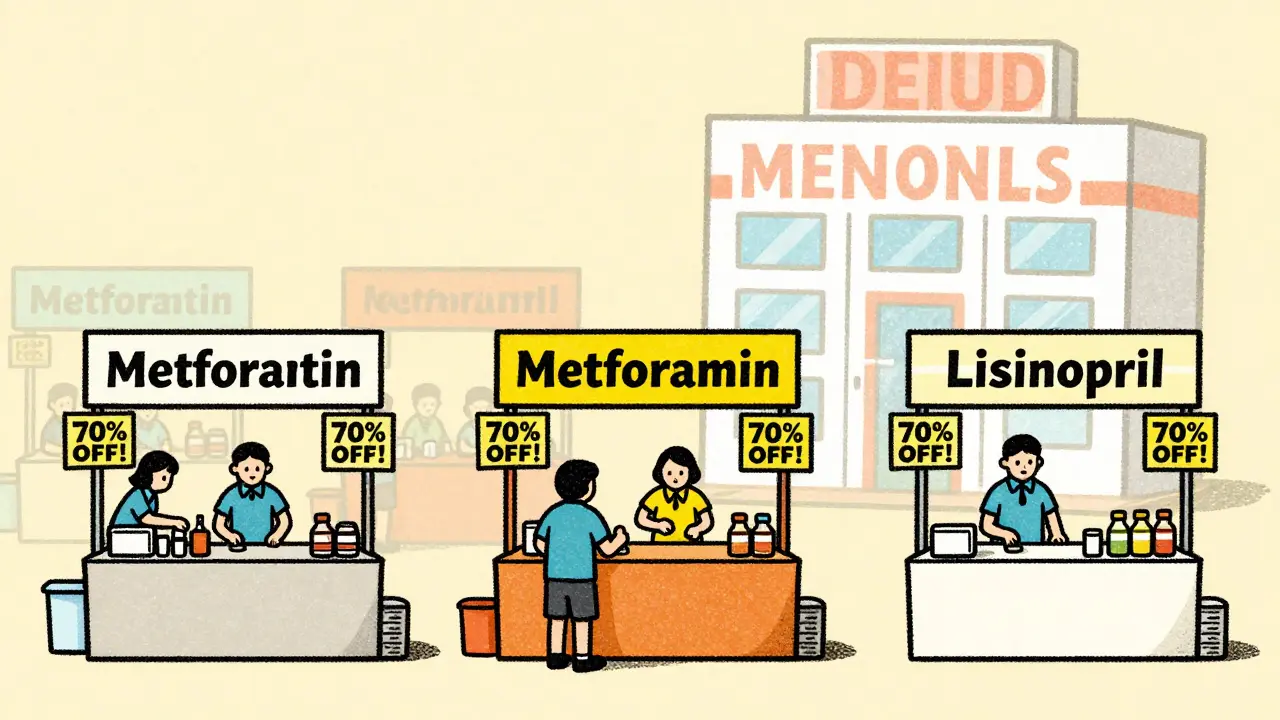
When you fill a prescription for a generic drug, you probably don’t think about who made it. But the truth is, the price you pay is shaped by a simple economic rule: more competitors mean lower prices. This isn’t just theory-it’s what happens every time a brand-name drug loses its patent and multiple companies start making the same medicine. The result? Prices drop fast, often by more than 70%.
Why Generic Drugs Cost So Much Less
Brand-name drugs are expensive because the company that invented them had to pay for research, clinical trials, and marketing. Once the patent runs out, other companies can copy the formula without those upfront costs. They don’t need to spend millions proving the drug works-it’s already been proven. So they can sell it for far less.
But here’s the catch: if only one company starts making the generic, prices don’t fall much. In fact, some drugs with just one generic manufacturer cost almost as much as the brand. That’s because there’s no pressure to lower prices. But when two or three companies enter the market, things change fast. A 2021 study published in JAMA Network Open looked at 50 drugs and found that the first generic lowered prices by 17%. With two competitors, prices dropped 39.5%. With three, they fell 52.5%. And when four or more companies made the same drug, prices plunged by 70.2%.
The Power of Competition: Real-World Examples
Take metformin, a common diabetes drug. In the U.S., at least eight different manufacturers make it. You can buy a 90-day supply for under $10 at many pharmacies. That’s because competition keeps prices low. If only one company made metformin, you’d likely pay $100 or more.
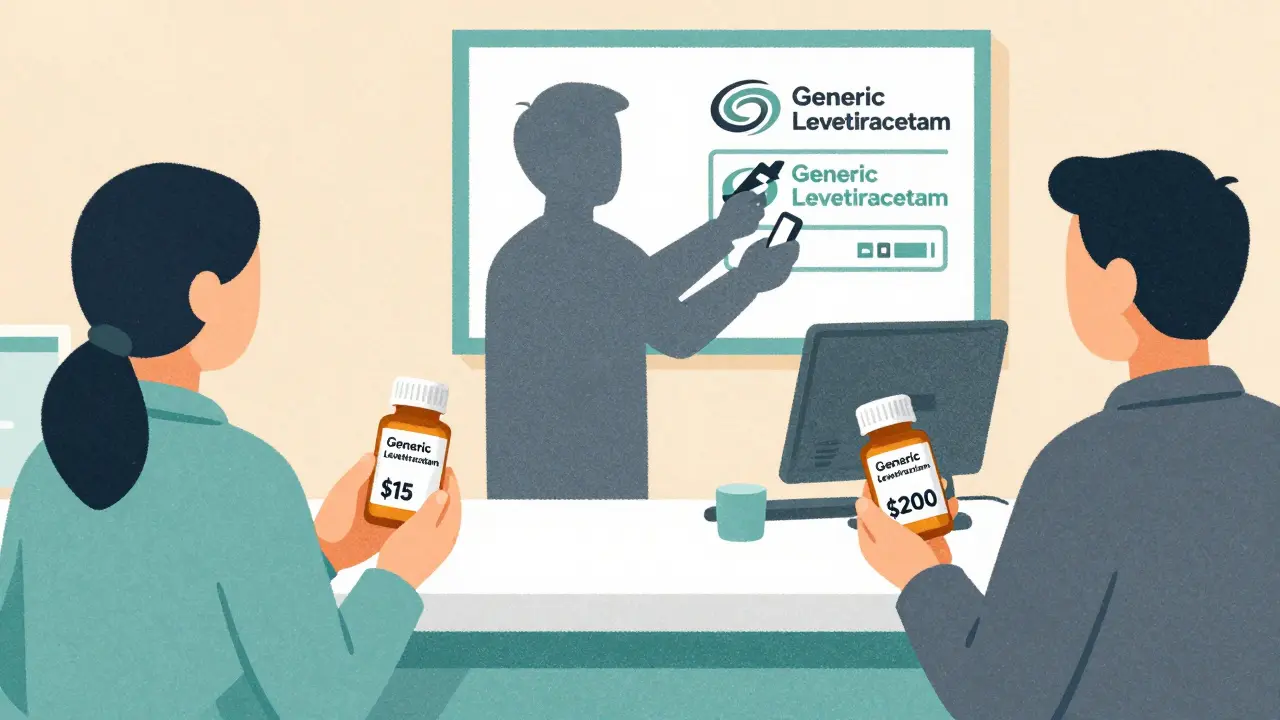
Compare that to levetiracetam, an antiseizure medication. A few years ago, five companies made it. Prices were stable and affordable. Then two manufacturers left the market. Suddenly, only two were left. Within months, prices jumped by over 300%. Some patients couldn’t afford it anymore and had to switch to riskier alternatives.
This isn’t rare. A Reddit thread from June 2023 had dozens of people sharing stories of sudden price spikes after a generic manufacturer shut down or got bought out. One person said their cholesterol drug went from $15 to $120 in six months. Another described paying $200 for a drug that used to cost $25. These spikes happen because there’s no one left to compete with the remaining maker.
How Many Manufacturers Are Too Few?
Research from the National Bureau of Economic Research (NBER) found that over half of all generic drugs in the U.S. have at most two manufacturers. That’s a red flag. When a market has only one or two players, it’s not really a market-it’s a duopoly or monopoly. And monopolies don’t care about lowering prices.
The FDA says more competition leads to lower prices. But they also admit that consolidation is happening. Between 2014 and 2016, nearly 100 generic drug companies were bought by bigger ones. These mergers shrink the number of competitors without anyone noticing-until prices spike.
And it’s not just about the number of companies. It’s about who they are. Many generic manufacturers are small, family-owned businesses. They can’t afford to compete in a market where prices are already low. So they get bought out. The big players then control supply and set prices.
What About Complex Drugs?
Not all drugs follow this pattern. Simple pills-like antibiotics or blood pressure meds-have lots of competitors. But injectable drugs, biologics, and complex formulations? Not so much.
Biologics are made from living cells, not chemicals. They’re harder to copy, and the FDA doesn’t have a fast-track approval process for them like it does for regular generics. So even when biosimilars (the generic version of biologics) appear, they’re expensive. A 2021 study found that if biosimilars were treated like regular generics, Medicare could have saved nearly 27% on biologic drugs between 2015 and 2019.
Injectable generics also see less competition. Why? Because they’re harder to make. They require sterile environments, special equipment, and strict quality controls. Fewer companies can make them. So prices stay high.
Who Benefits-and Who Gets Left Behind?
Patients with insurance or good pharmacy discount programs usually don’t feel the pain of low competition. But for those paying cash? It’s a different story.
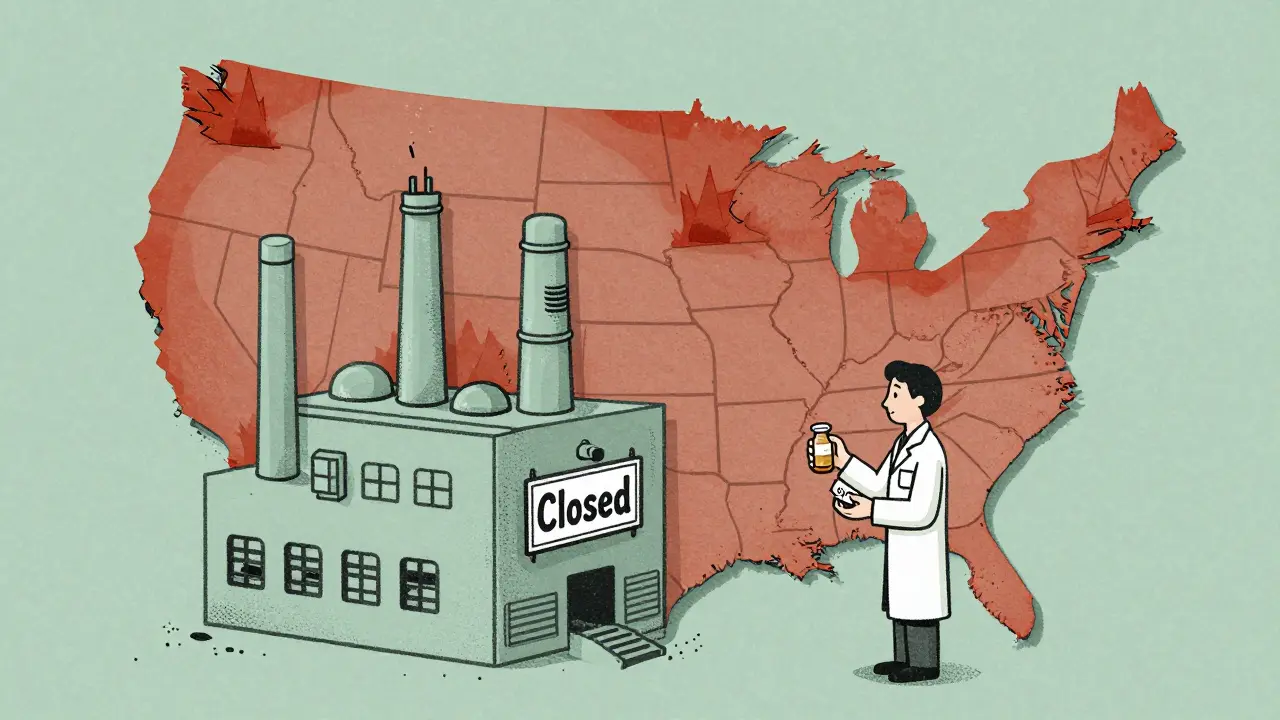
A 2022 study in the Journal of Managed Care & Specialty Pharmacy found that price competition can actually put patients at risk. When manufacturers cut costs to stay competitive, quality can slip. That’s led to shortages, recalls, and even contaminated batches. In 2021, Indiana University researchers warned that when only one or two companies make a drug, a single factory shutdown can cause nationwide shortages.
And it’s not just about supply. It’s about access. If you’re on Medicare, Medicaid, or have no insurance, you’re at the mercy of the market. If your drug has five manufacturers, you’re fine. If it has one? You might be stuck.
How to Protect Yourself
You can’t control how many companies make your drug. But you can take steps to avoid being caught off guard.
- Check GoodRx or similar price-comparison tools before filling a prescription. You might find the same drug for half the price at another pharmacy.
- Ask your pharmacist if there are other generic brands available. Sometimes switching to a different manufacturer saves money.
- Know your drug’s therapeutic equivalence. The FDA’s Orange Book lists which generics are considered interchangeable. Look for AB-rated drugs-they’re proven to work the same as the brand.
- Don’t assume your prescription is safe. If your drug suddenly becomes expensive, ask why. A change in manufacturer could mean a price hike.
The Bigger Picture
Generic drugs make up 90% of all prescriptions in the U.S. But they account for only 23% of total drug spending. That’s because competition works-when it’s allowed to.
The FDA estimates that generic drugs saved the U.S. healthcare system $1.7 trillion between 2010 and 2019. That’s billions in savings for patients, insurers, and taxpayers. But that number could shrink fast if consolidation continues.
Regulators are starting to pay attention. The FTC has challenged mergers in the generic market since 2021. Congress passed the CREATES Act in 2019 to stop brand companies from blocking generic entry. And the FDA’s Drug Competition Action Plan aims to speed up approvals and prevent anti-competitive behavior.
But none of this matters if we don’t demand transparency. If you’re paying cash for a drug that used to be cheap, ask why. Talk to your doctor. Call your pharmacy. Share your story. Because the next time a manufacturer exits the market, it might be your medication that disappears.
Why do generic drug prices drop so much when more companies make them?
When multiple companies make the same generic drug, they compete on price. Since they don’t have to pay for research or marketing, their only way to win customers is to charge less. The more competitors, the harder they push prices down. Studies show that with four or more manufacturers, prices can fall by over 70% compared to the original brand.
Can a drug have too few generic manufacturers?
Yes. Over half of all generic drugs in the U.S. have only one or two manufacturers. That’s not enough competition. With so few players, prices stay high, shortages become more likely, and patients lose options. When one company leaves the market, prices can jump 300% or more.
Why do some generic drugs suddenly become expensive?
This usually happens when a manufacturer stops making the drug-either because it’s not profitable, or because they got bought out. If only one or two companies are left, they can raise prices without fear of losing customers. This is especially common with older, low-cost drugs that have no brand-name competition.
Are all generic drugs the same?
In most cases, yes. The FDA requires generics to be bioequivalent to the brand-name drug-meaning they work the same way in the body. But for drugs with a narrow therapeutic index (like warfarin or levothyroxine), even small differences can matter. Always check the FDA’s Orange Book for AB-rated generics, which are approved as interchangeable.
How can I find the cheapest generic version of my drug?
Use price-comparison tools like GoodRx, SingleCare, or RxSaver. These sites show prices at local pharmacies and often offer discount coupons. You can also ask your pharmacist if another generic brand is available. Sometimes switching to a different manufacturer saves you 50% or more.

Ray Foret Jr.
March 7, 2026 AT 11:45Samantha Fierro
March 9, 2026 AT 01:34Robert Bliss
March 10, 2026 AT 19:44Peter Kovac
March 11, 2026 AT 18:37APRIL HARRINGTON
March 12, 2026 AT 02:28Leon Hallal
March 12, 2026 AT 07:09rafeq khlo
March 14, 2026 AT 05:01Morgan Dodgen
March 14, 2026 AT 16:43Philip Mattawashish
March 15, 2026 AT 16:03Tom Sanders
March 15, 2026 AT 20:22Jazminn Jones
March 17, 2026 AT 11:21Ray Foret Jr.
March 17, 2026 AT 14:20