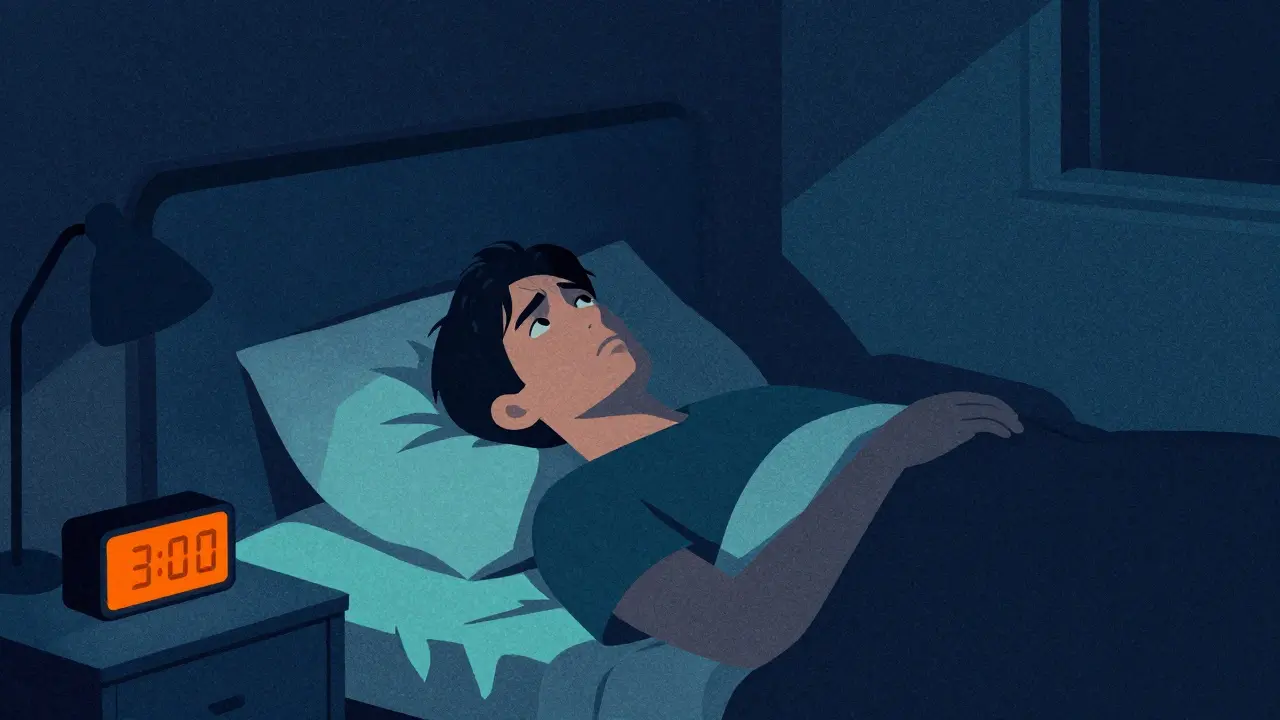
The Core Pillars of Better Sleep
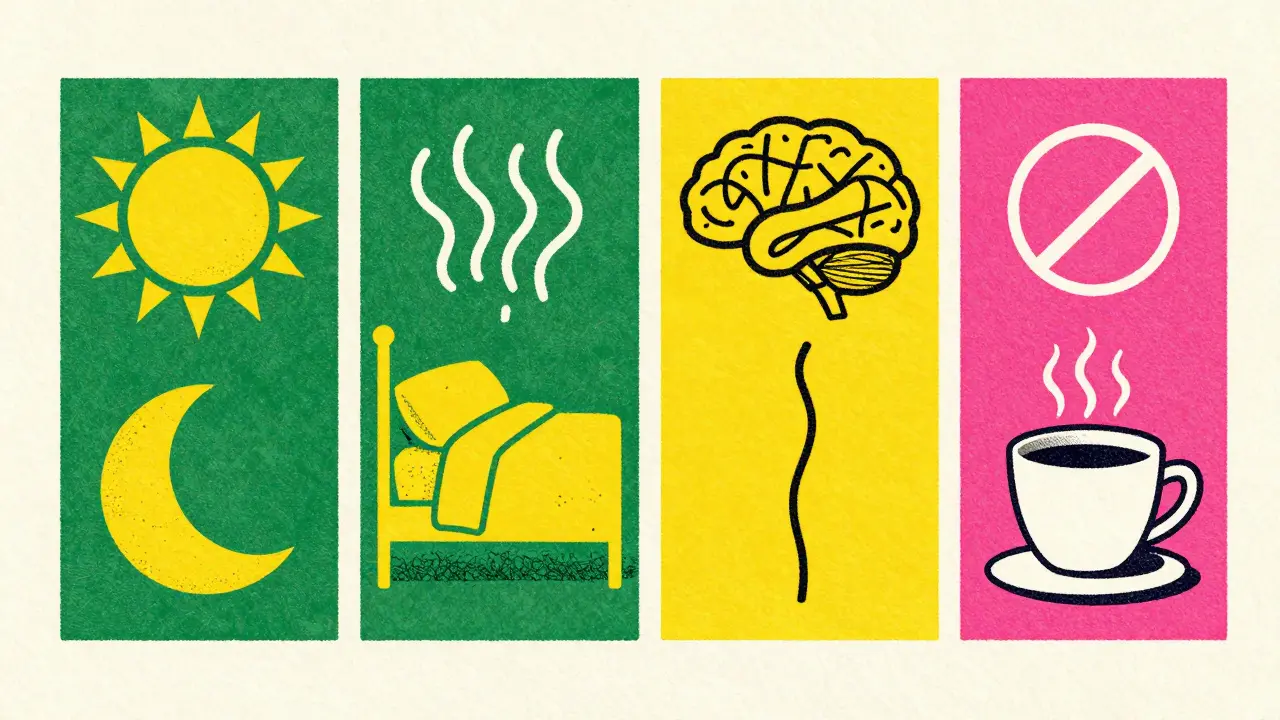
If you want to actually improve your sleep, you have to look at it through four specific lenses. It's not just about the hour before you hit the pillow; it's about how you treat your body and brain throughout the entire day.- Routine Consistency: Your brain loves predictability. The goal is to wake up and go to bed within a 30-minute window every single day-yes, even on Saturdays. This anchors your circadian rhythm, the internal clock that tells your body when to be alert and when to produce melatonin.
- Environmental Control: Your bedroom should be a sanctuary for sleep. Keep the temperature between 60-67°F (15.6-19.4°C). If the room is too hot, your core temperature can't drop, which is a biological trigger for deep sleep. Also, keep lighting below 5 lux-basically, as dark as a cave.
- Cognitive Regulation: Most of us spend the hour before bed "winding up" instead of winding down. This means scrolling through stressful emails or worrying about tomorrow. Reducing this mental arousal is often more important than the physical environment.
- Physiological Prep: This is the chemistry of sleep. Caffeine blocks adenosine, the chemical that builds up during the day to make you feel sleepy. To let that process work, cut the coffee 8 hours before bed. Similarly, limit fluids 2 hours before sleep to avoid middle-of-the-night bathroom trips.
Does it Actually Work? The Evidence
You've probably heard these tips a thousand times, but does the data back them up? A 2023 systematic review confirmed that integrating behavior-change theory into sleep hygiene produces significant improvements, particularly in young adults. In a study of over 1,200 university students, those who consistently followed five or more of these practices saw a meaningful drop in their scores on the Pittsburgh Sleep Quality Index (PSQI), moving from clinically impaired sleep to a much healthier range. However, it's important to be realistic. Sleep hygiene is a foundation, not a standalone cure for severe clinical insomnia. While it's great for maintenance and mild disturbances, those with chronic, severe insomnia often need Cognitive Behavioral Therapy for Insomnia (CBT-I). Think of sleep hygiene as the healthy diet and exercise of sleep, while CBT-I is the targeted medical treatment. The good news? Sleep hygiene components make up about 45-60% of why CBT-I works in the first place.| Method | Implementation Barrier | Speed of Results | Sustainability |
|---|---|---|---|
| Sleep Hygiene | Low (Self-managed) | Slow (2-4 weeks) | High (Long-term habit) |
| CBT-I | Medium (Requires coach/pro) | Moderate | Very High (Mental restructuring) |
| Pharmaceuticals | Low (Prescription) | Fast (Days) | Low (Risk of dependence) |
Common Pitfalls and the "Paradoxical Effect"
Here is the irony: sometimes, trying too hard to have perfect sleep hygiene actually keeps you awake. This is known as the paradoxical effect. When you become obsessed with the "rules"-stressing over whether the room is exactly 65 degrees or panicking because you looked at your phone for five minutes-you create pre-sleep anxiety. This mental arousal overrides the physical benefits of the habits. Another common struggle is the "weekend drift." Many people maintain a strict schedule Monday through Friday but sleep in until 11 AM on Sunday. This creates a form of social jet lag, essentially resetting your internal clock and making Monday morning a nightmare. If you can't be perfect, try to keep your weekend wake time within an hour of your weekday time.Practical Strategies for Implementation
Changing your habits is hard. If you try to overhaul everything tonight, you'll likely burn out by Wednesday. Instead, use these two proven psychological techniques:- Habit Stacking: Attach a new sleep habit to an existing one. For example, if you already brush your teeth every night, tell yourself: "After I brush my teeth, I will put my phone in the charger in the other room." This has a significantly higher success rate than trying to remember a new rule in isolation.
- Implementation Intentions: Use "if-then" planning. "If it is 9:00 PM, then I will turn off the bright overhead lights and switch to a bedside lamp." This removes the decision-making process from your tired brain.
The Modern Dilemma: Screens and Light
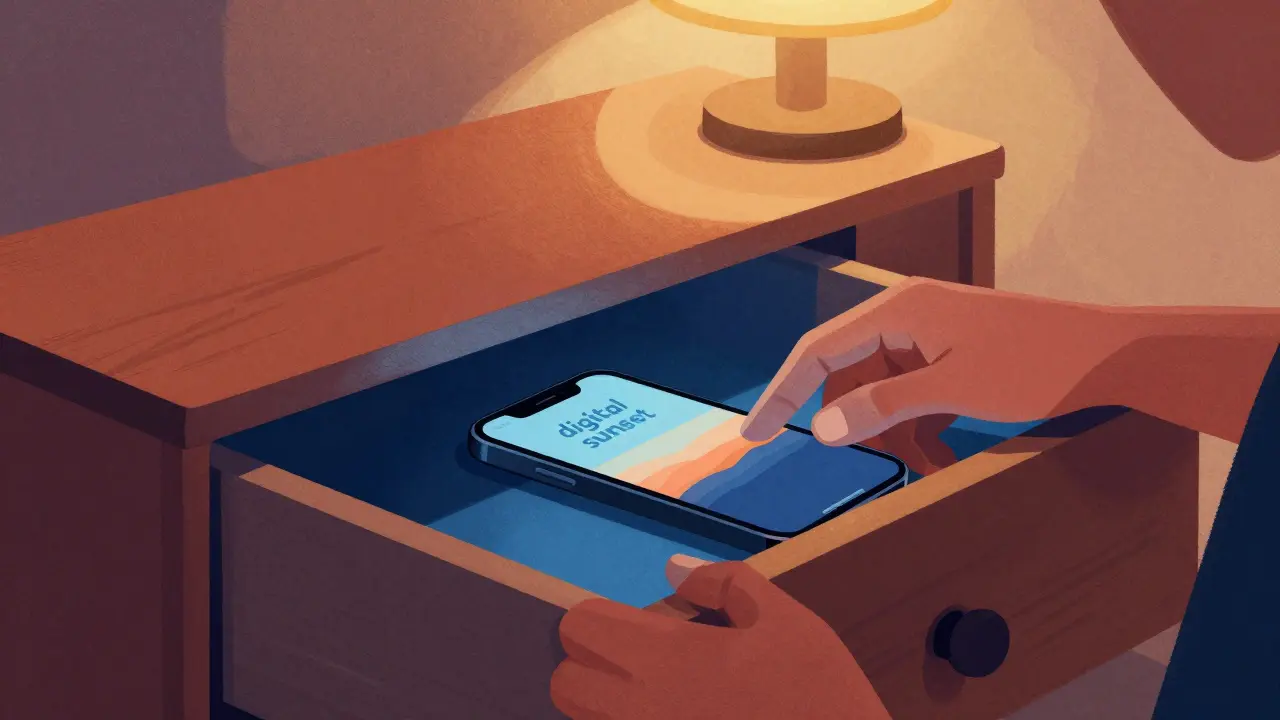
We've all heard that blue light is the enemy. While it's true that short-wavelength light suppresses melatonin, recent data suggests the problem is more complex. New research indicates that blue-light filtering glasses only marginally reduce the time it takes to fall asleep (by about 4-7 minutes). The bigger issue is "cognitive arousal"-the act of engaging with a stimulating social media feed or a work email. It's not just the light; it's the content. The brain can't switch from "problem-solving mode" to "sleep mode" in a few seconds. Aim for a digital sunset at least 60 minutes before bed.How long does it take for sleep hygiene changes to work?
Most people start seeing a noticeable difference after 14 to 21 days of consistent practice. It takes about a week just to establish a baseline pattern and for your circadian rhythm to begin aligning with your new wake-up time.
Can I exercise right before bed?
Contrary to old advice, some recent studies suggest that moderate exercise within 3 hours of bedtime can actually improve sleep quality for a majority of people. However, if high-intensity workouts leave you feeling wired or "over-stimulated," it's better to move your gym session to earlier in the day.
What is the most important single change I can make?
Consistent wake times are consistently rated as the strongest predictor of sleep quality. Waking up at the same time every day, regardless of how much sleep you got the night before, is the most effective way to regulate your sleep-wake cycle.
Do I really need to keep my room that cold?
While 60-67°F is the clinical recommendation, the key is that your room must be cooler than your daytime environment. A drop in core body temperature is a biological signal to the brain that it's time to sleep.
What if I can't control my environment (e.g., noisy neighbors or heat)?
Focus on the variables you can control. If you can't lower the room temperature, try a cool shower before bed. If it's noisy, use a white noise machine or earplugs. Prioritize the routine and cognitive regulation pillars if environmental optimization isn't fully possible.



Mark Zhang
April 4, 2026 AT 16:18The point about habit stacking is a total game changer for anyone struggling with the discipline part of this. I've seen so many people fail because they try to change everything at once, but linking it to something like brushing your teeth makes it feel effortless. Just take it one small win at a time!
Divine Manna
April 5, 2026 AT 10:29The biological imperative for a drop in core temperature is a well-documented physiological necessity, yet most people ignore it in favor of mindless comfort. It is quite amusing that society treats sleep as a luxury rather than a fundamental metabolic requirement. One must realize that the 'paradoxical effect' is essentially a manifestation of cognitive rigidity; the more you cling to the rule, the more you alienate the very biological process you are attempting to facilitate. True mastery of sleep requires a synthesis of discipline and surrender, a nuance that is frequently lost in these simplistic guides.
Brian Shiroma
April 6, 2026 AT 14:03Oh sure, because staring at a wall in a 62-degree room is exactly how everyone wants to spend their evening. Totally sustainable for people who don't have actual lives.
Dee McDonald
April 6, 2026 AT 21:39Get those blackout curtains and stop making excuses! If you want better sleep, you have to be aggressive about your environment. No more scrolling in bed, just put the phone in another room and commit to it!
sophia alex
April 7, 2026 AT 08:17Imagine thinking a bedside lamp is a 'strategy' 🙄 The level of basicness here is honestly insulting to anyone who actually understands wellness. Only in America do people need a manual to tell them that phones keep them awake 💅✨
simran kaur
April 7, 2026 AT 08:35Funny how they mention 'evidence-based' practices but ignore the fact that the lighting industry literally profits from keeping us in a state of permanent cognitive arousal. The 5 lux suggestion is a joke when most of our apartments are designed as fluorescent boxes to keep us productive for corporate overlords. It's all a systemic trap to keep us tired and compliant, and these little 'tips' are just band-aids on a bullet wound of industrial civilization.
Jenna Carpenter
April 9, 2026 AT 01:12tried the cold room thing and it totaly workd for me tho my husband thinks its a freezin lundry room in there lol. just get a fan!!
Rachelle Z
April 10, 2026 AT 03:35I love the idea of a digital sunset!!! 🌅 Even if the science is a bit debatable, just unplugging feels so refreshing... although I still check my notifications one last time because I'm an addict lol!! 😂💖
Branden Prunica
April 12, 2026 AT 03:05The 'weekend drift' is literally my entire personality. I spend all Sunday pretending Monday doesn't exist and then I wake up feeling like I've been hit by a truck every single week. It's a tragedy.
Hudson Nascimento Santos
April 13, 2026 AT 22:22There is a profound irony in the effort to quantify the subconscious. We attempt to optimize the one period of our existence where we are meant to be free from the constraints of measurement and productivity. Perhaps the real 'hygiene' is the acceptance of the night's unpredictability.
Hope Azzaratta-Rubyhawk
April 15, 2026 AT 11:07It is absolutely imperative that we all commit to these changes immediately! Consistency is the only way to achieve the results described. Stop settling for poor sleep and start treating your health with the urgency it deserves!
Ace Kalagui
April 15, 2026 AT 20:43I've always found that creating a warm, welcoming atmosphere in the home helps the transition to sleep, and while the temperature guidelines are scientifically sound, I think it's also about the emotional comfort of the space. In my experience working with various people from different backgrounds, the ritual of winding down-like a warm tea or some light stretching-often bridges the gap between the stressful workday and the quiet of the night, making the clinical temperature drop feel less like a chore and more like a natural progression of the evening's peace.
Aysha Hind
April 16, 2026 AT 23:12The 5 lux limit is just a fancy way of saying 'stay in the dark so you don't notice the fluoride in the water.' This whole guide is just corporate sleep-training to make sure you're refreshed enough to go back to your cubicle and grind for another 8 hours. Absolute nonsense designed to make us obsess over thermometers while the real world burns. It's a psychedelic distraction from the fact that we're all just biological batteries for a system that hates us.