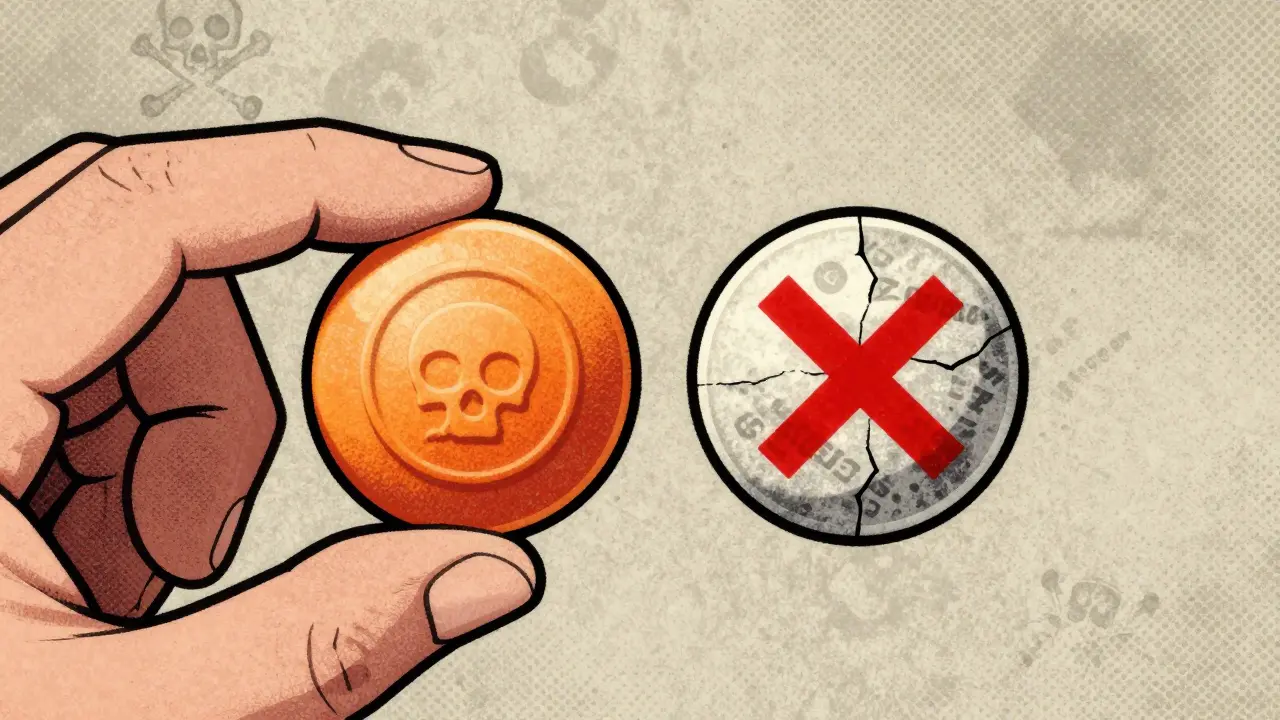
Buying medication online feels convenient-until you realize the pill in your hand might not contain anything close to what the label says. In 2023, the World Health Organization estimated that counterfeit generics make up about 10.5% of the global pharmaceutical market, worth over $200 billion a year. And it’s not just developing countries affected. In North America alone, the DEA seized over 134 million fake pills containing deadly doses of fentanyl between January 2023 and October 2024. These aren’t harmless imitations. They’re lethal. And they’re easier to find than ever.
Why Counterfeit Generics Are So Dangerous
Counterfeit generics aren’t just cheaper versions of the real thing-they’re frauds. Some contain no active ingredient at all. Others have too little, too much, or the wrong drug entirely. In parts of Asia, more than half of fake malaria pills have zero medicine inside. In the U.S., counterfeit pills made to look like oxycodone or Xanax are often laced with fentanyl-a synthetic opioid 50 times stronger than heroin. Just two milligrams can kill an adult.These pills are pressed using professional-grade machinery to copy the exact color, shape, and imprint of real medications. You won’t see a difference. Even experienced pharmacists can’t tell without lab tests. The FDA confirmed this in a 2023 alert about counterfeit Muro 128 eye drops: patients reported burning and irritation, but the packaging looked identical to the real product.
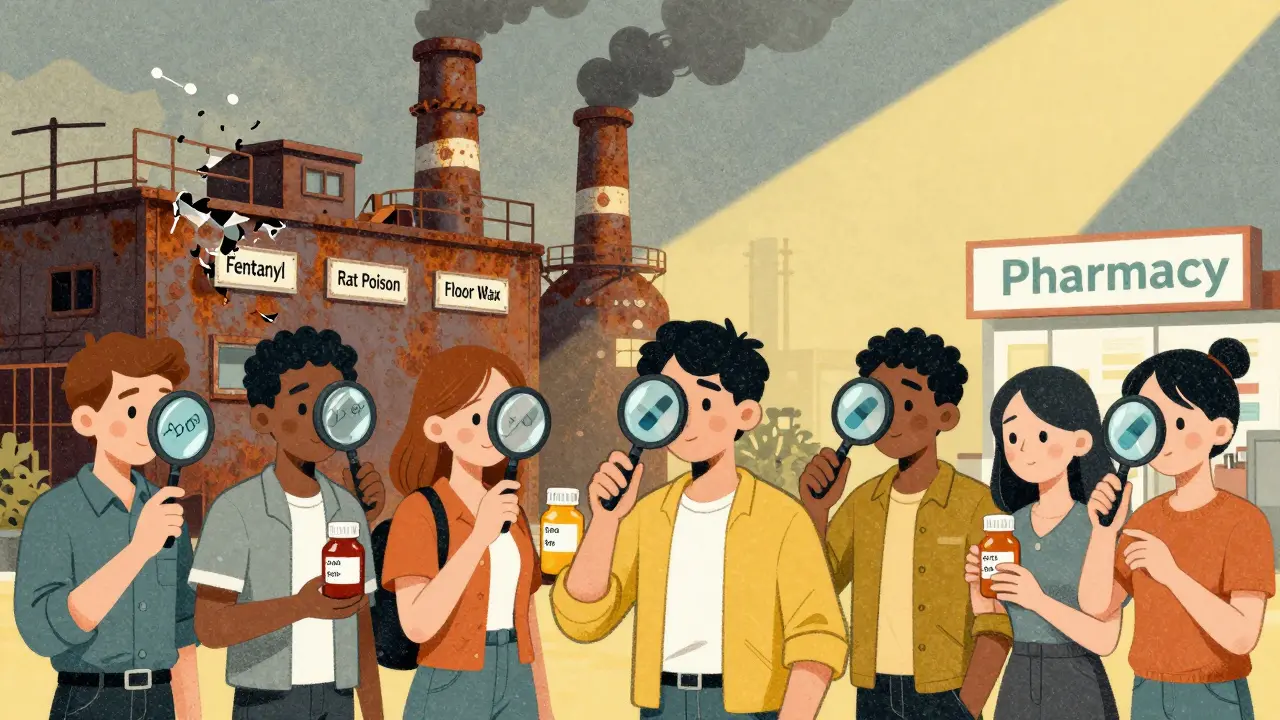
It’s not just about effectiveness. It’s about safety. Fake antibiotics might not cure your infection, letting it spread. Fake heart meds could trigger a stroke. Fake insulin? That’s a death sentence. And because these products bypass regulation, they often contain toxic fillers like crushed drywall, floor wax, or rat poison.
How to Spot a Fake Online Pharmacy
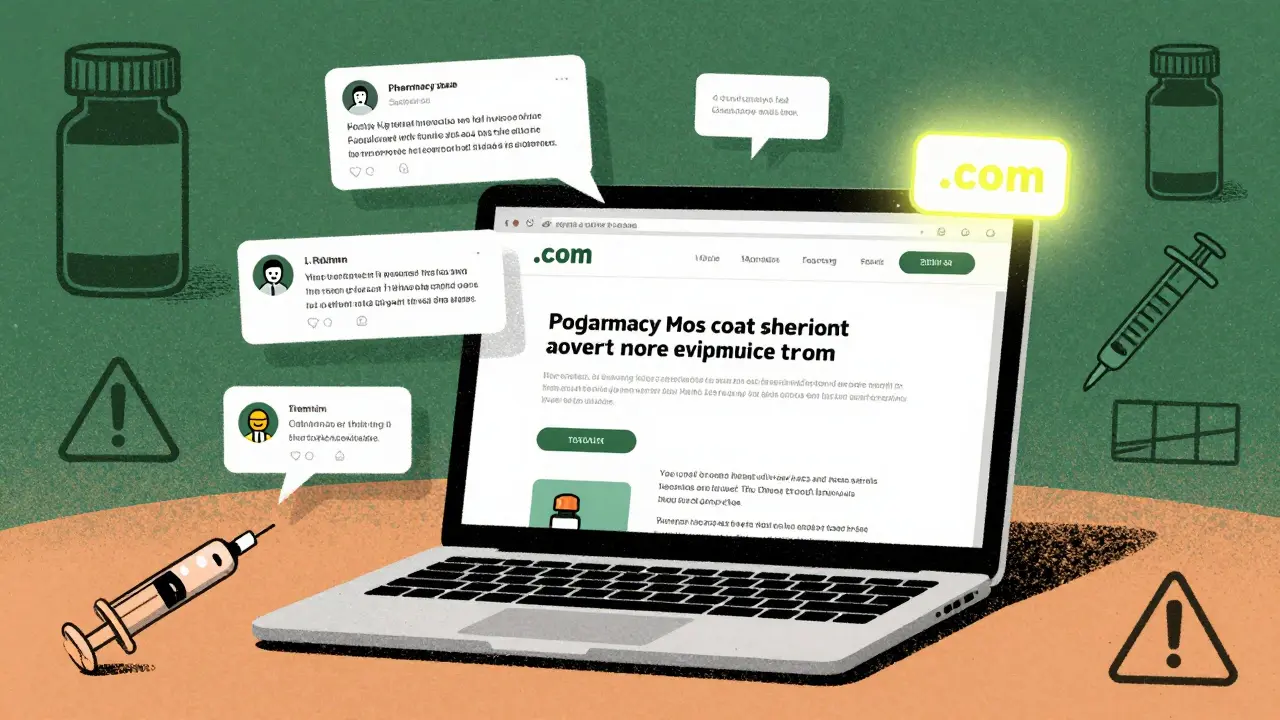
Most counterfeit drugs come from websites that look real. They use professional logos, fake testimonials, and even fake “pharmacist consultations.” But there are red flags you can spot without a lab.- They don’t require a prescription. Legitimate pharmacies, even online ones, must verify your prescription. If you can buy Adderall, Viagra, or Xanax with a click and no doctor’s note, it’s illegal-and almost certainly fake. The National Association of Boards of Pharmacy found that 88% of online pharmacies operating without prescriptions are fraudulent.
- No physical address or phone number. Legit pharmacies list their full address and a working phone line. If the contact page says “email us” with no street address, walk away.
- They’re not .pharmacy. The only reliable online identifier is the .pharmacy domain. This isn’t just a fancy URL-it’s a verified seal from the National Association of Boards of Pharmacy. Only pharmacies that meet strict licensing, safety, and privacy standards get this domain. Look for it in the website address. If it’s missing, assume it’s unsafe.
- Prices that are too good to be true. If a 30-day supply of Lipitor costs $5 instead of $50, it’s not a sale-it’s a trap. Legitimate pharmacies don’t sell prescription drugs at 90% off. The WHO warns: if it sounds too good to be true, it is.
Even trusted-looking sites can be fake. Scammers copy the layout of real pharmacies, change just a few letters in the domain name, and run ads on Google or Instagram. Always type the address yourself. Never click links from emails or social media.
What to Check on the Packaging
Once you get the pills, don’t assume they’re safe just because they look right. Compare them to your last legitimate bottle. Look for:- Color or shape differences. Even small changes-like a pill being slightly rounder or a different shade of blue-can mean it’s fake.
- Spelling errors or odd fonts. Real manufacturers are meticulous. Typos in the label, uneven capitalization, or a font that looks “off” are major red flags.
- Missing lot numbers or expiration dates. Every legitimate package has a lot number and expiration date. If it’s missing, blurred, or handwritten, it’s counterfeit.
- Unfamiliar manufacturer name. Generic drugs are made by different companies, but they’re still regulated. If the name on the bottle doesn’t match the one your doctor or regular pharmacy uses, call the original drugmaker. Pfizer, GlaxoSmithKline, and other big companies track counterfeit reports and can confirm if your batch is real.
- Unusual smell or taste. Some users report fake pills dissolving instantly in water, while real ones take 20 minutes or more. Others say they taste metallic or bitter. These aren’t foolproof, but they’re clues.
Don’t rely on holograms or color-shifting ink alone. Counterfeiters now replicate even these overt security features. The real protection comes from layered verification-combining packaging checks with source verification.
What You Can Do Right Now
You don’t need a lab to protect yourself. Here’s what to do:- Only buy from .pharmacy websites. This single step reduces your risk by 95%. Visit the NABP’s website to search for verified pharmacies.
- Call the drug manufacturer. If you’re unsure about your pills, call the company that makes the brand version. They have databases of known counterfeits and can check your lot number. Pfizer and other companies offer free verification services.
- Report suspicious products. If you think you’ve received fake medicine, report it to your country’s health authority. In Australia, that’s the TGA. In the U.S., it’s the FDA. Your report helps track outbreaks and shut down scams.
- Use AI-powered verification apps. Apps like MediGuard scan QR codes on packaging using artificial intelligence. In 2023, they verified over 1.2 million products with 92.4% accuracy. These aren’t perfect, but they’re a powerful tool when used with other checks.
- Never buy from social media or marketplaces. Instagram ads, Facebook groups, and eBay sellers are the top sources of fake pills. Even if they claim to be “from Canada” or “licensed,” they’re not.
Why Lab Testing Is the Only Real Answer
Here’s the hard truth: no visual check, no app, no hologram can guarantee a pill is real. Only laboratory testing-using techniques like Raman spectroscopy or FT-NIR-can confirm the chemical makeup. Handheld devices used by regulators can give a “yes or no” result in seconds, showing a green checkmark for real drugs and a red X for fakes. But these tools cost thousands of dollars and aren’t available to the public.That’s why prevention matters more than detection. The best way to avoid counterfeit generics is to avoid unverified sources entirely. If you need to buy online, use only verified pharmacies. If you’re unsure, go to your local pharmacy. They’re regulated, accountable, and trained to spot fakes.
What’s Being Done to Fix This
Governments and drugmakers aren’t sitting still. The FDA’s Drug Supply Chain Security Act now requires every prescription drug package to have a unique digital identifier by 2025. Pfizer and other companies are testing blockchain systems that track every pill from factory to pharmacy-with 99.6% accuracy in pilot programs. The WHO’s Global Surveillance and Monitoring System has logged over 1,500 cases of falsified drugs across 141 countries and is expanding to 120 nations by 2025.But technology alone won’t solve this. Criminal networks adapt faster than regulations. New pill presses can replicate imprints perfectly. Fake websites are updated daily. And consumers keep clicking on those “discount” links.
The real defense is awareness. Every time someone checks a .pharmacy domain, calls a manufacturer, or reports a suspicious package, they help shut down a scam.
Final Warning
The next time you’re tempted to buy cheap pills online, remember: you’re not saving money. You’re risking your life. Fake generics don’t just fail to work-they can kill. And they’re designed to look exactly like the real thing.There’s no shortcut to safety. No app that guarantees authenticity. No website that’s trustworthy unless it has .pharmacy in the address. If you’re unsure, go to your local pharmacy. Talk to your pharmacist. Ask questions. Your health isn’t worth the gamble.
How can I tell if my generic medication is fake?
You can’t be 100% sure without lab testing, but you can spot warning signs: check for spelling errors, mismatched pill color or shape, missing lot numbers, or unfamiliar manufacturer names. Compare the packaging to your last legitimate bottle. If anything looks off, call the drugmaker’s customer service-they can verify if your batch is real.
Are all online pharmacies dangerous?
No, but 96% of them are illegal. Only pharmacies with the .pharmacy domain are verified by the National Association of Boards of Pharmacy as meeting strict safety and licensing standards. Stick to those. Avoid any site that doesn’t require a prescription, doesn’t list a physical address, or offers prices that seem too good to be true.
Can I trust pharmacies that say they’re based in Canada or the UK?
Not necessarily. Many fake pharmacies claim to be from Canada, the UK, or Australia to seem legitimate. The location doesn’t matter-what matters is whether they’re licensed and verified. Always check for the .pharmacy domain and a real, verifiable address. If you’re unsure, call the pharmacy directly and ask for their license number.
What should I do if I think I took a fake pill?
Stop taking it immediately. Contact your doctor or pharmacist and describe the pill’s appearance and any side effects you’ve had. Report the product to your country’s health authority-like the TGA in Australia or the FDA in the U.S. Keep the packaging and pills as evidence. If you experienced symptoms like dizziness, chest pain, or unusual bleeding, seek medical help right away.
Is it safe to buy generics from big retailers like Walmart or CVS?
Yes. Major retailers like Walmart, CVS, and local pharmacies source their generics through regulated supply chains. These drugs are subject to the same safety standards as brand-name medications. The risk comes from buying online from unverified sources, not from licensed pharmacies-even if they sell generics.
Do counterfeit drugs only affect poor countries?
No. While counterfeit drugs are more common in low-income countries, they’re a global problem. In the U.S. and Australia, fake pills laced with fentanyl are killing thousands every year. Online shopping has made it easy for criminals to ship fakes anywhere. No country is immune.
Can I use a smartphone app to verify my pills?
Some apps, like MediGuard, scan QR codes on packaging using AI and can identify counterfeits with about 92% accuracy. They’re helpful tools, but they’re not foolproof. Always combine app checks with other steps: verify the pharmacy, check packaging details, and call the manufacturer if you’re unsure.
Ishmael brown
February 2, 2026 AT 00:02Jaden Green
February 2, 2026 AT 12:30Nicki Aries
February 2, 2026 AT 17:43Ed Di Cristofaro
February 4, 2026 AT 15:32Deep Rank
February 5, 2026 AT 20:32Naomi Walsh
February 6, 2026 AT 20:18Bryan Coleman
February 7, 2026 AT 17:50Aditya Gupta
February 8, 2026 AT 06:47Nancy Nino
February 8, 2026 AT 15:31Jamie Allan Brown
February 8, 2026 AT 16:14Melissa Melville
February 9, 2026 AT 18:03Naresh L
February 10, 2026 AT 10:03