BPH & Medication Safety Checker
Select a common cold or allergy medication ingredient to see its potential impact on urinary flow for those with an enlarged prostate.
Pseudoephedrine
(e.g., Sudafed)
Phenylephrine
(Common OTC decongestants)
Oxymetazoline
(Nasal Sprays)
Diphenhydramine
(Benadryl/Nighttime formulas)
Loratadine
(Claritin/Non-drowsy)
Analysis
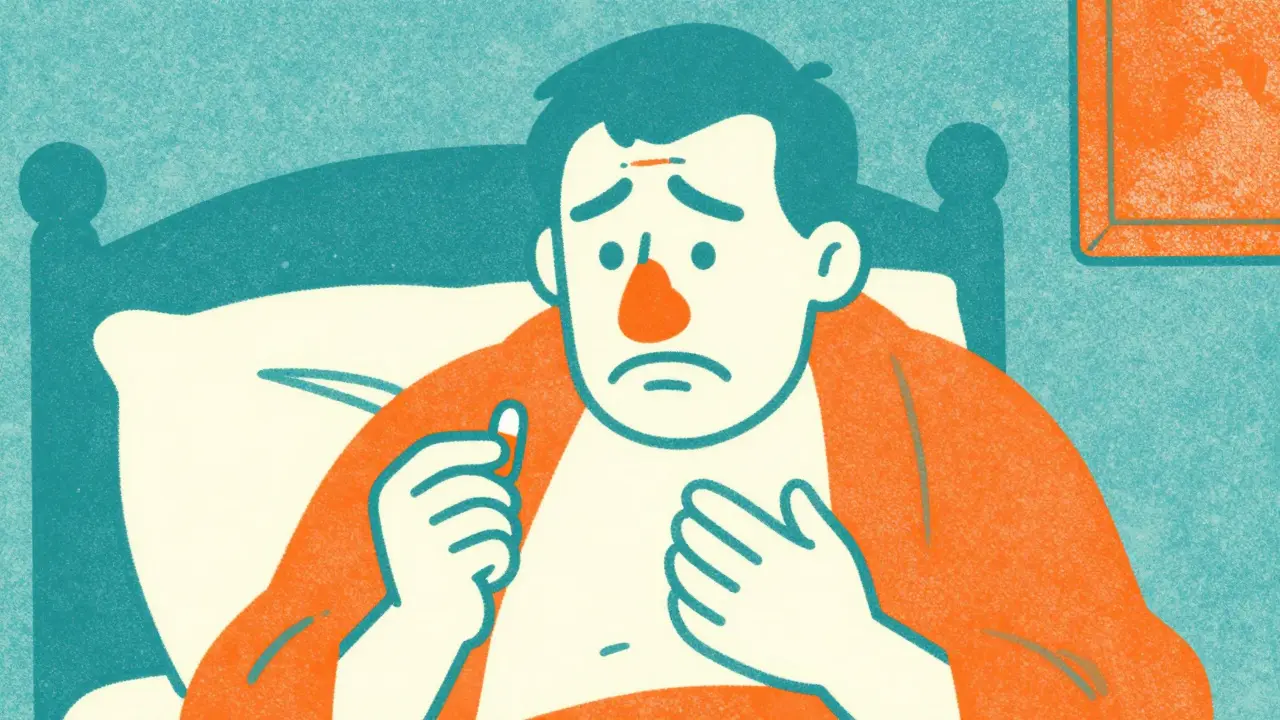
Imagine waking up with a brutal head cold and grabbing a standard decongestant to clear your sinuses, only to find a few hours later that you physically cannot urinate. For most people, this sounds like a nightmare scenario, but for men with Benign Prostatic Hyperplasia is a noncancerous enlargement of the prostate gland that can compress the urethra. Also known as BPH, this condition affects roughly 50% of men by age 60. When you mix this structural blockage with certain over-the-counter cold medicines, you create a perfect storm for a medical emergency called acute urinary retention.
The biological trigger: How decongestants lock the bladder
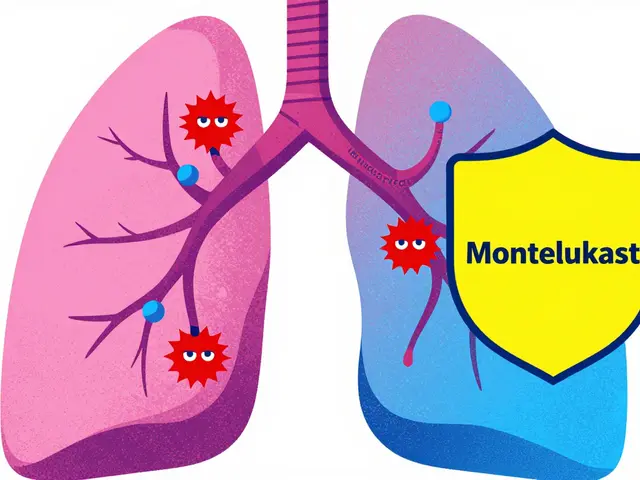
To understand why this happens, you have to look at the muscles in the prostate and the bladder neck. These areas are packed with alpha-adrenergic receptors. Pseudoephedrine is a sympathomimetic drug used as a nasal decongestant that acts as an alpha-1 adrenergic agonist. While it's great for shrinking swollen blood vessels in your nose, it doesn't just stay there. It travels through your system and tells the smooth muscles in your prostate and bladder neck to contract.
If you have a healthy prostate, this contraction might go unnoticed. But if your prostate is already enlarged, this extra squeeze can shut the door completely. Urodynamic studies show that these medications can increase urethral resistance by 35-40%. Essentially, the medicine that clears your nose is tightening the grip of your prostate on your urethra, making it nearly impossible for urine to pass through.
Comparing the risks: Not all decongestants are equal
If you're staring at a pharmacy shelf, it's important to know that different active ingredients carry different levels of risk. Some are systemic (affect the whole body), while others stay local to the nasal passage.
| Active Ingredient | Risk Level | Mechanism | Estimated Impact on Resistance |
|---|---|---|---|
| Pseudoephedrine | Very High | Systemic Alpha-1 Agonist | Up to 27% increase in flow resistance |
| Phenylephrine | High | Systemic Alpha-1 Agonist | 15-20% increase in resistance |
| Oxymetazoline (Nasal Spray) | Low | Local Action / Minimal Absorption | Minimal systemic effect |
The danger is compounded by age. Men over 70 using pseudoephedrine face a significantly higher chance of voiding dysfunction-over 50% in some clinical groups-compared to men under 50. The half-life of these drugs also means the risk doesn't vanish instantly; symptoms can persist for up to 24 hours after a single dose.

Warning signs and the "Emergency Room" scenario
Acute urinary retention isn't just "difficulty peeing." It is a sudden, complete inability to empty the bladder. Many men describe a terrifying feeling of the bladder filling to the limit while the exit remains locked. In real-world reports, some users have noted that even a single 30mg dose can lead to total blockage.
If you experience any of the following after taking a cold pill, you should seek medical help immediately:
- A complete stop in urine flow.
- Intense pressure or pain in the lower abdomen.
- A sudden, dramatic drop in the strength of your urinary stream.
- Frequent, urgent needs to go but only producing a few drops.
When this happens, the only solution is often catheterization to drain the bladder and prevent kidney damage. Research indicates that about 70% of BPH patients who hit this wall after taking decongestants require a catheter for 48 to 72 hours to stabilize.
Safe alternatives for congestion relief
You don't have to suffer through a cold just to protect your bladder. There are several ways to manage congestion that don't involve tightening the prostate muscles.
First, try mechanical solutions. Saline nasal irrigation-like those squeeze bottles you find at the drugstore-is effective in about 68% of cases and carries zero urinary risk. Steam inhalation is another classic, safe bet.
If you need something stronger, look into Fluticasone, which is an intranasal corticosteroid used to reduce inflammation in the nasal passages. Since it works locally and doesn't stimulate alpha-receptors systemically, it doesn't affect the bladder. For allergies, choose second-generation antihistamines like Loratadine (Claritin). Avoid first-generation options like diphenhydramine (Benadryl), as they have anticholinergic effects that can further complicate urinary flow.

Strategies for unavoidable medication use
Sometimes a doctor might insist on a specific medication, or you might be in a situation where you have no other choice. In those cases, there are harm-reduction strategies. One approach involves the use of Tamsulosin, which is an alpha-blocker that relaxes the smooth muscles in the prostate and bladder neck. By starting an alpha-blocker 72 hours before a short-term decongestant, some studies suggest the risk of retention can be reduced by up to 85%.
Follow the "48-hour rule": never take a systemic decongestant for more than two consecutive days without checking in with your urologist. If you must use them, keep the dose as low as possible (e.g., 30mg of pseudoephedrine) and stay hydrated to help flush the system.
Can I use nasal decongestant sprays if I have BPH?
Generally, yes. Nasal sprays like oxymetazoline have very low systemic absorption, meaning they don't enter the bloodstream in high enough quantities to cause prostate constriction. However, you should still use them sparingly to avoid "rebound congestion."
Is Sudafed dangerous for men with enlarged prostates?
Yes, because Sudafed typically contains pseudoephedrine. This is a potent alpha-adrenergic agonist that causes the smooth muscles in the prostate to contract, which can lead to acute urinary retention in men with BPH.
What should I do if I can't pee after taking cold medicine?
This is a medical emergency. You should go to the nearest urgent care or emergency room immediately. Acute urinary retention can cause bladder damage and kidney failure if not treated quickly via catheterization.
Are there any safe "all-in-one" cold medicines for BPH?
Be very careful with "multi-symptom" or "nighttime" formulas. Many contain both a decongestant (like pseudoephedrine) and an antihistamine with anticholinergic properties (like diphenhydramine). Both can obstruct urine flow. Look for products that are decongestant-free and use a non-drowsy antihistamine like loratadine.
Does this risk apply to men with mild BPH symptoms?
The risk is highest for those with moderate to severe symptoms (IPSS score > 12). However, even those with mild symptoms can experience a sudden increase in resistance. It's best to consult a doctor or pharmacist before using any systemic alpha-agonist.
What to do next
If you have been diagnosed with an enlarged prostate, the first step is to audit your medicine cabinet. Toss out or label any old cold and allergy medications that contain pseudoephedrine or phenylephrine. When you visit your pharmacist, specifically mention your BPH; many pharmacists are now trained to screen for this interaction and can point you toward the safest alternatives.
For those who frequently suffer from sinus issues, consider switching to a daily nasal corticosteroid under medical supervision. This prevents the need for emergency decongestants during cold season and keeps your bladder health stable.


Mike Arrant
April 23, 2026 AT 04:56Most of you guys probably just ignore your doctors and then act surprised when you end up in the ER. If you're old enough to have BPH, you should already know your own body's triggers without needing a guide.
Sue Stoller
April 24, 2026 AT 06:22This is such an important reminder! 🌟 Stay safe everyone and always double check those labels! ✨🙌
Ajinkya Joshi
April 24, 2026 AT 19:36Oh wow, imagine being so shocked that a drug designed to constrict vessels actually constricts something else. Absolute groundbreaking discovery here.
vimal purwal
April 25, 2026 AT 18:06It is imperative to recognize that the pharmacological interaction between alpha-adrenergic agonists and the physiological state of the prostate is a critical area of concern for geriatric care, and I must insist that patients do not disregard the guidance of their healthcare providers simply because over-the-counter medications seem accessible and benign, as the resulting acute urinary retention can lead to severe systemic complications including renal failure and permanent bladder dysfunction if not addressed with immediate clinical intervention via catheterization.
Emma Cozad
April 25, 2026 AT 22:10Typical pharma scam... they make stuff that barely works then you get some side effect and gotta pay more for the 'safe' version. total ripoff if u ask me
Caroline Duvoe
April 27, 2026 AT 17:18everyone knows this already 🙄 just use saline spray lol 💅
Mayur Pankhi Saikia
April 29, 2026 AT 01:23The sheer... simplicity of this explanation is almost insulting!! One must consider the nuances of pharmacokinetics... if one were actually educated on the subject... though I suppose the average user barely understands basic biology...
Divyanshu Giri
April 29, 2026 AT 20:15Keep your spirits high brothers! Just be smart with the pills and keep the flow going strong! You got this!
Mike Arrant
May 1, 2026 AT 18:37Probably just lazy habits. People don't drink enough water then blame the pills.
Chidi Prosper
May 3, 2026 AT 11:33I completely agree with the point about using saline irrigation. It is a much safer bet for anyone dealing with these issues.
Sarah Watters
May 4, 2026 AT 02:08Funny how they tell us to trust the pharmacist. Who is paying those pharmacists? Big Pharma. They'll steer you toward the most expensive 'safe' alternative to keep the profits rolling in while they experiment on our bladders.
Rick Brewster
May 6, 2026 AT 01:27One must ponder the irony of the human condition where we seek to clear the mind of the fog of congestion only to find ourselves prisoner to the most primal of needs... it is a tragicomedy of biological error... truly a reflections of our frailty in the face of chemical intervention... we are but puppets to our own receptors
Anastasios Kyriacou
May 6, 2026 AT 03:29didnt know sudifed was that bad lol... guess i'll just suffer throug the cold
Nicole Antunes
May 7, 2026 AT 12:45It is truly heartening to see such clear options for those who might be struggling. I hope everyone finds a routine that works for them. :)
Anantha Lakshmi
May 9, 2026 AT 04:58Let's all make sure to share this with our dads and uncles! Safety first! 🛡️💪