NAFLD Cardiovascular Risk Calculator
Assess Your Heart Disease Risk with NAFLD
Based on 2023 AASLD/EASL guidelines: Statins reduce heart attack risk by 48% in NAFLD patients. Calculate your risk and see if statins are right for you.
mg/dL
/
For years, doctors avoided giving statins to people with fatty liver disease. It wasn’t because the drugs didn’t work-it was because everyone thought they might hurt the liver. That myth is finally dead. Today, we know statins are not only safe for people with nonalcoholic fatty liver disease (NAFLD), they may actually help protect the heart and even slow liver damage.
Why Was Everyone Afraid of Statins and Fatty Liver?
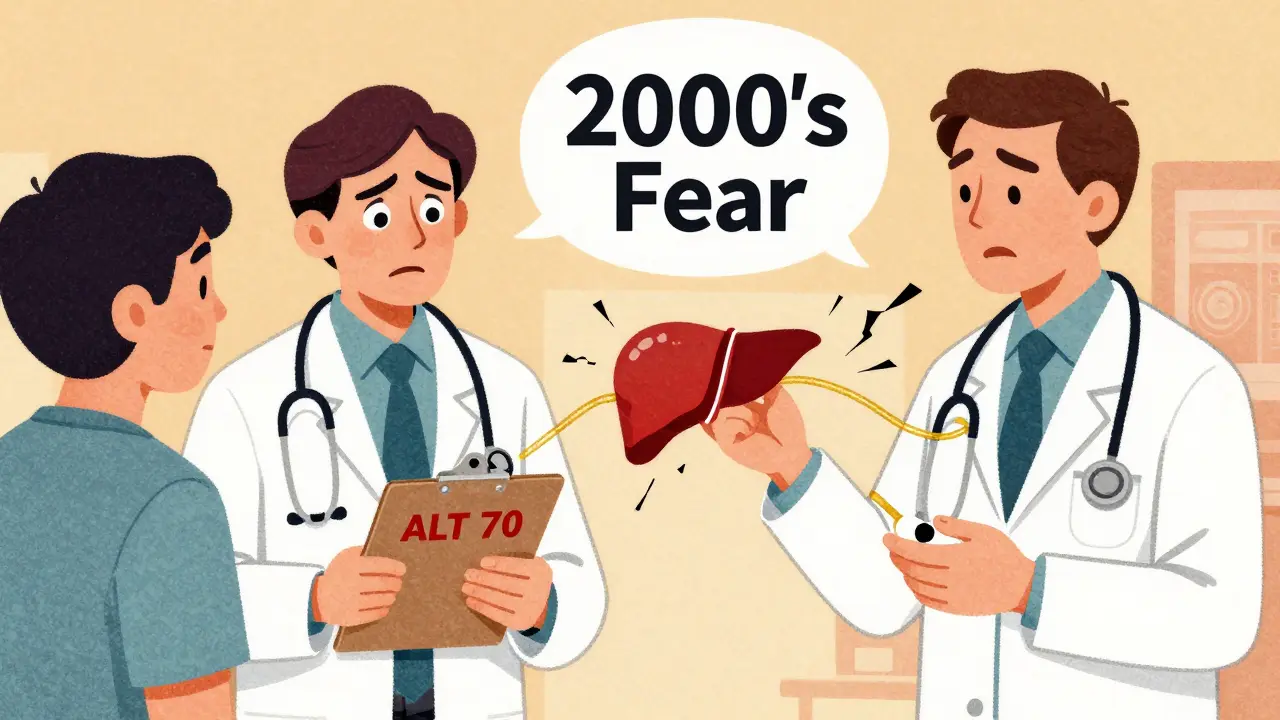
Back in the 2000s, if your liver enzymes-ALT or AST-were even slightly high, your doctor likely told you to hold off on statins. The fear was simple: statins cause liver damage. But that idea came from old studies on people with advanced liver disease or those taking very high doses. It wasn’t based on real-world data. Now, we have data from over 200 million research papers. A 2023 consensus from the American Association for the Study of Liver Diseases (AASLD), the European Association for the Study of the Liver (EASL), and the European Association for the Study of Diabetes (EASD) cleared the record: statins do not cause liver injury in NAFLD patients. In fact, they’re one of the safest options you can take if you have both high cholesterol and fatty liver.What Does the Evidence Actually Show?
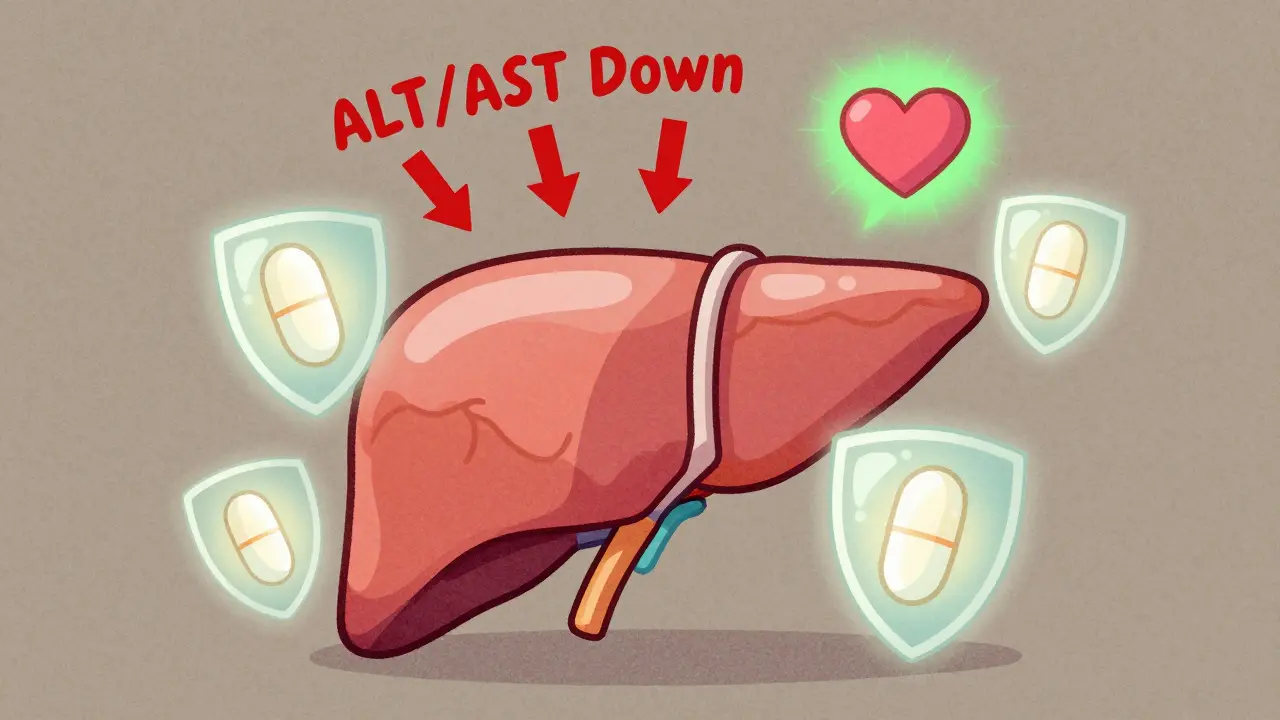
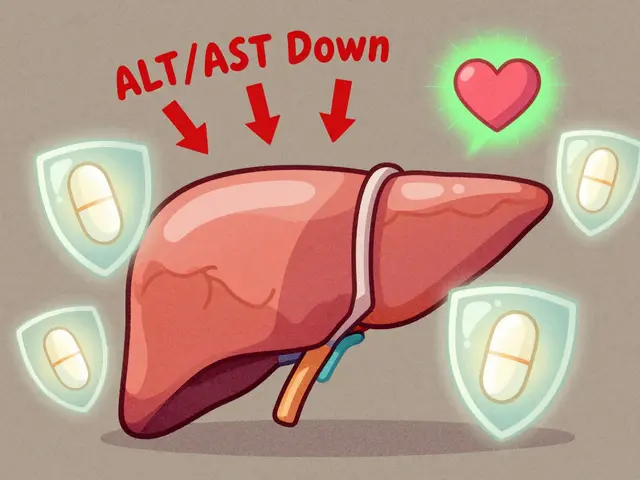
Let’s look at the numbers. In a 2023 systematic review of clinical trials, people with NAFLD who took statins saw their ALT levels drop by an average of 15.8 U/L and AST by 9.2 U/L. That’s not a sign of damage-it’s improvement. These enzymes go up when the liver is inflamed. Lower numbers mean less inflammation. Statins work in ways that directly help the liver. They reduce oxidative stress, lower bad cholesterol buildup in liver cells, and improve how your body uses insulin. All of this slows down fat accumulation and fibrosis-the scarring that can turn fatty liver into cirrhosis. And it’s not just lab numbers. In the GREACE study, NAFLD patients on statins had a 48% lower risk of heart attacks and strokes compared to those who didn’t take them. That’s huge. Heart disease is the #1 cause of death in people with NAFLD-not liver failure.Who Should Be on Statins?
If you have NAFLD and one or more of these, you should be on a statin:- High LDL cholesterol (over 100 mg/dL)
- Diabetes or prediabetes
- High blood pressure
- History of heart attack, stroke, or stents
- Family history of early heart disease
What About Liver Enzymes? Do I Need to Check Them All the Time?
No. You don’t need routine monthly blood tests. The FDA removed the requirement for regular liver enzyme monitoring for statins back in 2012. But many doctors still order them out of habit. Here’s what the 2023 AASLD guidelines actually say:- Check ALT and AST once before starting a statin
- Check again at 12 weeks
- If levels are under 3x the upper limit of normal, no further monitoring is needed
- If levels rise above 3x ULN, pause the statin and investigate other causes-like alcohol, viral hepatitis, or autoimmune disease
What Dose Is Safe?
For most people with NAFLD, standard doses are fine:- Atorvastatin: 10-80 mg daily
- Rosuvastatin: 5-20 mg daily
- Simvastatin: 20-40 mg daily
What About Other Liver Medications?
Some people wonder: should I take pioglitazone or vitamin E instead? Those drugs are used for NASH (the inflamed, scarred form of fatty liver), and they do improve liver biopsy results. But they don’t protect your heart like statins do. In the PIVENS trial, pioglitazone improved liver histology in nearly half of patients-but didn’t reduce heart attacks. Statins? They cut heart events by nearly half in NAFLD patients. That’s why guidelines say: use statins for heart protection. Use pioglitazone or vitamin E only if you have biopsy-proven NASH and no cardiovascular risk. Fibrates and ezetimibe? They’re weaker. No proven benefit for heart outcomes in NAFLD. Statins are still the gold standard.Why Are So Many Doctors Still Avoiding Statins?
Here’s the frustrating part: even with all this evidence, many doctors still won’t prescribe them. A 2021 survey found 68% of hepatologists still worry about liver damage. Only 29% of cardiologists do. That’s a huge gap. Primary care doctors are even worse-41% still believe elevated liver enzymes are an absolute reason to avoid statins. Patients report being turned down for statins even when they’ve had heart attacks or have diabetes. One patient on the American Liver Foundation forum said, “My doctor said no statins because my ALT was 70. I have a stent. He didn’t care.” This isn’t about science anymore. It’s about outdated habits. And it’s costing lives.
What Are the Real Side Effects?
The most common side effect of statins? Muscle aches. About 8.7% of NAFLD patients report this. But here’s the key: only 1.2% have actual muscle damage (elevated CK levels). That’s the same rate as people taking a placebo. Serious liver injury from statins? Extremely rare. In over 200 million patient-years of data, there’s no increased risk. If you feel muscle pain, don’t stop the statin immediately. Talk to your doctor. Sometimes switching to a different statin-like rosuvastatin instead of simvastatin-fixes it. Or lowering the dose helps. Rarely, you need to stop. But don’t assume it’s the statin. Most muscle pain has other causes: vitamin D deficiency, thyroid issues, or just aging.What Should You Do If Your Doctor Refuses?
If your doctor says no to statins because of NAFLD, ask them this:- “Do you know the 2023 AASLD/EASL guidelines say statins are safe in NAFLD?”
- “Am I at higher risk for a heart attack because of my fatty liver?”
- “If I don’t take a statin, what’s my 10-year risk of heart disease?”
bob bob
January 5, 2026 AT 03:12Finally, someone says it loud and clear. I’ve been on statins for years with NAFLD and my liver enzymes were always ‘concerning’-but my heart’s never been better. My doc used to scare me off them. Now I’m the one educating new patients in my support group.
Vicki Yuan
January 5, 2026 AT 11:41The data is overwhelming, and it’s frustrating that outdated protocols still dominate clinical practice. The AASLD/EASL consensus is unambiguous: statins reduce cardiovascular mortality in NAFLD patients without increasing hepatic risk. Continuing to withhold them based on ALT levels is medical malpractice disguised as caution.
Peyton Feuer
January 5, 2026 AT 21:40my doc told me no statins cause liver damage 😭 i had a heart attack last year and he still said ‘wait till your alt drops’… but my alt’s been 68 for 3 years. what even is this?
josh plum
January 6, 2026 AT 06:10Statins are just another Big Pharma scam. They’re not fixing anything-they’re just masking symptoms while your liver turns to mush. You think lowering LDL is magic? Nah. It’s just suppressing the body’s natural warning signs. Look at the side effects. Muscle pain? Fatigue? That’s your body screaming.
Clint Moser
January 6, 2026 AT 08:14Alt levels aren’t the issue-it’s the hepatic steatosis index and fibrosis-4 score. If you’re not tracking elastography or CAP scores, you’re flying blind. Statins might lower LDL, but they don’t touch lipid peroxidation or TNF-alpha upregulation. We need targeted NASH therapeutics, not band-aid cardio drugs.
Ashley Viñas
January 6, 2026 AT 18:36It’s honestly embarrassing that we’re still having this conversation in 2024. The guidelines have been out for a year. If your doctor refuses statins because of NAFLD, they’re either out of date or don’t care. I’ve had three patients die from preventable heart attacks because their doctors were scared of ALT values. Sad.
Brendan F. Cochran
January 7, 2026 AT 20:31Statins are a globalist plot to make us dependent on pills. The liver is a detox organ-why poison it? I’ve been eating keto and doing cold plunges since 2020. My ALT dropped to 24. No pills needed. America’s gone soft.
jigisha Patel
January 8, 2026 AT 23:30The GREACE study has significant selection bias. The cohort was predominantly male, middle-aged, and already on multiple antihypertensives. The observed cardioprotective effect may be confounded by polypharmacy. Additionally, the definition of NAFLD was based on ultrasound, not biopsy-thus including non-specific steatosis. This undermines the validity of the conclusions.
Mandy Kowitz
January 9, 2026 AT 10:51Wow. So now we’re supposed to trust doctors who still think ‘liver enzymes’ are a reason to avoid heart meds? I guess next they’ll tell us not to use insulin because blood sugar is high. 🙄
Justin Lowans
January 11, 2026 AT 06:11This is the kind of clarity our medical system desperately needs. Statins aren’t just safe-they’re a lifeline for people with NAFLD who are walking time bombs for cardiovascular events. It’s not about fear. It’s about prioritizing the leading cause of death, not the least likely one. Kudos to the researchers and clinicians pushing this forward.
Michael Rudge
January 12, 2026 AT 10:50Of course the guidelines say it’s safe. They’re written by people who get paid by pharma. You think they’d recommend a drug that actually fixes the root cause? Nah. They’d rather keep you on pills forever. Your liver doesn’t heal-it just gets numb.
Ethan Purser
January 12, 2026 AT 12:23I’ve been through the ringer. My doctor refused statins. I got a heart scare. Then I found a cardiologist who actually read the papers. I’m on rosuvastatin now. My liver enzymes? Down. My anxiety? Gone. My life? Actually livable again. This isn’t just medicine-it’s redemption.
Doreen Pachificus
January 13, 2026 AT 21:31Just read this after my bloodwork. My ALT’s 72. My doc said ‘we’ll watch it.’ I didn’t even know statins were an option. Thanks for this. I’m printing it out.