Why Your Balance Matters More Than You Think
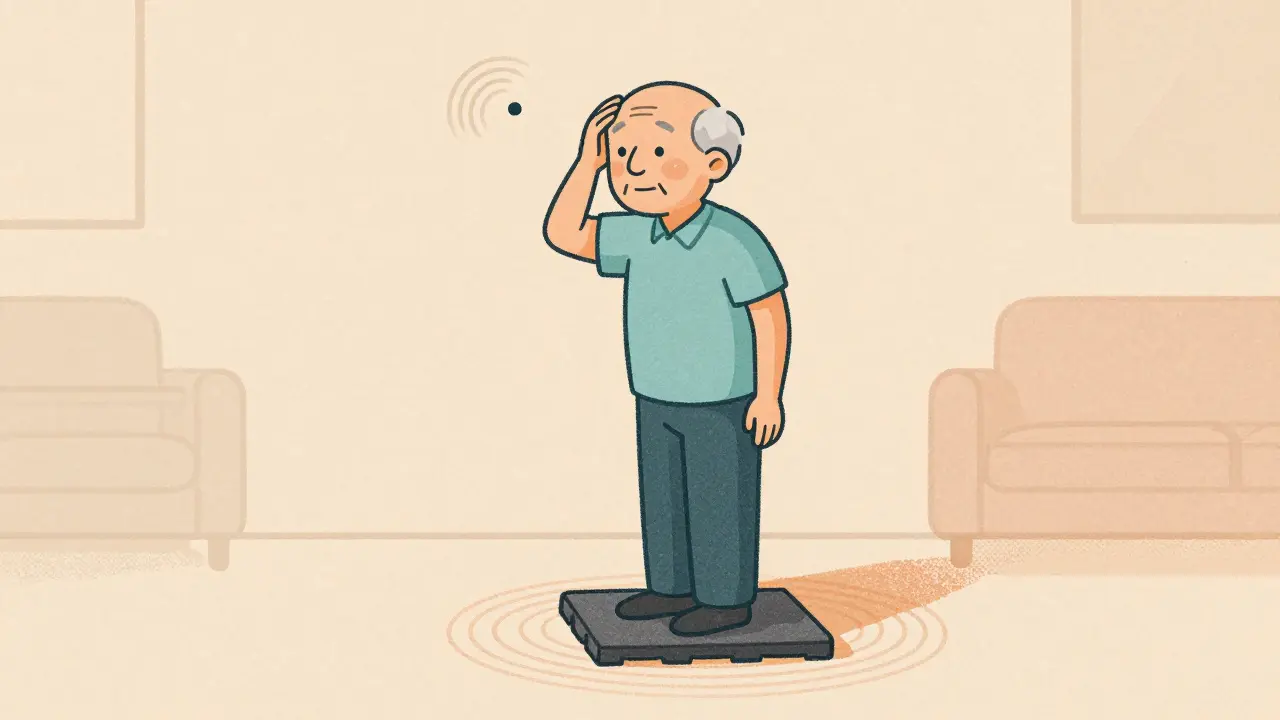
If you’ve ever felt like the room is spinning when you roll over in bed, or stumbled on a curb because your feet didn’t feel grounded, you’re not alone. About 30% of adults over 65 fall at least once a year. For many, it’s not just bad luck-it’s a sign their vestibular system isn’t working right. That’s the part of your inner ear that tells your brain where your body is in space. When it’s damaged by aging, infection, or injury, your balance goes off-kilter. And that’s when falls, dizziness, and fear of movement start taking over your life.
But here’s the good news: you don’t have to live with it. Vestibular rehabilitation therapy (VRT) isn’t magic. It’s science. And it works. Studies show people who stick with it improve their balance by 73%, cut dizziness episodes by 42%, and reduce fall risk by 53%. This isn’t about fancy machines or expensive gear. It’s about retraining your brain to listen to your body again.
How Vestibular Rehabilitation Actually Works
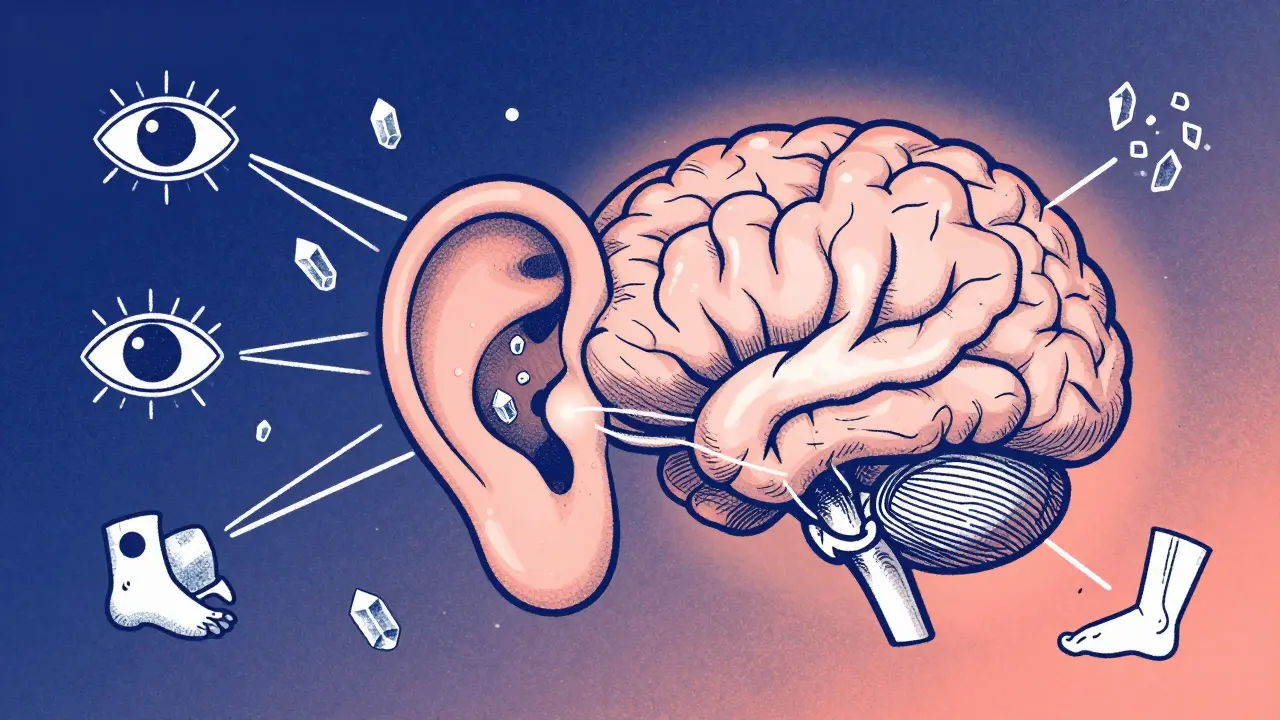
Your vestibular system is like a broken radio. Sometimes it sends static. Other times, it sends no signal at all. Your brain used to rely on that signal to keep you steady. Now, it’s confused. VRT doesn’t fix the inner ear. It teaches your brain to use other senses-your eyes, your feet, your muscles-to make up for the lost input. That’s neuroplasticity: your brain’s ability to rewire itself.
Therapists don’t just hand you a list of exercises. They design a plan based on what’s causing your imbalance. Is it BPPV, where tiny crystals in your ear get stuck? Is it vestibular neuritis after a virus? Or is it just the slow decline that comes with age? Each case needs a different approach. But all of them rely on the same core principles: repetition, control, and gradual exposure.
The Four Goals of Every VRT Program
Good vestibular rehab doesn’t just make you feel less dizzy. It gets you back to living. The therapy targets four clear outcomes:
- Gaze stability - Can you read a sign while walking? If your vision bounces or blurs when you move your head, that’s a sign your eyes and inner ear aren’t synced. VRT trains your eyes to stay locked on a target even when your head moves.
- Postural stability - Can you stand on one foot without wobbling? Can you walk on grass or gravel without gripping the wall? These are real-world tests. VRT rebuilds your body’s internal compass.
- Vertigo reduction - If spinning or lightheadedness keeps you from turning your head, bending down, or getting out of bed, VRT helps your brain stop reacting to those triggers.
- Daily function - Can you shop, cook, climb stairs, or play with your grandkids without fear? That’s the end goal. No one wants to live in a bubble.
One patient, Rhonda, went from avoiding grocery stores to walking the aisles alone after just six weeks. She didn’t get cured. She got trained.
What You’ll Actually Do in VRT
There’s no single routine. But most programs include these six types of exercises:
- Gaze stabilization - Sit or stand, focus on a small object (like a dot on the wall), then move your head side to side or up and down. Keep your eyes locked on that dot. Start slow. Do 10 reps, three times a day. This is the most common and most effective exercise.
- Balance retraining - Stand with feet together, then with one foot in front of the other. Try it with your eyes closed. Then try it on a couch cushion or foam pad. Your feet need to learn to sense the ground again.
- Habituation - If turning your head makes you dizzy, you do it on purpose. Over and over. Slowly. Controlled. Your brain learns: ‘This movement isn’t dangerous.’ It’s like desensitizing a panic response.
- Walking and coordination - Walk forward, then backward. Walk while turning your head. Walk on uneven surfaces. Add arm movements. The goal is to move your whole body as one unit again.
- Stretching and strengthening - Tight neck muscles can worsen dizziness. Weak legs make falls more likely. Simple stretches and light resistance work help support the whole system.
- Environmental exposure - Go to a busy store. Walk in a dim room. Stand near a moving escalator. These aren’t tests. They’re practice. The more you expose yourself, the less scary it becomes.
Most people do these exercises 3 to 5 times a day. Each session lasts 5 to 10 minutes. You don’t need a gym. You don’t need a therapist every day. But you do need consistency. Missing a day? That’s okay. Missing a week? That’s how progress stalls.

Who Benefits the Most
VRT isn’t just for older adults. It helps anyone with a vestibular issue:
- People with BPPV - The most common cause of vertigo. VRT can resolve it in days or weeks.
- Those recovering from vestibular neuritis - Often after a cold or flu. The inner ear gets inflamed. VRT helps the brain compensate.
- People with Meniere’s disease - While it can’t cure the inner ear fluid buildup, it reduces the fear and instability that come with attacks.
- Seniors with age-related balance loss - Even if no single cause is found, VRT improves stability and confidence.
- Anyone who’s fallen before - Fear of falling is its own kind of injury. VRT breaks that cycle.
Age doesn’t matter. One study followed patients in their 80s with diabetes, arthritis, and heart disease. They improved just as much as younger people. The only thing that predicted success? How often they did the exercises at home.
What to Expect in the First Few Weeks
Let’s be honest: the first few days of VRT can feel worse. You might feel more dizzy after doing the exercises. That’s normal. It means your brain is working. You’re not making it worse-you’re resetting it.
Think of it like rehabbing a sprained ankle. At first, moving it hurts. But if you avoid it, the joint stiffens and weakens. Same here. Avoiding dizziness only makes your brain more sensitive to it. The goal is to face it, slowly, safely, and repeatedly.
Most people notice small changes by week 2: less nausea in the morning, fewer trips to the wall when turning around. By week 6, many report being able to read while walking, climb stairs without holding on, or walk in the dark without fear. One Reddit user went from 3-4 falls a week to zero after 12 weeks. Another said they could finally read a book on the bus-something they hadn’t done in years because their vision shook too much.
Why Most People Quit (And How to Stay On Track)
The biggest reason VRT fails? People stop too soon. They feel a little better, so they think they’re done. But the brain needs time to rewire. Stopping early means the old patterns come back.
Here’s how to stick with it:
- Do your exercises at the same time every day-right after brushing your teeth, or before lunch. Habit sticks better than motivation.
- Track your progress. Write down: ‘Today I did 10 head turns without nausea.’ Small wins build confidence.
- Don’t wait for perfect conditions. Do it even if you’re tired, sick, or stressed. That’s when your brain needs the practice most.
- Use reminders. Set a phone alarm labeled ‘Balance Time.’
- Find a buddy. A spouse, friend, or even an online support group. Sharing struggles makes them lighter.
And if you miss a day? Don’t punish yourself. Just start again the next day. Progress isn’t linear. It’s a slow climb.
When VRT Isn’t Enough
VRT works for most people. But it’s not a cure-all. If your dizziness comes from a tumor, stroke, or severe neurological condition, you’ll need medical treatment first. VRT helps after the acute phase.
Also, if you’ve tried VRT for 12 weeks and see no change, talk to your therapist. Maybe your exercises need tweaking. Or maybe you need more frequent sessions. Some people need 12-16 weeks. Others need a different type of therapy altogether.
And don’t forget: VRT works best with other healthy habits. Sleep well. Stay hydrated. Cut back on caffeine and alcohol. Manage stress. These aren’t extras-they’re part of the recovery.
Where to Get Started
You don’t need a referral from a specialist to begin. Most physical therapists are trained in VRT. Ask your doctor for a referral to a therapist who specializes in vestibular rehabilitation. Look for clinics affiliated with hospitals like Penn Medicine, Princeton Sports and Family Medicine, or Texas Health Resources-they’ve been doing this for years.
Some insurance plans cover VRT under physical therapy benefits. Check your policy. Even if you’re paying out of pocket, a few sessions with a therapist can give you a personalized plan you can do at home for months.
And if you’re not ready for therapy yet? Start simple. Do 5 minutes of gaze stabilization every morning. Look at a pen, move your head side to side. Keep your eyes on it. That’s it. Do it for a week. Then add balance work. You don’t need to run before you walk. You just need to start.
Final Thought: Balance Is a Skill, Not a Gift
You weren’t born with perfect balance. You learned it as a toddler-by falling, by trying, by trying again. VRT is just giving you back that chance. It’s not about fixing your inner ear. It’s about teaching your brain to trust your body again. And that’s something you can rebuild, no matter your age, no matter your history.
The next time you feel dizzy, don’t freeze. Don’t sit down. Don’t wait for it to pass. Move slowly. Do the exercise. Let your brain learn. You’re not broken. You’re just out of practice. And practice, not pills or surgery, is what brings you back.
Can vestibular exercises help if I’m over 70?
Yes. Age doesn’t limit how well VRT works. Studies show older adults, even those with multiple health conditions like arthritis or diabetes, improve balance and reduce falls just as much as younger people. The key is consistency-not how young you are.
Do I need special equipment for vestibular rehab?
No. You don’t need machines, treadmills, or expensive tools. All you need is a chair, a wall for support, and a small object like a pen or a dot on the wall. Therapists may use foam pads or balance boards, but you can start with just your body and a quiet space.
How long until I see results from vestibular exercises?
Most people notice small improvements within 2-3 weeks, like less nausea or better focus when turning their head. Significant changes-like walking without holding onto walls or no longer avoiding stairs-usually happen between 6 and 8 weeks with daily practice. Some take up to 12 weeks, especially if symptoms are long-standing.
Is it normal to feel more dizzy after doing the exercises?
Yes, and it’s a good sign. Feeling more dizzy after doing the exercises means your brain is being challenged and is starting to adapt. This isn’t a setback-it’s part of the process. The dizziness should fade within minutes after you stop. If it lasts hours or gets worse, check with your therapist to adjust the intensity.
Can vestibular rehab prevent future falls?
Absolutely. Clinical studies show VRT reduces fall risk by 53% in older adults. It doesn’t just improve balance-it rebuilds confidence. People who’ve had falls often become afraid to move. VRT breaks that fear cycle by teaching safe, controlled movement. Fewer falls mean fewer injuries, fewer hospital visits, and more independence.
Should I stop taking my dizziness medication if I start VRT?
Never stop medication without talking to your doctor. VRT is meant to work alongside medical treatment, not replace it. Over time, as your balance improves, your doctor may reduce your medication. But that decision should always be made with professional guidance.
What’s the difference between vestibular rehab and general physical therapy?
General physical therapy focuses on muscles, joints, and mobility. Vestibular rehab targets the brain’s ability to process balance signals from the inner ear, eyes, and body. It’s more about neural adaptation than strength. A VRT therapist knows how to design exercises that specifically challenge and retrain the vestibular system, not just the legs.
Can I do vestibular exercises if I have vertigo attacks?
Yes-but only if they’re controlled and guided. Avoid sudden movements during a full attack. Instead, work with a therapist to design exercises that gently expose you to triggers at low intensity. Over time, your brain learns these movements aren’t dangerous. Many people with frequent vertigo find that daily, low-level exposure reduces the frequency and severity of attacks.



Palesa Makuru
January 1, 2026 AT 17:01Lori Jackson
January 3, 2026 AT 12:07Wren Hamley
January 3, 2026 AT 21:14veronica guillen giles
January 4, 2026 AT 20:06erica yabut
January 5, 2026 AT 05:08Tru Vista
January 6, 2026 AT 13:59Vincent Sunio
January 7, 2026 AT 00:06JUNE OHM
January 8, 2026 AT 20:28Philip Leth
January 9, 2026 AT 08:04Angela Goree
January 9, 2026 AT 10:26Tiffany Channell
January 10, 2026 AT 08:35Joy F
January 11, 2026 AT 11:09Haley Parizo
January 11, 2026 AT 17:29Ian Detrick
January 12, 2026 AT 17:00