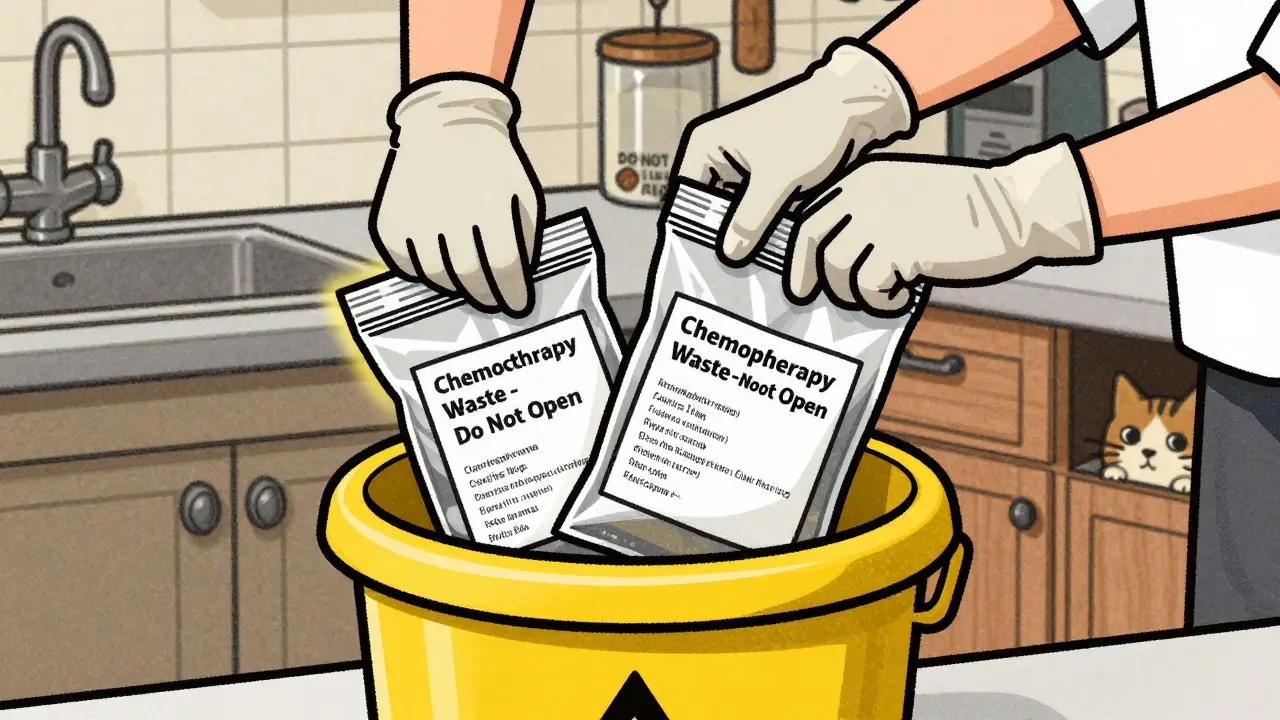
When you or a loved one is receiving chemotherapy at home, the focus is usually on treatment, side effects, and recovery. But one critical part of that process is often overlooked: how to safely dispose of chemotherapy medication. Unlike regular pills or painkillers, chemotherapy drugs are powerful toxins designed to kill fast-growing cells - including cancer. That same power makes them dangerous to anyone else who comes into contact with them, even after they’ve been used. Improper disposal can put children, pets, waste workers, and the environment at risk. This isn’t just about following rules - it’s about preventing real harm.
Why Chemotherapy Waste Is Different
Most medications can be thrown in the trash after mixing with coffee grounds or cat litter. That’s not safe for chemotherapy drugs. These are cytotoxic agents, meaning they damage DNA. Even tiny amounts left in urine, sweat, or vomit can cause harm. The American Cancer Society says active chemotherapy compounds can stay in bodily fluids for up to 72 hours after treatment. That means every glove, bottle, syringe, or pad used during or after treatment is contaminated. The EPA found detectable levels of cyclophosphamide - a common chemo drug - in 67% of U.S. waterways. That’s not from hospitals. It’s from homes. Flushing these drugs down the toilet or sink is illegal under EPA rules and contributes to long-term environmental damage. Even if your doctor didn’t warn you, the law is clear: never flush chemotherapy medication.What You Need to Dispose of Chemotherapy Safely
You don’t need fancy equipment, but you do need the right materials. Most oncology clinics provide these to patients starting home treatment. If you didn’t get them, ask your nurse. Here’s what you’ll need:- Disposable nitrile gloves - at least 0.07mm thick. Regular latex gloves won’t protect you.
- Two leak-proof plastic bags - each at least 1.5 mil thick. These aren’t grocery bags. They’re specially made for hazardous waste.
- A yellow hazardous waste container - often provided by your clinic. This is for solid items like used pads, bottles, or empty vials.
- Dedicated cleaning supplies - wipes, cloths, and spray bottles kept only for chemo cleanup. Never use household items.
Don’t skip the gloves. Even a quick touch can transfer enough residue to cause skin irritation or long-term health issues. A 2021 safety study from Mayo Clinic showed that proper double-bagging reduces exposure risk by 92% compared to single-bag methods.
How to Dispose of Different Types of Chemotherapy
Not all chemotherapy is the same. How you handle it depends on the form.Oral Pills and Capsules
Never crush, break, or chew chemo pills. Even a small amount of dust can be dangerous. After taking your dose, place the empty container directly into the inner plastic bag. If you have leftover pills, keep them sealed in their original bottle. Do not mix them with other medications. Put the bottle into the inner bag, then seal it.Liquid Chemotherapy
Liquid doses - whether oral or IV - need special care. Pour any unused liquid into a sealed container, then absorb it with an inert material like paper towels or cat litter. Seal that inside the inner bag. Never pour liquid chemo down the drain. If you’re using an IV bag or syringe, place the entire unit - including tubing and needle - into the inner bag. Do not reuse or recycle.Transdermal Patches
These are sticky patches that release drugs through the skin. After removing one, fold it so the sticky side sticks to itself. Place it in the inner bag. Even used patches still contain active drug. A 2022 study found that patches left on the floor or in regular trash were still releasing detectable levels of medication for days.Contaminated Items
Everything touched during treatment goes into the inner bag: gloves, wipes, tissues, diapers, pads, even clothing soaked with sweat or vomit. If you’re unsure whether something is contaminated, assume it is. Seal the inner bag tightly with a zip-tie or heat seal. Then place it into the second bag. Seal that one too. Label both bags clearly: “Chemotherapy Waste - Do Not Open.”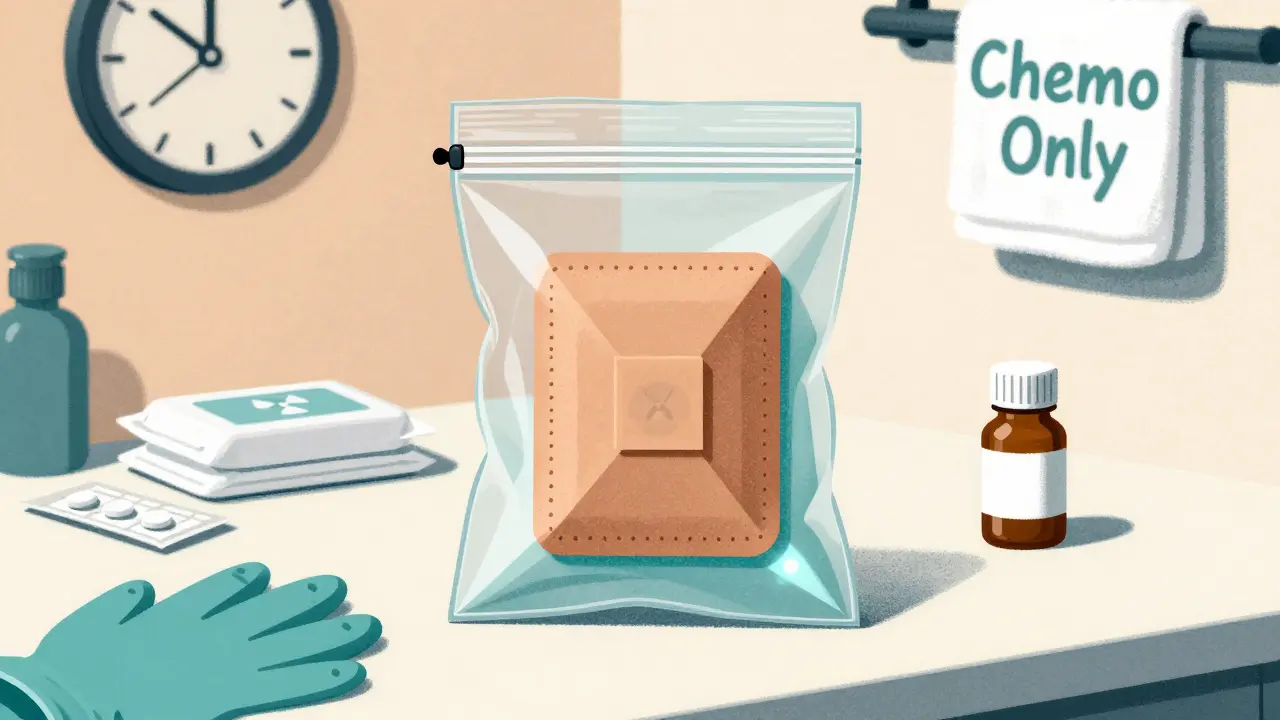
How Long to Keep Taking Precautions
The danger doesn’t disappear after you take your last dose. Your body continues to eliminate active drugs for 48 to 72 hours. During this time:- Use separate bathroom towels.
- Flush the toilet twice after each use.
- Wash your hands thoroughly after using the bathroom.
- Keep children and pets away from the bathroom and laundry area.
- Wash contaminated clothing separately in hot water with detergent.
Dr. Michael Johnson, lead author of the 2022 Cancer Institute of New Jersey guidelines, says: “The 48-hour precaution period is non-negotiable.” Skipping these steps puts others at risk.
What You Shouldn’t Do
There are common myths about chemo disposal that can be deadly:- Don’t flush it. Even if the bottle says “flush if no take-back program,” that does NOT apply to chemotherapy. The FDA explicitly says chemo drugs are never safe to flush.
- Don’t use MedDrop kiosks or Deterra systems. These are designed for regular medications. Less than 40% of MedDrop locations accept chemo, and Deterra’s own website says it’s not approved for hazardous cancer drugs.
- Don’t put it in regular recycling or trash. Waste workers aren’t trained to handle these materials. A 2022 Stericycle report found 41% of patients improperly dispose of chemo - far higher than the 29% who mishandle regular drugs.
- Don’t give leftover pills to someone else. Even if they have cancer, the dosage is tailored to you. Sharing chemo is dangerous and illegal.
What to Do With Leftover Medication
If you have unused chemo, don’t store it. Don’t save it “just in case.” These drugs degrade over time and become unpredictable. Contact your oncology team. Many clinics offer mail-back envelopes specifically for unused chemotherapy. Only 28% of U.S. pharmacies offer this service, so ask yours. If your clinic doesn’t provide one, call the American Cancer Society - they can help you find a certified disposal program in your area.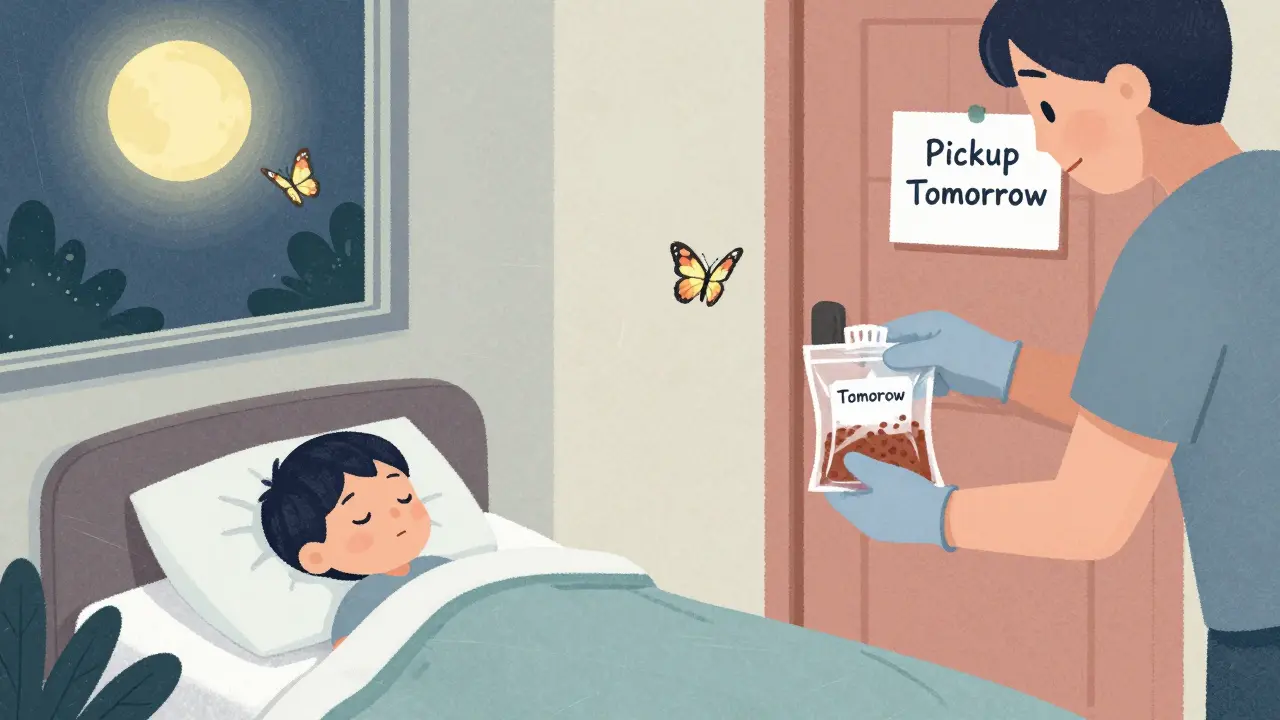
What Happens After You Seal the Bag
Once you’ve double-bagged everything, store it in a cool, dry place - away from children, pets, and food. Your oncology team should tell you how long to keep it before pickup. Some clinics send a courier every few weeks. Others arrange for pickup through a licensed hazardous waste company. If you’re unsure, call your nurse. They’ll know your local protocol.Don’t wait for someone to come. If you’re not given instructions, ask. The average patient needs 3-4 training sessions to get this right. CancerCare’s 2022 survey found that 68% of patients needed multiple reminders before they felt confident.
Cost and Accessibility
The cost of disposal supplies is usually covered by your treatment provider. But if you’re paying out of pocket, expect to spend about $15.75 per month on replacement gloves, bags, and wipes. Some clinics provide monthly kits. Others require you to order them. If you’re struggling to get supplies, reach out to your social worker. Many hospitals have patient assistance programs.Right now, only 19 U.S. states have specific laws for home chemotherapy disposal. Federal rules are still being debated. The Cancer Drug Disposal Act of 2021 is under review - it could make standardized disposal mandatory nationwide. Until then, you’re responsible for following the safest practices.
Final Reminder: Your Safety Is Everyone’s Responsibility
You didn’t ask for this burden. But you’re doing something important - protecting your family, your community, and the environment. Every sealed bag you leave at the curb is a step toward safer cancer care. Don’t feel guilty for asking questions. Don’t assume someone else will handle it. If your nurse didn’t explain it clearly, go back and ask again. Write it down. Show it to a family member. Make sure everyone in the house knows what to do.Chemotherapy saves lives. But it doesn’t disappear quietly. It takes careful, consistent action to keep everyone safe. You’re not just a patient. You’re a protector.
Can I flush chemotherapy drugs down the toilet?
No. Flushing chemotherapy drugs is strictly prohibited by the Environmental Protection Agency (EPA) and the FDA. Even if a medication is on the FDA’s flush list for regular drugs, chemotherapy agents are never included. Flushing contaminates water systems and poses long-term environmental risks. Always use double-bagging and follow your oncology team’s disposal instructions.
Can I use a MedDrop kiosk for chemo waste?
Most MedDrop kiosks do not accept chemotherapy waste. While they accept about 98% of regular medications, only 37% of chemotherapy drugs are eligible for collection through these kiosks. Always check with your clinic or pharmacist before using one. If in doubt, use the double-bagging method provided by your oncology team.
How long should I wear gloves when handling chemo waste?
Wear disposable nitrile gloves every time you handle chemotherapy medication, empty containers, used syringes, or any item that came into contact with bodily fluids - including urine, vomit, or sweat. This includes the 48 to 72 hours after treatment, when active drugs may still be present. Change gloves if they tear or become contaminated.
What if I accidentally spill chemotherapy liquid?
Put on gloves, a gown, and a face shield if available. Use absorbent pads or paper towels to soak up the spill. Place all cleanup materials into a leak-proof plastic bag. Do not use household cleaners. After cleanup, wash the area with soap and water. Call your oncology team for further instructions. Never use a vacuum or mop on chemo spills - they can spread contamination.
Can I recycle empty chemo bottles?
No. Empty chemo bottles still contain trace amounts of hazardous drug residue. Even if they look clean, they must be treated as hazardous waste. Place them in the inner leak-proof bag, then into the second bag. Do not place them in recycling bins. Recycling facilities are not equipped to handle cytotoxic materials.


Craig Staszak
February 12, 2026 AT 18:47Double-bagging isn't optional. It's the difference between your dog living and ending up at the vet with organ failure. I've seen it.
Skilken Awe
February 12, 2026 AT 18:55Meanwhile, the real hazard is the 47% of patients who don't even know they're supposed to wear gloves. You don't need a yellow container. You need a damn education system that doesn't assume everyone has a PhD in oncology.
andres az
February 14, 2026 AT 01:03And why are we still using plastic bags? That's just trading one toxin for another. What if the bags leach into groundwater? Did they test that? No. Because profit > planet.
Reggie McIntyre
February 15, 2026 AT 01:02Now we label the bags like they’re nuclear waste. And honestly? That’s not an exaggeration. This stuff is silent. It doesn’t smell. It doesn’t glow. But it remembers.
Ojus Save
February 16, 2026 AT 14:18Jack Havard
February 17, 2026 AT 19:40Also - who pays for these yellow containers? The patient? That’s a $200/year hidden cost. No one talks about that.
Jim Johnson
February 19, 2026 AT 12:41They didn’t even wear gloves when they moved the box. The wife had a rash on her hands for three weeks. It was vincristine residue. I wish I could’ve given them this guide before it got to that point.
Brad Ralph
February 20, 2026 AT 15:24Every sealed bag is a quiet act of rebellion against neglect.
Suzette Smith
February 20, 2026 AT 19:27Stephon Devereux
February 22, 2026 AT 09:39That’s not healthcare. That’s survival.
athmaja biju
February 23, 2026 AT 00:03Robert Petersen
February 23, 2026 AT 02:28Ernie Simsek
February 24, 2026 AT 07:48alex clo
February 25, 2026 AT 03:45