SSRI Hyponatremia Risk Assessment Tool
This tool assesses your risk of hyponatremia (low sodium) when starting SSRIs. Hyponatremia can cause confusion, dizziness, and falls. Answer the questions below to see your risk level.
Risk Assessment
Every year, thousands of older adults start taking SSRIs to manage depression or anxiety. These medications work well for many, but they come with hidden dangers-especially for people over 65. Two of the most serious risks? Hyponatremia and falls. Both can turn a simple prescription into a life-altering event. And the scary part? Many of these cases are preventable.
What Is Hyponatremia, and Why Does It Happen with SSRIs?
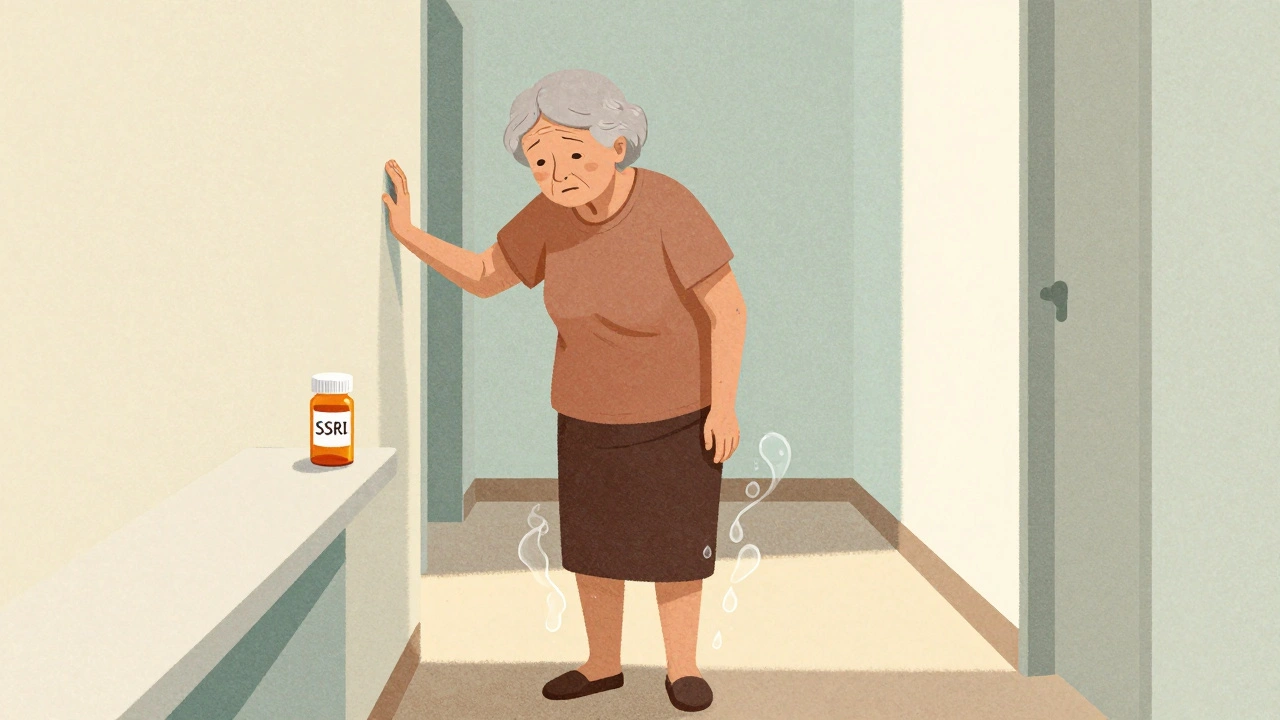
Hyponatremia means your blood sodium level is too low-below 135 mmol/L. Sodium helps control fluid balance in your body. When it drops, water builds up in your cells, including brain cells. In older adults, this can cause confusion, dizziness, weakness, and loss of balance. All of these make falls more likely. SSRIs trigger hyponatremia by causing something called SIADH-Syndrome of Inappropriate Antidiuretic Hormone Secretion. Normally, your body releases just enough antidiuretic hormone (ADH) to keep fluids balanced. SSRIs overstimulate this system. Your kidneys hold onto too much water, diluting the sodium in your blood. It’s not about drinking too much water. It’s about your body holding onto water when it shouldn’t. This isn’t rare. About 6 out of every 100 older adults taking SSRIs develop hyponatremia. For some, it’s mild. For others, it’s dangerous. The risk spikes in the first two to four weeks after starting the drug or increasing the dose. That’s when you need to be most alert.Who’s Most at Risk?
Not everyone on SSRIs gets hyponatremia. But certain people are far more vulnerable:- Women-especially those who are thin or have a BMI under 25
- People already with low sodium levels (below 140 mmol/L)
- Those taking thiazide diuretics (like hydrochlorothiazide) for high blood pressure
- People over 75, especially with kidney changes or reduced body water
How Hyponatremia Leads to Falls
Falls aren’t just about slippery floors or poor lighting. In older adults, they often start inside the body. Hyponatremia causes subtle but dangerous symptoms: mild confusion, feeling lightheaded, unsteady walking, sudden fatigue. These aren’t always obvious. A person might say, “I just feel off today,” or “I don’t feel like walking far.” These are red flags. A 2023 study at Johns Hopkins found that older adults with even mild hyponatremia were 3 times more likely to have a fall in the next 30 days. Many of these falls led to fractures, hospital stays, or long-term disability. The connection isn’t always measured directly-but the pattern is undeniable. And here’s the worst part: hyponatremia can be silent. Up to 40% of people with low sodium have no symptoms at all. That’s why checking blood levels isn’t optional-it’s essential.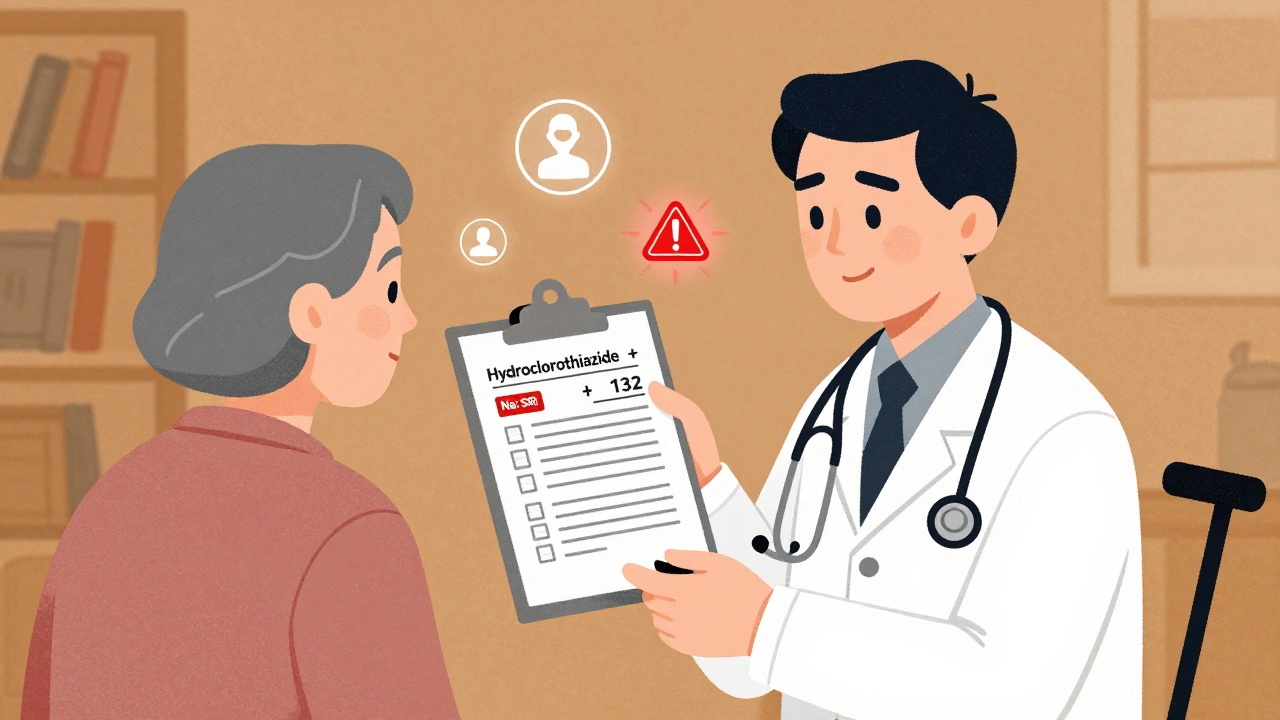
What Doctors Should Do Before and After Prescribing SSRIs
There’s a clear protocol for safer SSRI use in older adults:- Check sodium before starting. A simple blood test should be done before the first pill is taken.
- Test again at 2 weeks. This is the critical window. Most cases develop here.
- Review all medications. Look for thiazide diuretics, NSAIDs, or other drugs that raise risk.
- Choose safer alternatives when possible. Mirtazapine (Remeron) and bupropion (Wellbutrin) have much lower hyponatremia risk. They’re not perfect for everyone, but they’re safer for high-risk patients.
- Teach patients what to watch for. Dizziness, confusion, weakness, or feeling unsteady? Call your doctor. Don’t wait.
The Monitoring Paradox
Here’s where things get confusing. Some experts say routine sodium testing saves lives. Others say it doesn’t reduce hospitalizations. A 2023 study in the Journal of the American Geriatrics Society found that even when doctors checked sodium levels, patients still ended up hospitalized for hyponatremia. Why? Because checking alone isn’t enough. You need a plan. If the sodium is low, what happens next? Does the SSRI get stopped? Is the patient referred? Are fluids restricted? Are alternatives offered? In many clinics, testing happens-but action doesn’t. A survey of 45 geriatricians found that 68% had official monitoring protocols, but only 32% followed them consistently. Staff shortages, lack of reminders, and unclear guidelines all play a role. The solution isn’t just more tests. It’s better systems. Hospitals that used automated alerts in their electronic records-flagging SSRI + thiazide combinations and prompting sodium tests-saw an 18.7% drop in risky prescriptions. That’s real progress.What You Can Do as a Patient or Caregiver
You don’t have to wait for your doctor to act. Be proactive:- Ask: “Is this the safest antidepressant for me, given my other meds and health?”
- Request a sodium test before starting the SSRI and again at 2 weeks.
- Keep a list of all your medications-including over-the-counter pills and supplements-and bring it to every appointment.
- If you feel dizzy, confused, or unsteady after starting the medication, call your doctor. Don’t assume it’s just aging.
- Ask about alternatives like mirtazapine or therapy. Many older adults respond well to talk therapy or behavioral interventions.
What Are the Safer Alternatives?
If SSRIs are too risky, what else works?- Mirtazapine (Remeron): This antidepressant has almost no link to hyponatremia. It can cause drowsiness and weight gain, but for many older adults, the trade-off is worth it.
- Bupropion (Wellbutrin): Doesn’t affect serotonin much, so hyponatremia risk is very low. Good for people who need energy, but not ideal for those with anxiety or seizure history.
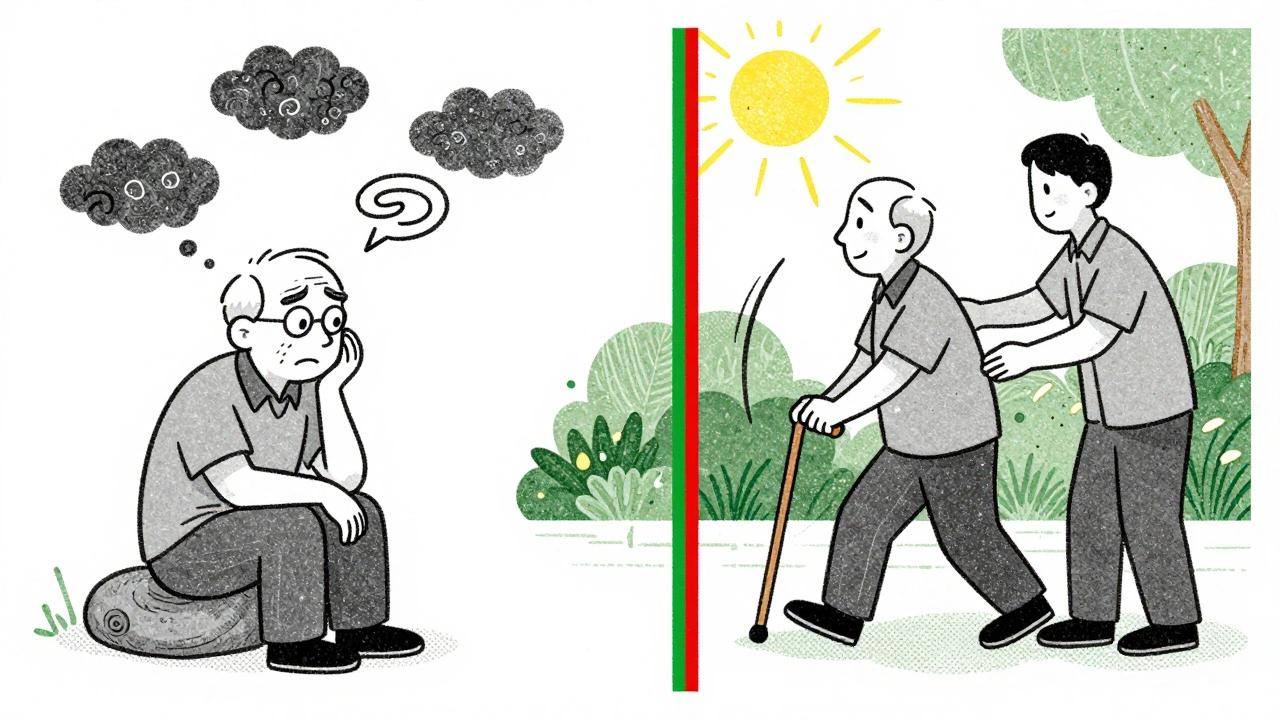
- Psychotherapy: Cognitive behavioral therapy (CBT) is just as effective as SSRIs for mild to moderate depression in older adults. It has zero side effects. The problem? Access. Many don’t have transportation, insurance, or local providers.
- Exercise programs: Regular walking or tai chi improves mood, reduces fall risk, and can ease depression symptoms.



Eddie Bennett
December 10, 2025 AT 12:17Man, I never realized how sneaky SSRIs can be for older folks. My grandma started on Lexapro and within weeks she was stumbling around like she was drunk. We thought it was just aging, turns out her sodium was through the floor. Glad someone’s talking about this.
Paul Dixon
December 12, 2025 AT 11:14Same. My uncle got prescribed Zoloft after losing my aunt, and two weeks later he ended up in the ER. No one warned us. Docs just hand out scripts like candy. This needs to be standard protocol, not luck.
Vivian Amadi
December 14, 2025 AT 06:30Are you kidding me? You’re telling me doctors are still not testing sodium before prescribing SSRIs in 2025? This is malpractice. People are dying because lazy physicians don’t want to do a $15 blood test. Someone should sue every geriatric clinic in America.
Jimmy Kärnfeldt
December 14, 2025 AT 15:15It’s not just about the meds-it’s about how we treat aging. We’ve normalized confusion and wobbliness as ‘just getting older.’ But that’s not aging, that’s a warning sign. If we treated elderly health like we treat car maintenance-regular checkups, fluid levels, warning lights-we’d save so many lives. We just need to care enough to look.
john damon
December 15, 2025 AT 11:45😭 This needs to go viral. My mom’s on Effexor + HCTZ and I had to fight the doctor to get her sodium checked. Turned out it was 128. She’s on mirtazapine now and walks the dog again. 🙏
Monica Evan
December 16, 2025 AT 02:57My mom’s therapist is a lifesaver-she’s been doing CBT for 6 months now and ditched the SSRI entirely. No brain fog no dizziness no falls. But good luck finding a therapist who takes Medicare and isn’t booked for 6 months. We need more funding for mental health in senior centers, stat.
Katherine Liu-Bevan
December 16, 2025 AT 05:56Studies consistently show that sodium testing before and at two weeks reduces hospitalizations by over 40% in high-risk populations. The fact that this isn’t standard care reflects systemic neglect of geriatric patients. It’s not a lack of evidence-it’s a lack of will. Every primary care provider should be required to complete a brief geriatric pharmacology module before prescribing SSRIs.
Lisa Stringfellow
December 16, 2025 AT 14:38So what? People get sick. That’s life. Why are we treating older adults like fragile glass? Maybe they just need to toughen up instead of demanding blood tests and new meds every time they feel a little off.
Kristi Pope
December 18, 2025 AT 02:10I love how this post highlights alternatives like exercise and CBT. My dad started walking with a senior group twice a week and his mood lifted faster than any pill ever did. And he made friends! Sometimes the best medicine isn’t in a bottle-it’s in a park, with a buddy, and a pair of comfy shoes.
Aman deep
December 19, 2025 AT 07:56in india we dont even have access to ssris for most elders, but when they do get them, no one checks sodium at all. my uncle took fluoxetine and got confused, thought he was in 1980s. family thought he was going senile. took 3 months to figure out it was the med. sad.
Sylvia Frenzel
December 21, 2025 AT 05:17This is why we need to stop letting foreigners dictate our healthcare. We’ve got better options here than importing these risky European protocols. Just say no to overtesting and overmedicating our seniors.