Warfarin INR Risk Calculator
INR Risk Assessment Tool
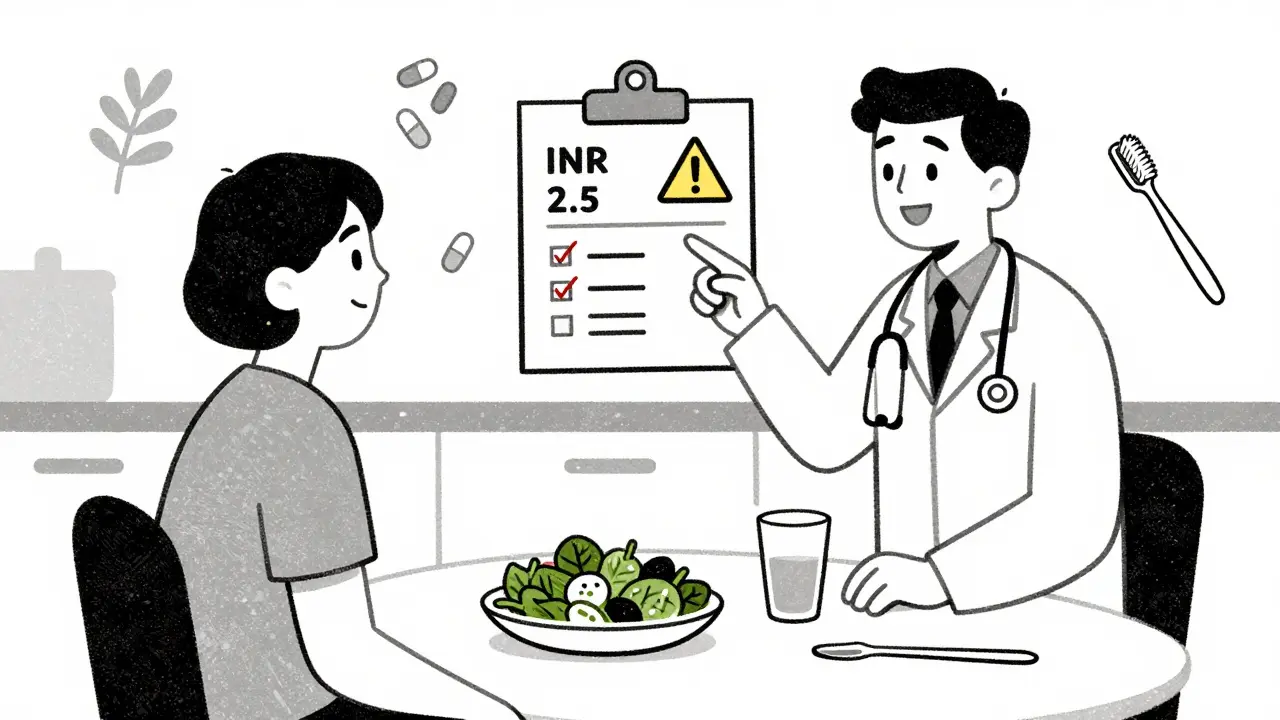
Enter your current INR value to see your bleeding risk level and appropriate actions. The target therapeutic range is typically 2.0 to 3.0.
Warfarin is one of the oldest and most widely used blood thinners in the world. It’s been prescribed for over 70 years to prevent strokes, blood clots, and dangerous blockages in the heart and lungs. But while it works, it comes with serious risks - especially when it’s not managed carefully. If you’re taking warfarin, you need to know the signs of trouble before they become emergencies. This isn’t about scaring you. It’s about giving you the facts so you can stay safe.
What Warfarin Does - and Why It’s Still Used
Warfarin works by blocking vitamin K, which your body needs to make clotting proteins. This slows down blood clotting, which is exactly what you want if you have atrial fibrillation, a mechanical heart valve, or a history of deep vein thrombosis. It’s cheap - often under $10 a month - and it’s reversible. That last part matters. If something goes wrong, doctors can give you vitamin K or special blood products to reverse its effects quickly. That’s why, even with newer drugs available, warfarin is still used for certain patients, especially those with mechanical heart valves.
The Biggest Risk: Bleeding
Bleeding is the number one danger with warfarin. About 1 in 10 people on warfarin will have a major bleeding event each year. That sounds scary, but it’s not random. Most bleeding happens when your INR - the test that measures how long your blood takes to clot - goes too high. The target range for most people is 2.0 to 3.0. If your INR jumps above 4.0, your risk of serious bleeding doubles. At INR 5.0 or higher, it can be five times worse.
Minor bleeding is common and often not dangerous. You might notice:
- Nosebleeds that last more than 5 minutes
- Bleeding gums when brushing your teeth
- Unexplained bruises, especially large ones
- Bloody or dark stools
- Pink, red, or brown urine
These aren’t emergencies - but they are red flags. Call your doctor. Don’t wait. These signs mean your INR might be too high, and your dose may need adjusting.
When Bleeding Becomes an Emergency
Some bleeding events need immediate care. Go to the ER or call 911 if you have:
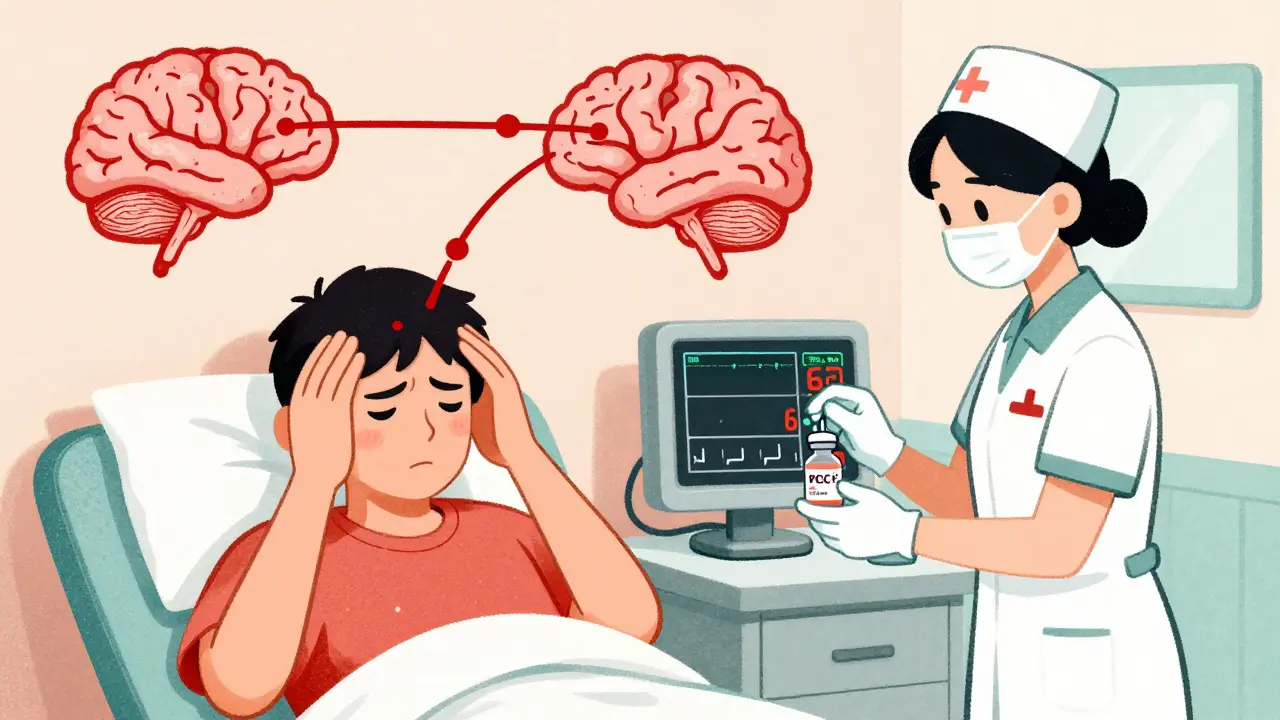
- Headaches that come on suddenly and are severe
- Vomiting blood or material that looks like coffee grounds
- Coughing up blood
- Severe back or abdominal pain
- Weakness, dizziness, or fainting
- Heavy vaginal bleeding outside your period
- Any bleeding that won’t stop after 10 minutes of pressure
These could mean internal bleeding - like in the brain, stomach, or intestines. Intracranial hemorrhage (bleeding in the brain) happens in about 0.2% to 0.5% of warfarin users each year. It’s rare, but deadly if not treated fast. The goal is to reverse the effect of warfarin within 30 to 60 minutes. That’s why knowing your INR and having a plan matters.
Other Side Effects You Might Not Know About
Most people think of bleeding when they hear "warfarin side effects." But there are rare but serious issues too.
Warfarin-induced skin necrosis - This is extremely rare, affecting about 1 in 10,000 people. It usually shows up 3 to 5 days after starting warfarin. You’ll see painful, red or purple patches on your skin, often on the breasts, thighs, or buttocks. It’s linked to a protein C deficiency. If you notice this, stop warfarin and get help immediately.
Purple toe syndrome - This shows up weeks after starting the drug. Your toes turn dark purple, sometimes with pain or ulcers. It’s caused by tiny cholesterol clots breaking loose. It’s not life-threatening, but it’s a sign your body is reacting oddly to the drug.
Calciphylaxis - A very rare condition where calcium builds up in blood vessels, leading to skin ulcers and tissue death. It mostly happens in people with kidney failure. If you have end-stage renal disease and are on warfarin, talk to your doctor about monitoring for this.
Less serious side effects include nausea, bloating, stomach pain, and a weird taste in your mouth. These usually go away as your body adjusts.
Who’s at Highest Risk?
Not everyone on warfarin has the same risk. Some factors make bleeding more likely:
- Age 65 or older - Your body processes warfarin slower.
- History of stomach bleeding - If you’ve had it before, you’re more likely to have it again.
- High blood pressure - Especially if it’s not controlled.
- History of stroke or heart disease - Your blood vessels are already under stress.
- Anemia or cancer - These conditions make bleeding harder to manage.
- Chronic kidney disease - Your body can’t clear the drug as efficiently.
If you have three or more of these, your annual bleeding risk can jump to 20%. That’s why doctors use tools like the HAS-BLED score to help decide if warfarin is still the best choice for you.
How to Stay Safe: INR Monitoring and Daily Habits
The single most important thing you can do is keep your INR in range. Most people need testing every 4 weeks. But if you’re new to warfarin, had a recent dose change, or your INR keeps swinging, you might need weekly tests.
What you eat matters. Vitamin K fights warfarin’s effect. If you eat a big salad one day and almost none the next, your INR will jump around. Aim for consistency - about 60 to 80 micrograms of vitamin K daily. That means eating similar amounts of leafy greens like spinach, kale, or broccoli. Don’t quit them - just keep it steady.
Watch what you take. Over 300 medications and supplements interact with warfarin. Common ones include:
- NSAIDs like ibuprofen or naproxen - these can double your stomach bleeding risk
- Aspirin - even low-dose aspirin increases bleeding
- Antibiotics - especially sulfa drugs and fluoroquinolones
- Herbal supplements - garlic, ginkgo, ginseng, and St. John’s wort all interfere
Always check with your pharmacist or doctor before starting anything new - even an over-the-counter cold medicine.
Protect yourself from injury. Use an electric razor instead of a blade. Use a soft-bristle toothbrush. Avoid contact sports, skiing, or anything with a high risk of falls. Wear slip-resistant shoes. Even a minor bump can turn into a big problem.
What to Do If You Bleed
For minor bleeding - like a small nosebleed or a little gum bleeding - keep pressure on it, stay calm, and call your doctor. Don’t panic. But if you have any of the emergency signs listed above, go to the ER. Tell them you’re on warfarin. Bring your pill bottle and your last INR result if you have it.
In the hospital, they’ll likely:
- Check your INR immediately
- Stop your warfarin
- Give you vitamin K (if bleeding is serious)
- Use a clotting factor product called PCC (prothrombin complex concentrate) for rapid reversal
- Use fresh frozen plasma if PCC isn’t available
There’s no magic antidote like there is for newer blood thinners. But we know how to reverse it - if you act fast.
Should You Switch to a Newer Blood Thinner?
Newer drugs like apixaban, rivaroxaban, and dabigatran are now preferred for many patients. They don’t need INR checks, have fewer food interactions, and carry about 30% less risk of major bleeding. But they’re not for everyone.
Warfarin is still the best option if you have:
- A mechanical heart valve (especially in the mitral position)
- Severe kidney disease (creatinine clearance under 15)
- Need for long-term anticoagulation with a high risk of bleeding and need for reversibility
If you’re new to anticoagulation and don’t have one of these reasons, talk to your doctor about whether a DOAC might be safer for you.
Final Tips: Your Action Plan
If you’re on warfarin, here’s what to do right now:
- Know your current INR and target range - write it down.
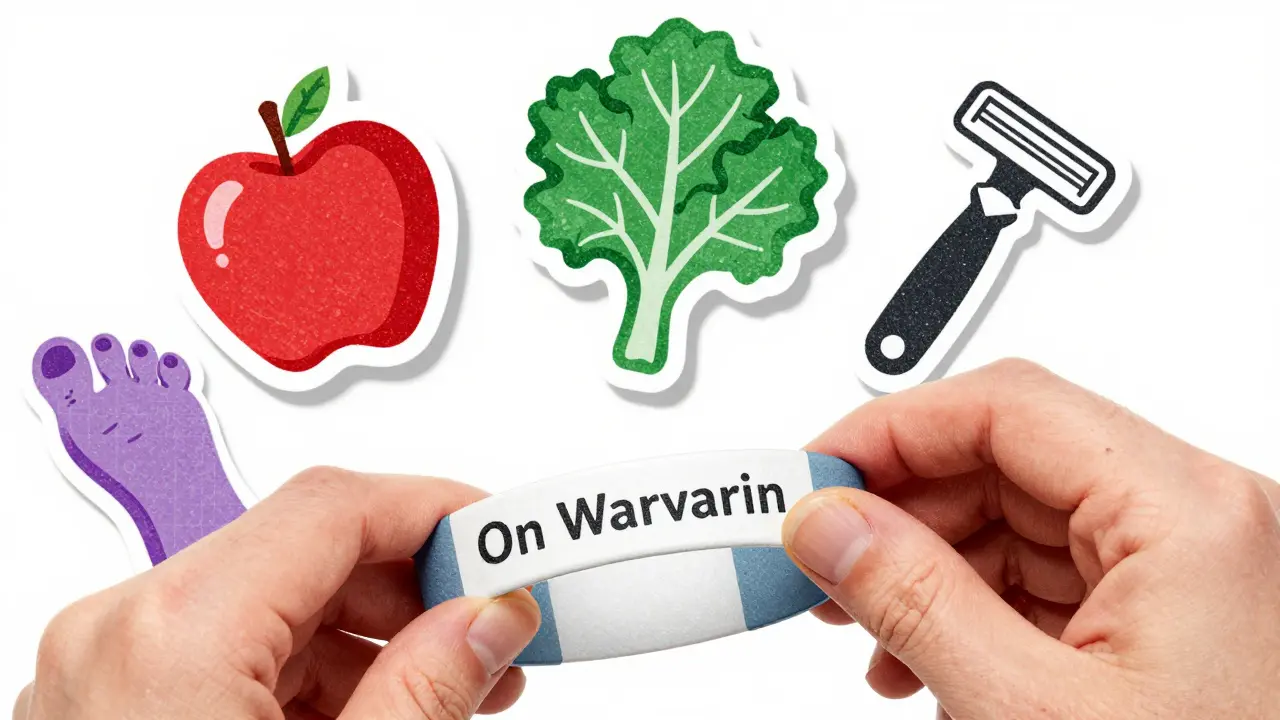
- Carry a medical alert card or wear a bracelet that says "On Warfarin" - the American Heart Association has approved wording.
- Keep your vitamin K intake consistent - no sudden diet changes.
- Review all your medications and supplements with your pharmacist every 3 months.
- Never take NSAIDs or aspirin without approval.
- Get your INR tested on time - don’t skip appointments.
- Know the emergency signs - and act fast.
Warfarin saved lives for decades. But it demands respect. You don’t need to be afraid of it. You need to be informed. Stay consistent. Stay aware. And never ignore the signs.
Can I still eat leafy greens while taking warfarin?
Yes - but keep your intake consistent. Eating a large amount of spinach one week and almost none the next can cause your INR to swing dangerously. Aim for about the same amount every day - roughly 1 cup of cooked greens. Don’t quit them, just don’t change your habits suddenly.
What should I do if I miss a dose of warfarin?
If you miss a dose and remember within a few hours, take it right away. If it’s later in the day, skip it and take your next dose at the regular time. Never double up. If you miss more than one dose, contact your doctor. Missing doses can make your INR drop too low, increasing your risk of clots.
Can I drink alcohol while on warfarin?
Moderate alcohol use is usually okay - one drink a day for women, two for men. But heavy drinking can raise your bleeding risk and interfere with how your liver processes warfarin. If you drink regularly, tell your doctor. Sudden changes in alcohol intake can also affect your INR.
Do I need to stop warfarin before dental work?
For most routine dental procedures - cleanings, fillings, simple extractions - you should keep taking warfarin. Your dentist can use local measures like gauze, sutures, or hemostatic agents to control bleeding. Only complex surgeries or multiple extractions might require temporary stopping, and even then, it’s decided case by case. Never stop on your own.
Is there a way to test my INR at home?
Yes. FDA-approved devices like the CoaguChek Pro II let you test your INR at home with a finger prick. Studies show it’s as accurate as lab tests. If your INR is unstable or you have trouble getting to the clinic, ask your doctor about home testing. It can improve your time in range by 15-20% and reduce emergency visits.


phyllis bourassa
March 5, 2026 AT 15:03Okay but like... why are we still using this 70-year-old drug when we have DOACs that don't require blood draws? I get the reversibility thing, but honestly? My aunt bled out from a nosebleed on warfarin and it took 3 hours to get PCC. No thanks. 🙃
Tim Hnatko
March 6, 2026 AT 07:23I've been on warfarin for 8 years. My INR's been stable at 2.5 for ages. The key? Same amount of kale every Monday, Wednesday, Friday. No surprises. And I never touch ibuprofen. Ever. It's not scary if you treat it like a ritual, not a chore.
Andrew Poulin
March 8, 2026 AT 03:47Stop overcomplicating this. INR in range = safe. Miss a dose = risk. Eat greens = fine as long as you dont flip between spinach and lettuce. No magic. Just discipline. Get tested. Don't be lazy.
Vikas Verma
March 9, 2026 AT 05:54Warfarin remains a cornerstone in anticoagulation therapy for patients with mechanical valvular heart disease due to its proven efficacy and reversibility profile. Emerging DOACs, while advantageous in terms of pharmacokinetics, lack robust data in high-risk subpopulations. Consistent INR monitoring remains non-negotiable for therapeutic success.
Sean Callahan
March 10, 2026 AT 06:20i just started warfarin last month and i keep forgetting to take it. i think i missed 3 days last week. my doc said dont double up but i dont even know if im bleeding inside or what. help?
Ferdinand Aton
March 10, 2026 AT 10:56Everyone's scared of warfarin. But you know what's scarier? Not taking it when you have a mechanical valve. I had mine replaced in 2012. I'd rather bleed than clot. Your fear is just fear. Mine is survival.
William Minks
March 11, 2026 AT 10:14My grandma's on warfarin and she tests at home now. She says it's like checking her blood sugar. 🤗 She even made a little chart with stickers. I'm so proud of her. Home testing changed her life. 💪
Jeff Mirisola
March 11, 2026 AT 13:27People act like warfarin is some ancient curse. It's not. It's a tool. Like a hammer. You don't blame the hammer for a bad nail job. You blame the person who didn't measure twice. Stay consistent. Get your numbers. You're not a victim. You're managing.
Susan Purney Mark
March 11, 2026 AT 21:45I'm a nurse and I've seen so many patients panic about bruising. A little purple spot? Totally normal. A sudden headache? Go to the ER. Your body's giving you signals. Listen. And don't feel guilty for needing help. You're doing great just by reading this. 💛
amber carrillo
March 12, 2026 AT 04:09Warfarin saved my life after my PE. But I had to learn to live with it. No more spontaneous sushi nights. No more random NSAIDs. I carry my INR card in my wallet like a credit card. It's not glamorous. But it works.
Aaron Pace
March 13, 2026 AT 20:30Anyone else get purple toes? Mine looked like I stepped in a bag of grapes. My doctor said it was fine. I still don't trust it. I'm switching to Eliquis next month. No more weird toes. 🤷♂️
Joey Pearson
March 14, 2026 AT 18:05Just got my INR back: 4.8. Called my doc. They told me to skip my dose and come in tomorrow. No panic. Just action. You got this. 💪
Roland Silber
March 15, 2026 AT 20:52What about the long-term cognitive effects? I read a study from 2021 suggesting chronic warfarin use might correlate with microbleeds in the brain over time. Not enough to scare people off, but worth monitoring. Especially if you're over 70. Your brain's not invincible.
Patrick Jackson
March 17, 2026 AT 05:14Warfarin is the ghost of medicine past haunting our present. It's clunky. It's inconvenient. It demands sacrifice. But sometimes... sometimes the old ways hold the deepest wisdom. The fact that we can reverse it? That's not a flaw. That's a miracle. I'm not scared of warfarin. I'm grateful it exists. 🌅