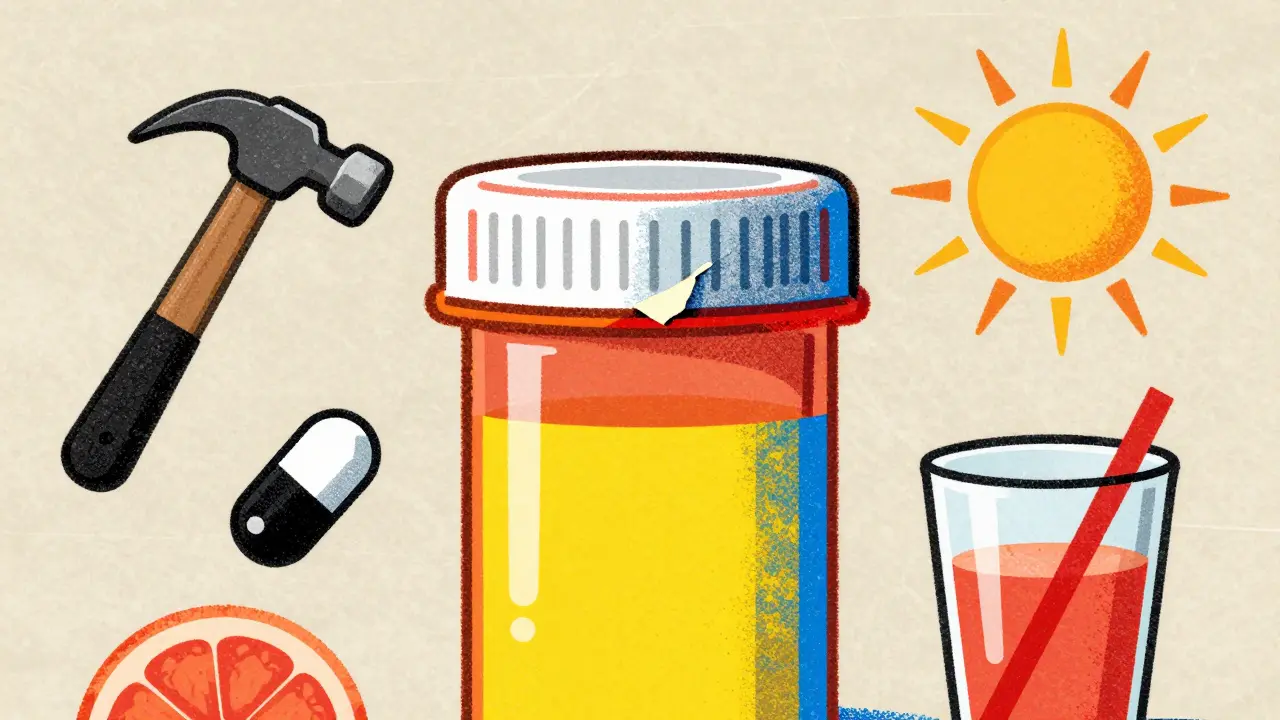
Every time you pick up a prescription, there’s a small sticker on the bottle that could save your life. But most people barely glance at it. These aren’t just random notes from the pharmacist-they’re official safety alerts, backed by federal law, designed to stop dangerous mistakes before they happen. And yet, nearly half of patients misunderstand what they say.
What Those Stickers Are Really For
Those tiny labels on your pill bottle aren’t decoration. They’re legal requirements. The U.S. Food and Drug Administration (FDA) mandates every prescription container carry warnings that prevent injury. These aren’t suggestions. They’re rules written in response to real harm-like the 1.3 million injuries and 7,000 deaths each year from medication errors, according to the Institute of Medicine. The most serious warnings are called Black Box Warnings. You’ll find them printed in bold, boxed text at the top of your prescription’s official paperwork. They’re used only when a drug has been linked to death or life-threatening side effects. About 40% of new drugs approved between 2013 and 2017 carried one. If your medication has this warning, it doesn’t mean you can’t take it-it means you need to understand exactly why and how.Color Matters More Than You Think
You’ve probably noticed the colors: red, yellow, blue, white. They’re not chosen randomly. A study in U.S. Pharmacist found that 42% of patients automatically associate red with danger, yellow with caution, and lighter colors like blue or green with general advice. A red sticker saying “May cause drowsiness” is meant to grab attention. A yellow one saying “Take with food” is a reminder, not an emergency. But here’s the problem: many people ignore the colors. They read only the words. And that’s where things go wrong. One patient thought “Do not crush” on a blue label meant it was safe to crush-because blue didn’t feel like a warning. Another ignored a yellow sticker saying “Avoid alcohol” because they thought it was just a recommendation. Both ended up in the ER.Common Warnings, Common Mistakes
Some phrases sound simple-but they’re often misunderstood.- “Take on empty stomach” means at least one hour before or two hours after eating. Many people think “before breakfast” counts, but if they ate toast at 7 a.m. and took their pill at 8 a.m., it’s not empty.
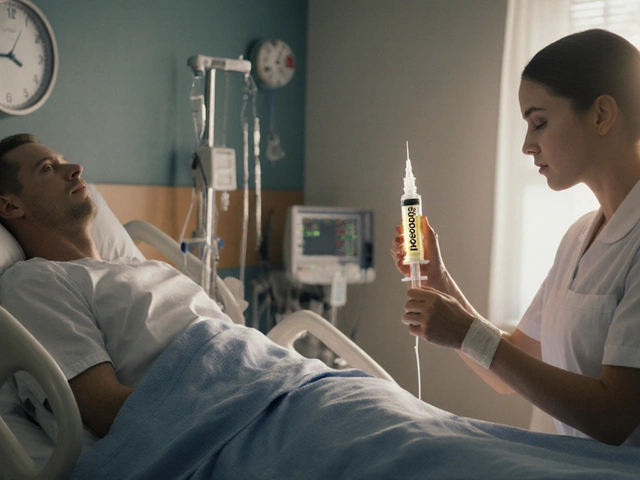
- “Do not chew or crush, swallow whole” is misread by about 30% of patients as “chew it up so it dissolves.” But crushing certain pills can release the full dose at once-causing overdose.
- “Refrigerate” doesn’t mean “keep cold if you can.” It means 2°C to 8°C (36°F to 46°F). If you leave it on the counter, the medicine can break down and become useless-or even toxic.
- “Avoid sunlight” isn’t just about sunburn. Some drugs make your skin react badly to UV light, causing severe burns or long-term damage.
Why You’re Not Getting It Right
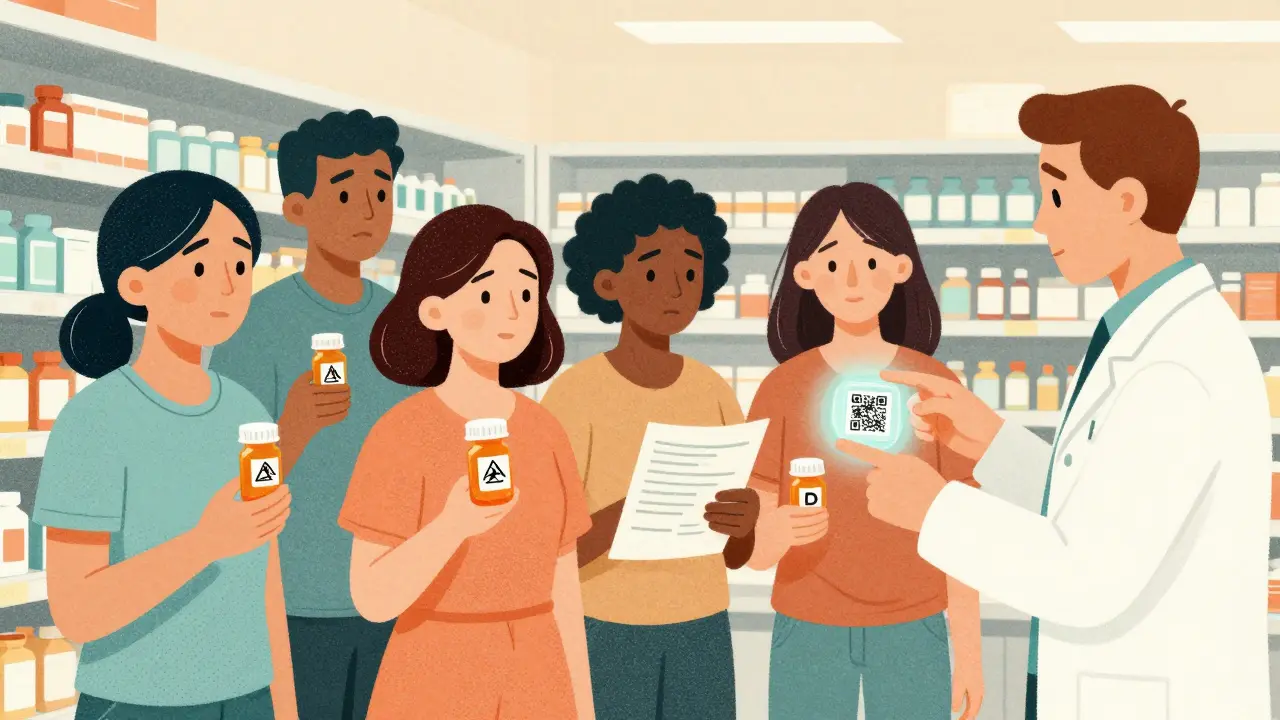
The FDA admits: current labels aren’t working for most people. Only 55% of patients correctly understand standard warnings. That number jumps to 89% when labels are simplified-like the ones tested at Kaiser Permanente. Why the gap? Three big reasons:- Health literacy. About 80 million U.S. adults struggle with basic health terms. Words like “contraindication” or “adverse reaction” might as well be Latin.
- Speed. Observational studies show patients spend just 7 to 12 seconds looking at their label. That’s not enough to read, process, and remember.
- Disposability. A 2020 study found 68% of patients toss the printed Patient Prescribing Information sheet. That’s where the full details live-details the sticker only summarizes.
What Works Better
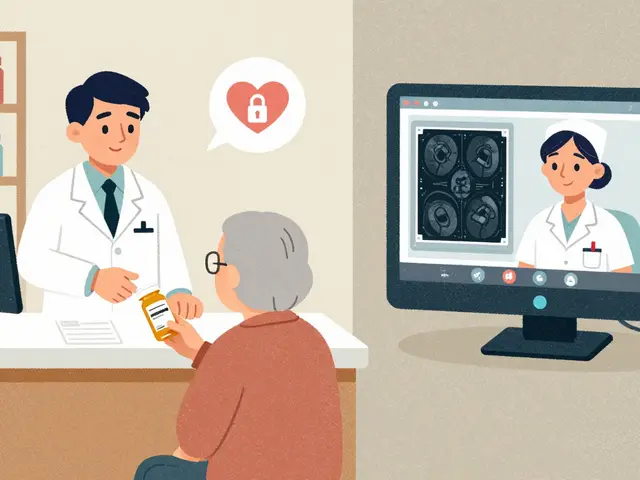
The best warnings don’t just tell you-they show you. The FDA approved a new set of universal symbols in February 2023. One icon-a pill with a slash through it and a hammer-means “Do not crush.” In testing, misinterpretation dropped from 31% to just 8%. Verbal explanations paired with visuals work best. A pharmacist saying, “This pill can make you dizzy-don’t drive until you know how it affects you,” while pointing to a red sticker, boosts understanding to 92%. Text-only? Only 78% get it right. Pharmacies like Walgreens now offer a “Medication Safety Check” where staff walk you through each warning. Patients there have 92% comprehension. Independent pharmacies without this service? Only 68%.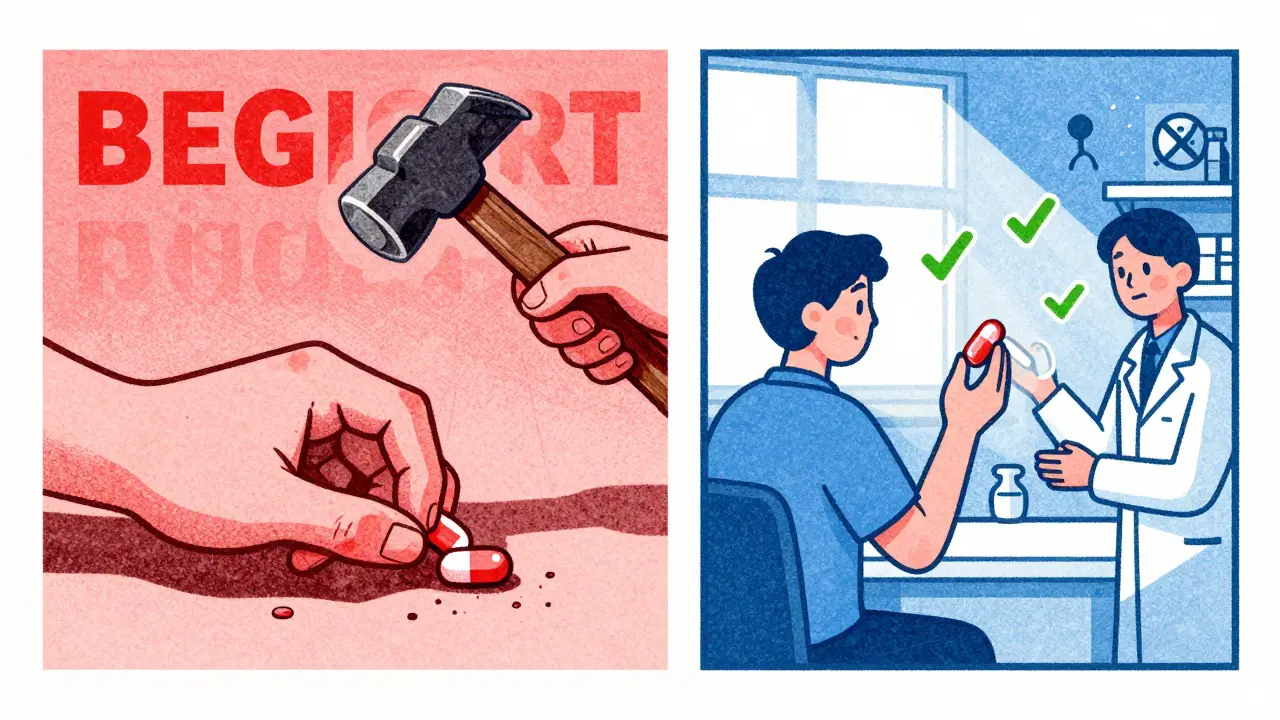
What’s Changing-And When
The system is finally waking up. In 2022, the FDA launched the “Facts Label” initiative, requiring simplified patient instructions for 20 high-risk drugs. By June 2025, every prescription for these must come with clear, plain-language warnings. In 2024, 250 hospitals are testing QR codes on labels. Scan it, and you get a 60-second video explaining the warning in simple terms. Mayo Clinic trials showed this improves understanding by over 50%. By 2026, 89% of pharmacy directors expect all warning labels to follow standardized, patient-tested designs. The goal? Cut emergency visits from medication errors by 120,000 a year-and save $1.4 billion.What You Should Do Right Now
Don’t wait for the system to fix itself. Here’s what to do every time you get a new prescription:- Check the pill. Does the shape, color, and imprint match what’s on the label? If not, ask. Counterfeit or misfilled pills happen.
- Look at the color. Red = danger. Yellow = caution. Don’t skip these.
- Ask for the “teach-back.” Say: “Can you tell me in your own words what this sticker means?” If you can’t explain it, you don’t understand it.
- Keep the paper. The Patient Prescribing Information sheet has the full details. Store it with your other meds.
- Use the pharmacy. If you’re confused, call. Pharmacists are trained to explain this stuff. They won’t mind.
When to Worry
If you’ve ever ignored a warning because “it didn’t seem important,” you’re not alone. But here’s the truth: the most dangerous mistakes come from the warnings you think are minor. A patient skipped “avoid sunlight” on a skin cream. Got a severe burn. Needed skin grafts. Another took a painkiller with alcohol, thinking “I’ve done it before.” Had a liver bleed. These aren’t rare. They’re predictable. And they’re preventable. The sticker isn’t there to scare you. It’s there to keep you safe. The system isn’t perfect-but you can still be the final line of defense.What does a black box warning mean on a prescription label?
A black box warning is the strongest safety alert the FDA requires. It appears at the top of the prescribing information and means the drug has been linked to serious, life-threatening side effects-like organ failure, severe allergic reactions, or death. It doesn’t mean you can’t take the medicine, but you must understand the risks and follow all instructions exactly.
Why do some warning stickers say "take on empty stomach"?
Some medications are absorbed better-or only work properly-when there’s no food in your stomach. Eating can block absorption or cause dangerous spikes in drug levels. "Take on empty stomach" means at least one hour before or two hours after a meal. Even a small snack can interfere.
Can I ignore a warning if I’ve taken the medicine before without problems?
No. Your body changes over time. New health conditions, other medications, or even changes in diet can turn a safe interaction into a dangerous one. For example, grapefruit juice might have been fine last year-but now you’re on a new blood pressure drug. What was safe before may not be now.
Are color-coded warning stickers standardized across all pharmacies?
Not officially. Red usually means danger and yellow means caution, but there’s no federal rule forcing all pharmacies to use the same colors. However, most major chains follow these conventions because patients expect them. Always assume red = serious, yellow = important, and white/blue = general advice.
What should I do if I don’t understand a warning?
Ask. Call the pharmacy. Ask your doctor. Use the “teach-back” method: say, “Can you explain this to me like I’m 12?” Don’t guess. Misunderstanding a warning can lead to hospitalization or worse. There’s no shame in asking-pharmacists are trained to help you understand.
Is it safe to throw away the printed medication guide?
No. The sticker on the bottle is a summary. The printed guide has full details: how the drug works, what to avoid, signs of serious side effects, and what to do in an emergency. Studies show 68% of patients throw these away-and then can’t find the info when they need it. Keep it in a folder with your other meds.


Rob Sims
January 21, 2026 AT 16:46Let me get this straight - we’re trusting our lives to a sticker that looks like it was printed on a 1998 inkjet? The FDA mandates these warnings but doesn’t standardize the colors? That’s not safety, that’s Russian roulette with a pill bottle. And don’t even get me started on people tossing the pamphlet like it’s a fast-food receipt. You wouldn’t ignore the manual for your toaster, but you’ll ignore the one that tells you not to die from your blood pressure med? Pathetic.
Patrick Roth
January 23, 2026 AT 08:09Actually, the color thing is a myth. I’ve seen blue stickers that said ‘DO NOT MIX WITH ALCOHOL’ in bold red letters underneath. The whole system’s a mess because pharmacies use whatever template their software defaults to. Also, ‘black box warning’ sounds scary, but half the time it’s just ‘may cause nausea in 3% of users.’ The FDA’s just marketing fear to justify their budget. Real danger? The fact that pharmacists are overworked and read you the label in 12 seconds while scanning your next prescription.
Kenji Gaerlan
January 25, 2026 AT 06:15fr tho why do they even put warnings on the bottle if no one reads em? i mean i just look at the pill and go ‘yep thats the one’ and swallow. grapefruit juice? bro i like grapefruit juice. i dont care if its gonna make my heart do the cha-cha. also why is everyone acting like this is new info? ive been ignoring these since 2012 and im still alive. lol
Tatiana Bandurina
January 26, 2026 AT 20:33It’s not just about comprehension - it’s about corporate liability. The real reason these labels exist is so the drug companies can say, ‘We warned you.’ They don’t care if you understand. They care if they can dodge a lawsuit. That’s why the language is so convoluted. That’s why the colors are inconsistent. That’s why the QR code links to a 12-page PDF with 10-point font. This isn’t patient safety. It’s legal armor wrapped in a sticker.
Philip House
January 28, 2026 AT 20:27Look, I get it - people are lazy. But this isn’t a failure of literacy. It’s a failure of American culture. We’ve turned everything into a commodity, including our own health. You want to know why you don’t understand the label? Because you’ve been conditioned to believe that if it’s complicated, someone else should fix it. The pharmacist? The doctor? The app? No. You’re the last line of defense. And if you don’t want to be responsible for your own body, then stop complaining when you end up in the ER. This isn’t rocket science. It’s basic accountability.
Ryan Riesterer
January 30, 2026 AT 13:19Empirical data from Kaiser Permanente’s simplified labeling trials show a 34-point increase in correct interpretation of warning semantics. The key variable was syntactic simplification and lexical reduction - replacing ‘contraindicated’ with ‘don’t do this’ and eliminating passive voice. The FDA’s new ‘Facts Label’ initiative aligns with cognitive load theory: under 12 seconds of exposure, comprehension peaks when lexical density is below 0.6. QR codes reduce misinterpretation by 51% because they bypass textual processing entirely - leveraging multimodal encoding (audio + visual). This isn’t opinion. It’s applied psycholinguistics.
Akriti Jain
January 31, 2026 AT 02:49THEY’RE HIDING SOMETHING 🤔💊
Why do they use colors? Why do they change the wording? Why do the QR codes only work in certain states? I’ve seen people get sick after taking meds with the same warning… but different colors. Coincidence? I think not. Big Pharma is using these stickers to track who’s reading what. Your phone scans the QR, your location is logged, your habits are sold. They don’t want you to understand - they want you to scan. That’s how they know who’s compliant. Who’s not. Who’s going to die next. 🕵️♀️👁️
And don’t tell me it’s not true - remember when the flu shot had that ‘do not use if pregnant’ sticker… but the same batch was given to 3 pregnant women in my town? 🤷♀️
Mike P
February 1, 2026 AT 07:03Man, I used to be one of those guys who just shrugged at the sticker. Then my cousin ended up in the ICU because he crushed his extended-release morphine pill because it ‘felt like it should be chewed.’ He’s fine now, but he lost two years of his life. That’s the thing - you think it’s not a big deal until it’s your kid, your mom, your best friend. And yeah, the system sucks. But the answer isn’t to rage against the machine - it’s to ask questions. Call the pharmacy. Read the damn paper. If you don’t know what ‘refrigerate’ means, look it up. It’s not that hard. We’re not stupid. We’re just distracted. Stop being lazy. Your life’s on the line.
Jasmine Bryant
February 1, 2026 AT 13:40Just wanted to add - if you're on statins or blood thinners, the grapefruit warning is NON-NEGOTIABLE. I had a friend who thought ‘one glass a week’ was fine. Turns out, even one glass every 72 hours can spike levels enough to cause rhabdomyolysis. Also, the ‘take on empty stomach’ thing? If you take it with coffee or milk, it can totally block absorption. I used to take mine with breakfast and wonder why it wasn’t working. Now I set a phone alarm for 7am, drink water, wait an hour, then eat. Small changes, huge difference. And yes, I keep the paper. In a folder. With the receipt. 📂
Liberty C
February 2, 2026 AT 01:19How tragic that we’ve reduced the sacred act of healing to a bureaucratic sticker war. We’ve turned medicine into a consumer product, and the patient into a passive, illiterate cog in the pharmaceutical machine. The ‘Facts Label’ initiative? A PR stunt. QR codes? A digital placebo. Real healing requires presence - not scanning, not simplifying, not color-coding. It requires reverence. And we’ve lost that. We’ve forgotten that a pill isn’t a snack. A warning isn’t a suggestion. A life isn’t a data point. The system isn’t broken - it was designed to make you feel safe while quietly eroding your autonomy. You think you’re being warned? You’re being managed.
Rob Sims
February 3, 2026 AT 00:54And yet here we are - the guy who ignored the ‘do not crush’ label is now running a TikTok channel about ‘how I survived 3 ER trips.’ Meanwhile, the pharmacist who tried to explain it to him? Got yelled at for ‘being condescending.’ We’re not just ignoring warnings. We’re glorifying ignorance. And the system? It’s laughing all the way to the liability insurance payout.