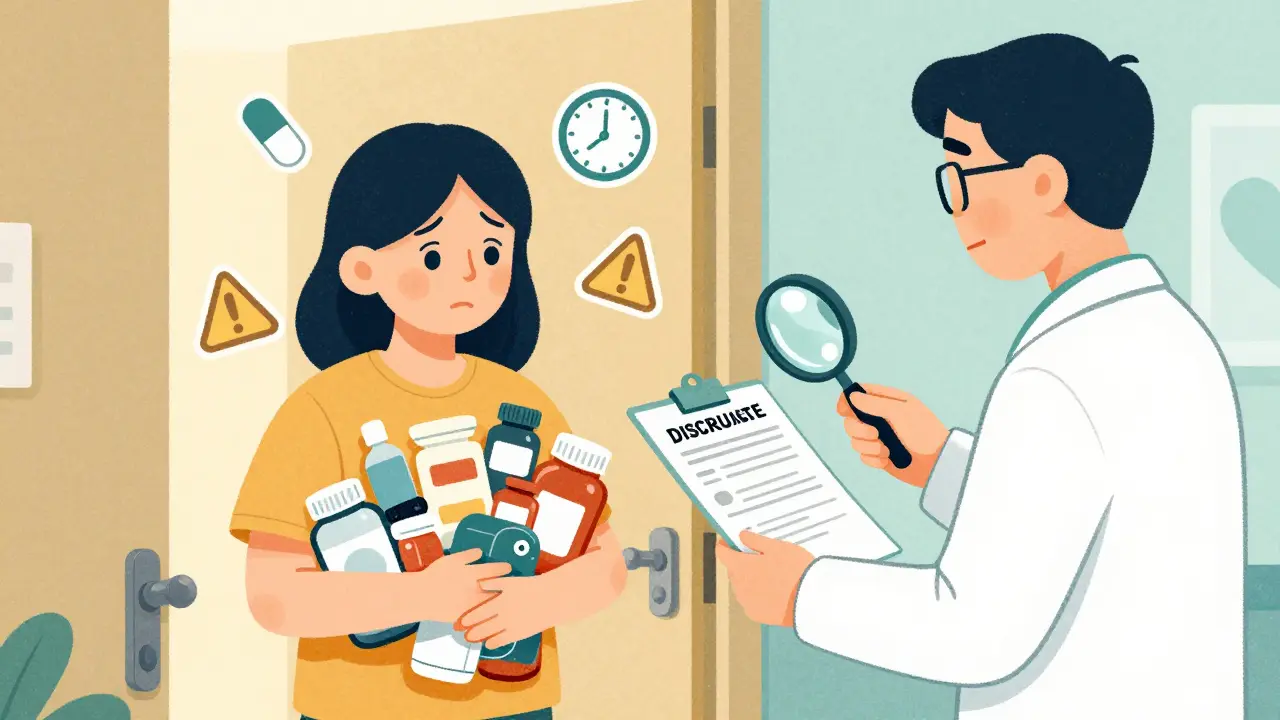
When you leave the hospital, your body is still healing - but the safety net that kept you stable during your stay starts to thin out. One of the biggest risks after discharge isn’t the illness you were treated for - it’s the medication plan you’re sent home with. Studies show that 30% to 70% of patients leave the hospital with a medication list that doesn’t match what they were taking before, or what they actually need. These mismatches lead to dangerous side effects, missed doses, or even readmissions. The good news? You don’t have to navigate this alone. With the right steps, you can make sure your meds are safe, accurate, and aligned with your life outside the hospital.
Why Medication Reconciliation Matters After Discharge
Medication reconciliation isn’t just paperwork. It’s a safety check that compares your hospital discharge list with your home meds - including prescriptions, over-the-counter drugs, vitamins, supplements, creams, and even herbal remedies. The goal? To catch mistakes before they hurt you.Here’s how common the problem is: In the first 30 days after leaving the hospital, nearly half of all medication errors happen because someone forgot to restart a blood thinner, changed a diabetes dose without telling you, or added a new drug that clashes with your old ones. The National Quality Forum calls this process NQF 0097, and Medicare requires providers to document it. But documentation doesn’t mean safety - action does.
When reconciliation is done right, it cuts 30-day hospital readmissions by nearly a third. That’s not a guess - it’s from a 2023 study of over 12,000 patients. The biggest wins come when pharmacists lead the process. They’re trained to spot interactions, check for duplicates, and ask the questions doctors don’t have time for: “Are you actually taking these pills?” or “Did you fill the new prescription?”
Who’s Responsible for Your Medication Plan?
Many patients assume their primary care doctor will handle everything after discharge. But that’s not always true. Here’s how it actually works:- Your hospital team creates a discharge medication list. But they often don’t know what you were taking at home unless you brought a full list - or your pharmacy sent it over.
- Your primary care provider (PCP) is supposed to reconcile your meds within 30 days. But if they didn’t get the discharge summary, or if your specialist didn’t share updates, they’re working blind.
- Your specialist (like a cardiologist or endocrinologist) may change your meds for their specific condition - but forget to tell your PCP.
- A pharmacist - especially one embedded in the hospital’s discharge team - is the most reliable person to catch errors. They can review your entire history, check for drug interactions, and even call your pharmacy to confirm what was filled.
Here’s the catch: Medicare only allows one billing code per discharge for transition care - meaning your PCP and specialist can’t both bill for the same reconciliation. That creates a gap. Who takes responsibility? Often, no one. That’s why you need to be the one to push for clarity.
What You Need to Do Before Leaving the Hospital
Don’t wait until you’re home to fix your meds. Start the process before you walk out the door.- Bring a complete list of all your meds. Write down everything: names, doses, times, and why you take them. Include vitamins, CBD oil, pain patches, eye drops, and herbal teas. If you’re not sure, bring the bottles.
- Ask for a written discharge medication list. Don’t just take the verbal summary. Get a printed copy or an email with the exact names and instructions. Make sure it’s labeled “Discharge Medication List.”
- Request a pharmacist consult. Ask: “Can a pharmacist review my meds before I leave?” Many hospitals now offer this - and it’s free. Pharmacists can spot 40% more errors than doctors alone.
- Confirm who’s in charge after discharge. Ask: “Who will be coordinating my meds once I’m home? Will my PCP get my discharge summary? Should I schedule a follow-up with them?”
- Get contact info for your discharge team. Save the phone number of the nurse or pharmacist who gave you your discharge instructions. You’ll need them if something doesn’t make sense later.
Pro tip: Take a photo of your pill organizer before you leave the hospital. That way, if you forget what you were taking, you have a visual backup.
What to Do in the First 7 Days After Discharge
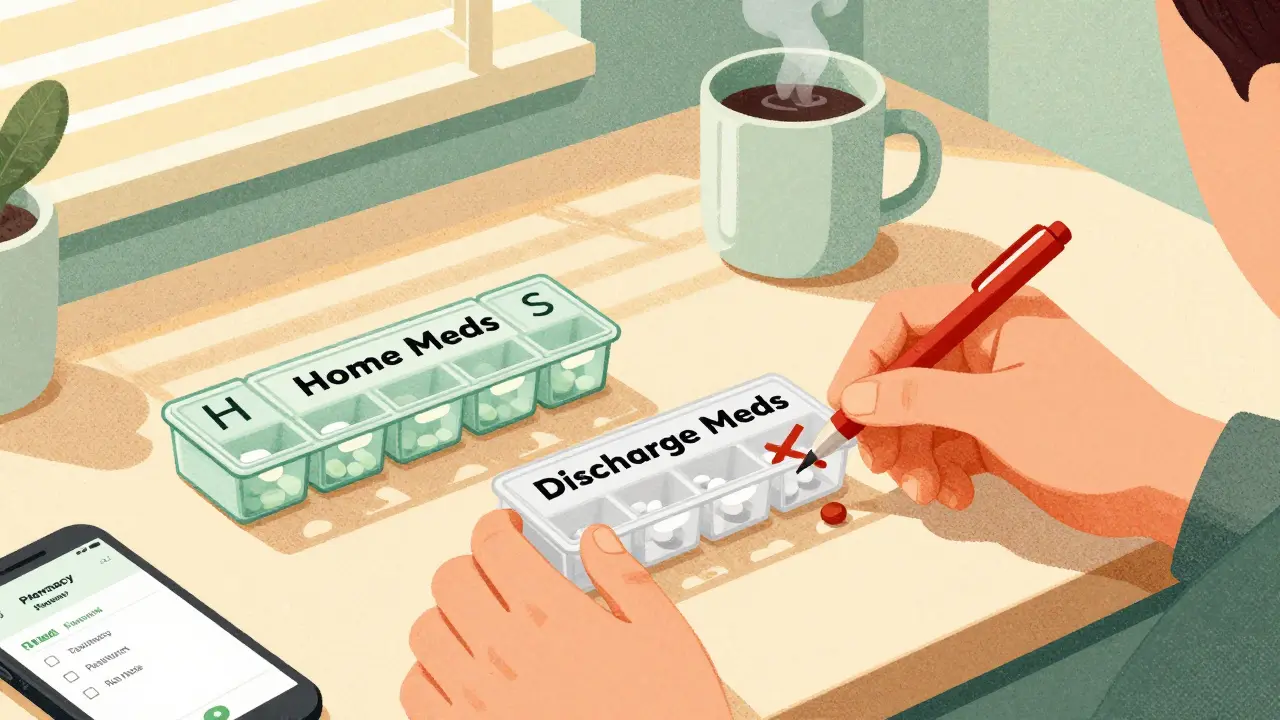
The first week after hospital discharge is the most dangerous. That’s when patients are most likely to skip doses, take too much, or mix up new and old meds.- Compare your discharge list to your home meds. Lay them side by side. Are any meds missing? Are any new? Are the doses different? Write down every difference.
- Call your pharmacy. Ask them to print out your recent prescription history. This shows what you’ve actually filled - not just what was prescribed. Many patients get new prescriptions but never pick them up.
- Check for red flags. Did they stop your blood thinner? Add a new NSAID (like ibuprofen) while you’re on a blood pressure med? Start a new antidepressant without telling you? These are high-risk changes. Call your doctor or pharmacist immediately if you see something off.
- Use a pill organizer. Even if you’ve never used one before, now’s the time. Set alarms on your phone. Write down why each pill is there. If you forget, you’ll have a visual reminder.
- Don’t wait for your PCP appointment. If your follow-up is in two weeks, don’t assume everything’s fine. Call your doctor’s office and say: “I need a medication review. Here’s my discharge list and my home list - can someone check for errors?”
How to Talk to Your Doctor About Medication Changes
You don’t need to be an expert to ask the right questions. Use these phrases:- “I noticed I’m no longer taking [medication]. Why was it stopped?”
- “I’m still taking [medication] at home, but it’s not on my discharge list. Should I keep going?”
- “I was told to take [new med] twice a day, but the bottle says once. Which is right?”
- “Are any of these new meds likely to interact with my other ones?”
- “Can you confirm that all my providers know about these changes?”
Don’t be shy. If your doctor says, “It’s not my job,” ask: “Then who is responsible? Can you help me connect with the right person?”
When to Call for Help
Some signs mean you need help right away:- You feel dizzy, confused, or unusually tired after starting a new med.
- You’re taking more than five new pills and can’t remember why.
- You missed a dose of a critical drug like warfarin, insulin, or seizure medicine.
- You have swelling, rash, or trouble breathing - these could be allergic reactions.
If you’re unsure, call your pharmacist. They’re trained to handle these questions 24/7. In Australia, most community pharmacies offer free medication reviews - no appointment needed.
What Works Best: Pharmacist-Led Reconciliation
The strongest evidence shows that when a pharmacist leads the reconciliation process - not a nurse or doctor - outcomes improve dramatically. In one study, pharmacist-led teams reduced medication errors by over 32% and cut readmissions by nearly 28%. Why? Because pharmacists:- Check every single medication - including supplements and creams.
- Verify what patients are actually taking, not just what’s written down.
- Call your pharmacy to see what you filled.
- Use tools that flag dangerous drug combinations automatically.
- Have time to explain why a change was made.
Look for hospitals or clinics that have embedded pharmacists in their discharge teams. Ask your hospital: “Do you have a pharmacist who reviews meds before discharge?” If they say no, ask if they can refer you to one after you leave.
What to Do If You’re Still Confused
If you’ve done all the steps and still feel lost:- Request a Medication Therapy Management (MTM) session. This is a free service offered through Medicare and some private insurers. A pharmacist sits with you for 30 minutes to sort out your entire list.
- Use apps like MyTherapy or Medisafe to track your meds. They send reminders and let you share your list with family or doctors.
- Ask a family member or caregiver to help you. Two sets of eyes catch more errors than one.
- If you’re in Brisbane, contact the Pharmacy Board of Australia for a list of accredited pharmacists who offer post-discharge reviews.
Remember: You’re not just a patient. You’re the CEO of your own health. No one else will protect your meds the way you can.
What’s the difference between medication reconciliation and just getting a new prescription?
Medication reconciliation isn’t about adding or changing one drug - it’s about comparing your entire list of current medications with what you were taking before hospitalization. It looks for missing drugs, duplicate prescriptions, wrong doses, and dangerous interactions. A new prescription is just one piece of that puzzle. Reconciliation makes sure everything fits together safely.
Can my specialist and my GP both bill for medication reconciliation after my hospital stay?
No. Medicare and most insurers only allow one billing code per discharge event for transition care. That means your GP and specialist can’t both be paid for the same reconciliation. This creates confusion - and sometimes, neither one takes responsibility. That’s why you need to be clear: Ask which provider will handle it, and get that in writing.
What if I didn’t get a discharge medication list?
Call the hospital’s discharge office or your doctor’s office within 24 hours. Say: “I didn’t receive my discharge medication list. Can you email or mail it to me?” If they say no, ask for the name of the pharmacist who handled your discharge - they often keep a copy. Without this list, you’re guessing - and guessing with meds can be deadly.
How do I know if my meds are interacting?
Common dangerous combinations include blood thinners with NSAIDs (like ibuprofen), statins with grapefruit juice, and antidepressants with certain painkillers. But the best way to know is to ask a pharmacist. Bring your full list - including vitamins and supplements - and ask: “Are any of these drugs likely to cause problems together?” Don’t rely on online search results. Pharmacists have access to clinical tools that check for interactions in real time.
Is medication reconciliation covered by insurance?
Yes - if it’s done correctly. Medicare covers medication reconciliation during a Transition of Care visit (CPT codes 99495 or 99496) if it’s done in person within 30 days of discharge. It also covers free Medication Therapy Management (MTM) sessions for people on multiple chronic medications. Private insurers often cover these too. Ask your provider: “Is this service covered under my plan?” If they say no, ask for the CPT code and check directly with your insurer.
Next Steps: Your 5-Minute Action Plan
1. Find your discharge medication list. If you don’t have it, call the hospital today. 2. Write down every med you’re taking at home. Include doses, times, and why. 3. Compare the two lists. Circle every difference - even small ones. 4. Call your pharmacist. Ask them to review your list and flag any risks. 5. Schedule a follow-up. Even if you feel fine, get a check-in within 7 days.Medication safety doesn’t end when you leave the hospital. It begins there. The system isn’t perfect - but you can be the missing link that keeps you safe.




Ashok Sakra
January 20, 2026 AT 23:57Gerard Jordan
January 22, 2026 AT 15:46Roisin Kelly
January 23, 2026 AT 02:04lokesh prasanth
January 24, 2026 AT 02:48Malvina Tomja
January 24, 2026 AT 05:29Samuel Mendoza
January 26, 2026 AT 02:24Kevin Narvaes
January 26, 2026 AT 06:32Dee Monroe
January 27, 2026 AT 17:31Sangeeta Isaac
January 28, 2026 AT 21:34Alex Carletti Gouvea
January 30, 2026 AT 12:12Melanie Pearson
January 31, 2026 AT 05:05Rod Wheatley
January 31, 2026 AT 11:42Jerry Rodrigues
February 1, 2026 AT 22:11Barbara Mahone
February 2, 2026 AT 05:19Stephen Rock
February 2, 2026 AT 10:46