Have you ever wondered why your doctor prescribed a brand-name drug that costs hundreds of dollars when a cheaper option exists? You might assume the alternative is a "generic" version. But if your medication is a complex protein therapy-like those used for cancer or autoimmune diseases-the cheaper option isn't a generic at all. It's a biosimilar.
The confusion between these two terms is common, but the distinction matters. Mixing them up can lead to questions about safety, effectiveness, and whether your pharmacist can swap your prescription without asking your doctor. While both aim to lower healthcare costs, they are fundamentally different in how they are made, regulated, and used.
This guide breaks down exactly what sets biosimilars apart from generics, so you can understand your treatment options with confidence.
What Are Generic Drugs?
Generic drugs are the backbone of affordable healthcare. When you think of a "copycat" medicine, you're usually thinking of a generic. These medications contain the exact same active ingredient as the original brand-name drug. They work the same way, have the same strength, and are taken in the same manner.
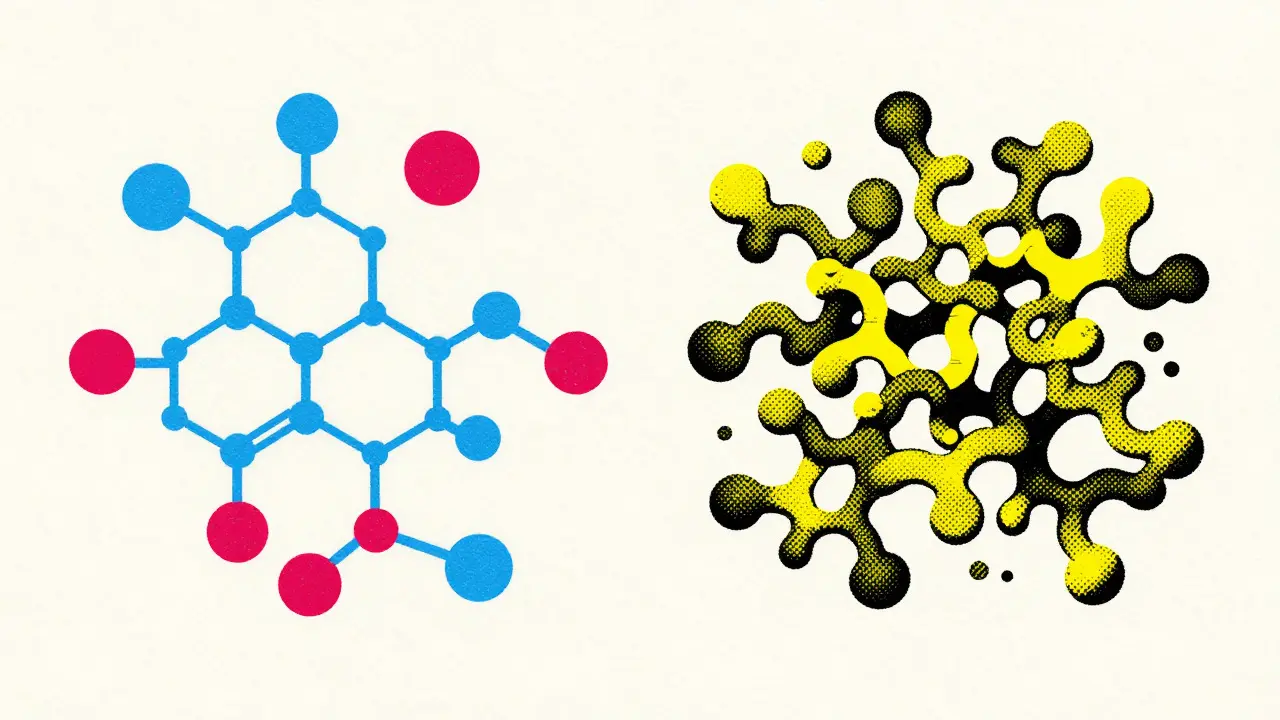
Generic drugs are small-molecule medicines that are chemically identical to their brand-name counterparts in dosage form, safety, strength, route of administration, quality, performance characteristics, and intended use. Unlike biologics, these small molecules can be precisely replicated through chemical synthesis.
Because their molecular structure is simple and well-defined, manufacturers can copy the formula exactly once the original patent expires. For example, if you take ibuprofen for pain, the generic version has the same molecular weight (206 daltons) and chemical structure as the brand-name Advil. The only differences might be inactive ingredients like dyes or fillers, which rarely affect how the drug works.
The regulatory bar for generics is high but straightforward. The manufacturer must prove bioequivalence, meaning the drug enters your bloodstream at the same rate and to the same extent as the brand-name version. If it does, it’s considered therapeutically equivalent. This simplicity allows generics to cost significantly less-typically 40% to 50% less than brand-name drugs.
What Are Biosimilars?
Biosimilars are not generics. They are follow-on versions of biologic drugs, which are large, complex molecules made from living organisms. Think of them as highly similar copies, but not identical twins.
Biosimilars are large-molecule medications derived from living organisms (such as plant or animal cells) that are 'highly similar' but not identical to reference biologic products, with no clinically meaningful differences in terms of safety, purity, and potency.
Biologics are produced using living cell cultures-a process that is inherently variable. Just as two apples from the same tree aren’t identical, two batches of a biologic drug will have minor natural variations. Because the manufacturing process is proprietary and complex, a biosimilar maker cannot simply copy the original recipe. Instead, they develop their own process to create a product that is "highly similar" to the reference biologic.
To earn approval, a biosimilar must undergo extensive testing. Regulators look at structural and functional properties, animal studies, and often clinical trials to ensure there are no clinically meaningful differences in safety, purity, or potency. Despite this rigorous process, biosimilars still cost more to develop than generics-often $100-$200 million per product compared to $2-$5 million for generics. As a result, the price savings are smaller, typically around 15% to 33% off the brand-name biologic.
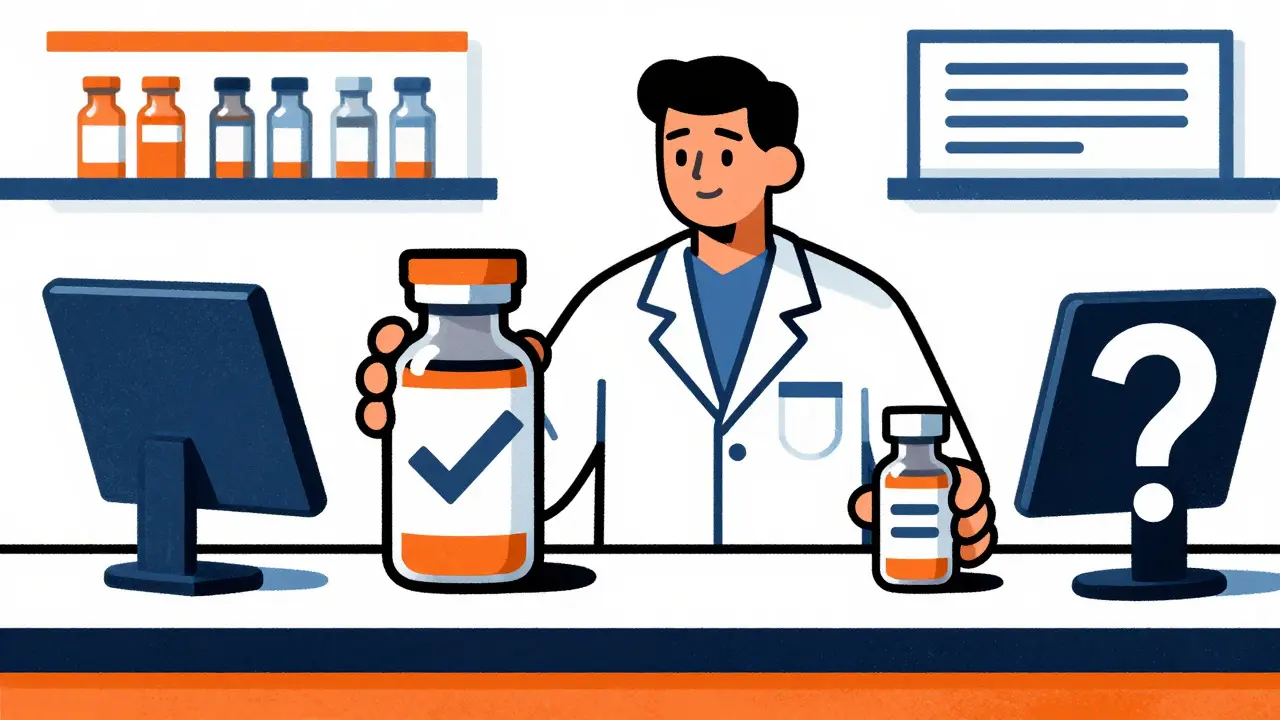
Key Differences: Side-by-Side Comparison
Understanding the technical distinctions helps clarify why regulators treat these two categories differently. Here is how they stack up against each other:
| Feature | Generic Drugs | Biosimilars |
|---|---|---|
| Molecular Size | Small molecules (e.g., 180-206 daltons) | Large proteins (1,000-5,000x larger than small molecules) |
| Manufacturing Process | Chemical synthesis (precise replication) | Living cell cultures (natural variation expected) |
| Regulatory Standard | Identical (Bioequivalent) | Highly Similar (No clinically meaningful differences) |
| Cost Savings | 40%-50% less than brand | 15%-33% less than brand |
| Substitution Policy | Automatic substitution allowed in most states | Only "interchangeable" biosimilars can be auto-substituted |
| Development Cost | $2-$5 million | $100-$200 million |
The Substitution Question: Can Your Pharmacist Swap Them?
This is where patients often feel confused. With generic drugs, substitution is usually automatic. In all 50 U.S. states, pharmacists can substitute a brand-name pill with its generic equivalent without calling your doctor, thanks to "automatic substitution" laws. You likely don’t even notice the switch because the pills work identically.
Biosimilars are different. Not all biosimilars can be substituted automatically. Only those designated as interchangeable by the FDA can be swapped at the pharmacy counter without physician intervention. As of late 2023, only seven biosimilars had received this special status. For non-interchangeable biosimilars, your doctor must specifically prescribe that product. Even then, switching from a reference biologic to a biosimilar-or between different biosimilars-requires careful monitoring due to potential immunogenicity concerns (where your body reacts to the new protein).
If you’re on a stable biologic therapy, ask your provider before any switch. While many patients tolerate biosimilars well, the decision should be informed and deliberate, unlike the routine nature of generic substitutions.
Safety and Efficacy: What Experts Say
A common myth is that biosimilars are less safe or effective because they aren’t identical. This is incorrect. Regulatory agencies like the FDA and the European Medicines Agency (EMA) hold biosimilars to strict standards. Dr. Gary Gibbons, Director of the National Heart, Lung, and Blood Institute, noted that while the regulatory approach differs due to complexity, biosimilars are rigorously evaluated for safety.
The American Society of Health-System Pharmacists (ASHP) emphasizes that biosimilars are not automatically substitutable due to these nuances, but they remain a trusted option. Clinical data shows that biosimilars perform comparably to their reference products in real-world settings. However, because they are large proteins, there is a slight risk of immune response, which is why monitoring is recommended during transitions.
In Europe, biosimilars have captured 35% of the biologics market, demonstrating widespread acceptance and safety over years of use. In the U.S., adoption is slower but growing, with major hospitals increasingly incorporating biosimilars into their formularies to reduce costs.
Why Does This Matter for You?
For patients, the bottom line is access and affordability. Biologic drugs can cost tens of thousands of dollars annually. Biosimilars offer a way to lower those costs, especially as patents expire on blockbuster drugs like Humira and Enbrel. The Inflation Reduction Act of 2022 further supports this by reducing out-of-pocket costs for Medicare beneficiaries.
If you’re prescribed a biologic, ask your doctor:
- Is there a biosimilar available for my condition?
- Is it interchangeable, or do I need a specific prescription?
- What monitoring is required if we switch?
For generic users, the process remains seamless. Continue expecting significant savings and identical performance. Understanding these distinctions empowers you to navigate your healthcare choices with clarity, ensuring you get effective treatment without unnecessary financial burden.
Are biosimilars as safe as generic drugs?
Yes, but they are regulated differently. Both are held to high safety standards by the FDA. Generics must be chemically identical, while biosimilars must be "highly similar" with no clinically meaningful differences in safety or efficacy. Extensive testing ensures biosimilars are safe, though they may require more monitoring during switches due to their complex biological nature.
Can my pharmacist substitute a biosimilar for my brand-name biologic?
Only if the biosimilar is designated as "interchangeable." As of 2023, only a few biosimilars have this status. For non-interchangeable biosimilars, your doctor must specifically prescribe them. Always check with your provider before switching biologics.
Why are biosimilars more expensive than generics?
Biosimilars are made from living cells, making their manufacturing process complex and costly. Development costs range from $100-$200 million per product, compared to $2-$5 million for generics. Additionally, biosimilars require more extensive clinical and analytical testing to prove similarity, leading to higher production costs and smaller price discounts (15-33%) compared to generics (40-50%).
What is the difference between a biologic and a generic drug?
Biologics are large, complex molecules made from living organisms (like proteins or antibodies), while generic drugs are small, chemically synthesized molecules. Biologics cannot be perfectly copied, so their alternatives are called biosimilars. Generics are exact chemical copies of brand-name small-molecule drugs.
Will biosimilars become more common in the future?
Yes. As patents expire on major biologic drugs, more biosimilars are entering the market. Analysts project biosimilars could capture 25-30% of the U.S. biologics market by 2028. Regulatory changes and cost-saving initiatives are driving faster adoption among providers and payers.