When you pick up a prescription at the pharmacy in the UK, you might not realize that the medicine you’re given isn’t always the one your doctor originally wrote. That’s because of pharmaceutical substitution - a long-standing NHS policy that lets pharmacists swap branded drugs for cheaper, generic versions. But in 2025, everything changed. New laws didn’t just tweak the rules - they overhauled how care is delivered, who delivers it, and even where you get your medicine.
What You Can and Can’t Be Substituted
Under the NHS (Pharmaceutical Services) Regulations 2013, pharmacists have always been allowed to substitute a branded medicine with a generic version - unless the doctor wrote ‘dispense as written’ (DAW) on the prescription. That rule still stands. But now, with the Human Medicines (Amendment) Regulations 2025 (Statutory Instrument 2025 No. 636), the system has been turned upside down.
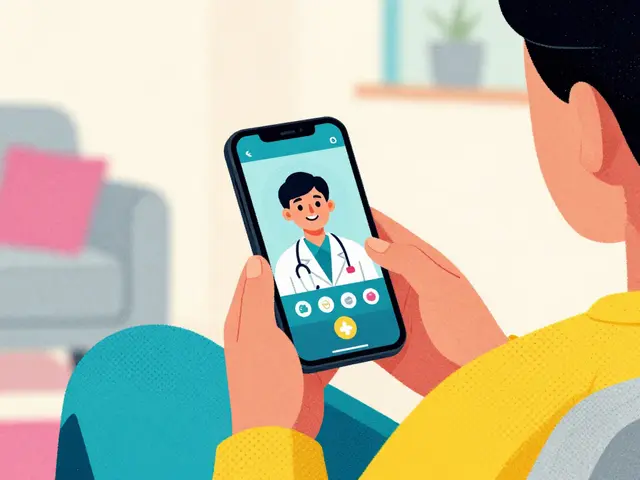
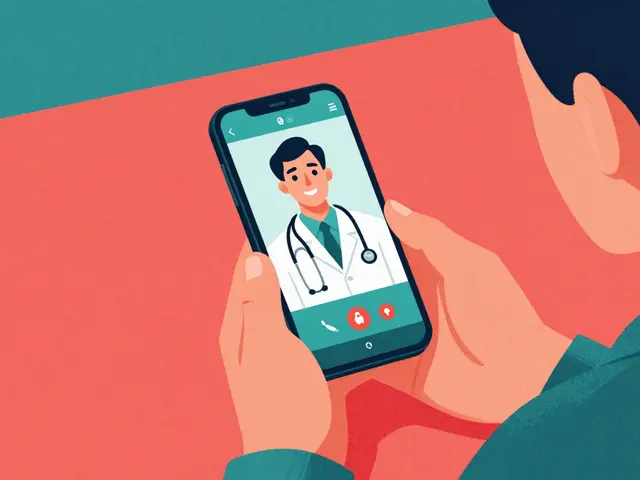
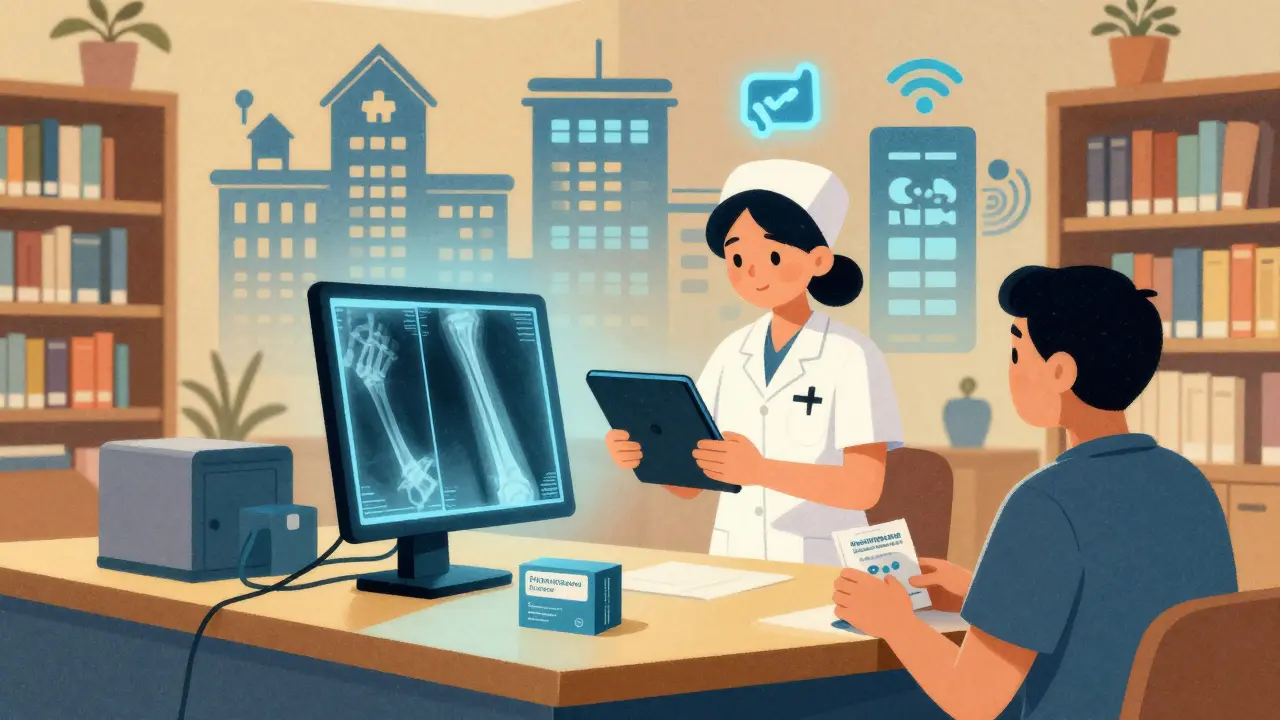
Starting October 1, 2025, all NHS pharmaceutical services must be delivered remotely. That means no more in-person consultations at your local pharmacy. Instead, Digital Service Providers (DSPs) handle prescriptions through digital platforms. You might upload your prescription, get a video consultation, and have your meds delivered to your door. This shift removes the physical pharmacy as the default point of care.
But here’s the catch: not all drugs are eligible for substitution. Insulin, blood thinners, epilepsy meds, and some psychiatric drugs are still protected. Prescribers can still block substitution if they believe the branded version is critical for safety or effectiveness. The 2025 reforms didn’t remove that safeguard - they just made the system more rigid.
The Big Shift: From Hospitals to Your Living Room
The NHS isn’t just changing how you get pills - it’s changing where care happens. The government’s 2025 mandate to NHS England clearly states: move care ‘from hospital to community, sickness to prevention, and analogue to digital.’
That means routine follow-ups, diagnostic scans, even some mental health check-ins are being moved out of hospitals. Community diagnostic hubs - often in local libraries or community centers - are replacing outpatient clinics. By 2027, these hubs are expected to handle 22% of all diagnostic services that used to happen in hospitals.
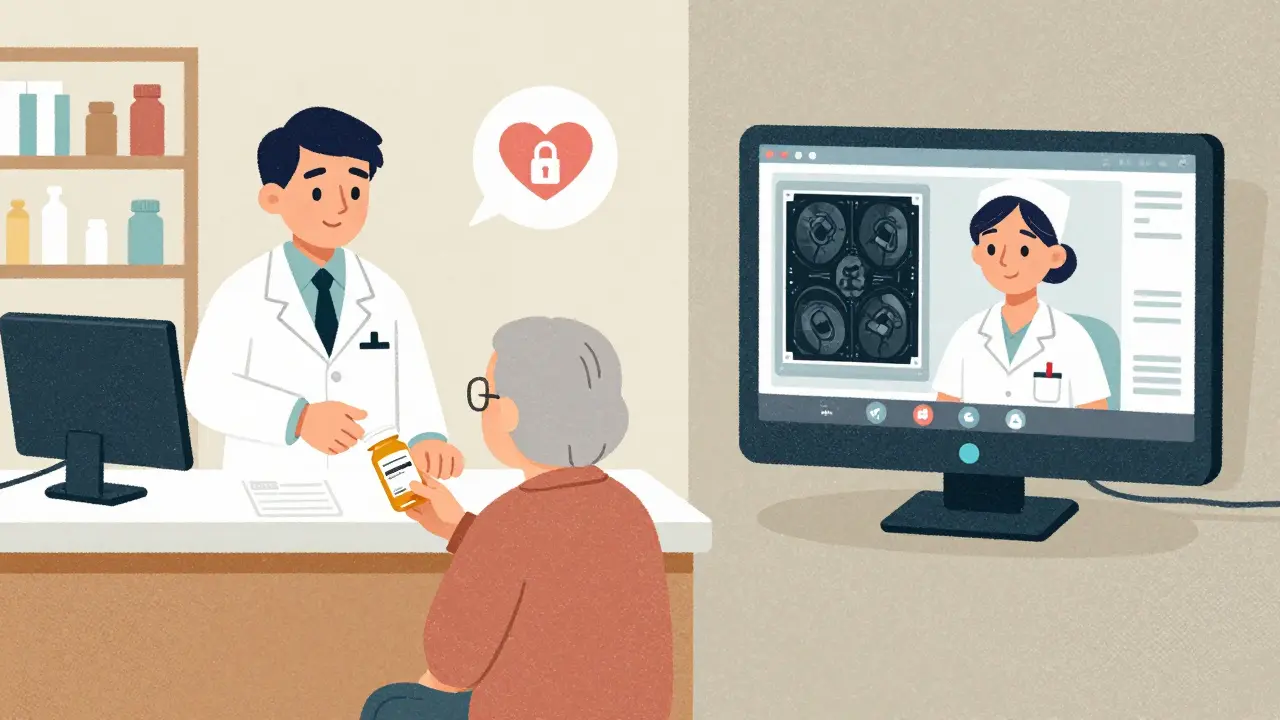
For example, a patient with a suspected fracture used to go to A&E, get an X-ray, wait for a specialist, and return for a follow-up. Now, they might get a virtual fracture clinic. A nurse reviews their scan remotely, texts them instructions, and arranges a home visit if needed. One Manchester hospital reported a 40% drop in unnecessary follow-ups after making the switch.
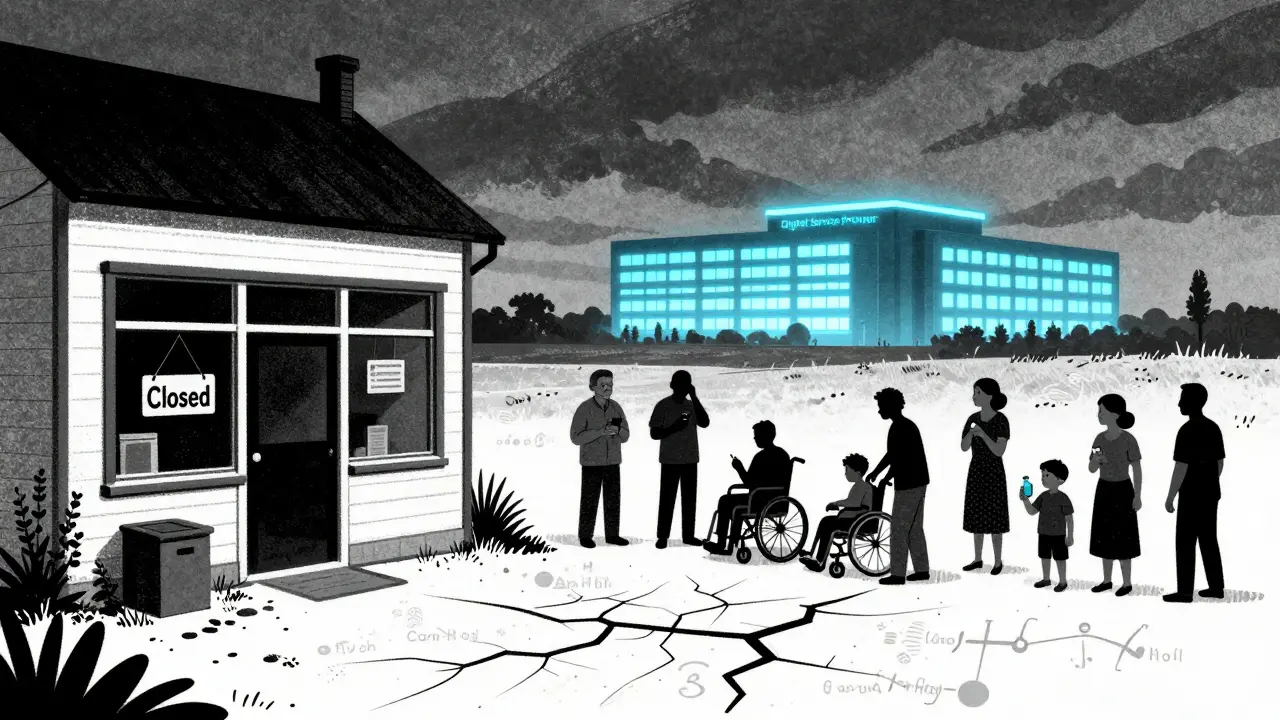
But not everyone benefits. The same study found 15% of elderly patients struggled because they couldn’t use video apps or didn’t have reliable internet. That’s not a glitch - it’s a design flaw in a system that assumes everyone is digitally literate.
Who’s Paying for All This?
The NHS has poured £1.8 billion into substitution initiatives for 2025-26. £650 million of that is going to community diagnostic hubs. Another chunk funds the rollout of remote dispensing tech for pharmacies. But here’s the problem: the money isn’t trickling down evenly.
A British Pharmaceutical Industry survey in March 2025 found that 79% of community pharmacies are worried about the new rules. Half of them say they need between £75,000 and £120,000 just to upgrade their systems. Many small pharmacies - especially in rural areas - can’t afford it. Some may shut down. Others will merge into larger DSP networks.
Meanwhile, the Department of Health and Social Care (DHSC) now directly controls all pharmaceutical policy after abolishing NHS England as a separate body. That centralization means decisions are made faster - but also with less local input. Integrated Care Boards (ICBs), once the bridge between local needs and national policy, have been cut from 42 to 28 and stripped of much of their power.
Workforce Gaps Are Making Substitution Risky
There’s a simple truth no one wants to admit: you can’t move care from hospitals to communities if there aren’t enough people to do it.
NHS Confederation data from April 2025 shows 68% of ICBs say they don’t have enough staff to handle the shift. In rural areas, 42% of trusts lack the basic infrastructure - like community nurses, mobile clinics, or transport services - to replace hospital care.
And it’s not just about numbers. It’s about skill. Community nurses aren’t trained to manage complex medication regimens like hospital pharmacists are. A nurse might not spot a dangerous drug interaction that a pharmacist would catch. That’s why the North West London pilot for remote dispensing saw a 12% spike in medication errors.
Even the staff are divided. The NHS Staff Survey 2025 found 63% of community nurses support the move. But 78% of hospital pharmacists are scared. They’ve seen what happens when you remove the safety net of face-to-face checks.
Generic Drugs Are the Engine - But Are They Enough?
The push toward generic substitution is the quiet backbone of this whole reform. Right now, the NHS substitutes generics in about 83% of eligible cases. The 2025 rules demand that rise to 90% by 2026. That’s not just about saving money - it’s about funding the bigger shift.
Generic drugs are just as safe and effective as branded ones. Studies from the Cochrane Collaboration confirm this. But the system doesn’t always treat them that way. Some patients still believe branded drugs work better. Some doctors still prescribe them out of habit.
The real challenge isn’t the science - it’s the culture. The NHS is trying to change decades of prescribing behavior in just a few years. And that’s where things get messy.
Who’s Left Behind?
The King’s Fund warned in June 2025 that without fixing workforce shortages, substitution could widen health inequalities by 12-18% in deprived areas. That’s not a guess - it’s based on data from Greater Manchester, where early substitution efforts made care gaps worse before targeted help was added.
Think about it: if you’re elderly, live alone, have no internet, and can’t afford to travel to a community hub, how do you get your meds? If you’re a single parent with no transport and your child needs a monthly inhaler refill, where do you go? The system assumes you have the time, money, tech skills, and support network to adapt.
And what about those who need ongoing monitoring? A diabetic patient on insulin might need regular blood tests and dosage adjustments. Moving that to a community hub without trained staff isn’t substitution - it’s neglect.
What Comes Next?
The NHS 10 Year Plan aims to substitute 45% of hospital outpatient appointments with virtual or community-based care by 2030. That could cut waiting lists by 35% and save £4.2 billion. But those numbers only work if:
- Community infrastructure is built - not just promised
- Staff are trained and paid properly
- Patients aren’t forced into digital systems they can’t use
- Generic substitution doesn’t become a cost-cutting excuse
The Carr-Hill formula, set to roll out in April 2026, will help. It’s designed to give more funding to areas with higher health and economic needs. If it’s done right, it could balance out the damage done by the current rush.
But right now, the system is being rebuilt while the plane is still flying. And too many people are being left out of the new design.
Can my pharmacist still give me a generic drug instead of the branded one?
Yes - unless your doctor wrote ‘dispense as written’ (DAW) on your prescription. The 2025 reforms didn’t remove this right. Pharmacists can still substitute eligible medications with generics to save money. But now, the process is happening remotely, so you might not even see your pharmacist in person.
Are all medications eligible for substitution?
No. Certain drugs - like insulin, epilepsy medications, blood thinners, and some psychiatric drugs - are protected from substitution because small differences in formulation can affect safety or effectiveness. Your doctor can also block substitution for any drug if they believe it’s necessary for your health.
What if I don’t have internet or a smartphone?
The NHS is supposed to offer alternatives - like phone consultations or home visits - for people who can’t use digital services. But in practice, many areas haven’t set up those backups. If you’re struggling, contact your GP or local Citizens Advice. They can help you request a paper-based or in-person option.
Why is the NHS moving care out of hospitals?
It’s about cost, efficiency, and prevention. Hospital care is expensive and often used for problems that could be handled in the community. By shifting care - like routine check-ups, scans, or minor follow-ups - to local hubs or virtual platforms, the NHS aims to free up hospital beds for emergencies and reduce long waiting lists.
Is this change happening because of money?
Partly. The NHS is under financial pressure, and substitution saves money - especially with generic drugs and remote care. But it’s also part of a long-term strategy to prevent illness and keep people out of hospitals. The real issue is whether the savings are being used to build proper support systems - or just cut costs.