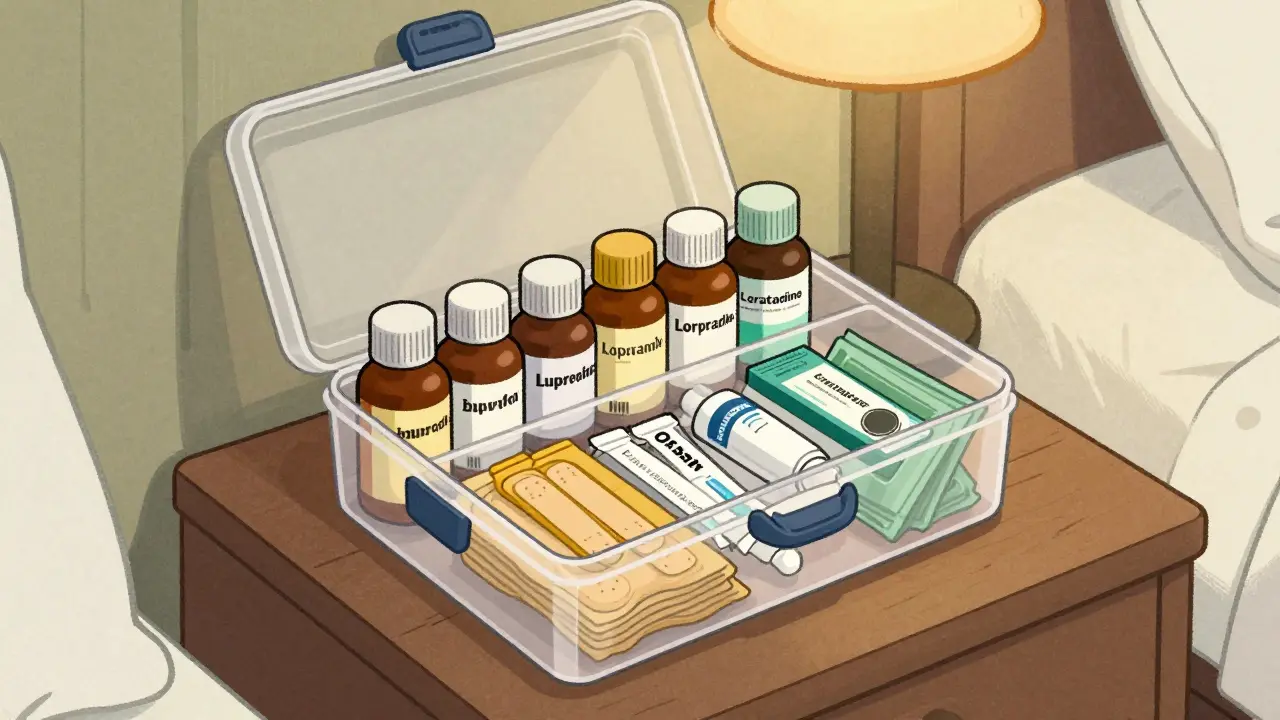
Why You Need a Travel Medication Kit
Imagine this: you’re halfway through your trip, and suddenly you’re stuck in a hotel room with stomach cramps, a fever, or a nasty bug bite. The local pharmacy is closed, the language barrier is real, and the prices are double what you’d pay at home. A well-packed travel medication kit isn’t just convenient-it’s a safety net. It keeps minor issues from becoming major disruptions. According to Cleveland Clinic, most travelers don’t need a full medicine cabinet, but they do need the right basics to handle common problems without rushing to a clinic.
Essential Medications for Common Travel Ailments
Start with the most common issues travelers face: pain, diarrhea, allergies, and minor cuts. Here’s what you actually need, based on guidelines from Cornell Health, Red Cross, and CityMD:
- Pain and fever: Ibuprofen (200-400mg tablets, at least 10) or acetaminophen (500mg tablets, at least 10). Don’t mix them unless you know how. Stick to one type unless symptoms don’t improve.
- Diarrhea: Loperamide (Imodium, 2mg tablets, 6-8 tablets) to slow things down. But don’t use it if you have a fever or bloody stool-those need antibiotics. For bacterial causes, carry a 3-day course of ciprofloxacin (500mg) or azithromycin (500mg), only if prescribed by your doctor.
- Allergies and bug bites: Loratadine (10mg) or cetirizine (10mg) tablets (7-10 count) for sneezing, hives, or itchy skin. Add a 15g tube of 1% hydrocortisone cream for localized itching or redness.
- Heartburn and indigestion: Calcium carbonate (500mg antacids) or famotidine (10mg) tablets (7-10 count). These help when you’re eating unfamiliar foods or overindulging.
Wound Care and Skin Protection
Minor cuts, scrapes, and blisters happen. Don’t wait until you’re bleeding to realize you forgot bandages. Your kit needs:
- Assorted adhesive bandages (10+ pieces, different sizes)
- 4 gauze pads (4x4 inches)
- 1-inch medical tape (1 roll)
- Antiseptic cleaner: chlorhexidine or povidone-iodine (1oz bottle)
- Antibacterial ointment: bacitracin or neomycin (0.5oz tube)
For blisters-common on long walks or new shoes-pack blister pads (like Compeed) or moleskin. If you’re hiking or camping, these are non-negotiable. Don’t use alcohol wipes on open wounds; they hurt more than they help. Stick to gentle antiseptics.
Hydration and Digestive Support
Dehydration from diarrhea or heat can turn a small problem into a medical emergency. Always carry oral rehydration salts (ORS). The World Health Organization formula is the gold standard. Pack at least 5 single-dose packets. These are small, lightweight, and can be mixed with bottled or purified water. If you’re prone to constipation, bring soluble fiber packets (psyllium husk, 10-count). They’re discreet, don’t need refrigeration, and work better than laxatives for most travelers.
Destination-Specific Add-Ons
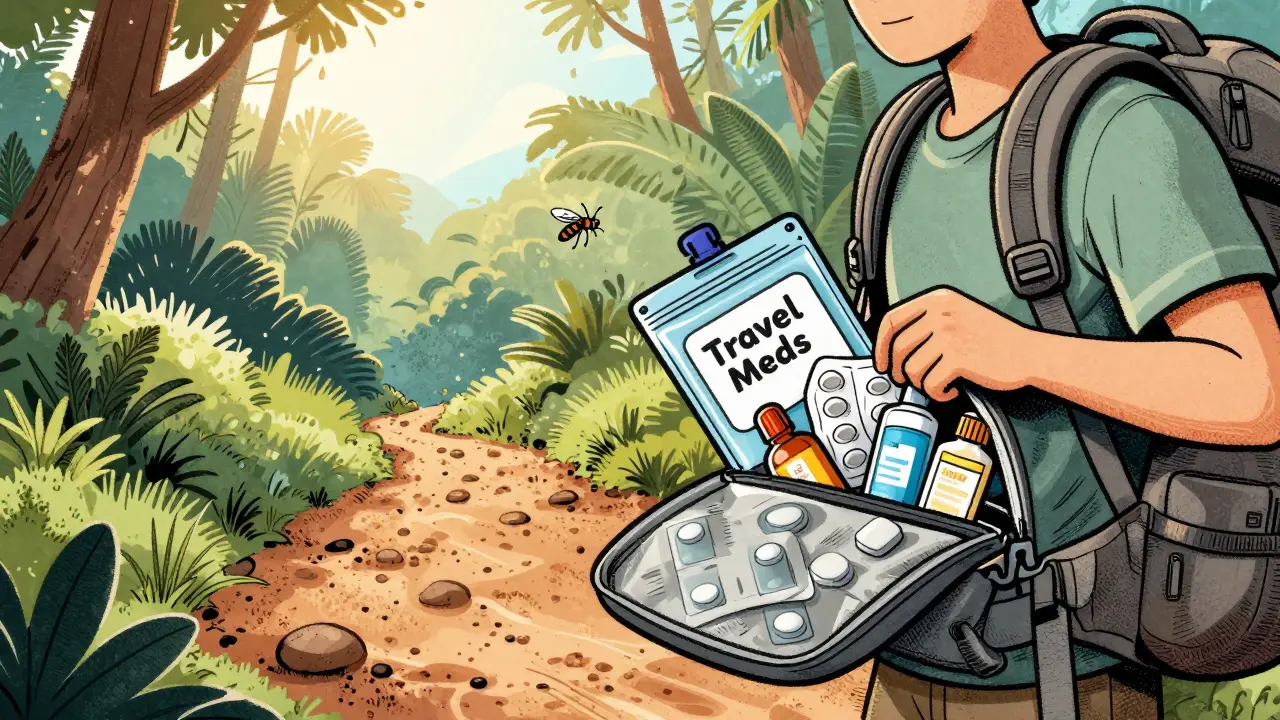
Your kit isn’t one-size-fits-all. Where you’re going changes what you pack:
- Tropical or developing countries: Water purification tablets (iodine or chlorine dioxide) if you can’t trust bottled water. Also pack DEET-based insect repellent (20-30% concentration, 1oz bottle) to prevent mosquito-borne illnesses like dengue or Zika.
- High-altitude destinations: Acetazolamide (125-250mg tablets) for altitude sickness. Start taking it 1-2 days before ascending. Talk to your doctor first.
- Cold climates: Lip balm with SPF and a small tube of moisturizer. Dry air and wind can crack skin fast.
- With kids: Never use adult medications for children under 2. Pack infant acetaminophen or ibuprofen (liquid form, with dosing syringe), pediatric electrolyte solution, and a digital thermometer. Check with your pediatrician before travel.
How to Pack It Right
Organization matters. A messy kit means you’ll waste time searching when you’re sick or in pain. Here’s how to do it:
- Use a small, clear, waterproof plastic box or a zip-top bag labeled clearly: "Travel Medication Kit".
- Keep all medications in their original bottles or blister packs. This avoids confusion and legal issues abroad.
- Store in a cool, dry place. Heat ruins medicine. Don’t leave your kit in a hot car or direct sunlight. Insulin, for example, degrades above 86°F (30°C).
- Split your supply. Put half in your carry-on, half in checked luggage. If your bag gets lost, you still have meds.
Legal and Safety Rules You Can’t Ignore
Some medications that are legal in the U.S. are banned in other countries. Japan, for example, doesn’t allow pseudoephedrine (common in cold medicines) or strong painkillers like codeine. Australia and the U.K. have strict rules too.
Before you go:
- Check with the embassy or consulate of your destination country. Many have online lists of prohibited drugs.
- Bring a doctor’s letter for all prescription meds. It should list the generic name, dosage, and that it’s for personal use.
- Carry copies of your prescriptions written in generic names (e.g., "ciprofloxacin," not "Cipro"). Brand names vary worldwide.
- If you use needles (like insulin), carry a letter from your doctor explaining why you need them. TSA allows them, but international customs may not.
Also, leave scissors, tweezers, and safety pins in checked luggage. They’re not allowed in carry-ons under current TSA rules.
What to Bring for Chronic Conditions
If you have diabetes, asthma, heart disease, or epilepsy, your kit needs more than just basics.
- Diabetics: Bring twice as much insulin and supplies as you’ll need. Pack a glucose meter, test strips, and fast-acting sugar (glucose tablets or juice boxes). Carry your doctor’s letter for syringes and insulin.
- Asthma: Bring your inhaler plus a spare. Keep them in your carry-on. Don’t rely on buying replacements abroad.
- Heart conditions: Carry your nitroglycerin or other emergency meds in your pocket, not your bag. Know the nearest hospital at your destination.
For all chronic conditions, keep a printed list of your medications, dosages, allergies, and your doctor’s contact info. Hand it to a nurse or doctor if you need help.
Final Checklist Before You Leave
Here’s a quick recap to make sure you didn’t forget anything:
- Pain relievers (ibuprofen or acetaminophen)
- Antidiarrheal (loperamide)
- Antibiotics for diarrhea (if prescribed)
- Antihistamines (loratadine or cetirizine)
- Hydrocortisone cream
- Bandages, gauze, tape, antiseptic, antibacterial ointment
- Oral rehydration salts (5+ packets)
- Water purification tablets (if needed)
- DEET repellent (20-30%)
- Blister pads (if hiking or walking a lot)
- Prescription meds in original bottles, with copies and doctor’s letter
- Extra meds split between carry-on and checked luggage
- Printed list of meds, dosages, and emergency contacts
What Not to Do
Don’t take leftover antibiotics from last year. They’re probably expired or wrong for your current illness. Don’t share meds with your travel buddy-even if they have the same symptoms. Don’t ignore your doctor’s advice. Don’t pack too much. A cluttered kit is useless if you can’t find what you need.
When to Skip the Kit and See a Doctor
Your kit handles minor issues. If you have:
- Fever over 102°F (39°C) that doesn’t break
- Bloody diarrhea or vomiting for more than 24 hours
- Difficulty breathing or chest pain
- Severe headache with stiff neck or confusion
- A wound that won’t stop bleeding or looks infected
Don’t wait. Find a clinic. Your kit is for prevention-not replacement-for serious problems.

Christina Bilotti
January 16, 2026 AT 05:35Oh wow, finally someone who didn’t just copy-paste a CDC brochure. I mean, most ‘travel tips’ are just ‘bring bandaids and pray’ - but this? This is actual preparedness. I’ve had loperamide save my life in Bangkok when the street food decided to declare war. Also, never trust ‘bottled water’ in India unless it’s sealed with a government stamp. And yes, I’ve seen people try to use vodka as antiseptic. It’s not a miracle cure, Karen.
brooke wright
January 17, 2026 AT 17:40I once forgot my hydrocortisone and ended up scratching my arms raw in Bali because of mosquito bites and then cried in a pharmacy because the guy didn’t speak English and I had no idea what ‘anti-itch’ meant in Bahasa. Also, I carry like 17 different pills now and I’m not even sure what half of them do but I feel safer. Like, emotionally safer. Like, if I die, I die with dignity. And meds.
vivek kumar
January 18, 2026 AT 08:29While the content is largely accurate, there is a critical omission: the interaction between ciprofloxacin and dairy products significantly reduces bioavailability. It is imperative to avoid calcium-rich foods or supplements within two hours of ingestion. Additionally, the recommendation to split medication between luggage is sound, but the legal risks in countries like Japan or Singapore are grossly understated. Possession of unapproved pharmaceuticals, even in personal quantities, may result in detention. A doctor’s letter must be notarized and translated into the destination language. This is not optional.
Jody Fahrenkrug
January 19, 2026 AT 00:09So I packed this exact kit last year for my solo trip to Peru and honestly? It was the only thing keeping me sane. I didn’t even need the antibiotics, but having them made me feel like a superhero. Also, the ORS packets? Game changer. I drank one after a 12-hour bus ride and felt like a human again. No drama. Just science. And a little bit of hope.
Chelsea Harton
January 19, 2026 AT 18:56why do u need so many pills like its a pharmacy in a backpack lmao
Corey Sawchuk
January 20, 2026 AT 01:23Good list but I’d add a small bottle of peppermint oil. It helps with nausea, headaches, and even repels bugs a little. I’ve used it in Morocco and Thailand. Also, don’t forget to check if your insurance covers telemedicine abroad. I got a prescription refill via Zoom from a hotel in Vietnam. Mind blown.
evelyn wellding
January 20, 2026 AT 19:28YESSSS this is the kind of post I save for my next trip 😍 I already printed this out and stuck it in my passport holder!! Also, DEET is a lifesaver - I used to use citronella and got eaten alive in Costa Rica. Never again. 🦟🚫
Nick Cole
January 22, 2026 AT 00:27For anyone with chronic conditions, this is gold. I’m diabetic and I’ve had border agents question my insulin vials. Having the doctor’s letter saved me from being detained in Dubai. Also - split your meds. I had a bag lost in Istanbul last year and still had half my supplies. Don’t be lazy. Your future self will thank you.
Riya Katyal
January 23, 2026 AT 21:24Oh sweetie, you forgot to mention that ‘oral rehydration salts’ are just fancy sugar water. You can make it at home with a pinch of salt, a spoon of sugar, and a liter of water. But sure, buy the $10 packets because why not? Also, ‘blister pads’? Try duct tape. It’s cheaper, lighter, and doesn’t melt in your suitcase.
Henry Ip
January 23, 2026 AT 23:54This is the most practical thing I’ve read all year. I’m sharing this with my entire family before our trip to Italy. My mom’s gonna love the heartburn tips. Also, the ‘don’t share meds’ note? Needed. My cousin once took my ibuprofen and had a reaction. Don’t be that person.
waneta rozwan
January 24, 2026 AT 05:44I CRIED reading this. I went to Thailand last year and thought I was prepared - I had a tiny first aid kit with one Band-Aid and a bottle of expired antihistamine. I spent three days in a hotel room sweating and shaking. This list? This is the difference between surviving and sobbing in a foreign pharmacy. I’m printing 10 copies. I’m laminating them. I’m framing one.
Isabella Reid
January 25, 2026 AT 15:51As someone who’s lived in 12 countries, I can confirm: the legal stuff is the most important. I once got stopped in Dubai because my prescription for amoxicillin had the brand name on it. They thought I was smuggling drugs. Now I always carry the generic name in bold. Also, carry a small pen and paper - sometimes the pharmacist doesn’t speak English, but they can read ‘ibuprofen 400mg’.
Bobbi-Marie Nova
January 26, 2026 AT 22:06Okay but the ‘don’t use alcohol wipes on open wounds’ part? YES. I learned that the hard way in Greece. Felt like my skin was on fire. Now I just use the little antiseptic spray from the pharmacy. Also, I carry a mini bottle of hand sanitizer and a pack of wet wipes. You’d be surprised how many times those save your dignity.
Allen Davidson
January 28, 2026 AT 20:47Great breakdown. I’d add one thing - if you’re going somewhere remote, bring a small flashlight. Not just for power outages - for checking your own throat when you’re too sick to ask someone to shine a light. Also, a small notebook to write down symptoms. Doctors appreciate details.
Samyak Shertok
January 29, 2026 AT 01:55So you’re telling me that the solution to the world’s travel problems is a plastic box full of pills? What about cultural immersion? What about trusting the local healers? What about the spiritual journey of getting sick in a foreign land? No - you’re just outsourcing your vulnerability to Big Pharma. The real travel medicine is learning to sit with discomfort. But hey, if you need your Imodium to feel safe, I guess that’s your path.