
Imagine you are traveling from Tennessee to Kentucky with your prescription for warfarin. In one state, the pharmacist can swap it for a generic without asking anyone. In the other, that same swap might be illegal unless the doctor says otherwise. This isn't a hypothetical scenario; it is the daily reality for millions of Americans relying on Narrow Therapeutic Index (NTI) drugs, which are medications where tiny changes in dose or blood concentration can lead to serious health risks.
If you take an NTI medication, understanding these rules is not just about saving money-it is about staying safe. The United States lacks a single, unified federal law governing how these specific drugs are substituted. Instead, you face a patchwork of 50 different state laws. Some states ban substitution entirely for certain drugs. Others allow it but require strict notifications. And some follow federal guidelines that many experts argue are too loose for sensitive medications.
What Exactly Are NTI Drugs?
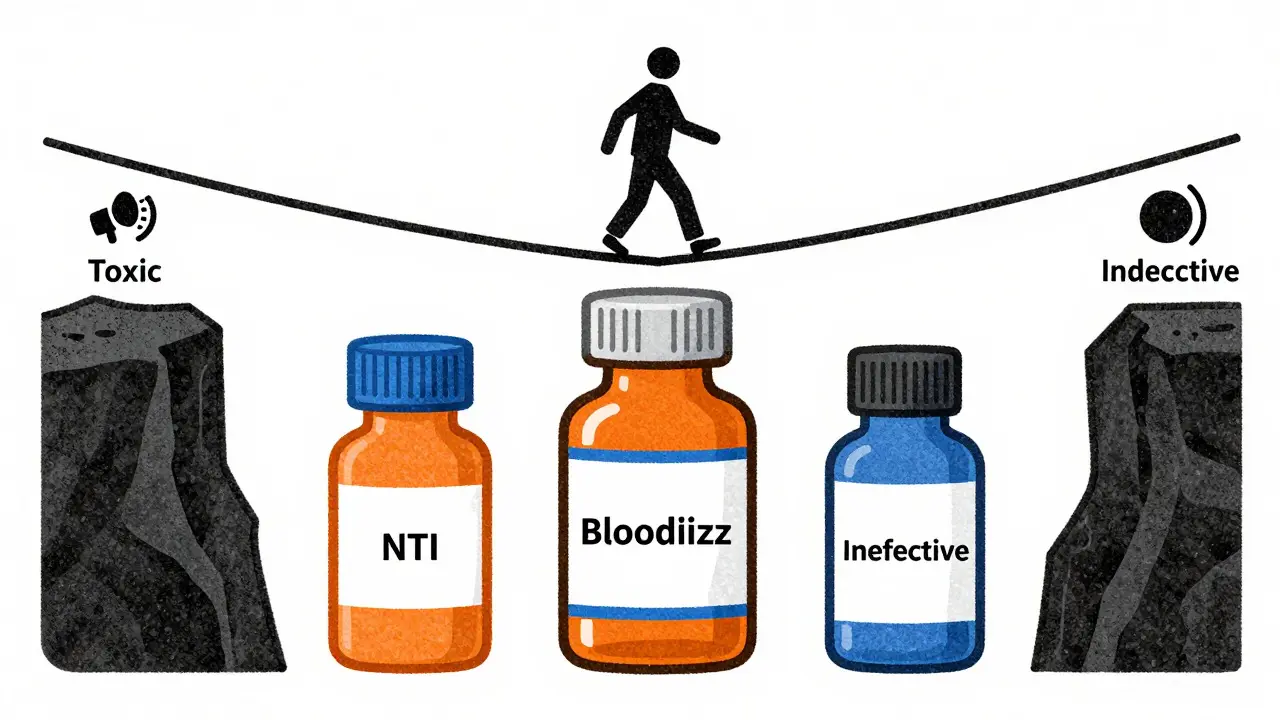
To understand why the laws vary so wildly, we first need to define what makes an NTI drug special. Unlike most medications, where a slight difference between a brand name and a generic version won't change how you feel, NTI drugs have a very small window between "effective" and "toxic."
Warfarin (a blood thinner), Lithium (for bipolar disorder), and Levothyroxine (for thyroid conditions) are classic examples. If your blood level of lithium drops by just a few percent, you might experience mood instability. If it rises slightly, you could face toxicity symptoms like tremors or confusion. Because of this sensitivity, patients often spend months finding the exact dose that works for their body. Switching manufacturers-even if both are approved as "bioequivalent"-can sometimes shift that balance enough to cause problems.
The Food and Drug Administration (FDA) has historically maintained that current bioequivalence standards are sufficient for all drugs, including NTIs. They do not formally designate a specific list of NTI drugs in their official Orange Book database. However, many states disagree with this stance, believing that patient safety requires stricter controls.
The Patchwork of State Regulations
As of 2024, there is no national standard for NTI substitution. According to data from the National Association of Boards of Pharmacy (NABP), 27 states have implemented specific restrictions on substituting NTI drugs. This creates a complex landscape for pharmacists, doctors, and patients alike.
We can group these state approaches into three main categories:
- Formal Prohibition Lists: States like Kentucky and Pennsylvania maintain specific lists of NTI drugs that pharmacists cannot substitute without prescriber approval. For example, Kentucky explicitly bans substitution for digitalis glycosides, antiepileptic drugs, and warfarin sodium tablets.
- Recommendation Frameworks: States like South Carolina recommend against substitution for certain categories but do not strictly prohibit it by statute. They advise caution for NTI drugs like lithium, as well as "critical drugs" such as insulin and cardiac glycosides.
- Professional Judgment Models: States like Iowa rely on the FDA's Orange Book ratings rather than maintaining a separate NTI list. Pharmacists use professional judgment to determine therapeutic equivalency based on whether a product receives an "A" rating.
This fragmentation means that a pharmacist working for a multi-state chain must memorize dozens of different rules. A 2023 survey found that nearly 70% of pharmacists practicing in multiple states reported confusion about these requirements, with over 40% admitting they had inadvertently violated substitution laws due to jurisdictional differences.
| State Approach | Example States | Key Mechanism | Impact on Patient |
|---|---|---|---|
| Formal Prohibition | Kentucky, Pennsylvania | Specific list of banned substitutions | High consistency; reduced risk of accidental switches |
| Recommendation Only | South Carolina | Advisory guidelines for pharmacists | Variable enforcement; relies on pharmacist vigilance |
| Professional Judgment | Iowa, Tennessee* | Use of FDA Orange Book ratings | Flexibility but potential for inconsistency |
| Critical Dose Notification | California | Pharmacist must notify prescriber | Ensures doctor awareness before switch occurs |
*Note: Tennessee allows substitution of "A-rated" products but prohibits it for antiepileptic drugs used to treat epilepsy without specific authorization.
Why Do These Laws Matter for You?
You might wonder why this regulatory debate affects your daily life. The answer lies in clinical outcomes. While the FDA argues that generics are safe, real-world data suggests otherwise for sensitive populations.
A meta-analysis published in 2023, cited by the American College of Clinical Pharmacy, reviewed 17 studies on levothyroxine substitution. It found that 32.4% of patients who were stabilized on a brand-name version experienced changes in their thyroid-stimulating hormone (TSH) levels after switching to a generic. These changes often required dose adjustments, meaning patients had to undergo additional blood tests and doctor visits.
Conversely, a 2022 study in the Journal of the American Pharmacists Association looked at warfarin therapy. It found that states with specific NTI substitution restrictions saw 18.7% fewer adverse drug events related to warfarin compared to states without such restrictions. While the absolute reduction was small (0.3%), for high-risk patients on blood thinners, even a marginal decrease in bleeding or clotting events is significant.
Dr. Jerry Avorn, a professor at Harvard Medical School, has argued that the FDA's accepted 20% bioequivalence range creates unacceptable risk for drugs like levothyroxine, where a variation of just 5-10% can cause clinical instability. On the other side, former FDA officials argue that the current standards are sufficient and that state-level restrictions create unnecessary administrative burdens.
Challenges for Pharmacists and Healthcare Systems
The lack of uniformity creates headaches for healthcare providers. Pharmacists are caught in the middle. They want to provide cost-effective care through generics, but they also fear liability if a patient suffers an adverse reaction due to a substitution.
In "Mandatory" substitution states, pharmacists must dispense generics unless the prescriber writes "dispense as written." In "Restrictive" states, they may be barred from swapping NTI drugs entirely. Navigating these rules while managing a busy drive-thru window is difficult. One pharmacist described the stress of remembering Tennessee's exception for antiepileptics while covering shifts in different locations with varying local practices.
For Pharmacy Benefit Managers (PBMs), the complexity translates to higher costs. Express Scripts reported in 2023 that NTI-related substitution restrictions increased their administrative costs by 5.7% compared to standard generic processes. These costs can trickle down to insurers and, eventually, patients in the form of higher premiums or copays.

Trends Toward Standardization
Despite the current chaos, there are signs of movement toward a more unified system. The National Association of Boards of Pharmacy (NABP) launched the Model State NTI Substitution Act in January 2024. This model act proposes a standardized NTI drug list based on evidence-based criteria, aiming to replace the current state-by-state guesswork.
As of mid-2026, 12 states have introduced legislation based on this model. Industry analysts at IQVIA predict that by 2027, 38 states will have adopted standardized NTI substitution protocols. This shift could reduce cross-state prescription errors by an estimated 22.4%.
Simultaneously, the FDA is facing pressure to reconsider its longstanding position. Following a Government Accountability Office report citing nearly 3,000 adverse events potentially linked to NTI drug substitutions between 2019 and 2023, the Senate Committee on Aging pushed for action. In September 2024, the FDA announced it would review its policies on NTI drugs, marking a potential turning point in federal regulation.
What Should Patients Do?
If you take an NTI medication, you should not assume that your pharmacist knows your specific history or preferences. Here are practical steps to protect your health:
- Know Your Medications: Ask your doctor if any of your prescriptions are considered Narrow Therapeutic Index drugs. Common ones include warfarin, lithium, phenytoin, carbamazepine, and levothyroxine.
- Communicate with Your Pharmacist: Tell your pharmacist if you have been stable on a specific brand or manufacturer. Ask them to note your preference in your profile.
- Check State Laws: If you travel frequently, check the substitution laws in the states you visit. You may need to carry a letter from your doctor specifying that you require a specific manufacturer.
- Monitor Your Levels: If you notice a change in the appearance of your pills (color, shape, imprint), ask your pharmacist if the manufacturer changed. If so, schedule a blood test sooner than usual to ensure your dosage is still correct.
Don't be afraid to advocate for yourself. If a substitution causes side effects, contact your doctor immediately. Your health is more important than the savings from a generic swap.
Does the FDA have a list of NTI drugs?
No, the FDA does not formally designate or publish a specific list of Narrow Therapeutic Index (NTI) drugs in its Orange Book or regulatory guidance. While the agency acknowledges the concept, it maintains that current bioequivalence standards apply to all drug products equally. This contrasts with many states that have created their own formal lists.
Which states have the strictest NTI substitution laws?
States like Kentucky and Pennsylvania have some of the strictest laws, maintaining formal prohibition lists that ban pharmacists from substituting specific NTI drugs like warfarin and antiepileptics without prescriber authorization. California also has strict rules requiring notification for "critical dose drugs," defined as those where a 10% or less difference in blood concentration is critical.
Can my pharmacist substitute my thyroid medication without asking?
It depends on your state. In states with restrictive NTI laws (like Kentucky or Pennsylvania), the pharmacist likely cannot substitute levothyroxine without checking with your doctor. In states with permissive laws, they may swap it freely. Given the sensitivity of thyroid medication, it is always best to specify your preferred manufacturer on your prescription.
Why do state laws differ so much?
The divergence stems from the fact that drug regulation is shared between the federal government and individual states. While the FDA approves drugs for safety and efficacy, states regulate pharmacy practice. Different states interpret patient safety risks differently, leading to varied approaches ranging from strict prohibitions to professional judgment models.
What is the Model State NTI Substitution Act?
Launched by the National Association of Boards of Pharmacy (NABP) in 2024, the Model State NTI Substitution Act is a proposed framework to standardize NTI drug regulations across the US. It aims to create a unified, evidence-based list of NTI drugs and consistent substitution rules to reduce confusion and improve patient safety. As of 2026, several states have begun introducing this legislation.
How can I prevent unwanted drug substitutions when traveling?
Carry a copy of your prescription that clearly indicates "Dispense As Written" or specifies the manufacturer. Inform the out-of-state pharmacist about your sensitivity to NTI drugs. If possible, fill your prescriptions before traveling or use a mail-order service that ships directly to your destination to ensure consistency.