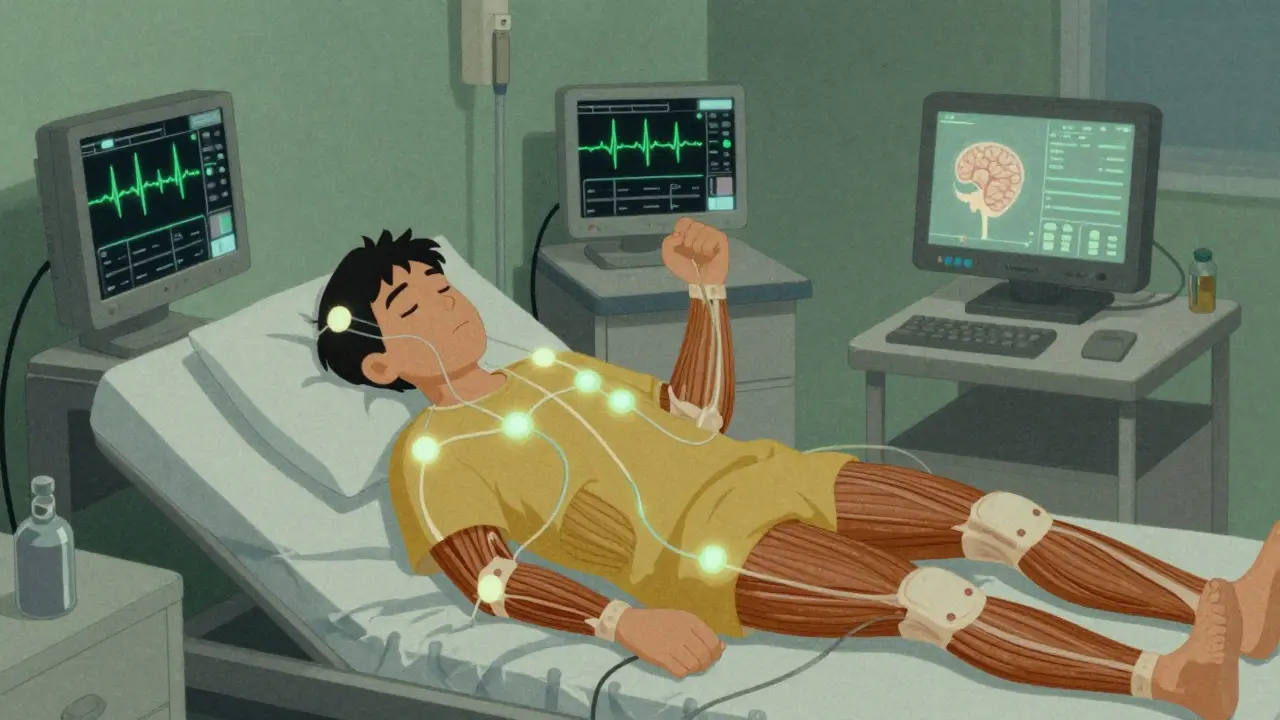
REM sleep behavior disorder isn’t just about dreaming loudly or moving in your sleep. It’s a warning sign your brain is changing in ways that could lead to Parkinson’s disease, dementia with Lewy bodies, or other serious neurological conditions. People with RBD don’t just kick or shout during dreams-they might jump out of bed, punch the air, or even fall down stairs. These aren’t random nightmares. They’re physical enactments of dreams because the brain’s natural paralysis during REM sleep has failed. And while the symptoms are terrifying, the real concern is what’s happening underneath: the slow, silent degeneration of brain cells that produce dopamine and other key neurotransmitters.
What Happens During REM Sleep Behavior Disorder?
Normally, when you enter REM sleep, your body goes completely still. Muscles are turned off-paralyzed-to keep you from acting out your dreams. In RBD, that paralysis doesn’t happen. Electromyography (EMG) during a sleep study shows abnormal muscle activity during REM sleep, often exceeding 15% of the time. This isn’t twitching. It’s complex, purposeful movements: throwing punches, screaming, running in place, or grabbing at imaginary objects. These behaviors happen on average 4.2 times per hour, and they’re not harmless. A 2019 study found that 78% of patients with RBD have had injuries-from bruises and cuts to broken bones-either to themselves or their bed partners.Why It’s More Than Just a Sleep Problem
RBD is rarely just a sleep issue. In fact, about 90% of cases are linked to underlying neurodegenerative diseases. The most common are Parkinson’s disease, dementia with Lewy bodies, and multiple system atrophy-all part of a group called synucleinopathies. These diseases involve the buildup of a misfolded protein called alpha-synuclein in the brain. RBD often appears years, even decades, before motor symptoms like tremors or stiffness show up. One study tracked patients with idiopathic RBD (meaning no known cause) and found that 73.5% developed a neurodegenerative disease within 12 years. That’s why doctors now treat RBD not just as a sleep disorder, but as an early warning system.How Is It Diagnosed?
There’s no blood test or brain scan that confirms RBD. The gold standard is polysomnography (PSG)-an overnight sleep study. During the test, electrodes monitor brain waves, eye movements, heart rate, breathing, and muscle activity. The key finding is REM sleep without atonia (RSWA). That means your muscles are active when they should be completely still. Doctors look for EMG signals in the chin, legs, or arms that exceed 15% of REM sleep epochs. If you’re acting out dreams, and the sleep study confirms this loss of muscle paralysis, you have RBD. Many patients don’t realize they have it until their partner complains or they wake up with bruises. That’s why it’s often underdiagnosed-until someone ends up in the ER after falling out of bed.
First-Line Treatments: Melatonin and Clonazepam
There are no FDA-approved drugs specifically for RBD. Treatment is off-label, but two medications are widely used: melatonin and clonazepam. Melatonin is a hormone your body naturally makes to regulate sleep. In RBD, higher doses-typically 3 to 12 mg taken at bedtime-help restore the brain’s ability to suppress muscle activity during REM sleep. About 65% of patients respond well to melatonin. Side effects are mild: occasional morning grogginess or headache. One patient reported his episodes dropped from seven per week to one after starting 6 mg nightly. The dose is slowly increased every 2-4 weeks until symptoms improve or side effects appear. Clonazepam, a benzodiazepine, works by enhancing GABA, a calming neurotransmitter in the brain. It’s been used for RBD since the 1980s and remains highly effective-80-90% of patients see a significant reduction in dream enactment. A 2000 study showed 88.7% improvement with clonazepam. But it comes with risks. Older adults are especially vulnerable to dizziness (22%), unsteadiness (18%), and daytime sleepiness (15%). These side effects increase fall risk by 34% in people over 65. Long-term use can lead to dependence or tolerance. Still, many patients choose it because it works fast-often within days. The starting dose is 0.25-0.5 mg at bedtime, with a maximum of 2 mg. Tapering off must be done slowly; stopping abruptly can trigger rebound nightmares or agitation in 38% of cases.Other Options: Pramipexole, Rivastigmine, and Emerging Therapies
Pramipexole, a dopamine agonist used for Parkinson’s and restless legs syndrome, is sometimes prescribed for RBD, especially if the patient also has leg discomfort at night. Studies show it helps about 60% of patients, but results are inconsistent. Rivastigmine, an Alzheimer’s drug, showed promise in a small trial for patients with RBD and mild cognitive impairment who didn’t respond to other treatments. It’s not a first-line option, but it’s an option when others fail. The most exciting developments are coming from research on dual orexin receptor antagonists. Orexin is a brain chemical that regulates wakefulness. Drugs like suvorexant (Belsomra) and Neurocrine Biosciences’ NBI-1117568 block orexin receptors and have shown dramatic reductions in dream enactment behaviors in animal models. In October 2023, Mount Sinai researchers reported a 78% reduction in RBD-like behaviors in mice. Human trials are underway. The FDA granted Fast Track status to NBI-1117568 in January 2023, meaning it could be approved faster than normal. These drugs may offer the same effectiveness as clonazepam without the drowsiness or fall risk.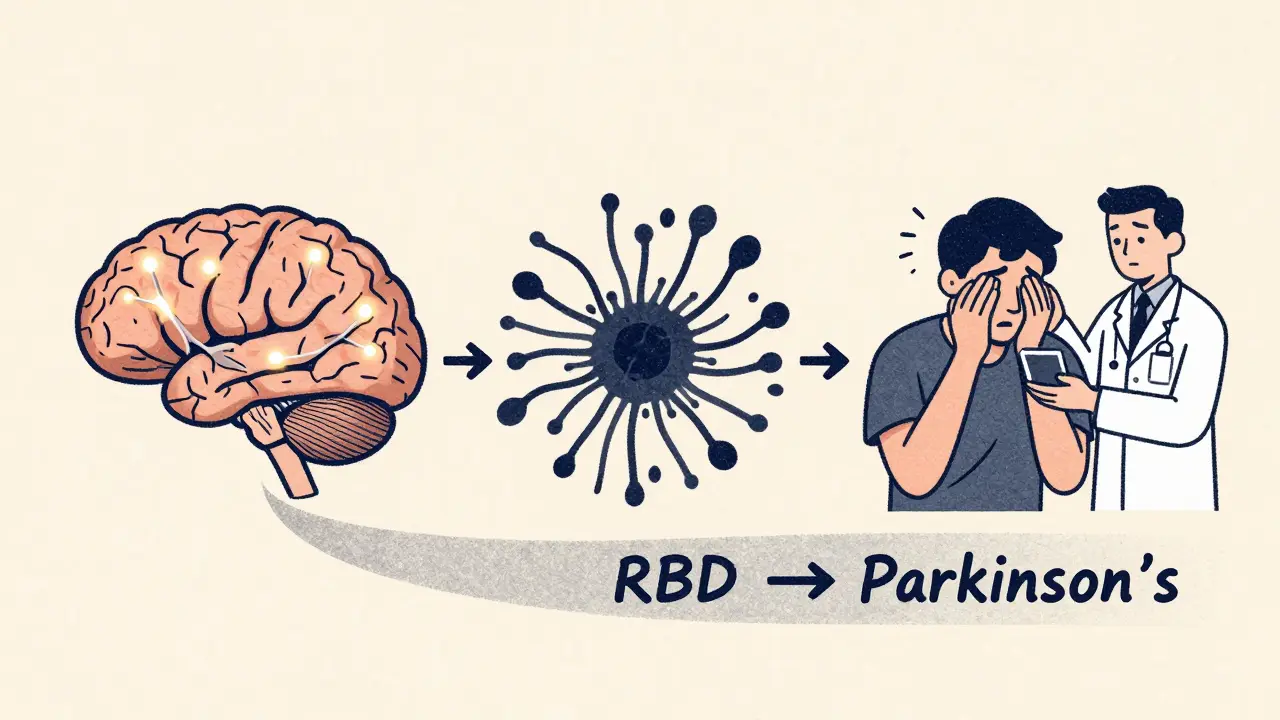
Safety Comes First: Modifying the Bedroom
Medications help, but they don’t eliminate risk. Even with treatment, about 42% of patients eventually sleep in separate rooms because of safety concerns. That’s why environmental changes are non-negotiable. The Cleveland Clinic recommends: removing all weapons from the bedroom, padding sharp corners of furniture, placing thick rugs or mats beside the bed, installing bed rails, and using a mattress on the floor. Avoid alcohol. Even one or two drinks can trigger episodes in 65% of patients. Sleep with a partner? Make sure they know how to respond safely-don’t try to physically restrain someone during an episode. Instead, speak calmly and guide them back to bed.Neurological Monitoring: Watching for the Next Step
Because RBD is so strongly tied to neurodegenerative disease, regular neurological checkups are essential. The American Academy of Neurology recommends annual exams for anyone diagnosed with idiopathic RBD. These aren’t just for symptom tracking-they’re for early detection of Parkinson’s or dementia. Signs to watch for: subtle changes in smell, constipation, mood swings, stiffness, slow movement, or trouble with balance. If any appear, a neurologist may recommend dopamine transporter scans or other tests to assess brain function. Early detection means earlier intervention. Drugs like levodopa or deep brain stimulation can slow progression if started at the first sign of motor symptoms.What’s Next for RBD Treatment?
Right now, we’re managing symptoms. The real goal is stopping the disease before it starts. Researchers are studying whether drugs that target alpha-synuclein buildup-like immunotherapies or gene therapies-can delay or prevent Parkinson’s in RBD patients. Clinical trials are underway. The global RBD treatment market is projected to grow to over $2 billion by 2030, driven by increased diagnosis and new drug development. But progress depends on awareness. Many patients still go years without a diagnosis. If you or someone you know is acting out dreams, especially with injury or worsening symptoms, see a sleep specialist. A simple overnight test can change everything.Can REM sleep behavior disorder be cured?
No, RBD cannot be cured at this time. Current treatments like melatonin and clonazepam manage symptoms effectively for most people, but they don’t stop the underlying brain degeneration. The focus is on reducing injury risk and improving sleep quality. Research is now focused on finding ways to delay or prevent Parkinson’s disease and other neurodegenerative conditions in RBD patients, which would be the closest thing to a cure.
Is melatonin safer than clonazepam for RBD?
Yes, melatonin is generally safer, especially for older adults. While clonazepam is more effective (80-90% success rate), it carries risks of dizziness, falls, dependence, and daytime sedation. Melatonin has a 65% success rate but causes only mild side effects in about 8% of users-usually just morning grogginess. For most patients, especially those over 65 or with balance issues, melatonin is the preferred first-line treatment.
How long does it take for melatonin to work for RBD?
Melatonin usually takes 2 to 4 weeks to show noticeable improvement, and patients often need to increase the dose gradually-from 3 mg to 6 mg, then 9 mg or 12 mg-before seeing full results. It’s not an instant fix. Clonazepam, by contrast, often works within a few days. But because melatonin has fewer side effects, doctors recommend starting with it before moving to stronger medications.
Can alcohol make REM sleep behavior disorder worse?
Yes, alcohol is a major trigger. Even one or two drinks can worsen RBD symptoms in 65% of patients. Alcohol disrupts normal sleep architecture and reduces muscle atonia during REM sleep, making dream enactment more likely and more violent. Patients with RBD are strongly advised to avoid alcohol completely, especially close to bedtime.
Should I sleep alone if I have RBD?
It depends on the severity. Many patients can sleep safely with their partner after starting treatment and making bedroom modifications. But if episodes are frequent, violent, or involve injuries, sleeping separately is often the safest choice. About 42% of patients eventually do this, even with medication. Safety is more important than closeness. Use bed rails, remove hazards, and consider a separate bed or mattress on the floor until symptoms are under control.
Is RBD a sign of Parkinson’s disease?
RBD is one of the strongest early warning signs of Parkinson’s disease, dementia with Lewy bodies, or multiple system atrophy. About 90% of RBD cases are linked to these conditions. Many people develop RBD 10-15 years before motor symptoms like tremors or stiffness appear. If you’re diagnosed with RBD, regular neurological checkups are critical to catch the next stage early.
What’s the best way to monitor RBD over time?
Keep a sleep diary noting frequency and severity of episodes, any injuries, and side effects from medication. Track changes in mood, movement, sense of smell, or bowel habits-these can signal early neurodegeneration. Schedule annual neurological exams. If symptoms worsen or new ones appear, ask about dopamine transporter scans or referral to a movement disorder specialist. Early detection improves long-term outcomes.




Lisa Davies
December 16, 2025 AT 18:07Nupur Vimal
December 17, 2025 AT 00:37RONALD Randolph
December 18, 2025 AT 16:25Benjamin Glover
December 20, 2025 AT 08:13Melissa Taylor
December 22, 2025 AT 06:03Mike Nordby
December 22, 2025 AT 10:13John Samuel
December 24, 2025 AT 01:31Sai Nguyen
December 24, 2025 AT 06:18Michelle M
December 25, 2025 AT 04:30Cassie Henriques
December 27, 2025 AT 01:15Jake Sinatra
December 28, 2025 AT 09:46Raj Kumar
December 29, 2025 AT 19:56John Brown
December 31, 2025 AT 16:51Christina Bischof
January 2, 2026 AT 04:45Jocelyn Lachapelle
January 3, 2026 AT 01:37