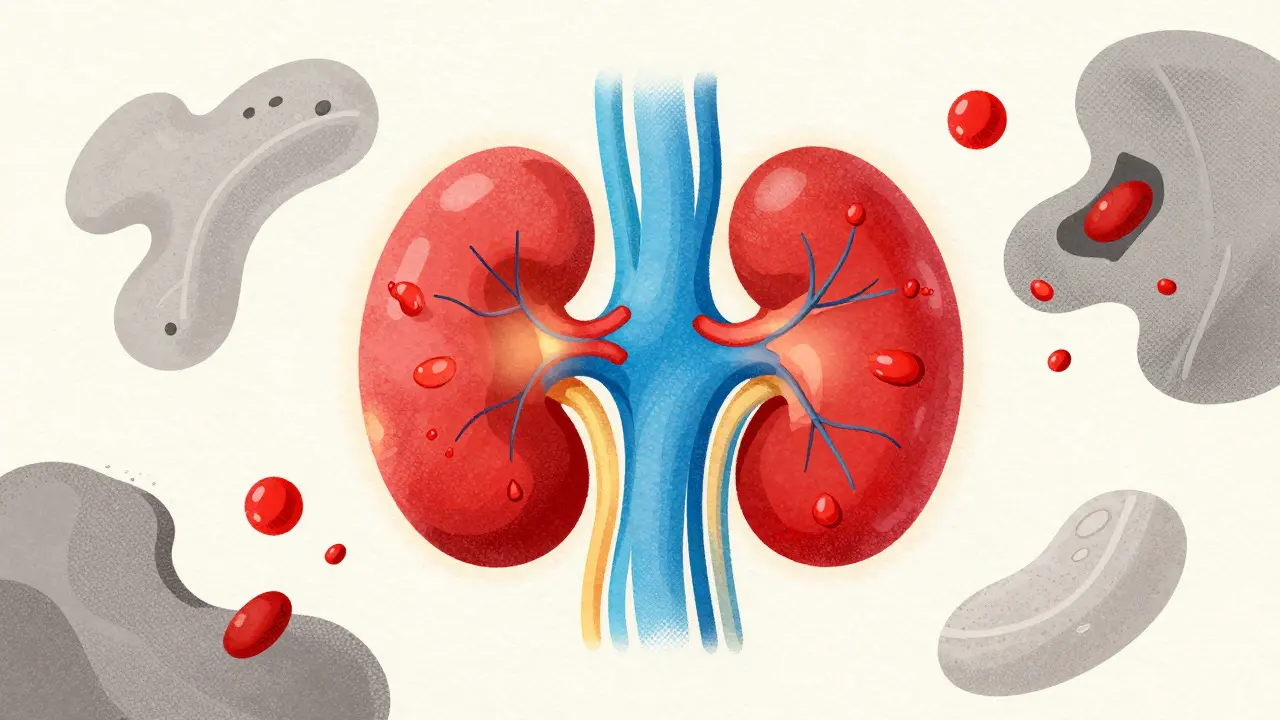
Your kidneys do more than filter waste; they produce a hormone called erythropoietin that tells your bone marrow to make red blood cells. When you have chronic kidney disease (CKD), this production drops, leading to anemia. It’s not just about feeling tired-it’s a major risk factor for heart attacks and strokes if left unmanaged. The good news? Modern treatments like erythropoiesis-stimulating agents (ESAs) and precise iron therapy can restore energy and protect your heart.
This guide breaks down how these therapies work, the specific numbers your doctor watches, and why the old approach of “just boosting hemoglobin” is no longer enough. We’ll look at the latest 2025 guidelines from KDIGO and explain what this means for your daily life, from injection schedules to dietary choices.
Why Your Kidneys Control Your Blood Count
To understand the treatment, you first need to grasp the problem. Healthy kidneys release erythropoietin in response to low oxygen levels. In CKD, damaged tissue fails to signal this properly. By stage 3 or 4 of CKD, most patients experience a drop in hemoglobin. This isn’t just a side effect; it’s a direct consequence of organ failure.
Anemia in CKD is typically normocytic (normal size cells) and hypoproliferative (bone marrow isn’t working hard enough). But there’s a catch: inflammation in the body blocks iron usage. Even if you have plenty of iron stored, your body might lock it away due to high hepcidin levels. This creates two types of deficiency:
- Absolute Iron Deficiency: You simply don’t have enough iron stores (ferritin < 100 mcg/L).
- Functional Iron Deficiency: You have iron stores, but can’t use them for new blood cells (transferrin saturation < 20-30%).
Distinguishing between these two is critical because treating functional deficiency with oral iron often fails. The iron sits in your gut, unused, while your blood count stays low.
The Role of Erythropoietin Stimulating Agents (ESAs)
Since the FDA approved recombinant human erythropoietin in 1989, ESAs have been the backbone of anemia management in dialysis patients. These are synthetic versions of the natural hormone. Common options include epoetin alfa, epoetin beta, and darbepoetin alfa.
How do they work? They mimic the natural signal, telling your bone marrow to ramp up production. For non-dialysis patients, subcutaneous injections (under the skin) are preferred. For those on hemodialysis, intravenous (IV) administration is standard because it’s easier to coordinate with their regular sessions.
Expectations matter here. ESAs aren’t instant fixes. Typically, you’ll see a hemoglobin increase of 1-2 g/dL within 2 to 6 weeks. If you don’t see movement after 12 weeks, doctors call this "ESA hyporesponsiveness." This usually points to hidden issues like uncorrected iron deficiency, active infection, or aluminum toxicity.
| Agent | Typical Dosing | Administration Route | Key Consideration |
|---|---|---|---|
| Epoetin Alfa | 200-10,000 units | Subcutaneous or IV | Most widely used; biosimilars available |
| Darbepoetin Alfa | 0.45 mcg/kg | Subcutaneous or IV | Longer half-life; less frequent dosing |
| Roxadustat (HIF-PHI) | Oral tablet | Oral | Newer class; avoids injections |
Iron Therapy: The Essential Partner
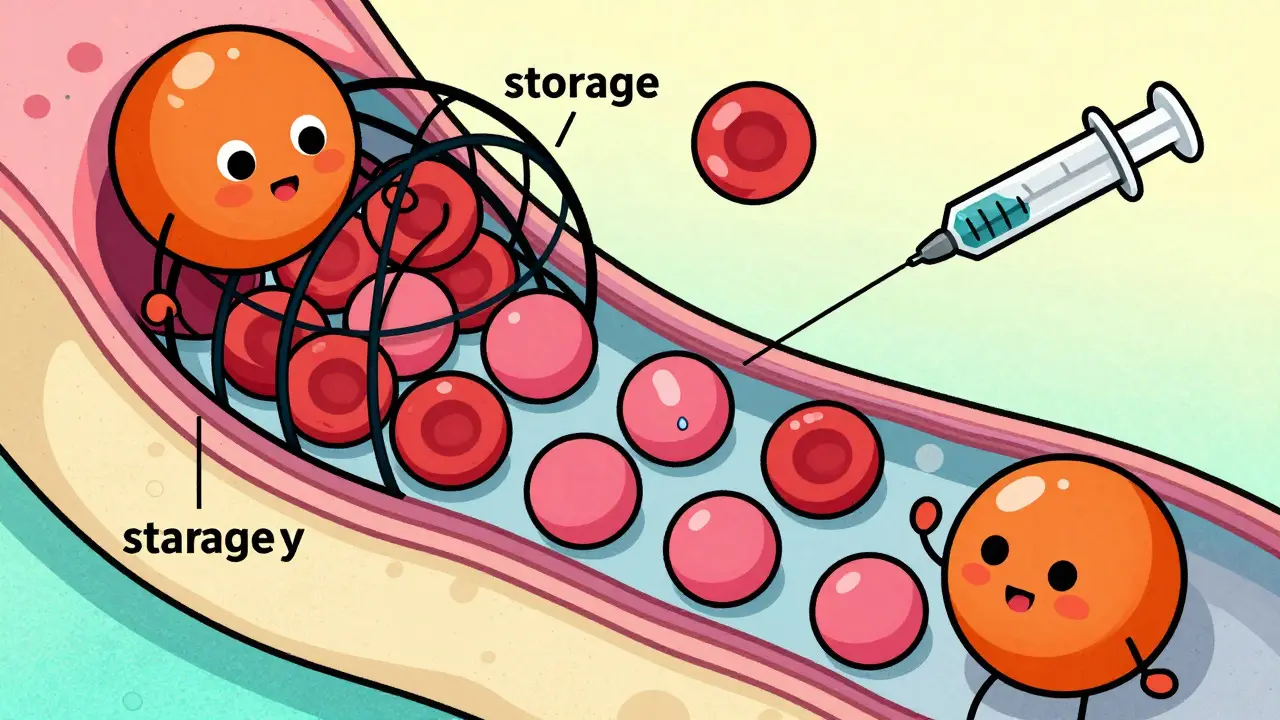
You can’t effectively boost blood counts with ESAs alone if your raw materials are missing. Iron is the fuel. However, oral iron pills are notoriously ineffective for CKD patients. Studies show absorption rates of only 30-40% due to inflammation blocking uptake. Intravenous (IV) iron bypasses the gut entirely, achieving 90-100% availability.
Current guidelines recommend IV iron sucrose as a primary option. For hemodialysis patients, a common protocol is 400 mg monthly, provided your ferritin stays below 700 μg/L and transferrin saturation (TSAT) remains under 40%. Why stop there? Too much iron leads to oxidative stress and potential organ damage.
What does IV iron feel like? Many patients report a temporary metallic taste (affecting 45% of users) or flu-like symptoms (28%). These are generally mild and resolve quickly. The benefit-rapid correction of deficiency-is worth the short-term discomfort for most.
Hemoglobin Targets: Less Is More
Here is where many patients get confused. Do you want your hemoglobin as high as possible? Not necessarily. The TREAT trial in 2009 showed that targeting higher levels (13 g/dL) increased stroke risk by 32% compared to moderate targets (9-11 g/dL).
The 2025 KDIGO draft guideline emphasizes individualized care. The general sweet spot for maintenance is between 10 and 11.5 g/dL. Going above 11.5 g/dL increases the risk of thrombosis (blood clots) and hypertension. Your doctor will monitor this monthly. If your hemoglobin rises too fast, they may reduce your ESA dose by 25%.
Think of it like heating a room. You don’t blast the furnace until it’s scorching hot; you adjust the thermostat to keep it comfortable. Similarly, the goal is symptom relief-energy for daily activities-not hitting a perfect number on a lab sheet.

Emerging Options: HIF-PHIs
A newer class of drugs called Hypoxia-Inducible Factor Prolyl Hydroxylase Inhibitors (HIF-PHIs) is changing the landscape. Roxadustat, approved in the US in late 2023, works differently than ESAs. Instead of adding the hormone, it tricks your body into thinking it needs more oxygen, thereby stimulating your own natural erythropoietin production and improving iron utilization.
The big advantage? It’s an oral pill. No injections. This improves quality of life significantly. However, caution is needed for patients with cancer history, as these drugs can potentially stimulate tumor growth. Always discuss your full medical history with your nephrologist before switching.
Practical Steps for Patients
Managing this condition is a partnership. Here’s how to stay on track:
- Monitor Your Labs: Know your Ferritin and TSAT. Ask your doctor what your specific target ranges are.
- Track Symptoms: Keep a log of fatigue, shortness of breath, or dizziness. This helps your team adjust doses faster.
- Blood Pressure Checks: ESAs can raise blood pressure. If you notice spikes, report them immediately. Uncontrolled hypertension negates the cardiovascular benefits of treating anemia.
- Hydration and Diet: While IV iron handles the heavy lifting, maintaining a balanced diet supports overall health. Avoid excessive vitamin C supplements around iron infusions unless advised, as it can alter absorption dynamics in complex ways.
Remember, consistency beats intensity. Regular monitoring and small adjustments yield better long-term outcomes than aggressive bolus treatments.
Can I take oral iron instead of IV iron?
It depends on your specific labs. If you have absolute iron deficiency and low inflammation, oral iron might work. However, for most CKD patients, especially those on dialysis, IV iron is superior because it bypasses gut absorption issues caused by hepcidin. Your doctor will decide based on your ferritin and TSAT levels.
How long does it take for erythropoietin to work?
You should see a measurable increase in hemoglobin within 2 to 6 weeks. If there is no improvement after 12 weeks, it is considered hyporesponsive, and your doctor will investigate other causes like hidden infections or insufficient iron.
What is the ideal hemoglobin level for CKD patients?
The current guideline-recommended range is 10 to 11.5 g/dL. Keeping it below 11.5 g/dL reduces the risk of blood clots and stroke. Individual targets may vary based on your symptoms and comorbidities.
Are HIF-PHIs safe for everyone?
They are generally safe but require caution in patients with a history of cancer, as they may stimulate cell growth. They are also associated with lower risks of hypertension compared to traditional ESAs. Discuss your personal risk profile with your specialist.
Why did my doctor lower my erythropoietin dose?
If your hemoglobin rose too quickly or exceeded 11.5 g/dL, your doctor likely reduced the dose to prevent complications like high blood pressure or clotting. This is a standard safety measure, not a sign that the treatment failed.