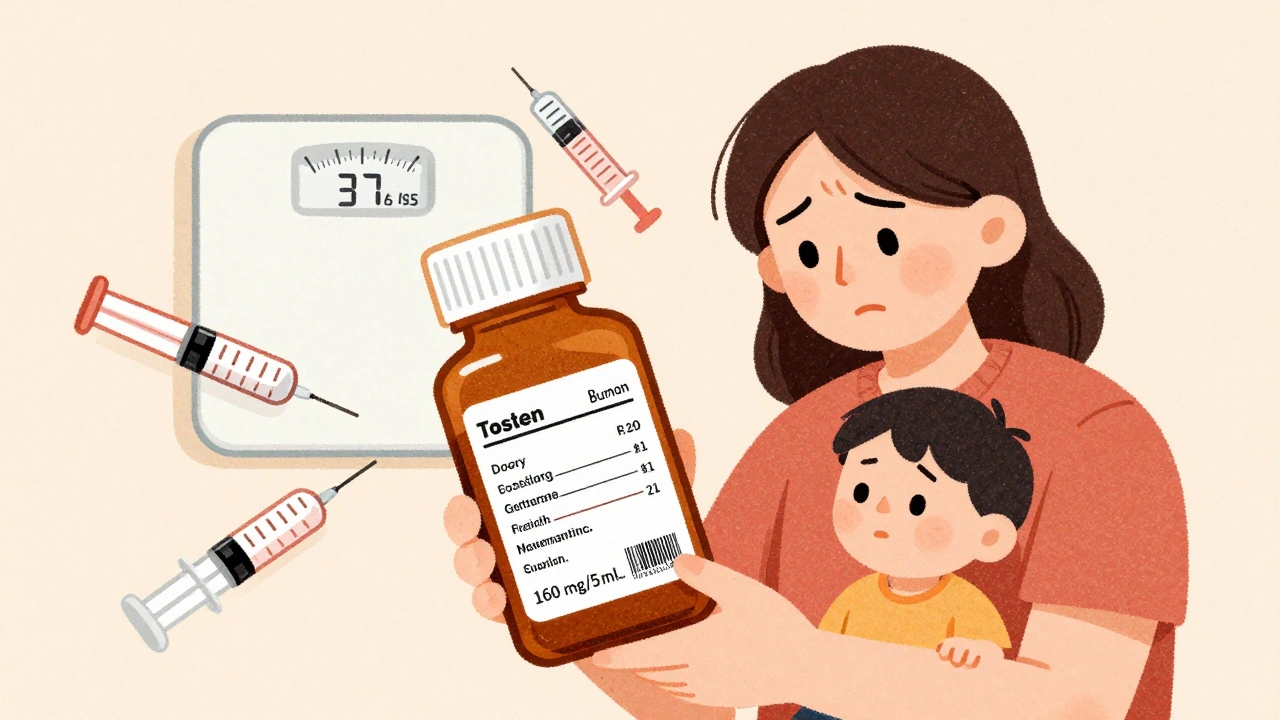
Every year, over a million children in the U.S. end up in emergency rooms because of mistakes with over-the-counter (OTC) medicines. Most of these errors happen because parents don’t know how to read the label correctly. It’s not about being careless-it’s about confusing measurements, mixing up age and weight, or using the wrong spoon. If you’ve ever stared at a tiny bottle with tiny print and wondered, “Is this the right amount?”, you’re not alone.
Why Weight Matters More Than Age
You’ve probably seen those little charts on medicine bottles: “For children 2-3 years: 5 mL.” But here’s the truth: weight is what actually determines the right dose, not age. A 2-year-old who weighs 30 pounds needs a different amount than a 2-year-old who weighs 18 pounds. Age is just a rough guess. Weight is the real number.The American Academy of Pediatrics says using age instead of weight leads to dosing errors in 23% of cases. That’s more than 1 in 4 times. Underdosing means the medicine won’t work. Overdosing? That can hurt the liver-or worse. Acetaminophen overdose is the top cause of acute liver failure in kids under 12. And it’s often preventable.
Here’s how to do it right: If you know your child’s weight, use that. If you don’t, use age-but only as a backup. And never guess. Weigh your child on a bathroom scale (hold them if they’re small, then subtract your own weight). Write it down. Keep it on your phone. Use it every time you give medicine.
Understanding the Label: What Every Word Means
OTC children’s medicine labels are now required to follow strict rules. They must show:- Active ingredient (e.g., acetaminophen or ibuprofen)
- Concentration (e.g., 160 mg per 5 mL)
- Dosing by weight AND age
- Maximum number of doses per day
- Warnings (e.g., “Do not use for children under 6 months”)
- “Do not combine with other medicines containing [active ingredient]”
Pay attention to the concentration. This is where most mistakes happen. There are two common strengths:
- Infant drops: 80 mg per 0.8 mL (concentrated)
- Children’s liquid: 160 mg per 5 mL (standard)
If you switch from drops to liquid without adjusting the dose, you could give your child five times too much medicine. Always check the concentration on the bottle. If it says “160 mg/5 mL,” that’s the standard. If it says “80 mg/0.8 mL,” you’re using drops. Never assume.
Acetaminophen vs. Ibuprofen: Know the Difference
These are the two most common OTC kids’ medicines. They’re not interchangeable.Acetaminophen (Tylenol):
- Can be given every 4 hours
- Max 5 doses in 24 hours
- Safe for babies as young as 2 months (with doctor’s approval)
- Warning: Can cause liver damage if too much is given
Ibuprofen (Advil, Motrin):
- Can be given every 6-8 hours
- Max 4 doses in 24 hours
- Do NOT give to babies under 6 months
- Can irritate the stomach if given on an empty stomach
Here’s a real example: A child weighing 24-35 pounds needs 5 mL of acetaminophen (160 mg/5 mL) or 5 mL of ibuprofen (100 mg/5 mL). Same volume. Different strength. Same mistake could mean double the dose-or half.
And don’t forget: Cold and flu medicines often contain acetaminophen too. If you give Tylenol and a cold medicine with “acetaminophen” on the label, you’re doubling up. That’s how accidental overdoses happen.

Never Use a Kitchen Spoon
“Just use a teaspoon,” someone says. Bad idea.A standard kitchen teaspoon holds anywhere from 4.5 mL to 7 mL. That’s a 30% variation. One parent gave their child 15 mL thinking it was 5 mL because they used a tablespoon instead of a teaspoon. Another used a soup spoon-twice the dose.
Always use the measuring tool that comes with the medicine:
- Dosing syringe (best option)
- Dosing cup with clear markings
- Oral dosing spoon (if it’s labeled in mL)
And here’s a trick: If the label says “5 mL,” use the syringe and fill it to the 5 mL line-not to the top. Squeeze out any air bubbles. Give it slowly into the side of the mouth. Don’t squirt it down the throat.
What to Do When Your Child’s Weight Falls Between Ranges
What if your child weighs 37 pounds? The chart says 36-47 lbs. That’s easy-use the 36-47 lb dose.But what if they weigh 48 pounds? The chart says 48-59 lbs. Use that one.
Now what if they weigh 47.5 pounds? That’s right on the edge. The rule from pediatricians is simple: round down. Use the lower weight category. It’s safer. Better to give a little less than risk giving too much.
And if your child is under 2 years old and you’re unsure? Call your pediatrician. Don’t guess. Don’t rely on the label alone. Fever in a baby under 3 months? Call 911 or go to the ER. Don’t wait.
Common Mistakes Parents Make (And How to Avoid Them)
Here are the top errors-and how to stop them:- Mixing up mL and tsp: mL is milliliters. tsp is teaspoons. They’re not the same. Always look for “mL” on the tool, not “tsp.”
- Using old medicine: Check the expiration date. Old medicine loses strength. Or worse-it can break down into harmful chemicals.
- Assuming “children’s” means “safe for all kids”: “Children’s” doesn’t mean “for all ages.” Some are only for 6+, others for 2+. Always check the age range.
- Not writing down the dose: Write it on your hand, phone, or a sticky note. Memory fails when you’re tired or stressed.
- Using someone else’s medicine: Your child’s dose isn’t the same as your neighbor’s. Weight matters.
One parent told her story on a parenting forum: “I gave my 18-month-old the same dose I gave my 5-year-old because ‘they’re both kids.’ He ended up in the ER with liver enzymes through the roof.”
What’s New in 2025?
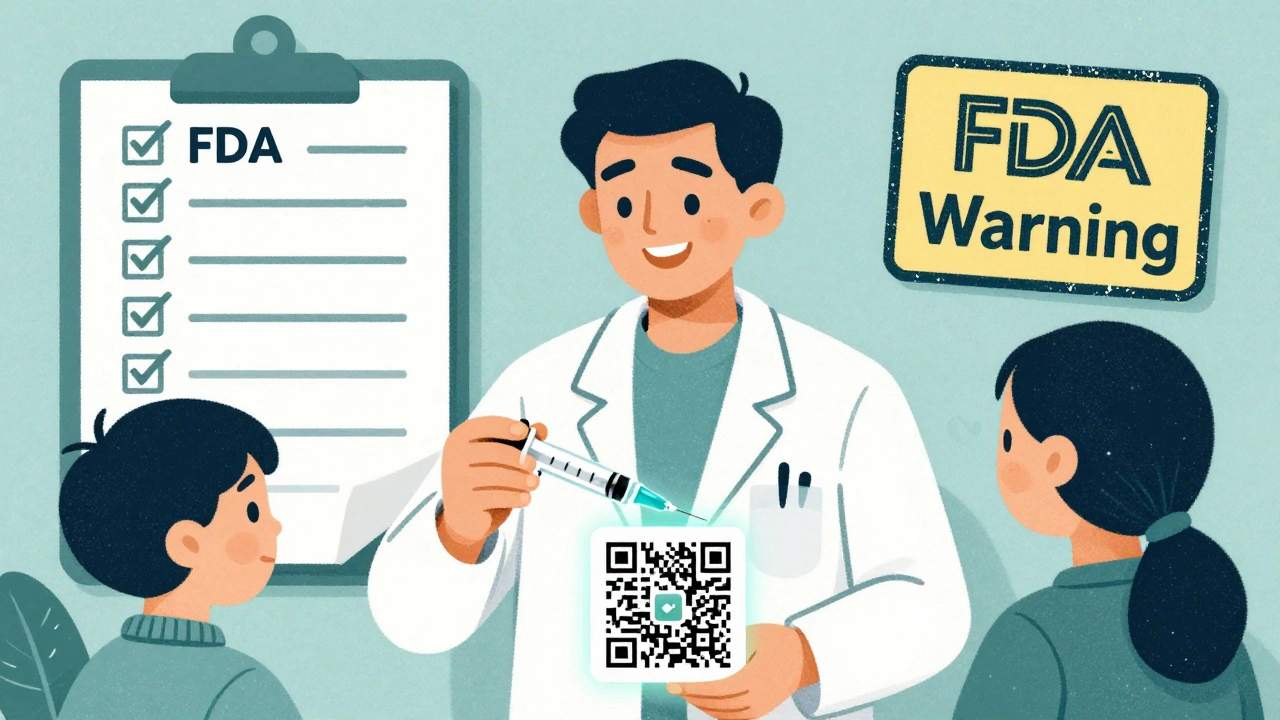
Labels are getting better. In 2024, the FDA started requiring a new “Liver Warning” on all acetaminophen products for kids under 12. It’s bold. It’s hard to miss.Also, more brands are adding QR codes that link to video instructions. Scan it with your phone and see exactly how to measure the dose. Some pharmacies now offer free dosing syringes with every purchase.
By 2026, 75% of children’s OTC meds are expected to have these video links. But don’t wait for that. Right now, you can find free dosing calculators online from trusted sources like HealthyChildren.org or the Children’s Hospital of Philadelphia. Bookmark one. Use it.
Final Checklist Before Giving Medicine
Before you give any OTC medicine to your child, run through this:- ✅ I know my child’s current weight (in pounds and kilograms)
- ✅ I checked the concentration (e.g., 160 mg/5 mL)
- ✅ I used the measuring tool that came with the bottle
- ✅ I didn’t use a kitchen spoon or cup
- ✅ I didn’t give another medicine with the same active ingredient
- ✅ I wrote down the time and dose
- ✅ I didn’t give more than the max doses per day
If even one of these is a no, stop. Call your doctor. Or go to a pharmacy. A pharmacist can help you read the label. They’re trained for this.
Can I use a regular teaspoon if I don’t have a dosing cup?
No. A household teaspoon can hold between 4.5 mL and 7 mL, which is up to 40% more than the standard 5 mL. That’s enough to cause an overdose. Always use the syringe or dosing cup that came with the medicine.
What if my child is under 2 years old and has a fever?
For babies under 3 months with a fever, call your doctor or go to the ER immediately. Don’t give any medicine unless instructed. For children 2-12 months, always check with your pediatrician before giving acetaminophen or ibuprofen. Weight-based dosing still applies, but medical advice comes first.
Is it safe to give ibuprofen to a child under 6 months?
No. Ibuprofen is not approved for children under 6 months of age. It can cause kidney damage in very young infants. If your baby under 6 months has a fever or pain, contact your pediatrician. They may recommend acetaminophen instead, but only after evaluating your child.
Why does the label say “Do not use with other medicines containing acetaminophen”?
Many cold, flu, and allergy medicines also contain acetaminophen. If you give Tylenol and a cold medicine together, you could give your child two doses of acetaminophen at once. That can lead to liver damage. Always read the “Active Ingredients” section on every medicine you give.
How do I know if I gave the wrong dose?
If you gave too much, watch for signs like nausea, vomiting, drowsiness, or yellowing of the skin or eyes (signs of liver stress). If you’re unsure, call Poison Control at 1-800-222-1222 (U.S.) or your local emergency number. Don’t wait for symptoms. It’s better to be safe.
If you’re ever in doubt, stop. Call your pediatrician. Or visit a pharmacy. Pharmacists are trained to help with dosing. They’ve seen this before. They won’t judge. They’ll help you get it right.
Medicine isn’t candy. It’s powerful. And when it’s given wrong, the consequences are real. But when you read the label carefully-weight first, tool second, never guess-you’re giving your child the safest care possible.


Ignacio Pacheco
December 3, 2025 AT 03:30So let me get this straight - we’re trusting parents to read tiny print on a bottle while sleep-deprived, stressed, and possibly drunk on caffeine? And we’re surprised kids end up in the ER? 😅
Makenzie Keely
December 5, 2025 AT 00:17THIS. So many parents don’t realize that ‘children’s’ doesn’t mean ‘one-size-fits-all.’ I used to give my daughter the same dose as my nephew until I read this - now I weigh her every time and write it down on my phone. Life-changing. Also, never trust a kitchen spoon. Ever. I’ve seen the results. It’s not pretty.
Katherine Gianelli
December 5, 2025 AT 03:10My kid was 18 months when I accidentally gave him ibuprofen instead of acetaminophen because I grabbed the wrong bottle in the dark. He didn’t get sick - but I lost sleep for a week. Now I label every bottle with a sharpie and keep them in separate drawers. Seriously. Do not underestimate how easy it is to mess this up. You’re not a bad parent for being scared - you’re a good one for reading this.
Myson Jones
December 6, 2025 AT 12:38It’s not just about reading the label - it’s about understanding the science behind it. The pharmacokinetics of acetaminophen in pediatric populations are non-linear and weight-dependent. Age-based dosing is a legacy heuristic from the 1970s. The AAP’s 23% error rate isn’t surprising - it’s a systemic failure of public health education. We need mandatory dosing literacy modules in pediatric clinics. Not just pamphlets.
parth pandya
December 8, 2025 AT 10:05good post but u forgot to mention that some brands use mg/ml instead of mg/5ml so always check the unit!! i once gave my son 10ml thinking it was 5ml cause the label said 160mg/ml but it was 160mg/5ml 😅
Albert Essel
December 9, 2025 AT 21:31One thing I’ve learned: if you’re unsure, ask. I used to think pharmacists were too busy. Turns out they love helping parents get this right. I went in last week with three bottles and a confused look - they spent 15 minutes walking me through each one. No judgment. Just help. We need more of that.
Charles Moore
December 11, 2025 AT 13:23Love this. I’m a dad of twins, and I used to just eyeball it. Now I have a laminated card in my wallet with the dosing chart for both kids. I take it to the pharmacy when I buy new meds. Simple. Effective. And I’ve told every parent I know. Seriously - if you read one thing today, make it this.
James Kerr
December 13, 2025 AT 07:02my kid’s pediatrician gave me a free syringe with a sticker that says ‘NO SPOONS’ on it. Best gift ever. 😊
Gene Linetsky
December 14, 2025 AT 03:15Let’s be real - this whole system is rigged. Big Pharma knows parents will mess up. They design labels to be confusing. They profit from ER visits. The FDA’s new ‘Liver Warning’? A PR move. They’ve known this for decades. The real solution? Ban OTC kids’ meds. Let doctors prescribe everything. Then we’ll see real safety.
Jim Schultz
December 15, 2025 AT 20:27Oh wow, another ‘read the label’ PSA. How novel. Did you also check the expiration date on your common sense? The fact that you need a 2,000-word essay to explain that you shouldn’t give your kid a tablespoon of syrup is terrifying. I mean, I get it - parenting is hard - but this isn’t rocket science. It’s medicine. And if you’re still using a kitchen spoon in 2025, maybe you shouldn’t be parenting. Just saying.
Joykrishna Banerjee
December 16, 2025 AT 03:58USA still relies on pounds? 😒 In India, we use kg - precise, metric, scientific. Why are you still using imperial units for medical dosing? It’s archaic. And your ‘round down’ rule? Inconsistent. Dosing should be calculated linearly - not rounded to arbitrary categories. Also, QR codes? Cute. But what about rural parents without smartphones? You’re designing for urban elites. Not real people.
Francine Phillips
December 18, 2025 AT 01:41i read this once and forgot about it. then my kid got a fever and i panicked. i think i gave the right dose. maybe. idk. anyway i’m tired.
Albert Essel
December 20, 2025 AT 00:14Just saw someone reply about using a kitchen spoon. I’ve done it. I’ve also used a medicine cup that didn’t have mL markings. I’ve given the wrong dose. I’ve cried after. But I learned. And now I carry a syringe in my diaper bag. It’s not about being perfect. It’s about being aware. And that’s what this post gives us - awareness. Thank you.