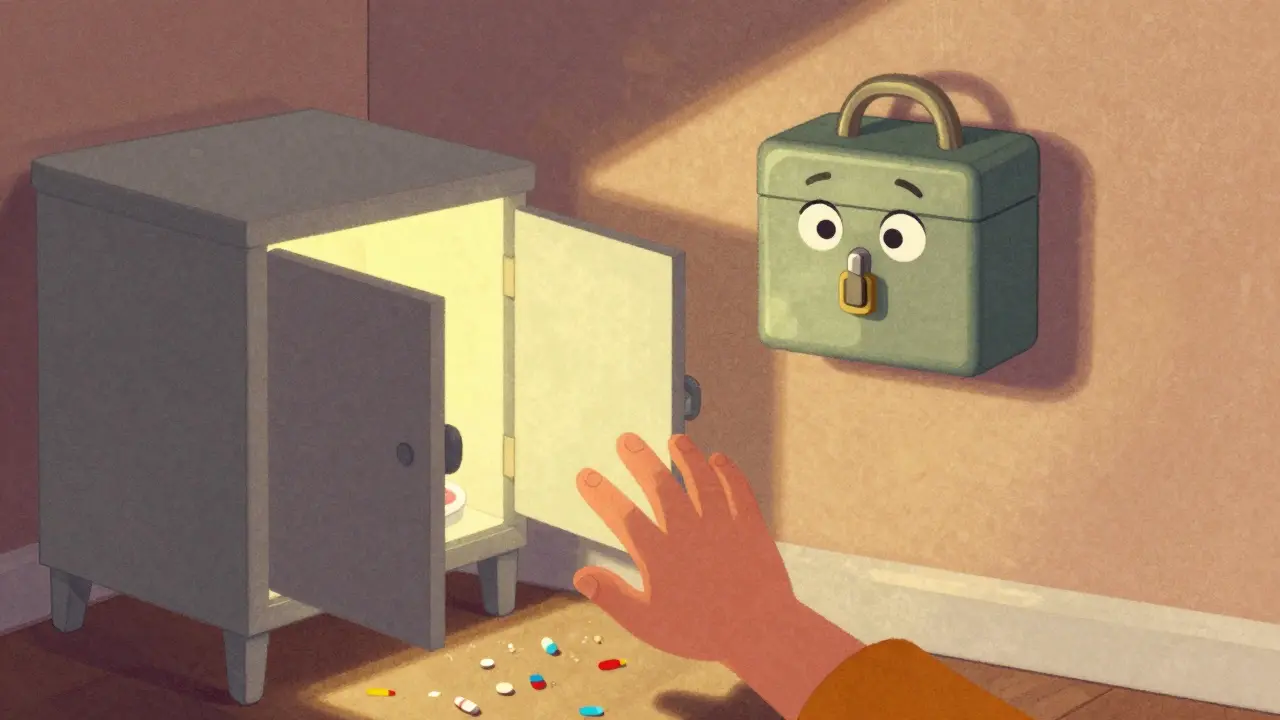
Every year in the U.S., around 60,000 children end up in the emergency room because they got into medications they weren’t supposed to. Most of these cases aren’t accidents caused by carelessness-they’re the result of medications being left within reach, even if they’re in child-resistant bottles. The truth is, those caps don’t work as well as you think. Half of kids aged 4 to 5 can open them in under a minute. If you’re keeping opioids, benzodiazepines, or stimulants at home-medications like hydrocodone, oxycodone, Xanax, or Adderall-you’re not just storing pills. You’re storing risk. And the safest way to manage that risk isn’t by hiding them under a pillow or taping them to the back of a cabinet. It’s by using a medication lockbox.
Why Lockboxes Are Necessary
Child-resistant packaging was designed to slow down access, not stop it. Kids are curious, quick, and surprisingly persistent. A 2023 study showed that 72% of children can find hidden medications within 30 minutes if they’re determined. Even if you think your home is safe, visitors-grandparents, cousins, teens-can accidentally or intentionally access unlocked meds. Prescription opioids alone caused over 16,700 overdose deaths in 2021. Many of those involved people who got pills from family medicine cabinets. Lockboxes create a physical barrier. No matter how clever a child is, how distracted an adult is, or how tempting the bottle looks, they can’t get in without the key, code, or fingerprint. This isn’t just theory. A 2020 study found households using lockboxes improved safe storage practices by 92% compared to those relying on caps or hiding spots. Emergency doctors see the difference. One pediatric ER physician in Alabama said her intervention group’s reported safe storage jumped 87% after lockboxes were provided.Which Medications Need a Lockbox?
Not every pill needs to be locked up. But some absolutely do. The CDC, AAP, and SAMHSA all agree: if it’s an opioid, benzodiazepine, or stimulant, it belongs in a lockbox. Here’s the short list:- Opioids: Hydrocodone (Vicodin, Norco), Oxycodone (Percocet, OxyContin), Fentanyl patches
- Benzodiazepines: Alprazolam (Xanax), Diazepam (Valium), Lorazepam (Ativan)
- Stimulants: Dextroamphetamine-amphetamine (Adderall), Methylphenidate (Ritalin, Concerta)
Types of Lockboxes and What to Look For
Not all lockboxes are the same. You need one that fits your needs-not just your budget.- Key locks: Simple, cheap, and reliable. But you have to keep the key somewhere safe-like on a separate keychain you never leave in your purse or wallet. Losing it means you’re locked out.
- Combination locks: No keys to lose. Most are 3- or 4-digit. Good for households with one or two people who can remember the code. But if you forget it, you’re stuck. Some models have reset features; check before you buy.
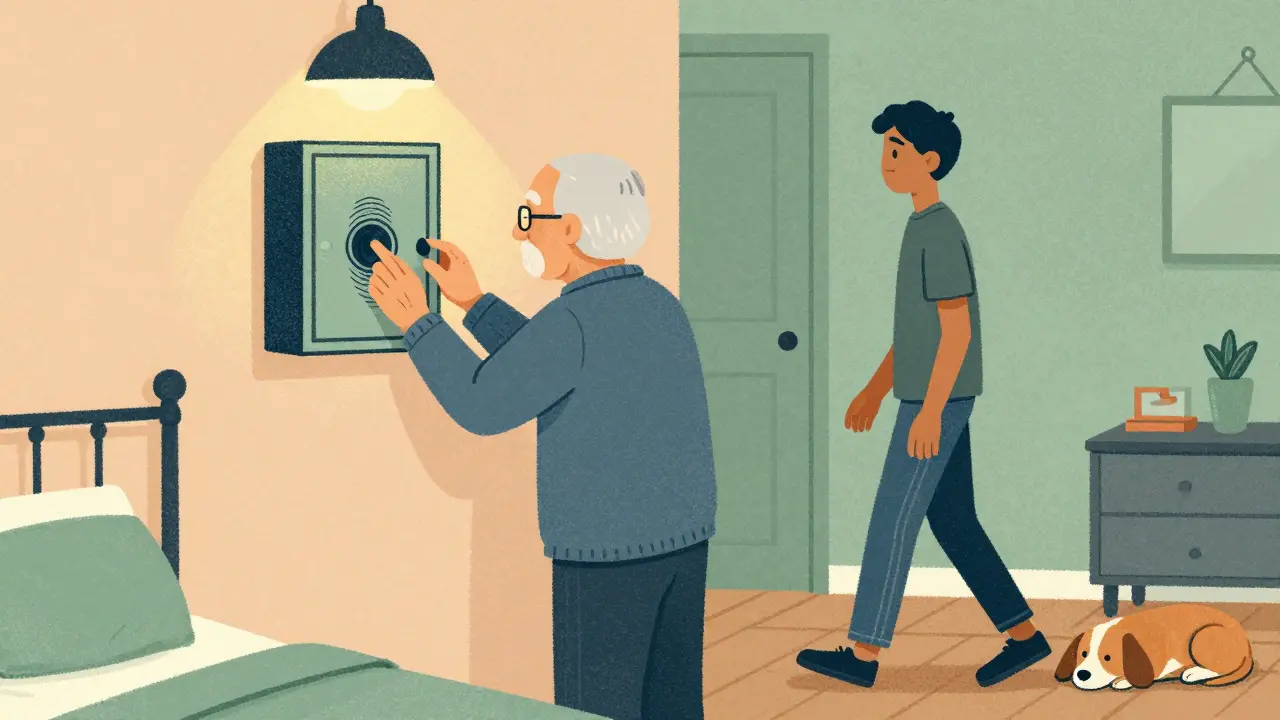
- Biometric (fingerprint): The most user-friendly option, especially for older adults or people with arthritis. These cost more-usually $30 to $50-but eliminate the hassle of codes or keys. They’re also faster in emergencies.
Where to Put It
Location is everything. A lockbox on a high shelf is useless if a toddler can pull a chair over. A box under the sink? Too damp. Behind a picture frame? Kids will find it. The best spots:- Inside a bedroom closet, mounted on the wall
- On a high shelf in a home office or study
- Inside a dresser drawer that’s locked (if the drawer itself can’t be pulled out)
How to Set It Up Properly
Getting the box isn’t enough. You need a system.- Identify all high-risk meds. Go through every cabinet. Check expiration dates. Toss anything old or unused-don’t just store it.
- Choose your lockbox. Pick the right size and type. Biometric is best if multiple people need access, or if someone has trouble with dials or keys.
- Install it securely. Mount it to the wall. Keep it out of reach of children and pets.
- Limit access. Only give keys or codes to two trusted adults. Never give them to teens or visitors.
- Check monthly. Make sure no one’s tampered with it. Count pills if you’re worried. Update your list if someone starts or stops a medication.
Common Mistakes and How to Avoid Them
People think they’re doing enough. They’re not.- Mistake: Storing the lockbox in an easy-to-reach spot. Solution: Mount it high and out of sight.
- Mistake: Giving the code to every family member. Solution: Only two people should know it. Even then, keep it locked when not in use.
- Mistake: Forgetting to update the box when meds change. Solution: Make it part of your monthly health routine-like checking smoke alarms.
- Mistake: Assuming child-resistant caps are enough. Solution: They’re not. Lockbox or nothing.
What About Seniors?
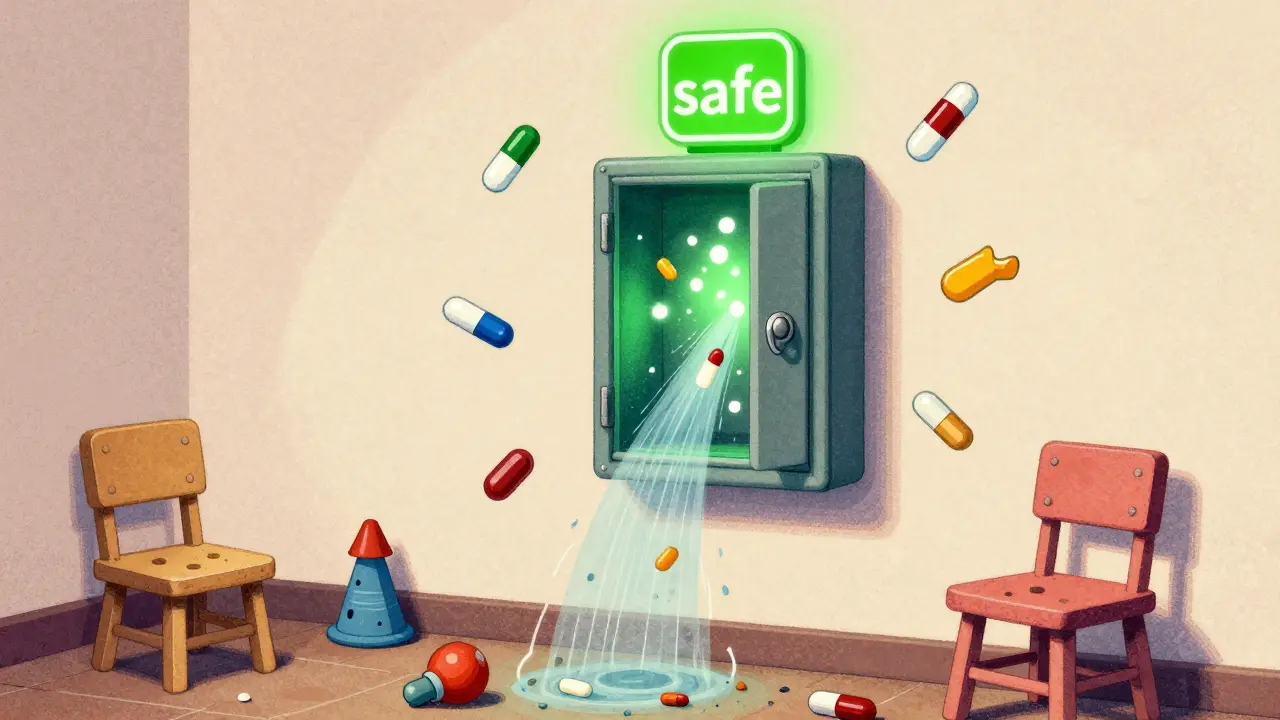
If you or someone you care for is over 75, combination locks and keys can be a real problem. Arthritis, tremors, or memory issues make them hard to use. That’s why biometric lockboxes are the smart choice for older adults. They’re fast, simple, and don’t require remembering anything. The National Council on Aging recommends them for seniors, especially if they’re taking multiple medications. Some newer models even have voice prompts or large buttons. Look for ones designed with accessibility in mind. Don’t let a lockbox become a barrier to getting medicine when it’s needed.What’s Next?
The future of medication safety is getting smarter. The FDA approved the first smart lockbox in May 2023-the MediVault Pro. It records who opens it, when, and how many pills were taken. It can even send alerts to a family member if someone tries to access it outside their prescription window. In 2024, new home builders in the U.S. are starting to include lockbox space in ‘Healthy Home’ certifications. That means future houses might come with a built-in spot for one. It’s not just a trend-it’s becoming standard. States are catching on too. Fourteen now require locked storage for opioid prescriptions if minors live in the home. And federal funding is still flowing: $15 million was allocated in 2023 to give away free lockboxes through public health programs.Final Thoughts
You don’t need to be a doctor to know that pills can kill. You don’t need to be a safety expert to understand that curiosity doesn’t care about warnings. A lockbox isn’t about distrust-it’s about responsibility. It’s about giving yourself peace of mind so you can focus on healing, not worrying. If you have high-risk medications at home, and there’s a child, teen, or older adult living with you-or even visiting-this isn’t optional. It’s the simplest, most effective thing you can do to prevent tragedy. Start today. Pick a box. Mount it. Lock it. And don’t look back.Can I just use a locked drawer instead of a lockbox?
Yes, but only if the drawer is securely mounted and can’t be pulled out. A standard dresser drawer can be emptied quickly by a determined child. A lockbox is designed to be a standalone barrier-harder to move, harder to break. For maximum safety, use a lockbox.
Do I need a lockbox if I don’t have kids?
Yes. Teens, visitors, houseguests, and even family members can access unlocked medications. Prescription drug misuse often starts with pills taken from a relative’s cabinet. Lockboxes protect everyone, not just children.
What if I forget the combination or lose the key?
Most lockboxes have a reset function or a backup key. Check the manual before you use it. If you lose both and can’t reset it, contact the manufacturer. Some offer replacement services for a small fee. Biometric models eliminate this risk entirely.
Are there free lockboxes available?
Yes. At least 22 U.S. states run free distribution programs through public health departments, hospitals, or pharmacies. Search for ‘Locks Save Lives’ or your state’s name + ‘medication lockbox program.’ Many also offer free disposal kits for unused pills.
Can I store insulin or other refrigerated meds in a lockbox?
Standard lockboxes aren’t refrigerated. For insulin or other temperature-sensitive meds, use a lockbox with a built-in cooling compartment, or keep the med in the fridge and lock the entire fridge door. Some premium models now include climate control-check product specs before buying.


Kunal Kaushik
February 3, 2026 AT 09:04Justin Fauth
February 3, 2026 AT 17:32Meenal Khurana
February 4, 2026 AT 02:04Joy Johnston
February 4, 2026 AT 21:22Shelby Price
February 6, 2026 AT 12:05Jesse Naidoo
February 8, 2026 AT 11:09Sherman Lee
February 8, 2026 AT 15:56Lorena Druetta
February 9, 2026 AT 08:42Zachary French
February 10, 2026 AT 08:45Daz Leonheart
February 11, 2026 AT 21:57Nathan King
February 12, 2026 AT 18:24Antwonette Robinson
February 13, 2026 AT 23:00caroline hernandez
February 14, 2026 AT 05:23Joseph Cooksey
February 14, 2026 AT 14:29Coy Huffman
February 14, 2026 AT 17:52