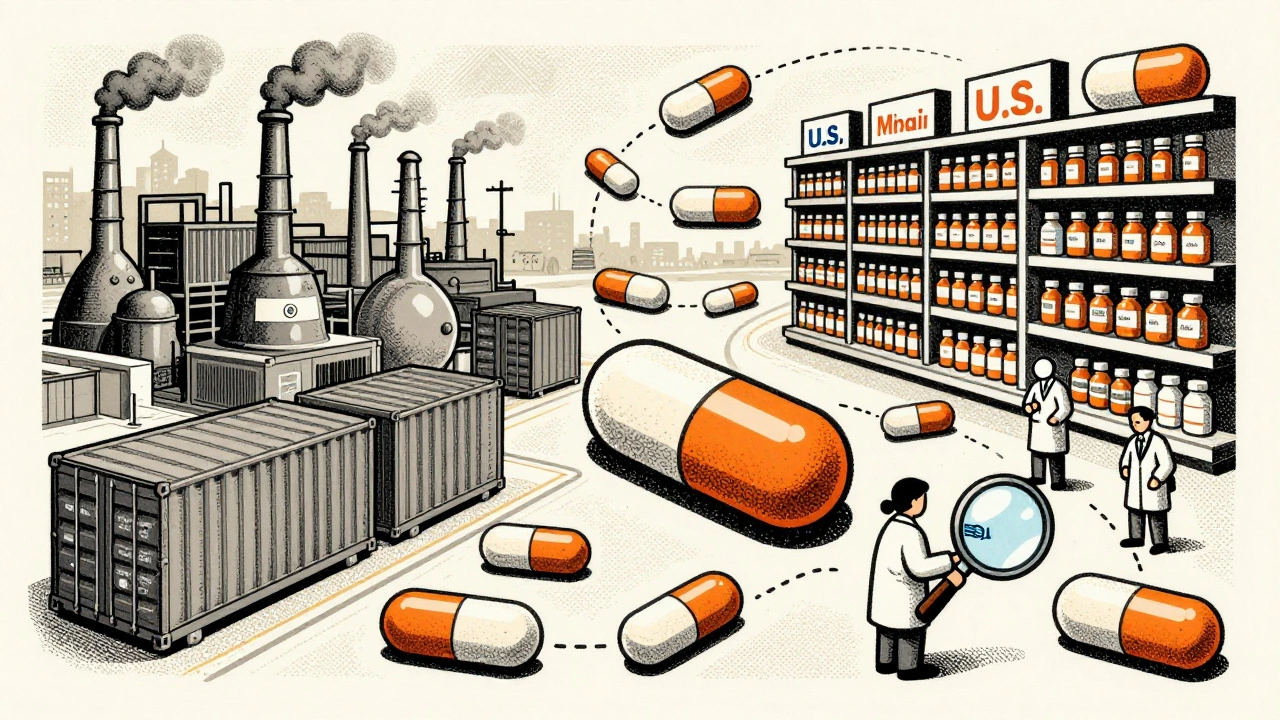
Every time you pick up a generic pill at the pharmacy, it didn’t just appear on the shelf. It traveled through a global network of factories, regulators, distributors, and negotiators - many of whom you’ll never hear about, but all of whom shape the price and availability of your medicine. In the U.S., generic drugs make up 90% of all prescriptions filled, yet they account for only 23% of total drug spending. That’s the promise of generics: same effectiveness, lower cost. But how do they actually get from a factory in India to your local pharmacy? And why does the price sometimes still feel high?
Where It Starts: The Active Ingredient
It all begins with the Active Pharmaceutical Ingredient, or API. This is the chemical that actually does the work in your body - whether it’s lowering blood pressure, fighting infection, or managing diabetes. But here’s the twist: less than 12% of API manufacturing happens in the United States. Nearly 88% takes place overseas, mostly in China and India. These countries produce APIs at scale, often at a fraction of the cost. But that global reliance creates risk. During the pandemic, when factories in India shut down or shipping slowed, over 170 generic drugs faced shortages in the U.S. The FDA responded by ramping up inspections of foreign facilities - from just 248 in 2010 to 641 in 2022 - trying to keep quality high even when production is far away.Getting Approval: The ANDA Process
Before any generic drug can be sold, the manufacturer must prove it’s identical to the brand-name version. That’s done through an Abbreviated New Drug Application, or ANDA, submitted to the FDA. Unlike brand drugs, which require full clinical trials, generics only need to show they deliver the same amount of active ingredient at the same rate in the body. This is called therapeutic equivalence. The FDA reviews this data, inspects the manufacturing site, and only then grants approval. This step is critical. Without it, a generic drug can’t legally enter the U.S. market. But approval doesn’t mean instant availability. Many companies file ANDAs for the same drug, and the first to get approval often gets a 180-day exclusivity window - a chance to be the only generic on the market before others join, driving prices down.Manufacturing: More Than Just Mixing Powder
Once approved, the drug moves into production. This isn’t just dumping API into capsules. Manufacturers must follow strict Good Manufacturing Practices (GMP). Every batch is tested for potency, purity, and stability. Temperature, humidity, and even air quality in the factory matter. A single batch that fails a test can be destroyed - and that’s before it ever leaves the plant. Quality control happens at multiple stages: raw material intake, during mixing, after packaging, and before shipment. Some companies use AI to predict when equipment might fail or when a batch might go off-spec. Others are testing blockchain to track every step of the process - from API shipment to final pill - so if something goes wrong, they can trace it fast.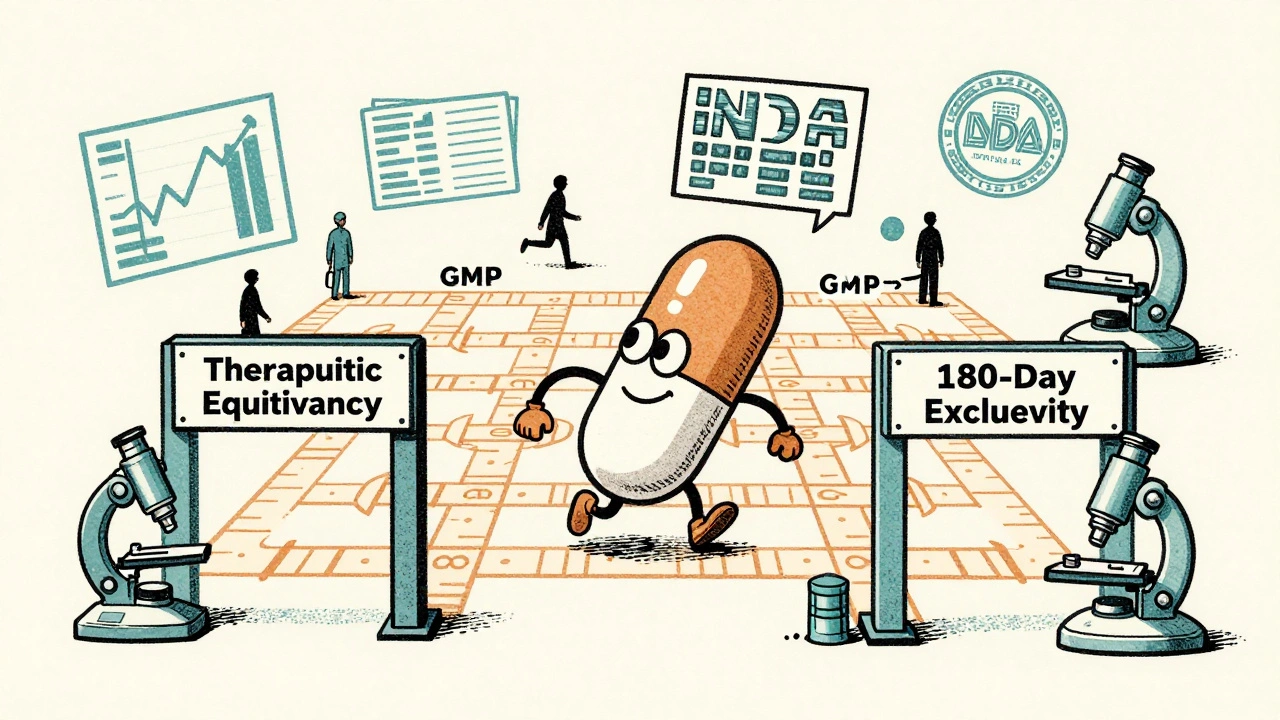
The Middlemen: Wholesalers and Distributors
After manufacturing, the drugs don’t go straight to pharmacies. They go to wholesale distributors - companies like McKesson, AmerisourceBergen, and Cardinal Health. These distributors buy in bulk from manufacturers, often getting discounts for paying quickly or ordering large volumes. Then they sell to pharmacies at a price called the Wholesale Acquisition Cost (WAC). But here’s where things get messy: the WAC isn’t what pharmacies actually pay. They negotiate discounts off that price. Big chains like CVS or Walgreens get better deals because they buy so much. Independent pharmacies? They often pay closer to full WAC. And because there are so many middlemen between the factory and the shelf, it’s hard to know exactly how much each step adds to the final cost.Pharmacy Reimbursement: The MAC Puzzle
When you pay $4 for your generic blood pressure pill, that’s not what the pharmacy paid for it. That $4 is what your insurance - or Medicare - reimburses them. And that reimbursement is based on something called Maximum Allowable Cost, or MAC. The MAC is a set price ceiling for each generic drug, based on the lowest cost among all manufacturers. For example, if three companies make 10mg atorvastatin, the MAC is set at the lowest acquisition cost, plus a small dispensing fee. But here’s the problem: if the pharmacy bought the drug for $5 but the MAC is $4.50, they lose money on every prescription. A 2023 survey by the American Pharmacists Association found that 68% of independent pharmacies say MAC reimbursement is often below what they paid. That’s why some small pharmacies are struggling - they’re being forced to sell at a loss just to stay in network.Who Controls the Money: PBMs and the Hidden Layer
Behind the scenes, Pharmacy Benefit Managers - or PBMs - are the real power players. CVS Caremark, OptumRX, and Express Scripts control about 80% of the U.S. PBM market. They don’t make drugs. They don’t run pharmacies. But they decide which drugs are covered, which pharmacies you can use, and how much those pharmacies get paid. PBMs negotiate rebates with brand-name drugmakers - sometimes billions of dollars - and use those rebates to lower premiums for insurers. But for generics? There are almost no rebates. Instead, PBMs set the MAC. And because they also own big pharmacy chains, critics say they have a conflict of interest: they can steer patients toward their own pharmacies by setting MACs that hurt competitors. Dr. Aaron Kesselheim from Harvard calls it a “lack of transparency.” No one - not even pharmacists - knows the full cost chain from manufacturer to patient.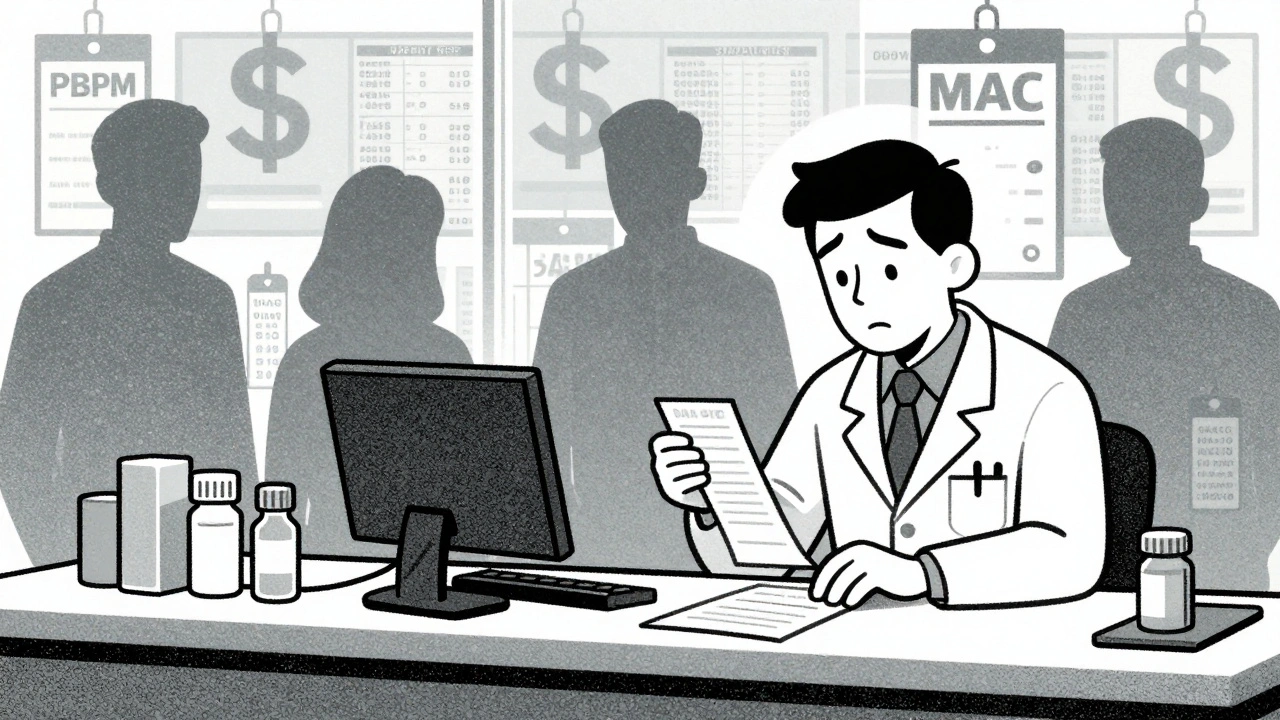



Tejas Bubane
December 8, 2025 AT 16:42The entire generic drug system is a house of cards built on cheap labor and regulatory arbitrage. India and China don’t care about your blood pressure pill-they care about export quotas and profit margins. The FDA inspections? A PR stunt. They inspect 641 facilities a year? There are thousands. And don’t get me started on the ANDA backlog. This isn’t a supply chain-it’s a gamble with your life.
Ajit Kumar Singh
December 9, 2025 AT 03:48Why are we even surprised the system is broken when we outsource everything and then act shocked when it fails?? We used to make our own meds in America!! Now we depend on foreign factories that could shut down tomorrow because of a monsoon or a trade war and we’re left scrambling for pills?? This is national security 101 and nobody wants to talk about it
Maria Elisha
December 9, 2025 AT 22:58My pharmacy just told me my $4 generic was out of stock because the MAC got cut again. I paid $12 for it last month. Now I’m being told to wait two weeks. Meanwhile, my insurance premium went up. This whole thing is a joke.
Lisa Whitesel
December 11, 2025 AT 02:54Of course the PBM-owned pharmacies are thriving while independents are bleeding out. It’s not a coincidence. It’s a rigged game. The FDA, Congress, and the media all look away because the money’s too good for the people who pull the strings. And you think your $4 pill is a win? It’s a trap.
Larry Lieberman
December 12, 2025 AT 06:25AI predicting shortages?? Blockchain tracking pills?? That’s wild 🤯 I had no idea this whole system was basically a sci-fi thriller written by a bureaucrat. Someone needs to make a documentary about this. Like, immediately.
Sabrina Thurn
December 13, 2025 AT 02:15The structural inefficiencies here are staggering. The concentration of manufacturing, the opacity of MAC pricing, the perverse incentives embedded in PBM rebate structures-all of it creates a classic market failure. What’s missing is price transparency and regulatory alignment. Until we decouple reimbursement from wholesale acquisition cost and mandate real-time supply chain visibility, we’re just rearranging deck chairs on the Titanic.
Richard Eite
December 13, 2025 AT 22:38China and India are stealing our medicine supply. We need to ban all foreign API imports. Build factories here. Make pills in America. End of story. If you can’t afford your meds, blame the liberals who outsourced everything. We used to be a superpower. Now we’re begging for pills from dictators.
Ronald Ezamaru
December 14, 2025 AT 03:22I’ve worked in a small pharmacy for 18 years. We’ve lost 40% of our generic drug suppliers in the last five years. Not because of shortages-because the reimbursement is lower than what we paid. We don’t make money on generics. We lose money on them. But we still fill them because someone’s life depends on it. This isn’t business. It’s charity with a side of bureaucracy.
Rich Paul
December 15, 2025 AT 02:53so like the pbms are basically middlemen who take a cut and then set the mac to screw over small pharmacies?? and no one can see the real cost?? bro that’s wild. like why even have a system if it’s just a black box? also did you know some of these pills are made in a building with no air conditioning??
Ruth Witte
December 16, 2025 AT 14:23WE CAN FIX THIS!! 🚀 Imagine if every pill had a QR code you could scan to see its whole journey-from factory to your hand. Transparency = trust. Let’s demand it! Let’s make this a movement! 💪💊 #TransparencyInMedicine #GenericDrugRevolution
Michael Robinson
December 18, 2025 AT 11:51People think cheap medicine means it’s low quality. But it’s not about cost. It’s about value. A pill that works is a pill that works. The problem isn’t the drug. It’s the system that turns something simple into something broken. We’ve lost sight of what medicine is for.
Chris Marel
December 18, 2025 AT 14:03As someone from Nigeria, I see how hard it is to get even basic generics here. The supply chain is even more broken than in the U.S. But I’m glad someone is finally talking about this. Maybe if we understand how it works here, we can fix it everywhere.
Evelyn Pastrana
December 18, 2025 AT 21:38So let me get this straight: we outsource the pills, then outsource the pricing, then outsource the blame? And we wonder why people are angry? 🤦♀️ At least the pills work. That’s the only thing keeping us from rioting.