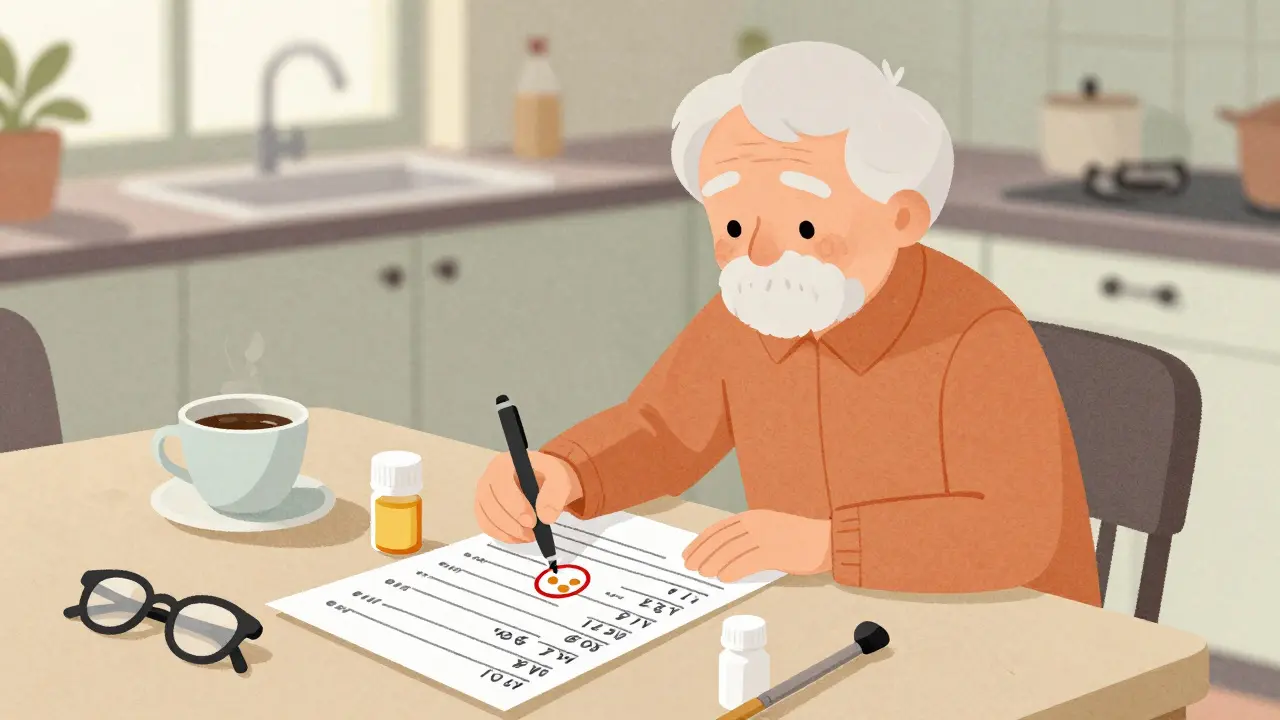
Many older adults take five or more medications every day. Some of these pills were prescribed years ago for conditions that have changed-or even disappeared. But they’re still on the list. And that’s not just common. It’s risky. About 15% of seniors on five or more drugs experience harmful side effects like dizziness, confusion, or falls. These aren’t just side effects. They’re preventable. The solution isn’t always adding more medicine. Sometimes, it’s taking some away. That’s called deprescribing.
Why Deprescribing Matters More Than You Think
Deprescribing isn’t about quitting medicine because you’re tired of it. It’s about making sure every pill you take still has a good reason to be there. For example, a blood pressure drug that was needed after a heart attack might not be helping anymore if your pressure is now consistently low. Or a statin for cholesterol might have been started when you were 60, but now at 82, the long-term benefits don’t outweigh the muscle pain or liver strain it’s causing. The goal isn’t fewer pills. It’s better days.Research shows that 68% of seniors would happily take fewer medications-if their doctor brought it up. But only 12% of doctors initiate the conversation. That means the ball is often in your court. And that’s okay. You’re not being difficult. You’re being smart.
What to Say-And What Not to Say
Don’t start with, “I want to take fewer pills.” That’s vague. Doctors hear that all the time. And sometimes, they dismiss it because it doesn’t point to a specific problem.Instead, connect your concern to your life. Say something like: “I’ve been feeling dizzy after I take my evening blood pressure pill. Last week, I nearly fell getting up to go to the bathroom. I really want to keep walking my dog every morning without fear.” Or: “I used to enjoy gardening, but now I’m too tired by noon. Could any of these meds be making me sluggish?”
Studies show that when patients link medication side effects to real-life goals-like staying independent, playing with grandchildren, or walking without help-their doctors are 5.8 times more likely to agree to a plan. The phrase “This medicine might be hurting more than helping” gets a 4.7 out of 5 response rate in patient preference surveys. “I can’t afford this” or “I don’t have long to live” get much lower responses. Focus on how you feel now, not how long you might live.
Prepare Before You Walk In
Don’t rely on memory. Write it down. Here’s what to bring:- A complete list of every medication, including over-the-counter drugs, vitamins, and supplements. Many people forget their daily aspirin or melatonin.
- Notes on side effects: When do they happen? How bad? For example: “Drowsiness starts 30 minutes after taking the sleeping pill. I miss breakfast because I’m still groggy.”
- One or two medications you’re most worried about. Don’t try to tackle them all at once. Pick the one causing the biggest problem.
- A clear goal: “I want to reduce falls so I can keep living alone.” or “I want to have more energy to visit my daughter on weekends.”
People who bring a written list and specific concerns are 37% more likely to get a deprescribing plan approved. And if you’ve read about the Beers Criteria or STOPP/START guidelines (both are trusted tools doctors use to spot risky meds), print out a page or two. It shows you’ve done your homework-and it gives your doctor a useful reference.
Use the Ask-Tell-Ask Method
This simple three-step technique works better than arguing or pleading:- Ask: “What’s your view on how my medications are working for me right now?” This opens the door without sounding confrontational.
- Tell: “I’ve noticed I’ve been unsteady since I started this new pain pill. I’m scared I’ll fall. I’ve read that some meds like this can cause balance issues in older adults.”
- Ask: “What would be the safest way to test if reducing this could help?”
This method works because it turns the conversation into a team effort. Doctors are more willing to adjust meds when they feel you’re partnering with them-not challenging them.
Expect a Slow Process
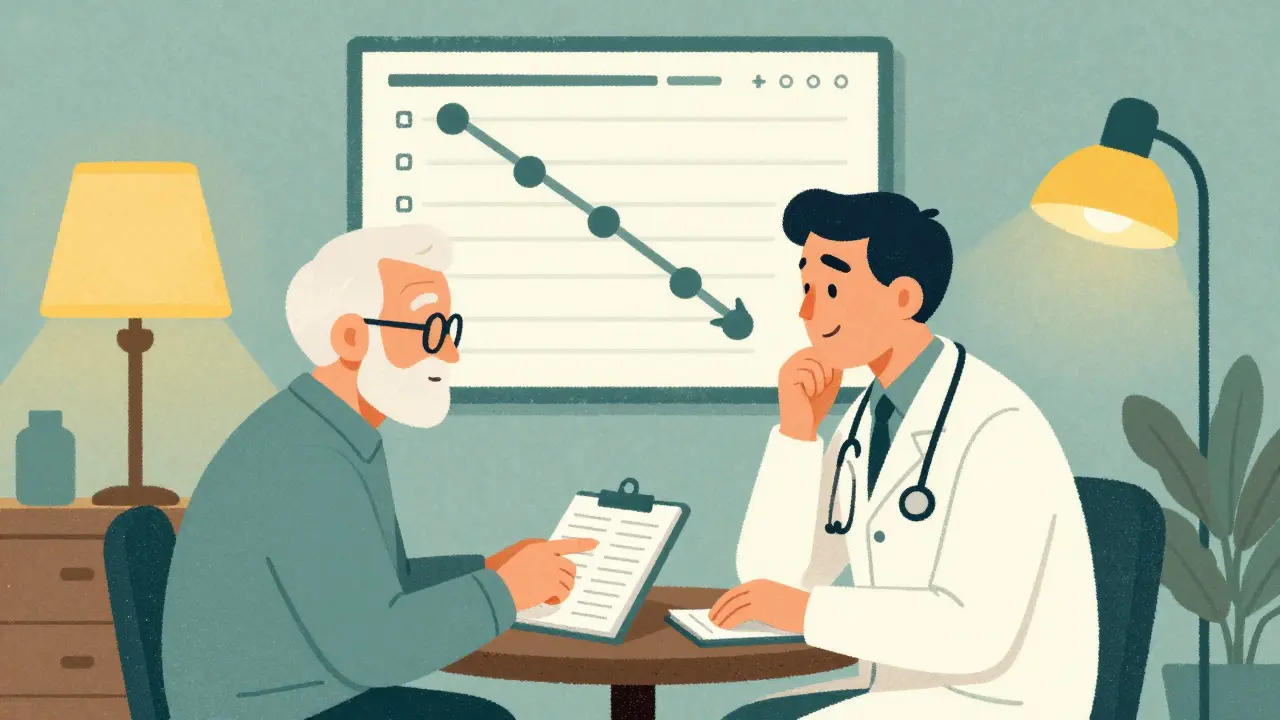
You won’t walk out with a prescription to stop a drug that day. That’s not how it works. Most successful deprescribing happens gradually. A 25% dose reduction every month. A “drug holiday” where you skip it for a few days to see how you feel. Monitoring is key. Your doctor will likely want to check your blood pressure, kidney function, or balance after a change.Don’t be surprised if they say, “Let’s wait and see.” That doesn’t mean no. It means they’re being careful. Ask: “Can we schedule a follow-up in six weeks to check how I’m doing?” That sets the next step.
What If They Say No?
Sometimes, doctors say no because they’re worried about risks. Or they’re pressed for time. Or they don’t feel confident in deprescribing. That’s not the end.If you’re turned down, ask: “Is there another specialist who could help me review these meds?” A geriatrician, pharmacist, or geriatric care manager often has more training in this area. Many hospitals now have medication therapy management services-free for Medicare patients. Ask your clinic if they offer one.
Also, remember: You can always come back. Schedule another appointment in three months. Bring updated notes. Say: “I’ve been tracking my energy levels since we talked. I’m feeling better on some days. Can we revisit reducing the sleeping pill?”
Why This Is Becoming Easier
Things are changing. In 2024, Medicare made medication reviews part of the Annual Wellness Visit. That means your doctor gets paid to talk about your meds-not just check your blood pressure. Electronic health records now flag high-risk prescriptions for seniors automatically. And public awareness campaigns like the CDC’s “Right Size My Meds” are helping people understand this isn’t a secret-it’s standard care.Still, only 22% of primary care doctors feel fully trained in deprescribing. That’s why your preparation matters so much. You’re not just asking for help. You’re helping your doctor do their job better.
Real Success Stories
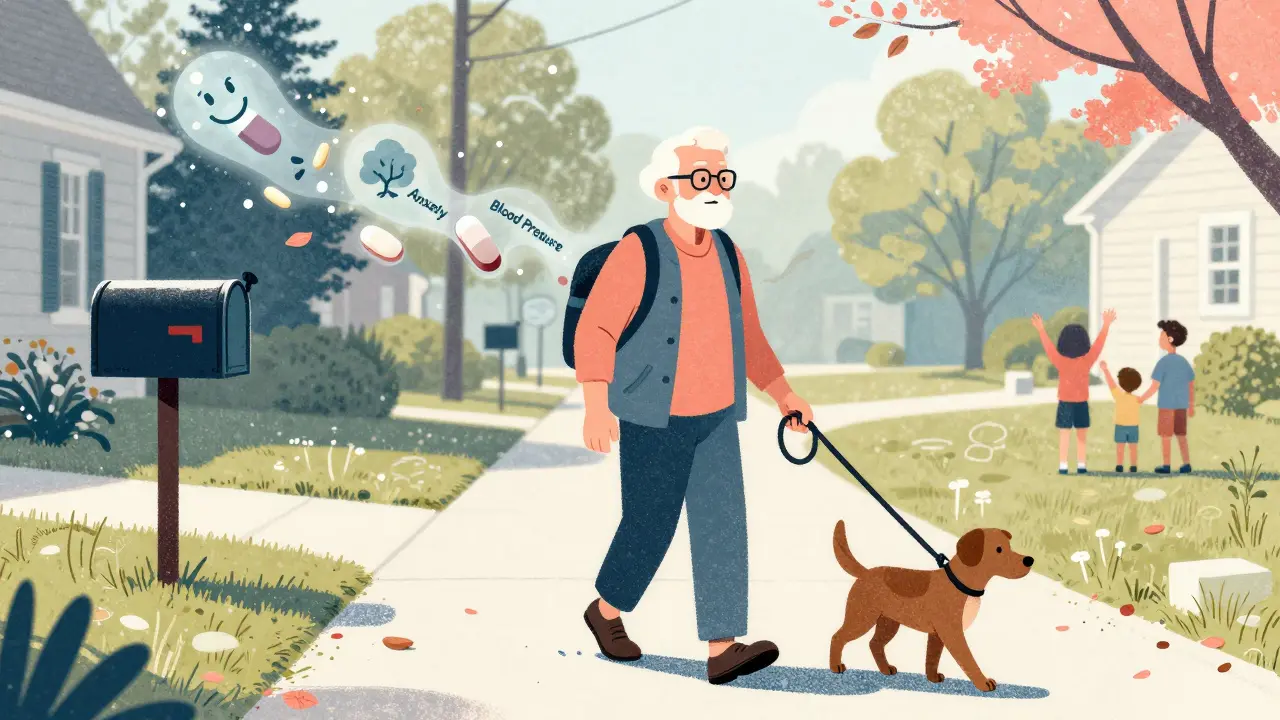
One woman in Ohio brought a journal showing how her anxiety pill made her forget names and miss calls from her grandkids. Her doctor cut the dose in half. Within a month, she remembered her grandson’s birthday for the first time in two years. Another man in Florida had been on three blood pressure pills for 15 years. His pressure was consistently 100/60-perfectly normal. He felt weak and dizzy. After a slow taper, he stopped one pill. Now he walks three miles a week without fatigue. These aren’t rare cases. They’re the result of one simple thing: a patient who spoke up-clearly, calmly, and with purpose.You’re Not Asking for Less Care. You’re Asking for Better Care.
Some people worry that reducing meds means giving up. But it’s the opposite. It’s choosing quality over quantity. It’s choosing balance over pills. It’s choosing your life over your medication list.There’s no shame in wanting to feel better. No weakness in wanting to walk without fear. And no burden in asking your doctor to help you get there.
Is deprescribing the same as stopping medication cold turkey?
No. Deprescribing means slowly and safely reducing or stopping a medication under medical supervision. Stopping suddenly can cause withdrawal symptoms, rebound high blood pressure, or worsening of the original condition. Most successful deprescribing plans involve gradual dose reductions over weeks or months, with regular check-ins to monitor how you’re doing.
What if I’m afraid my condition will come back?
That’s a common fear-and a valid one. But many medications are prescribed for conditions that improve over time. For example, a statin for high cholesterol might have been necessary after a heart attack, but if your cholesterol is now normal and you’re 80, the long-term benefit is small. Your doctor will monitor you closely during deprescribing. If symptoms return, the medication can be restarted. The goal is to avoid taking drugs that no longer help you.
Can I just stop a medication on my own?
Never. Some medications, like antidepressants, blood pressure pills, or steroids, can cause serious withdrawal effects if stopped abruptly. Even “harmless” supplements like melatonin or magnesium can interact with other drugs. Always talk to your doctor first. They’ll help you decide which meds are safe to reduce and how to do it safely.
What if my doctor doesn’t take me seriously?
If your doctor dismisses your concerns, ask for a referral to a geriatrician, pharmacist, or a medication therapy management program. Many hospitals and clinics offer these services, especially for Medicare patients. You can also request a second opinion. Your health matters enough to find a provider who listens.
How do I know if a medication is no longer needed?
Look for signs like: the original reason for the drug is gone (e.g., infection cleared), side effects are affecting your daily life, or the drug’s benefit takes years to show but you don’t expect to live that long. Trusted tools like the Beers Criteria and STOPP/START guidelines help doctors identify potentially inappropriate meds for seniors. You can find summaries of these online from reputable sources like the American Geriatrics Society or Deprescribing.org.
Will my insurance cover a medication review?
Yes-if you’re on Medicare. Since 2024, the Annual Wellness Visit includes a mandatory medication review, and it’s fully covered. Many private insurers now follow suit. Ask your doctor’s office if they offer a “medication therapy management” service. These are often free and include one-on-one sessions with a pharmacist to review your entire list.
Next Steps
Start today. Grab a piece of paper. Write down every pill, patch, and supplement you take. Next to each, note any side effect you’ve noticed-even if you think it’s minor. Then, pick one goal: “I want to sleep through the night without grogginess,” or “I want to walk to the mailbox without help.”Call your doctor’s office and say: “I’d like to schedule a 20-minute appointment for a medication review.” Don’t say “I want to stop some pills.” Say “I want to make sure I’m only taking what I need.”
You’ve lived with these meds for years. Now it’s time to make sure they’re working for you-not against you.



Priscilla Kraft
January 11, 2026 AT 16:06I literally cried reading this. My grandma took 12 pills a day and felt like a zombie. We started deprescribing last year-cut her sleep med and one blood pressure pill. Now she dances in the kitchen again 😭💖
Sam Davies
January 12, 2026 AT 20:57Oh wow, another ‘take fewer pills’ manifesto. Did you get this from a wellness influencer on TikTok? I’m sure the FDA is just waiting for your blog post to update their guidelines. 🙄
Christian Basel
January 14, 2026 AT 04:56Deprescribing is a subset of polypharmacy risk mitigation within the geriatric pharmacotherapy paradigm. The Beers Criteria and STOPP/START frameworks are essential, but without pharmacokinetic and pharmacodynamic profiling, you're just guessing. Also, most primary care docs don't have time for this-EMR alerts are garbage. You need a clinical pharmacist embedded in the workflow. Period.
Jennifer Littler
January 15, 2026 AT 07:12As a nurse who’s worked in geriatrics for 18 years, I’ve seen this play out too many times. Patients come in with a binder full of meds, scared to say anything. Then they whisper, ‘I just don’t feel like myself.’ That’s the real red flag. The system doesn’t reward stopping meds-it rewards prescribing. This post? It’s the manual we should’ve had decades ago.
Jason Shriner
January 17, 2026 AT 02:54so like... what if your doctor is just a robot programmed to say 'more pills'? what if they don't even look at your face? what if they're just trying to hit their qapi metrics? what if your life is just a checkbox on a spreadsheet? 🤔
Alfred Schmidt
January 19, 2026 AT 02:25I’ve been saying this for YEARS! My mom was on 11 meds-she started falling, forgetting names, crying for no reason. I took her to a geriatrician. We cut 5. She’s alive. She’s happy. And the doctor? He acted like I was asking him to perform surgery without anesthesia. I’m not ‘anti-med.’ I’m pro-CLARITY. And if your doctor doesn’t get it? FIRE THEM.
Sean Feng
January 20, 2026 AT 05:11My uncle died from a bad reaction to a blood thinner he didn't need. He was 83. No one ever asked if he still needed it. This is not a suggestion. This is a warning.
Vincent Clarizio
January 20, 2026 AT 12:52Think about it. We live in a world where we optimize our coffee, our sleep, our podcasts, our Instagram feeds… but when it comes to the actual chemicals flooding our bodies? We just shrug and say ‘oh well, the doctor said so.’ We’ve outsourced our autonomy to white coats in 15-minute slots. Deprescribing isn’t about pills-it’s about reclaiming your body from the medical-industrial complex. It’s existential. It’s revolutionary. It’s… your right.
Alex Smith
January 22, 2026 AT 07:57Love this. My dad’s doctor didn’t even know he was taking melatonin and aspirin together. We brought a list. Asked the ask-tell-ask thing. They cut the aspirin. Dad’s stomach stopped burning. Simple. But nobody ever asks. So we did. And now my mom’s doing it too. You don’t need a PhD. You just need to show up.
Adewumi Gbotemi
January 22, 2026 AT 12:59My cousin in Lagos takes 7 pills for nothing. Nigerian doctors give pills like candy. This post should be translated. People need to know they can ask.
Priya Patel
January 24, 2026 AT 06:00My mom’s 78. She took a sleeping pill for 12 years. We cut it slow. She said she felt ‘lighter’-like her brain finally stopped being full of cotton. Now she reads novels at night. I cried. Not because she stopped a pill. Because she got her life back.