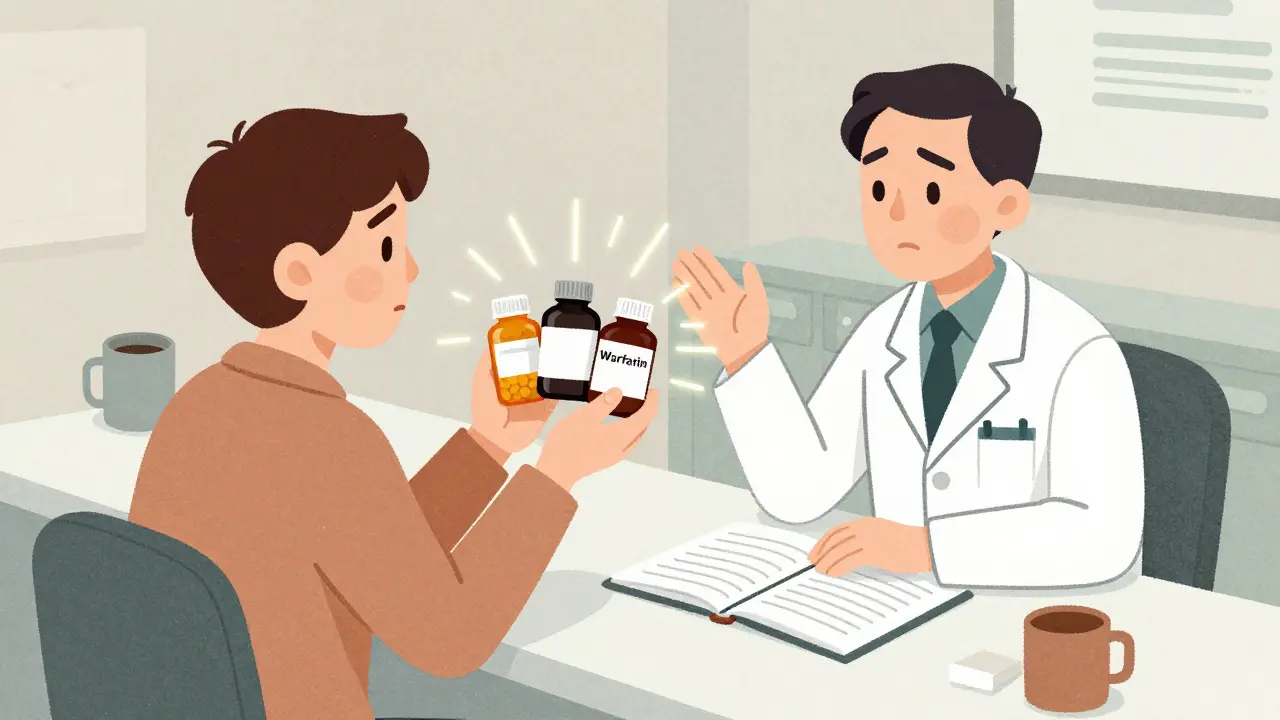
It’s 2025. You’re taking turmeric for joint pain, magnesium for sleep, and a daily multivitamin because you heard it’s good for your heart. You’ve been doing it for years. You feel fine. So why would you mention it to your doctor?
Because what you don’t say could hurt you.
Most people assume supplements are harmless. After all, they’re labeled ‘natural.’ But ‘natural’ doesn’t mean safe-especially when mixed with prescription drugs. St. John’s wort can make your birth control fail. Garlic pills can turn your blood thinners into a ticking time bomb. Turmeric might interfere with your blood pressure meds. And your doctor? They won’t know unless you tell them.
A 2023 study found that only 33% of people taking herbal supplements or vitamins actually told their doctor. That means two out of three patients are flying blind-while their provider is guessing what’s in their system. This isn’t just about honesty. It’s about safety.
Supplements Aren’t Regulated Like Medicines
The FDA doesn’t test supplements before they hit the shelf. Unlike prescription drugs, which go through years of clinical trials, dietary supplements can be sold without proof of safety or effectiveness. All the law requires is a label that says: ‘Not evaluated by the FDA. Not intended to diagnose, treat, cure, or prevent any disease.’
That means what’s on the bottle might not be what’s inside. A 2022 ConsumerLab.com test found that 20% of herbal products didn’t contain the main ingredient listed. Others had hidden additives-like prescription drugs slipped into ‘natural’ weight-loss pills. Even trusted brands aren’t immune.
When you don’t tell your doctor what you’re taking, you’re leaving them in the dark about what’s really in your body. And if something goes wrong-like abnormal bleeding, liver damage, or a dangerous drop in blood pressure-they won’t know where to look.
Herb-Drug Interactions Are Real-and Dangerous
Herbs and supplements don’t just sit quietly in your system. They interact. Like drugs, they’re metabolized by the liver. They affect enzymes that break down medications. And they can make those meds work too well-or not at all.
Here are real examples:
- St. John’s wort reduces the effectiveness of antidepressants, birth control pills, blood thinners, and even some cancer drugs.
- Ginkgo biloba increases bleeding risk when taken with aspirin, warfarin, or NSAIDs like ibuprofen.
- Green tea extract can raise blood pressure and interfere with beta-blockers.
- Calcium supplements block absorption of thyroid medication if taken at the same time.
- Garlic supplements thin the blood-dangerous before surgery or if you’re on anticoagulants.
A 2021 study in JAMA Internal Medicine found that nearly 1 in 5 adults taking five or more medications were also using supplements with known interactions. Many didn’t know. Their doctors didn’t know either.
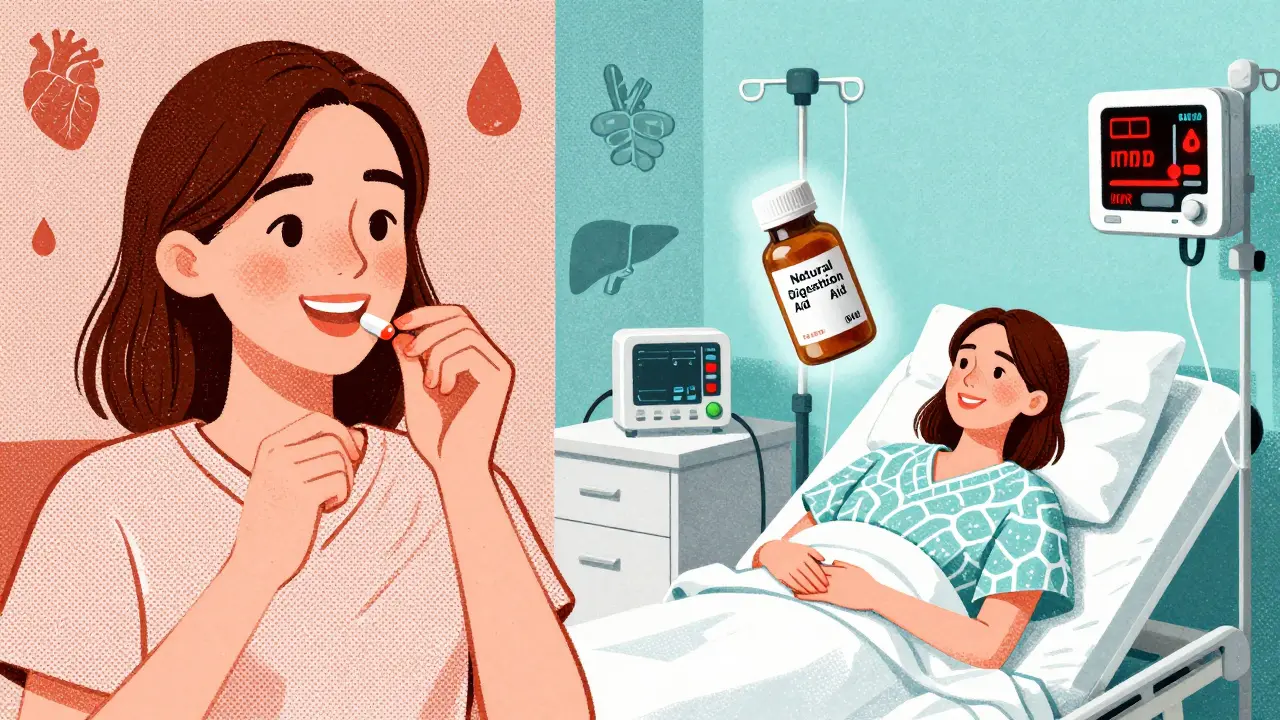
One patient in Brisbane, a 68-year-old woman on warfarin for atrial fibrillation, started taking ginger capsules for digestion. She didn’t mention it. Three weeks later, she ended up in the ER with internal bleeding. Her INR-a measure of blood clotting-was sky-high. The ginger had amplified the effect of her blood thinner. Her doctor only found out when she finally brought in her supplement bottles.
Doctors Don’t Always Ask-But They Should
Most doctors don’t routinely ask about supplements. A 2021 survey showed only 27% of physicians felt confident discussing them. Many assume patients will volunteer the info-or that it’s not important.
But patients rarely bring it up. Why? Because they think:
- ‘It’s just a vitamin-it’s not medicine.’
- ‘My doctor will think I’m wasting their time.’
- ‘They’ll judge me for using ‘alternative’ stuff.’
- ‘I didn’t think it mattered.’
Here’s the truth: your provider doesn’t care if you’re taking ‘natural’ remedies. They care if you’re safe. They’ve seen the results of nondisclosure. They’ve treated patients with liver failure from unregulated herbal teas. They’ve managed emergency room visits caused by forgotten supplements.
The key? Ask them to ask. Don’t wait for them to bring it up. Say it yourself: ‘I’m taking a few supplements. Can we check if they’re okay with my meds?’
How to Tell Your Doctor-The Right Way
Telling your doctor doesn’t mean dumping a bag of pills on their desk. It means being clear, organized, and specific.
Here’s how to do it right:
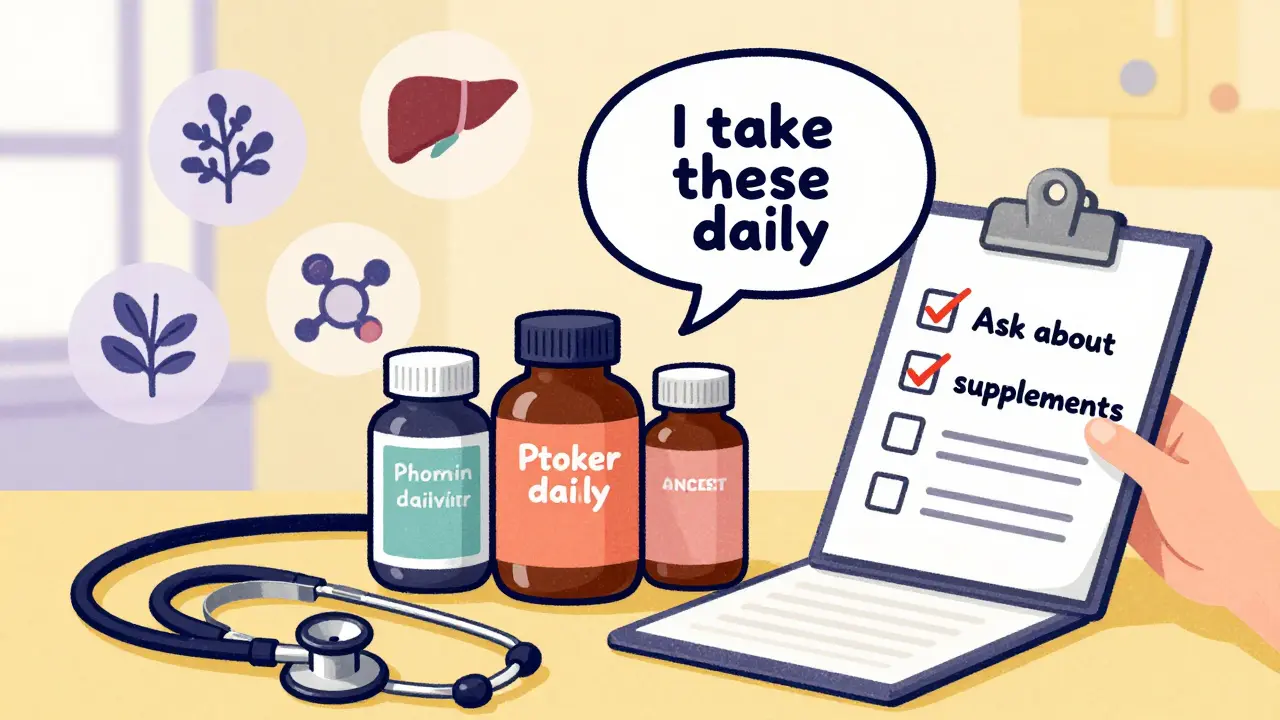
- Bring the bottles. Don’t rely on memory. Bring the actual containers. Labels show exact doses, ingredients, and manufacturers. That’s critical. Many supplements have different forms of the same ingredient-like magnesium citrate vs. magnesium oxide-and they behave differently.
- List everything. Include vitamins, minerals, herbs, protein powders, CBD oils, and even teas labeled as ‘medicinal.’ If you drink it, eat it, or swallow it daily, write it down.
- Be honest about why you take it. ‘I take ashwagandha because I’m stressed’ is more helpful than ‘I take supplements.’ It helps your provider understand context.
- Ask: ‘Could any of these interfere with my other meds?’ Don’t assume they’ll know. Be direct.
Some clinics now use a simple 5-question screening tool during intake:
- Are you taking any vitamins, minerals, or herbal products?
- Are you using any products for sleep, anxiety, or pain?
- Have you noticed any side effects since starting them?
- Have you told another doctor about these?
- Would you be willing to show me the bottles?
Studies show that using this tool boosts disclosure from 33% to 78%. It’s not magic-it’s just asking.
What Happens When You Do Disclose?
Most people worry their doctor will dismiss them or tell them to stop. That rarely happens.
A 2022 survey of 1,200 supplement users found that 78% of those who disclosed received helpful advice. One patient was told to switch from ginseng to a safer alternative for energy. Another learned to take their thyroid pill four hours apart from calcium. A third was warned not to combine fish oil with their new blood thinner.
Disclosing doesn’t mean giving up your supplements. It means using them safely. Your doctor can help you choose ones that won’t clash. They can suggest timing changes, dosage adjustments, or even stop you from something risky.
And here’s the best part: patients who disclose report higher trust in their providers. They feel heard. Seen. Supported-not judged.
What If Your Doctor Doesn’t Know Much?
Some providers still don’t know much about supplements. That’s okay. You can help.
Bring reliable sources. The National Center for Complementary and Integrative Health (NCCIH) has free, science-backed fact sheets on popular herbs. The FDA’s Dietary Supplement Ingredient Advisory List flags ingredients with known safety issues. You can print them out and say: ‘I read this. I wanted to make sure it’s safe with my meds.’
Or ask: ‘Could you refer me to someone who knows more about supplements?’ Many hospitals now have integrative medicine clinics or pharmacists trained in herb-drug interactions. They’re there to help.
The Bottom Line
You’re not being paranoid. You’re being smart.
Supplements and herbal remedies aren’t harmless. They’re active substances. They affect your body. They interact with your prescriptions. And if your doctor doesn’t know about them, they can’t protect you.
Next time you’re in for a check-up, bring your supplement bottles. List them. Ask the question. It takes less than a minute. But it could save your life.
Because your health isn’t just about what’s in your prescription bottle. It’s about everything you put in your body.

Vikrant Sura
December 22, 2025 AT 15:47Look, I take ashwagandha and turmeric daily. My doc never asked. I never told. Nothing’s exploded yet. Maybe we’re just lucky.
Why make it a thing?
Gabriella da Silva Mendes
December 22, 2025 AT 23:34OMG YES 😭 I’m so sick of people acting like ‘natural’ = safe. My cousin took that ‘immune booster’ from Amazon and ended up in the hospital with liver failure. The bottle didn’t even list the active ingredients. It just said ‘proprietary blend’ 🤡
Also, why is the FDA still letting this garbage fly under the radar? We regulate candy bars better than this. #AmericanHealthCareIsBroken
Sai Keerthan Reddy Proddatoori
December 23, 2025 AT 02:31This is what happens when you let corporations run medicine. Big Pharma doesn’t want you to know about herbs because they can’t patent them. That’s why they push pills. They’re scared. The government is in their pocket. You think your doctor is helping you? He’s getting paid to keep you on drugs.
My uncle took garlic pills and his blood pressure dropped to 70/40. He almost died. They didn’t tell him about the interaction. They didn’t even ask. That’s the system.
Don’t trust anyone. Bring your bottles. Fight back.
Johnnie R. Bailey
December 24, 2025 AT 06:53There’s a quiet revolution happening in integrative medicine, and most people don’t even know it. The science on herb-drug interactions is actually pretty robust - we’ve known about St. John’s wort and SSRIs since the 90s. The problem isn’t the supplements. It’s the disconnect between clinical practice and real-world behavior.
Doctors are trained to treat diseases, not lifestyles. Patients are trained to distrust the system. And neither side talks about the middle ground - the stuff you swallow between prescriptions.
The real win isn’t stopping supplements. It’s creating a language where ‘I take ashwagandha for stress’ doesn’t sound like an admission of weakness. It’s just data. Like your blood pressure. Like your cholesterol. It’s information. Not judgment.
Tony Du bled
December 26, 2025 AT 00:18My grandma takes fish oil, vitamin D, and a ‘heart health’ tea from the Indian store down the street. She’s 82. Still walks 3 miles a day. Never been on a single prescription.
She doesn’t tell her doc. He doesn’t ask. They both just… live.
Maybe we’re overcomplicating this.
Art Van Gelder
December 27, 2025 AT 11:16I used to think supplements were just expensive placebo water until I started researching the cytochrome P450 system. That’s the liver’s enzyme family that breaks down everything - drugs, alcohol, caffeine, turmeric, St. John’s wort, even grapefruit juice.
Imagine your liver as a busy airport. Every pill you take is a plane landing. Some planes are commercial jets (prescriptions). Others are private jets (supplements). Some are drones with no flight plan (random Amazon herbs).
When you don’t tell your doctor what’s in the sky, they’re trying to manage air traffic blindfolded. One wrong merge, and boom - internal bleeding. Liver toxicity. Cardiac arrest.
It’s not paranoia. It’s systems thinking.
Kathryn Weymouth
December 27, 2025 AT 16:58I appreciate the article, but I think the tone unintentionally reinforces stigma around alternative medicine. Many people use supplements because conventional medicine has failed them - chronically ill patients, elderly folks with polypharmacy, those with mental health struggles who can’t tolerate SSRIs.
Instead of framing disclosure as a duty, maybe we should frame it as a collaboration. ‘I’m using this because it helps me. Can we make sure it doesn’t hurt me?’
That language invites partnership, not fear.
Herman Rousseau
December 29, 2025 AT 05:14Just brought my supplement drawer to my last appointment. 14 bottles. My doctor laughed. Then he said, ‘I’ve been waiting for someone to do this.’
Turns out, he’s been trying to get patients to do this for years. No one ever did.
He adjusted my thyroid med timing because of my calcium. He told me to drop the green tea extract - it was raising my BP. He didn’t judge. He just helped.
Do it. It’s not a big deal. Just bring the stuff.
❤️
Candy Cotton
December 30, 2025 AT 13:01It is imperative that all citizens of the United States of America comply with the highest standards of medical transparency. The federal government has issued guidelines on dietary supplement disclosure, and failure to adhere to such protocols constitutes a dereliction of personal responsibility and a potential public health liability.
One must not conflate personal autonomy with medical negligence. The FDA, though underfunded, operates under statutory authority that demands accountability.
Bring the bottles. Submit the list. Sign the waiver. This is not optional.
Ajay Brahmandam
December 31, 2025 AT 21:13Been taking spirulina and moringa for years. My doc asked once. I showed him the bottles. He said, ‘Cool, keep going. Just don’t take it with my blood pressure med.’
Simple. No drama.
People make it weird. It’s just talking.
Aliyu Sani
January 2, 2026 AT 04:07yo i been takin' krill oil and reishi mushroom tincture since 2021. doc never asked, i never told. last month i got dizzy and my hands went numb. ER doc found my INR was 6.8. turns out the reishi was chillin' with my warfarin like old buds.
now i carry my bottles like a badge. no shame. just facts.
if ur doc dont ask, ask em. they dont know shit bout herbs.
we gon' save ourselves.
Cara Hritz
January 3, 2026 AT 17:30Wait - you mean the ‘natural energy boosters’ I bought on Etsy have caffeine in them? I thought it was just ‘adaptogenic herbs’? 😳
Also, my ‘immune tea’ has licorice root? I have high blood pressure??
My doctor is gonna kill me. I’m bringing the whole shelf tomorrow. 😭
Jeremy Hendriks
January 3, 2026 AT 18:38Supplements are the last refuge of the spiritually bankrupt. We live in a world where we outsource healing to bottles because we’ve lost touch with food, sleep, movement, and community.
But telling your doctor about them? That’s just another form of surrender - to the medical-industrial complex.
What if the real solution isn’t disclosure, but dismantling the system that made you feel you needed supplements in the first place?
jenny guachamboza
January 5, 2026 AT 17:28THEY’RE ALL LYING. The FDA, the doctors, the supplement companies - they’re all in on it. Turmeric doesn’t help joints. It’s a placebo for the gullible. But the real danger? The nanoparticles. They’ve been adding nanotech to ‘natural’ supplements since 2022 to track you. That’s why they want you to bring the bottles. So they can scan your DNA.
I only take what I grow myself. In my backyard. In a lead-lined pot. 😈
Tarun Sharma
January 5, 2026 AT 21:14Appreciate the clarity. Will bring supplements to next appointment. Thank you.
Johnnie R. Bailey
January 6, 2026 AT 21:44Just read the comment from the guy who said supplements are the refuge of the spiritually bankrupt.
That’s poetic. And wrong.
My mom took magnesium for insomnia after her husband died. It didn’t fix grief. But it let her sleep. And sleeping let her live. That’s not weakness. That’s human.
Disclosing isn’t surrender. It’s saying: ‘I’m trying. Help me do it right.’
That’s not surrender. That’s courage.