Imagine you are a doctor sitting across from a pregnant patient who has severe neuropathic pain. She’s been on Gabapentin for years. It works. Without it, she can barely sleep. But now she’s asking the question every parent-to-be dreads: “Is this safe for my baby?” For decades, the answer was murky. We knew gabapentin crosses the placenta. We knew older drugs like valproic acid were dangerous. But where did gabapentin fit in the spectrum of risk? The data is finally catching up to the prescriptions.
Prescriptions for gabapentin among pregnant women in the US jumped from 0.2% in 2000 to nearly 4% by 2014. That’s a massive shift. Today, we have large-scale studies that give us clearer numbers, but they also reveal new nuances. It’s not just about “safe” or “unsafe.” It’s about timing, dosage, and specific types of defects. If you’re navigating this decision, whether as a clinician or a patient, here is what the current evidence actually says.
The Core Risk Profile: Malformations vs. Adaptation
When people hear “teratogenic,” they usually think of structural birth defects-things like heart issues or limb problems. That’s the first layer of risk we need to unpack. A major study published in PLOS Medicine in 2020 analyzed hundreds of thousands of pregnancies. The headline finding? Gabapentin does not significantly increase the overall risk of major congenital malformations. The relative risk was 1.07. In plain English, if the baseline risk of a major defect is 3%, taking gabapentin bumps that to roughly 3.2%. That’s a tiny absolute difference.
However, looking at the big picture misses a critical detail. While the *overall* rate didn’t spike, there was a specific signal for cardiac malformations. Specifically, conotruncal defects showed a relative risk of 1.40 when exposure was consistent (two or more prescriptions). This means if a woman takes gabapentin regularly throughout pregnancy, her baby has a slightly higher chance of developing certain heart valve or outflow tract issues compared to a baby unexposed to the drug. It’s a small number in absolute terms-about 0.82% versus 0.59%-but in cardiology, even small shifts matter. This is why experts now recommend fetal echocardiography for mothers who use gabapentin consistently, especially during the first trimester when the heart forms.
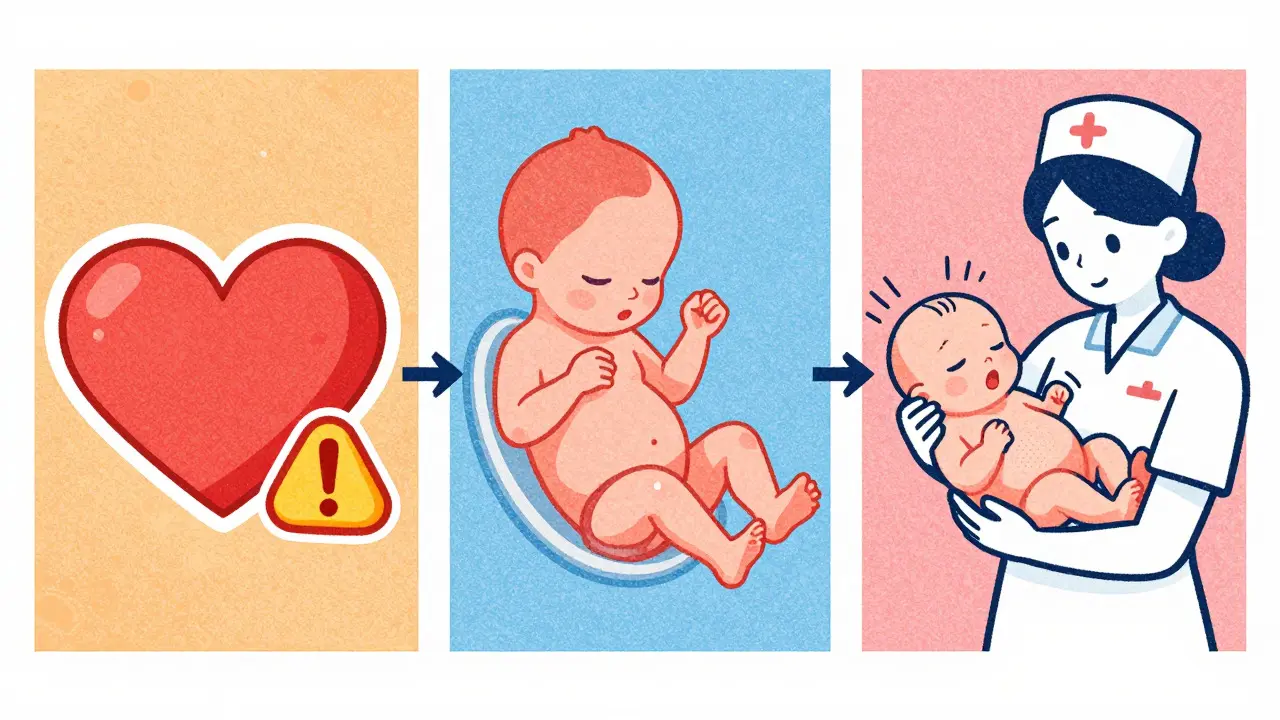
The second layer of risk isn’t about structure; it’s about function. This is where the story changes dramatically in the third trimester. Unlike structural defects that form early, neonatal adaptation issues happen right after birth. Infants exposed to gabapentin until delivery face a much higher likelihood of needing intensive care. In one significant cohort, 38% of exposed infants required NICU admission, compared to just 2.9% of controls. Symptoms often include tremors, irritability, and feeding difficulties. It’s not always full-blown withdrawal syndrome like you see with opioids, but it’s real enough to keep babies in the hospital longer. This distinction is vital: the risk of a broken heart is low, but the risk of a difficult transition to life outside the womb is high if the drug is used late in pregnancy.
Why Does Gabapentin Cross the Placenta?
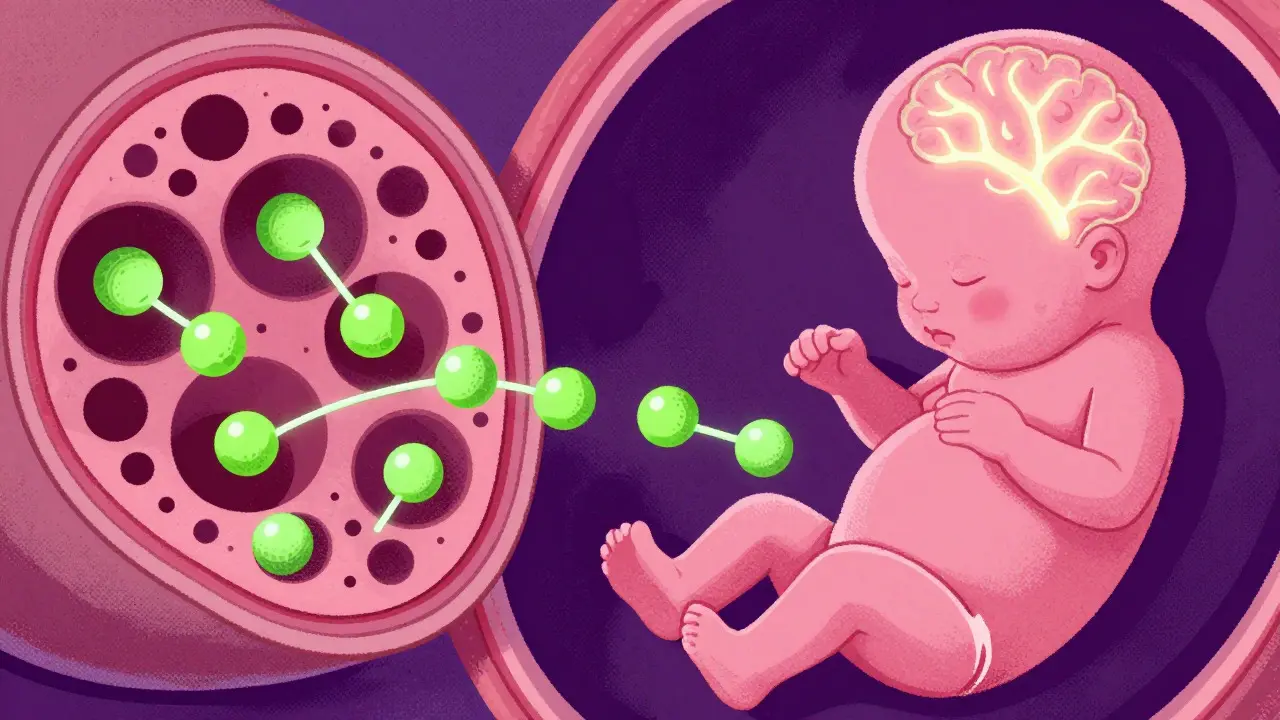
To understand the risks, you have to understand the mechanism. Gabapentin is a GABA analogue. Its molecular weight is only 171.27 g/mol, and it’s highly water-soluble. These properties make it easy for the drug to slip through the placental barrier into fetal circulation. Once inside, it doesn’t just float around; it binds to specific receptors in the developing brain.
A 2022 study in Frontiers in Pharmacology looked at this at the cellular level. Researchers found that at therapeutic concentrations, gabapentin alters the morphology of dopaminergic neurons in the ventral midbrain. Specifically, it reduced total neurite length by over 37% and downregulated key developmental genes like Nurr1 and Bdnf. This suggests that while the drug might not break bones or valves, it could subtly influence how neural networks wire themselves up. This mechanistic evidence supports the clinical observation of neurobehavioral effects in newborns, such as the tremors and irritability mentioned earlier. It’s a reminder that “no major malformations” doesn’t mean “no biological impact.”
Gabapentin vs. Pregabalin: Are They Interchangeable?
Many patients assume Pregabalin (Lyrica) is just a stronger version of gabapentin. Clinically, they are cousins, but their safety profiles in pregnancy are diverging. Both cross the placenta, but regulatory bodies are treating them differently. The European Medicines Agency issued a safety communication in 2022 expressing concern specifically about pregabalin based on animal studies showing developmental toxicity. As of 2023, the British National Formulary advises avoiding pregabalin in pregnancy unless benefits clearly outweigh risks, a stance that is stricter than the guidance for gabapentin.
Here is a quick comparison to help clarify the landscape:
| Feature | Gabapentin | Pregabalin |
|---|---|---|
| Major Malformation Risk | Low (RR ~1.07) | Uncertain / Potential Concern |
| Cardiac Signal | Moderate (Conotruncal defects) | Less Data |
| Neonatal Adaptation | Documented (NICU risk ~38%) | Documented (Similar profile) |
| Regulatory Stance (EU/UK) | Special Consideration | Contraindicated unless benefit > risk |
| Primary Indication in Pregnancy | Pain (43%), Epilepsy (34%) | Pain, Neuropathy |
This divergence matters because many doctors prescribe pregabalin for pain management. If you are considering switching medications before conceiving, gabapentin currently has a more robust (though still cautious) evidence base for human outcomes, whereas pregabalin carries heavier regulatory baggage due to preclinical data.
Timing Is Everything: Trimester-Specific Risks
Not all weeks of pregnancy carry the same weight. The risk profile shifts depending on when the baby is exposed.
- First Trimester (Weeks 1-12): This is the organogenesis phase. The primary concern here is structural formation. As noted, the overall malformation risk is low, but the cardiac signal is most relevant here. If you are already on gabapentin, don’t panic-stop abruptly without medical advice, as seizure control (if that’s the indication) is also critical. However, this is the window where fetal echo monitoring adds value.
- Second Trimester (Weeks 13-26): Growth phase. There is less data on specific defects here, but sustained exposure continues to build fetal levels. The focus remains on maintaining maternal stability.
- Third Trimester (Weeks 27-40): This is the danger zone for neonatal adaptation. Because gabapentin has a half-life of 5-7 hours, it stays in the system. Babies born to mothers who took the drug right up until delivery are at highest risk for withdrawal-like symptoms. Some clinicians suggest tapering the dose in the last few weeks of pregnancy under strict supervision to mitigate this, though this must be balanced against the mother’s pain or seizure control needs.
Clinical Decision-Making: When to Use, When to Avoid
So, when should you actually take it? The American College of Obstetricians and Gynecologists (ACOG) recommends using gabapentin only when non-pharmacological approaches have failed and the condition is severe. This is a risk-benefit calculation, not a binary switch. If you have epilepsy, the calculus is different. Untreated seizures pose a direct threat to both mother and fetus. In these cases, the slight increase in cardiac risk or NICU stay is often outweighed by the danger of status epilepticus. For neuropathic pain, however, alternatives exist. Duloxetine, physical therapy, and cognitive behavioral therapy are options that don’t cross the placenta in the same way. Yet, for some patients, nothing else touches the nerve pain. In those cases, 32% of surveyed obstetric practitioners said they would continue gabapentin if the benefit was clear. Practical tips for managing this:
- Preconception Counseling: If possible, stabilize your regimen before trying to conceive. Sudden changes during pregnancy can be harder to manage.
- Fetal Echocardiogram: Ask your OB-GYN about scheduling a detailed heart scan between 18-22 weeks if you’ve been on gabapentin since conception.
- Birth Plan Discussion: Tell your labor and delivery team exactly when you took your last dose. This helps them anticipate potential neonatal jitteriness or feeding issues.
- Documentation: Keep a log of doses. It helps researchers and your doctors track exposure patterns accurately.
What’s Next? Future Research and Regulatory Changes
We aren’t done learning. The FDA announced in January 2024 that all gabapentinoid manufacturers must conduct post-marketing surveillance of 5,000 pregnancy outcomes by 2027. This will provide much larger, cleaner datasets than we have today. Additionally, a longitudinal study tracking 1,200 children exposed in utero is underway, with preliminary neurodevelopmental data expected soon. This will tell us if those subtle changes in neuron wiring seen in lab cultures translate to long-term learning or behavioral differences in kids. For now, the consensus is cautious optimism. Gabapentin is not the villain that valproic acid is. It’s a tool with specific trade-offs. Used wisely, with monitoring, and with informed consent, it can be part of a safe pregnancy journey for many women. But it requires active management, not passive assumption.
Does gabapentin cause birth defects?
The risk of major birth defects is very low and similar to the general population. However, there is a slightly increased risk (about 40% higher relative risk) of specific cardiac defects, particularly conotruncal defects, if taken consistently during the first trimester. Overall, the absolute risk remains small.
Can I stop gabapentin suddenly when I find out I’m pregnant?
Do not stop suddenly without consulting your doctor. If you take it for epilepsy, sudden cessation can trigger seizures, which are dangerous for the fetus. If you take it for pain, your doctor may taper you off slowly or switch you to an alternative. Abrupt stopping can also cause rebound pain or anxiety.
Is pregabalin safer than gabapentin in pregnancy?
Currently, gabapentin has more human data supporting its relative safety regarding malformations. Pregabalin has raised more concerns in animal studies and has stricter regulatory warnings in Europe. Many clinicians prefer gabapentin if a gabapentinoid is necessary, but individual factors dictate the choice.
Will my baby need to stay in the NICU if I take gabapentin?
There is a higher risk if you take the medication right up until delivery. About 38% of exposed infants in one study required NICU admission, mostly for monitoring and support with feeding or tremors. This is manageable, but it increases the likelihood of a longer hospital stay compared to unexposed babies.
Does breastfeeding require stopping gabapentin?
Gabapentin passes into breast milk, but levels are generally considered low. Most guidelines suggest it is compatible with breastfeeding, but you should monitor the infant for excessive sleepiness or poor feeding. Discuss this with your pediatrician.