Lithium Thyroid Risk Estimator
Enter Your Details
Risk Assessment
Fill out the form to see your estimated risk profile.
Imagine your mood is finally stable after years of chaos. You are taking Lithium, a medication that has saved countless lives by treating bipolar disorder. But then, you start feeling tired. Your weight creeps up despite eating less. You feel cold when others are fine. It might not be your mood returning; it could be your thyroid struggling under the weight of lithium.
This isn't just a rare glitch. For many people, lithium acts like a double-edged sword. It keeps manic and depressive episodes at bay with unmatched effectiveness, but it also interferes with how your thyroid gland works. Understanding this interaction is crucial because ignoring it can lead to serious health issues, while managing it properly allows you to stay on the medication that keeps you well.
How Lithium Messes With Your Thyroid
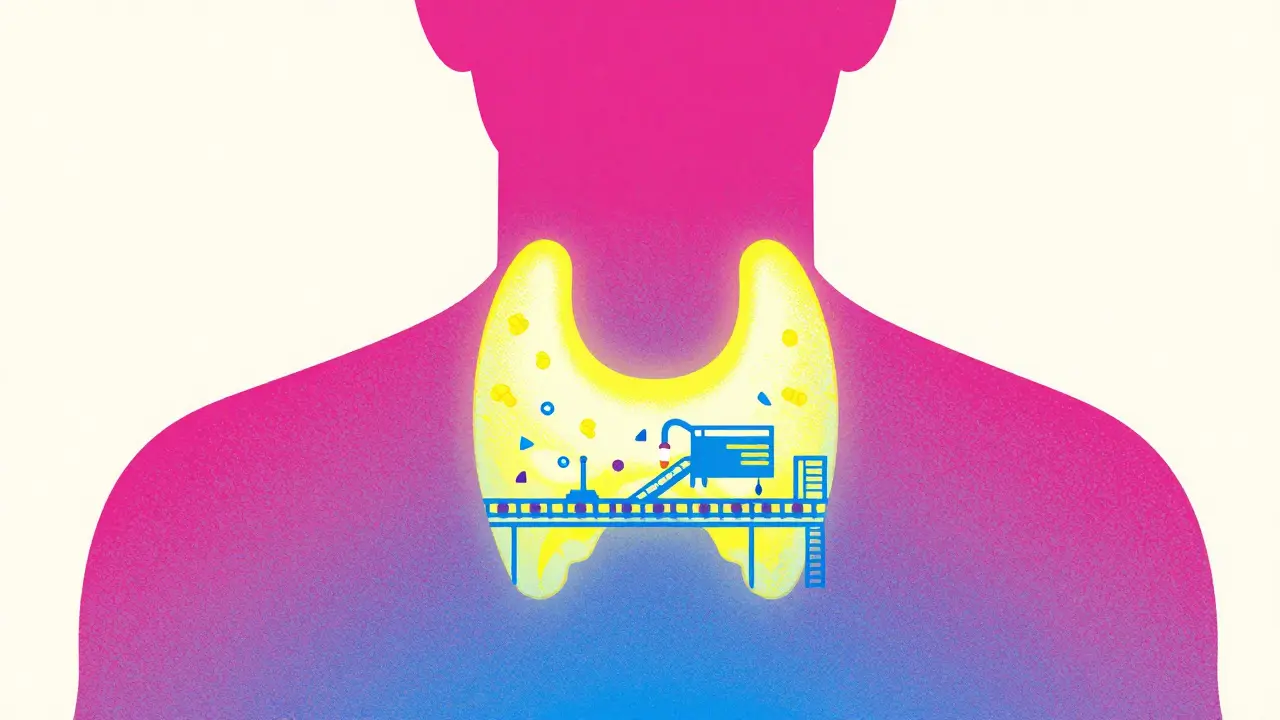
To understand why this happens, we need to look at what lithium actually does inside your body. Lithium is a simple element, but in your thyroid, it causes complex disruptions. Think of your thyroid as a factory that produces hormones (T3 and T4) using iodine. Lithium walks into that factory and starts blocking the assembly line.
Specifically, lithium inhibits the synthesis of thyroid hormones by interfering with how iodine attaches to thyroglobulin, a protein essential for hormone production. It also blocks the release of these hormones into your bloodstream. According to research by Kibirige (2013), lithium alters the structure of tubulin in thyroid cells, which disrupts normal cell function. This leads to two main outcomes: goiter (an enlarged thyroid) and hypothyroidism (underactive thyroid).
Here is the breakdown of what typically happens:
- Goiter Development: Between 30% and 59% of patients on long-term lithium therapy develop an enlarged thyroid gland. A study by Perrild et al. (1984) found that 44% of patients had goiters after 1-5 years, rising to 50% after more than 10 years.
- Hypothyroidism: About 20% of all lithium-treated patients develop hypothyroidism. However, recent data from 2023 shows that in some cohorts, up to 32% developed thyroid disorders, with 79% of those cases being hypothyroidism requiring medication replacement.
- Hyperthyroidism: Less common, affecting only 3-5% of patients. This usually presents as transient painless thyroiditis rather than Graves' disease.
The risk isn't random. Women under 60 face a significantly higher risk, developing hypothyroidism at 3.2 times the rate of men on equivalent doses. Additionally, where you live matters. In regions with lower iodine intake, like parts of Europe, goiter rates are higher compared to iodine-sufficient areas like the United States.
Monitoring: The Non-Negotiable Routine
If you are prescribed lithium, monitoring your thyroid is not optional; it is part of the treatment plan. The American Thyroid Association (ATA) and the American Psychiatric Association have clear guidelines on this.
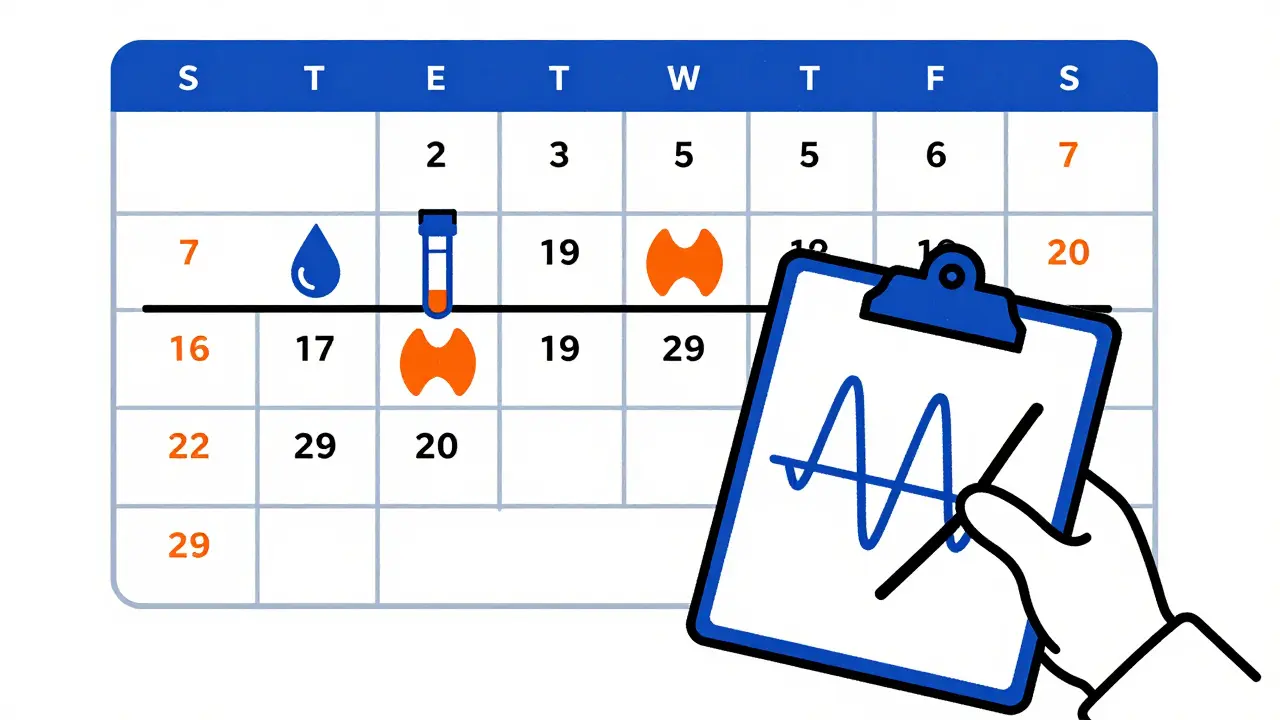
You should have a baseline test for TSH (Thyroid Stimulating Hormone) and Free T4 before you even take your first pill. After starting, here is the typical schedule:
- First Year: Check thyroid function every 6 months. This catches early changes before they become symptomatic.
- Stable Phase: If your levels remain normal, switch to annual testing.
- After Changes: If you change your lithium dose or add new medications, retest within 6-8 weeks.
A critical pitfall many doctors and patients fall into is reacting too quickly. There is a 6-8 week lag between starting lithium and seeing measurable changes in TSH. A 2022 JAMA Internal Medicine study found that 23% of primary care physicians unnecessarily stopped lithium because of mild, transient TSH elevations in the first three months. Often, the thyroid adapts, and levels stabilize without needing to drop the mood stabilizer. Patience and consistent tracking are key.
Managing Hypothyroidism on Lithium
If your tests show hypothyroidism, the solution is usually straightforward: hormone replacement therapy. The standard medication is Levothyroxine, a synthetic form of the thyroid hormone T4.
However, there is a catch. Patients on lithium often require 20-30% higher doses of levothyroxine than those not on lithium. Why? Because lithium interferes with the conversion of T4 to the active T3 hormone in peripheral tissues. So, even if your T4 looks okay, your body might still be starving for active hormone.
Start low. Doctors typically begin with 25-50 mcg per day and adjust based on follow-up blood tests. Do not self-adjust. Taking too much levothyroxine can trigger heart palpitations and anxiety, which can be mistaken for mania, complicating your psychiatric care.
| Medication | Thyroid Dysfunction Risk | Primary Mechanism | Best For |
|---|---|---|---|
| Lithium | High (20-32%) | Inhibits hormone synthesis/release | Bipolar I, Suicide prevention |
| Valproate | Moderate (5-10%) | Transient TSH elevation | Rapid cycling, Mixed episodes |
| Carbamazepine | Low | Minimal direct effect | Treatment-resistant cases |
| Lamotrigine | Very Low | No significant thyroid impact | Bipolar depression maintenance |
When Hyperthyroidism Strikes
While hypothyroidism is the usual suspect, hyperthyroidism (overactive thyroid) can happen. Dr. D. Kibirige notes that this is often a transient painless thyroiditis. Unlike Graves' disease, which requires long-term antithyroid drugs, lithium-induced hyperthyroidism often resolves on its own within 3-6 months.
In these cases, doctors might monitor you closely without immediate heavy intervention. If symptoms are severe, beta-blockers may be used to control heart rate. True Graves' disease triggered by lithium is rare but would require carbimazole or steroids. Never stop lithium abruptly if you develop hyperthyroidism, as sudden withdrawal can sometimes trigger a rebound effect or destabilize your mood.
New Insights: Dose Matters More Than We Thought
For years, experts believed lithium's thyroid damage was unpredictable. New data challenges that view. A 2024 study by Pardossi revealed a clear dose-response relationship. For every 100 mg/day increase in lithium dose, the odds of progressing to severe thyroid dysfunction increased by 27%. This suggests that keeping your lithium dose as low as effectively possible (the "minimum effective dose") is a smart strategy to protect your thyroid.
Interestingly, the same study noted that the risk diminishes slightly over time (OR 0.96 per month), suggesting the thyroid may adapt somewhat after the initial shock. This supports the idea of starting low and going slow.
Emerging Protective Strategies
Can we prevent this damage? Research is looking into supplements. A 2023 randomized controlled trial published in Thyroid showed that taking 100 mcg of selenium daily reduced the incidence of hypothyroidism in lithium-treated patients from 24% to 14% over two years. Selenium helps reduce oxidative stress in the thyroid gland. While promising, always talk to your doctor before adding supplements, as they can interact with other conditions.
Another frontier is predictive algorithms. The 2024 Pardossi study introduced a tool that uses baseline TSH, gender, age, and other meds to predict who is at highest risk. If you fit the high-risk profile (e.g., woman under 60, high baseline TSH), you might need more frequent monitoring than the standard six-month interval.
Should You Switch Medications?
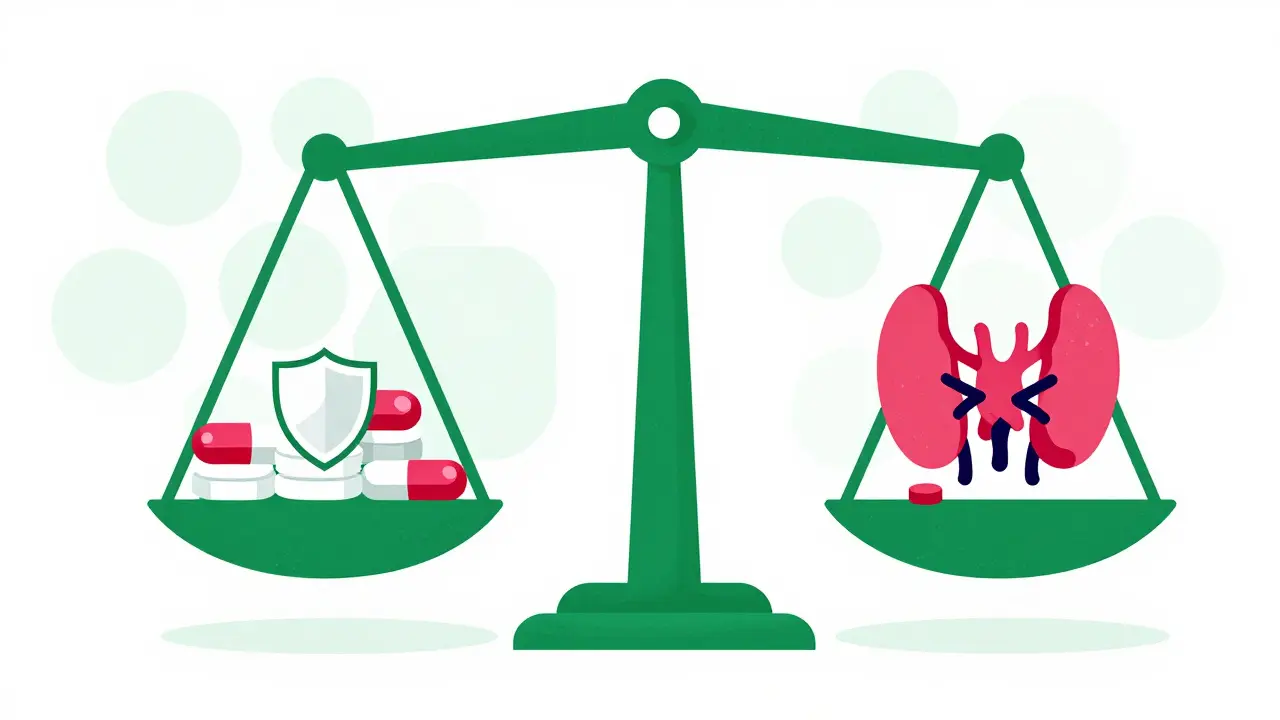
This is the hardest question. Lithium is unique. A 2013 BMJ study showed it reduces suicide attempts by 14% absolute risk compared to other mood stabilizers. No other drug comes close to this protective effect. Furthermore, a 2017 meta-analysis in The Lancet showed a 39% relative risk reduction in mood episodes with lithium versus placebo.
Switching to valproate or lamotrigine might save your thyroid, but it might cost you stability. Many patients report that even with thyroid issues, lithium is "better than the alternative." One patient on Reddit shared, "My bipolar symptoms are controlled even with thyroid issues." Another noted, "I now take 75mcg levothyroxine but my psychiatrist won't lower my lithium dose despite my requests," highlighting the tension between psychiatric and endocrine needs.
Generally, switching is considered only if:
- Thyroid dysfunction becomes unmanageable despite high-dose levothyroxine.
- You develop severe autoimmune thyroiditis.
- Lithium causes other intolerable side effects (kidney issues, tremors).
If you do switch, do it slowly. Abruptly stopping lithium can trigger a relapse or, rarely, a thyroid storm if underlying hyperthyroidism was masked.
Living Well With Both Conditions
Having bipolar disorder and hypothyroidism on lithium is manageable. It requires coordination between your psychiatrist and your GP or endocrinologist. Keep a log of your symptoms: fatigue, weight changes, temperature sensitivity, and mood shifts. Share this with both doctors.
Remember, the goal is quality of life. Lithium gives you mental clarity and stability. Levothyroxine gives you energy and metabolic balance. Together, they allow you to live fully. Don't let fear of side effects deter you from the treatment that works, but don't ignore the signs either. Regular blood tests are your best defense.
How long does it take for lithium to affect thyroid levels?
It typically takes 6 to 8 weeks after starting lithium or changing the dose for TSH levels to reflect any changes. This delay means early minor elevations in TSH should be monitored rather than immediately treated, as they may normalize as the body adapts.
Does lithium cause permanent thyroid damage?
In many cases, lithium-induced hypothyroidism is reversible if the medication is stopped. However, long-term use can lead to permanent structural changes like goiter or chronic autoimmune thyroiditis, requiring lifelong hormone replacement even after discontinuing lithium.
Can I take selenium to protect my thyroid while on lithium?
Recent studies suggest that 100 mcg of selenium daily may reduce the risk of developing hypothyroidism in patients on lithium. However, you should consult your doctor before starting any supplement to ensure it doesn't interfere with other treatments.
Why do women have a higher risk of thyroid issues on lithium?
Women naturally have a higher prevalence of autoimmune thyroid diseases. Studies show women under 60 develop lithium-induced hypothyroidism at 3.2 times the rate of men. Hormonal fluctuations and genetic predispositions likely play a role in this increased susceptibility.
Is it safe to stop lithium if my thyroid fails?
Stopping lithium abruptly is dangerous for both your mood and potentially your thyroid. Sudden withdrawal can trigger severe bipolar relapse or, in rare cases, thyroid storm. Any change must be gradual and supervised by a psychiatrist and endocrinologist.
What is the difference between lithium-induced hypo- and hyperthyroidism?
Hypothyroidism (underactive) is common, affecting ~20% of users, and requires levothyroxine. Hyperthyroidism (overactive) is rare (~3-5%) and often presents as transient painless thyroiditis that resolves on its own within months, unlike the chronic nature of hypothyroidism.
Do I need more levothyroxine if I am on lithium?
Yes. Lithium interferes with the conversion of T4 to active T3 hormone. Consequently, patients on lithium often require 20-30% higher doses of levothyroxine to achieve normal TSH levels compared to those not taking lithium.
Are there newer alternatives to lithium with fewer thyroid side effects?
Drugs like lamotrigine and valproate have lower thyroid risks but differ in efficacy. Lamotrigine is excellent for depression but weak against mania. Valproate has moderate thyroid risk. Newer analogs like RG101 are in trials aiming for similar mood benefits with minimal thyroid impact, but none are yet widely available.