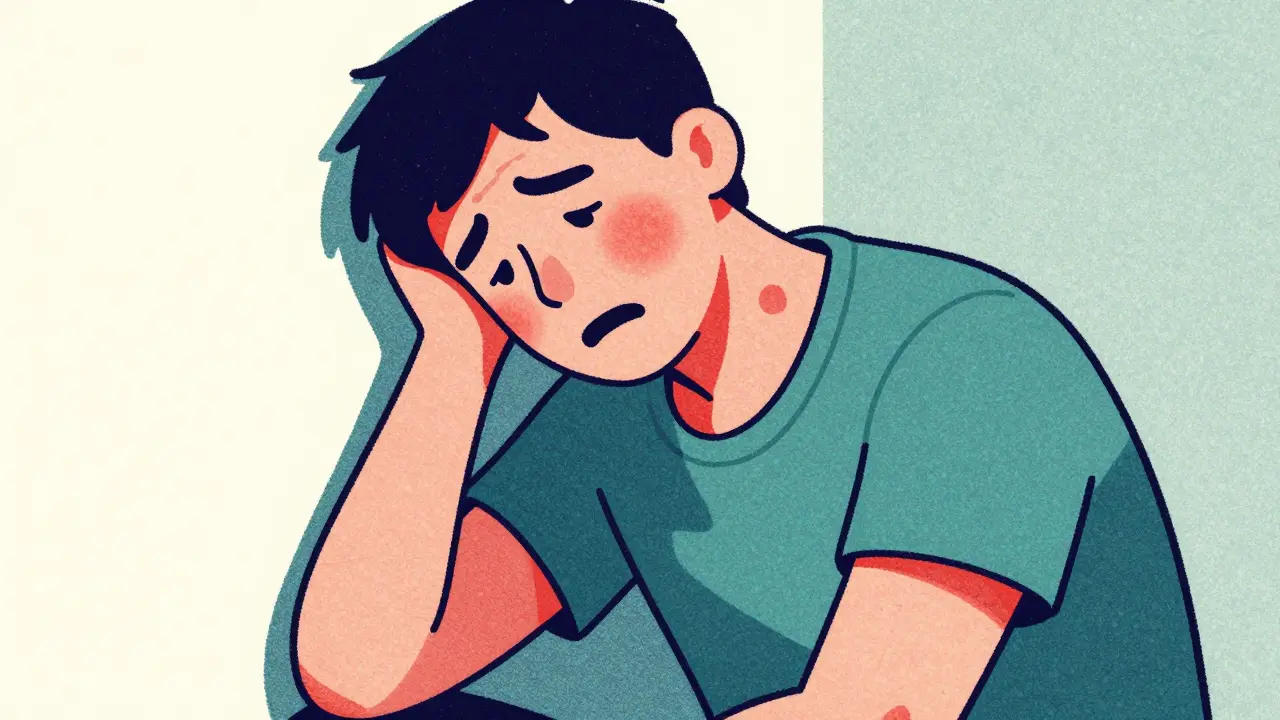
SJS and TEN Severity Spectrum Tool
Adjust the slider to see how the classification changes based on the percentage of Body Surface Area (BSA) affected by skin detachment.
Normal / No Detachment
BaselineNo epidermal detachment has been indicated. In a clinical setting, prodromal symptoms (fever, malaise) often precede these skin changes.
Imagine waking up with what feels like a mild flu-a bit of a fever, some muscle aches, and a general sense of malaise. A day or two later, a red or purple rash appears. Within hours, that rash turns into painful blisters, and your skin begins to peel away in large sheets, leaving you feeling as though you've suffered severe burns. This isn't a typical allergic reaction; it's a medical emergency. Stevens-Johnson Syndrome (SJS) and Toxic Epidermal Necrolysis (TEN) are severe cutaneous adverse reactions (SCAR) where the skin and mucous membranes undergo full-thickness epidermal necrosis. These conditions are primarily triggered by medications and can lead to systemic organ failure if not treated immediately.
Key Takeaways for Early Detection
- SJS and TEN exist on a spectrum based on how much of the body surface area (BSA) is affected.
- The first signs often mimic the flu before the skin ever breaks.
- Immediate discontinuation of the triggering drug is the most critical step in survival.
- Long-term complications, especially regarding vision, require multidisciplinary care.
Understanding the SJS and TEN Spectrum
While they are often discussed together, SJS and TEN are actually different points on the same scale of severity. The main difference is the percentage of the body's surface area that suffers skin detachment. If less than 10% of the skin is affected, it is classified as SJS. If more than 30% of the body is involved, it is termed TEN. When the damage falls between 10% and 30%, doctors call this "overlap syndrome."
Regardless of the label, the biological process is the same: the immune system attacks the skin cells, causing the top layer of the skin (the epidermis) to die and separate from the deeper layer (the dermis). This leaves the body vulnerable to infection and fluid loss, much like a patient with massive second- or third-degree burns. Because of this, patients are often moved to specialized burn units or intensive care units (ICUs) for treatment.
Spotting the Warning Signs
The window for intervention is narrow. Most patients don't start with a rash; they start with "prodromal" symptoms. This means you might feel sick for one to three days before any skin changes occur. Look for high fever, sore throat, and a general feeling of being unwell. Once the skin reaction starts, it usually appears as flushing or a purple-red rash that spreads quickly.
A hallmark of these emergencies is the involvement of mucous membranes. You'll likely see erosions or blisters in at least two of these areas: the mouth, the eyes, the genitals, or the throat. These ulcers make eating, drinking, and seeing incredibly difficult and painful. If you see blisters forming on the skin alongside these mucosal sores, you need to get to the emergency room immediately.
High-Risk Medications and Triggers
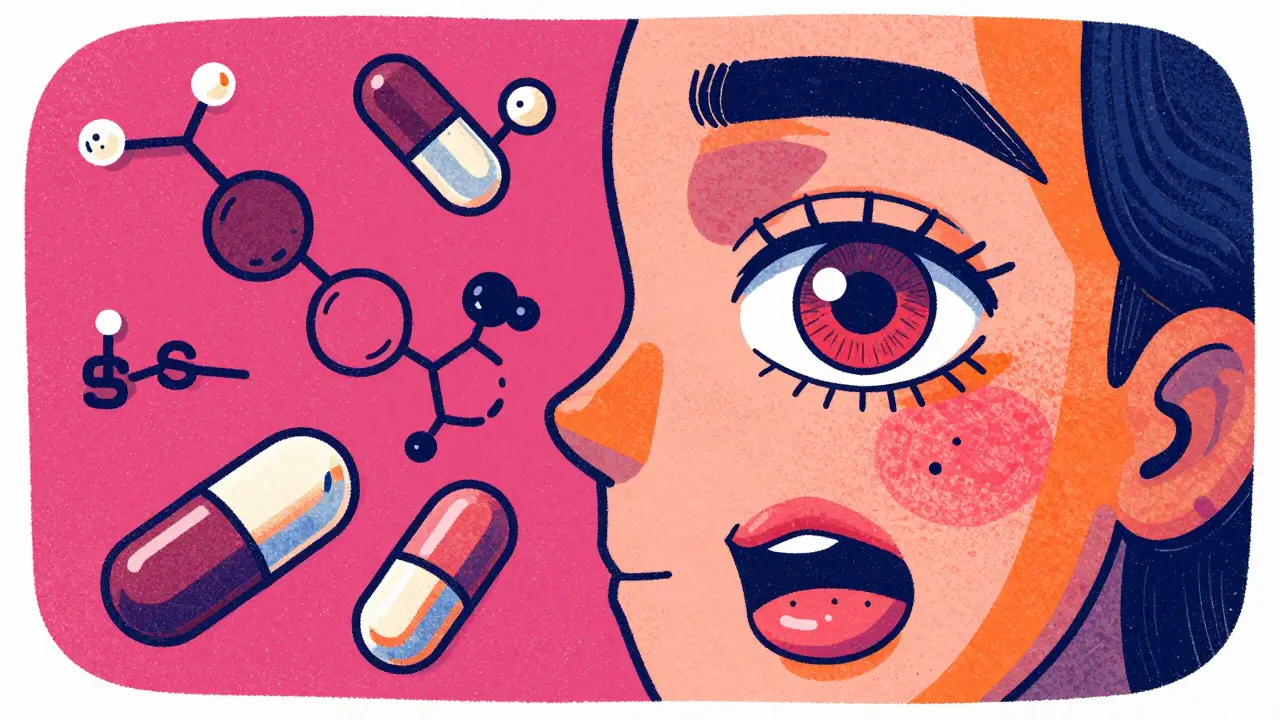
While any drug can theoretically cause this reaction, certain classes of medication are notorious for triggering these events. Allopurinol, used for gout, and various anticonvulsants like Lamotrigine and Carbamazepine are high on the list. In some cases, the risk is highest during the first eight weeks of starting a new drug or when the dose is increased too quickly.
Antibacterial Sulfonamides (such as Sulfamethoxazole) are also common culprits. It is also important to understand cross-reactivity. If you've had SJS from one anticonvulsant, your body might react similarly to another drug in that same family because they share a similar chemical structure. This makes a detailed medical history essential for any survivor.
| Drug Category | Specific Examples | Key Risk Note |
|---|---|---|
| Anticonvulsants | Lamotrigine, Phenytoin, Carbamazepine | High risk during dose titration |
| Antibiotics | Sulfamethoxazole, Penicillins | Commonly associated with "sulfa" allergies |
| NSAIDs | Meloxicam, Piroxicam | Oxicam-type anti-inflammatories |
| Other | Allopurinol, Nevirapine | Often used for chronic conditions |
Who Is Most at Risk?
Genetics and existing health conditions play a huge role in who develops these reactions. People with weakened immune systems, such as those living with HIV/AIDS or patients undergoing chemotherapy, are more susceptible. There is also a genetic component; if a close family member has experienced SJS, your risk is higher.
Some drug interactions also spike the danger. For example, taking Sodium Valproate alongside Lamotrigine can increase the likelihood of a severe rash. Additionally, those who have already had a rash from a different epilepsy medication are more likely to experience a recurrence with a new one.
The Path to Recovery and Long-Term Complications
Survival is the first goal, but the road to recovery is often long. Mortality rates vary wildly depending on the severity: SJS has a mortality rate of around 5%, but for TEN, it can climb above 30%. Death usually isn't caused by the skin peeling itself, but by secondary complications like sepsis (blood poisoning) or multi-organ failure due to the loss of the skin's protective barrier.
For those who survive, the "after-effects" can be life-altering. The eyes are particularly vulnerable. Between 30% and 50% of survivors face serious ocular issues, ranging from chronic dry eye and photophobia to corneal scarring and permanent blindness. This is why a team of specialists-including dermatologists and ophthalmologists-is required for follow-up care for at least a year after the acute phase.
Other survivors might deal with cutaneous scarring, permanent changes in skin pigment, or nail loss. Internal complications can also occur, such as esophageal strictures (narrowing of the food pipe) or genital stenosis, which can make basic bodily functions painful or difficult.
Preventing a Crisis
Since SJS/TEN is often unpredictable, the best prevention is vigilance. If you are starting a high-risk medication like Lamotrigine, doctors recommend a very slow "titration" or increase in dose. Rapidly ramping up the dosage is a known trigger for severe reactions.
Another practical tip for those on these medications is to avoid starting new medicines or changing your diet significantly during the first three months of treatment. This helps doctors determine if a rash is a simple drug allergy or the beginning of something more sinister. Most importantly, if you have ever had SJS, you must never take that medication-or its chemical cousins-again. A single re-exposure can trigger a recurrence that is often more severe than the first.
Is SJS the same as a typical drug allergy?
No. A typical drug allergy might cause hives or a mild itch. SJS is a systemic medical emergency involving the death of the skin cells (necrosis) and the peeling of the epidermis. It requires immediate hospitalization, whereas a typical allergy can often be managed with antihistamines at home.
How quickly does SJS progress after the first symptoms?
The progression is rapid. After a few days of flu-like symptoms, the rash typically appears and can evolve into blisters and skin detachment within a matter of hours or days. Early recognition is the most critical factor in reducing mortality.
Can SJS be cured?
There is no "cure" in the sense of a single pill that reverses the damage. Treatment is supportive-focused on stopping the causative drug, preventing infection, and managing fluids and nutrition-while the body slowly regenerates the skin.
Why do the eyes get affected?
SJS attacks the mucous membranes. The conjunctiva (the lining of the eye) is a mucous membrane and is highly susceptible to the same necrotic process that affects the skin, leading to inflammation, scarring, and potential blindness.
What should I do if I suspect I have SJS?
Go to the Emergency Department (A&E) immediately. Tell the medical staff every medication you have started or changed in the last two months. Do not wait for the rash to spread; early intervention is the only way to significantly improve the outcome.
Next Steps and Troubleshooting
If you are currently taking any of the high-risk medications mentioned, don't panic, but stay aware. Most people tolerate these drugs perfectly fine. However, keep a log of any new symptoms. If you notice a fever accompanied by a skin change, contact your doctor immediately.
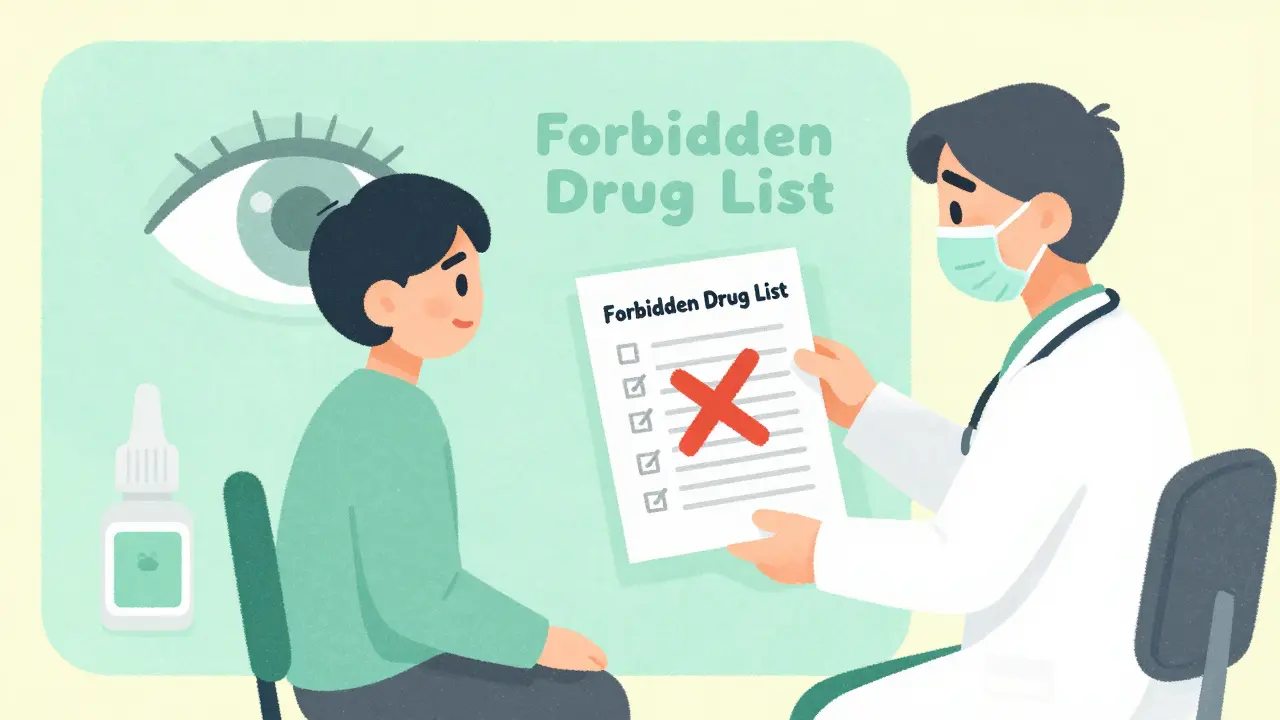
For those who have survived SJS/TEN, the most important next step is to create a "forbidden drug list." Work with your dermatologist to identify not just the drug that caused the reaction, but also the structurally related compounds you must avoid for the rest of your life. Carry this list in your wallet or as a digital note on your phone to show any doctor or pharmacist you visit in the future.
Rock Stone
April 18, 2026 AT 07:32This is some heavy stuff but honestly so important for people to know. Stay safe everyone!
Nell O'Leary
April 18, 2026 AT 10:37The focus on full-thickness epidermal necrosis is spot on. It's wild how the T-cell mediated cytotoxicity just goes haywire and triggers that massive apoptosis of keratinocytes. 🧬 Really glad to see the mention of HLA alleles and genetic predisposition, as that's such a huge part of the pathophysiology behind why some of us are ticking time bombs with certain sulfonamides! (。♥‿♥。)
Anna BB
April 19, 2026 AT 03:15It really makes you think about how fragile our skin is... just a thin barrier between us and the world!!! I wonder if the psychological trauma of the recovery is just as hard as the physical part??? ❤️
Ben Ferguson
April 20, 2026 AT 01:30I remember a time when a distant acquaintance of mine went through something terrifyingly similar, and the sheer scale of the horror was almost too much to bear, as they were rushed from one hospital to another in a state of absolute chaos, and it really strikes me how the medical system can sometimes struggle to differentiate these acute reactions from a common flu in those first critical hours, leading to a cascading series of events that feel like a nightmare come to life, truly an odyssey of suffering that no human should ever have to endure in their lifetime!
Michael Lewis
April 20, 2026 AT 22:42Listen, if you're on any of these meds, do not mess around with the titration schedule. Just follow your doctor's orders to the letter and don't try to be a hero by ramping up the dose faster to get relief quicker. It's not worth the risk of ending up in a burn unit!
Bonnie Piersall
April 22, 2026 AT 20:42Absolutely spot on. Dealing with this is like fighting a war on two fronts-your own immune system and the external environment. It's a total nightmare scenario that leaves you feeling completely stripped bare, both physically and emotionally. The road to recovery is a grueling marathon, not a sprint, and having a rock-solid support system is the only way to keep your head above water when the ocular complications start hitting. You've got to be a warrior to get through the skin grafting and the constant fear of a relapse. It's a brutal cycle of healing and scarring that tests every ounce of your resolve. The mental toll of knowing a simple pill could have ended it all is just heavy. But seeing the resilience of survivors is honestly a miracle in itself. Keep pushing through the pain and stay vigilant with those forbidden drug lists. It's a long haul, but you're stronger than the necrosis. Just keep grinding and taking it one day at a time. You've got this, even when it feels like the world is peeling away.
Heer Malhotra
April 24, 2026 AT 16:22The lack of mention regarding the accessibility of these specialized burn units in developing nations is a glaring omission. While this information is useful for the elite in the West, the systemic failure to provide such advanced care in the Global South remains a moral catastrophe that must be addressed with urgency and dignity.
Joshua Nicholson
April 25, 2026 AT 22:47idk why people get so hyped about this, just don't take the drugs lol