The stakes are higher than many realize. In the US alone, serious interactions lead to roughly 106,000 deaths every year. While your doctor and pharmacist do their best to screen for these, the system isn't perfect. Many patients, especially those managing multiple chronic illnesses, fall through the cracks of fragmented care. Understanding how these interactions work is the best way to advocate for your own safety and ensure your treatment actually works.
The Three Main Types of Interactions
Not every interaction happens the same way. Depending on what's triggering the change, they generally fall into three buckets:
- Drug-Drug Interactions is when two or more medications react with each other, either canceling each other out or amplifying an effect to a dangerous level. These make up about 80% of all clinically significant cases.
- Drug-Food/Drink Interactions is when the substances you consume alter how a drug is absorbed or metabolized. This is why you'll see warnings about alcohol, dairy, or specific juices on your medication labels.
- Drug-Condition Interactions is when a medical condition you already have changes the way a drug behaves, or when a drug makes another condition worse. For example, some medications for high blood pressure can actually trigger asthma attacks in sensitive patients.
How It Actually Happens: The Science of the Clash
To understand why a medication suddenly stops working or becomes toxic, you have to look at two mechanisms: pharmacokinetics and pharmacodynamics. Think of pharmacokinetics as "what the body does to the drug" and pharmacodynamics as "what the drug does to the body."
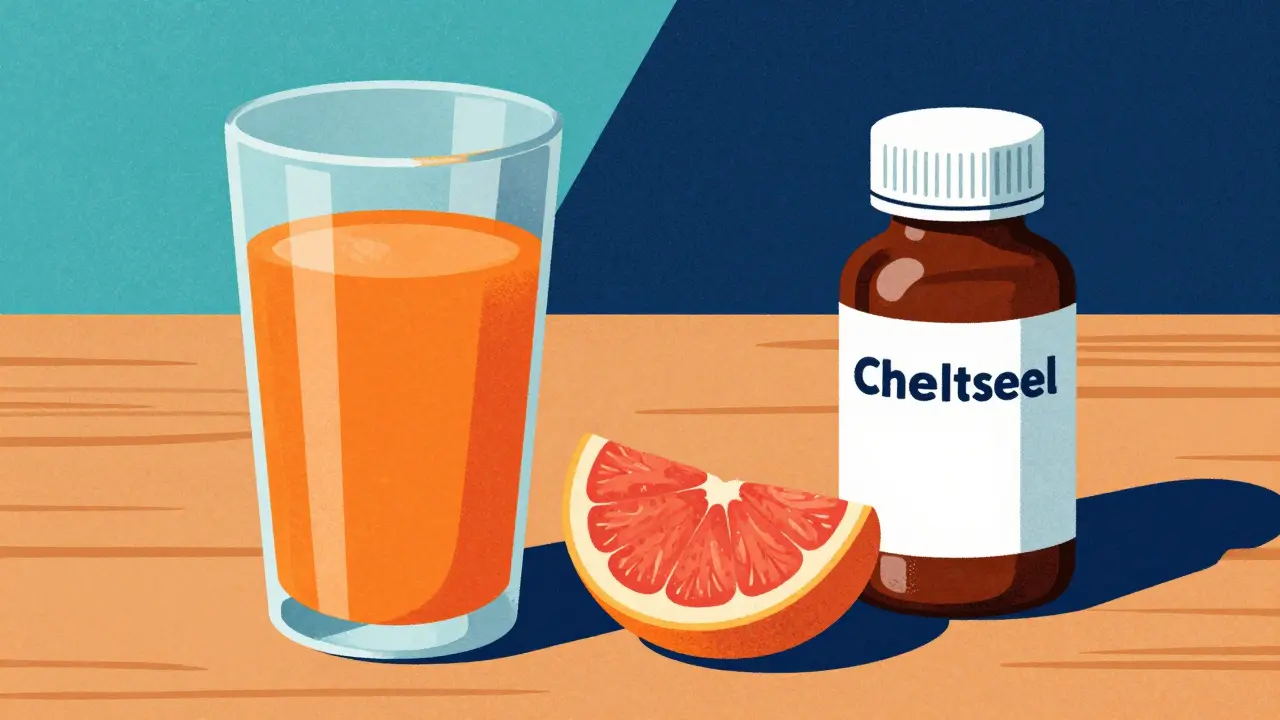
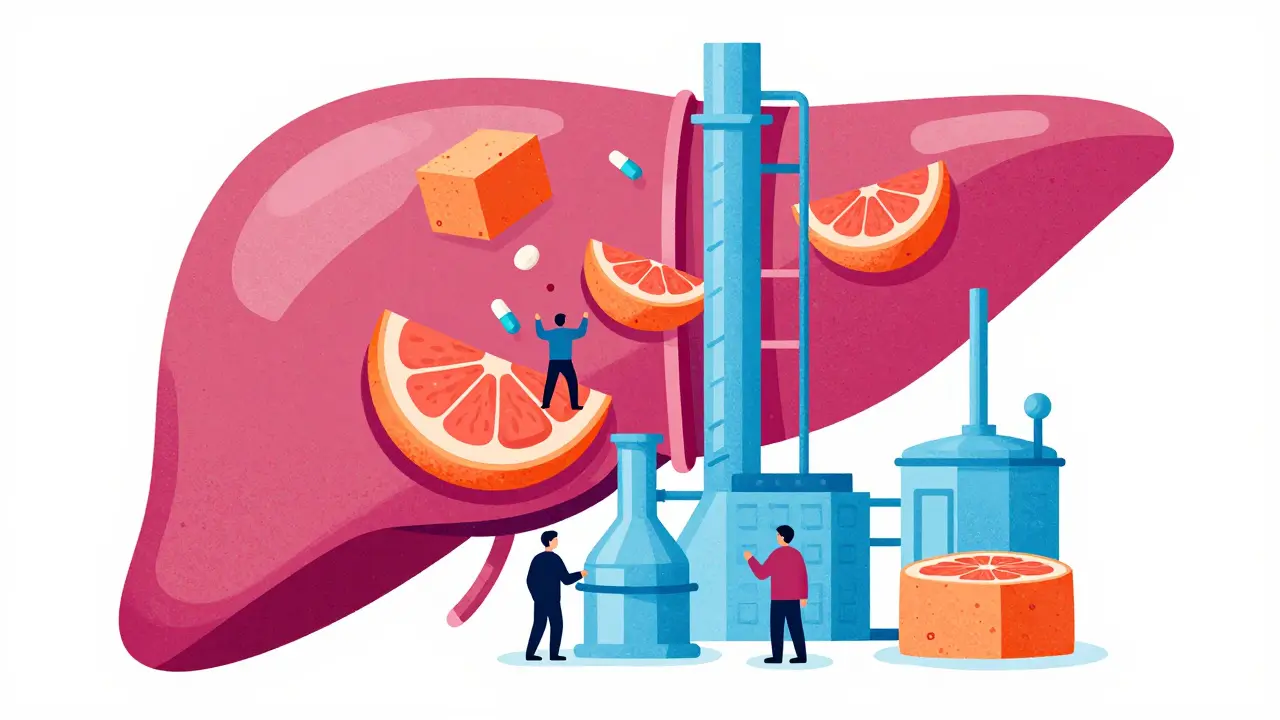
A huge part of the pharmacokinetic puzzle involves the liver. Specifically, a group of proteins called CYP450 enzymes is a superfamily of enzymes responsible for metabolizing the majority of prescription drugs in the human body . One particular enzyme, CYP3A4, handles about 50% of all common meds. If you take something that "inhibits" or blocks this enzyme, the drug it's supposed to break down just sits in your blood, building up to toxic levels. That's exactly what happens with grapefruit juice; it blocks CYP3A4, which can spike the levels of certain statins by 300-600%.
Pharmacodynamic interactions are different. They happen at the target site-like a receptor on a cell. An additive effect occurs when two drugs do the same thing, like taking a prescription sedative and an over-the-counter sleep aid, leading to extreme drowsiness. On the flip side, an antagonistic effect happens when drugs fight. For instance, certain nonsteroidal anti-inflammatory drugs (NSAIDs) can cause your body to hold onto salt and fluid, which effectively cancels out the work of a diuretic (water pill).
High-Risk Medications You Should Watch
Some drugs are simply "stickier" than others, meaning they interact with a vast array of substances. If you are taking any of the following, you need to be extra vigilant about every new supplement or medication you introduce.
| Medication | Common Interacting Substances | Potential Risk |
|---|---|---|
| Warfarin (Coumadin) | Antibiotics, Antifungals, Cranberry Juice | Dangerous blood thinning or clots |
| Digoxin (Lanoxin) | Certain Diuretics, Antibiotics | Toxicity/Heart rhythm issues |
| Levothyroxine (Synthroid) | Calcium or Iron Supplements | Reduced absorption/Hypothyroidism |
| Simvastatin (Zocor) | Grapefruit Juice, Fluconazole | Muscle breakdown (Rhabdomyolysis) |
Warfarin is the poster child for complexity, with over 600 known interacting substances. Even a change in your diet-like suddenly eating a lot more leafy greens (Vitamin K)-can change how much Warfarin you need.
The Danger of Polypharmacy in Older Adults
The risk of an interaction doesn't just depend on the drug, but on how many of them you're taking. This is where Polypharmacy is the simultaneous use of multiple medications by a single patient, often leading to an increased risk of adverse drug reactions . This is a major concern for seniors. On average, elderly patients take nearly five prescription meds a day and experience interactions at three times the rate of younger people.
The problem is often fragmented care. You might see a cardiologist for your heart, a rheumatologist for your joints, and a GP for your diabetes. If these doctors don't communicate, you end up with a cocktail of drugs that may fight each other. To combat this, geriatricians use the Beers Criteria, a gold-standard list of medications that are potentially inappropriate or dangerous for older adults. Using these guidelines has been shown to cut adverse drug events by 27% in the elderly.

How to Protect Yourself: Practical Safety Steps
You don't need a medical degree to lower your risk. A few simple habits can prevent a hospital trip.
- Use One Pharmacy: If you get your blood pressure meds from one store and your antidepressants from another, neither pharmacist has the full picture. Using a single pharmacy allows their computer system to run a comprehensive check on every new script.
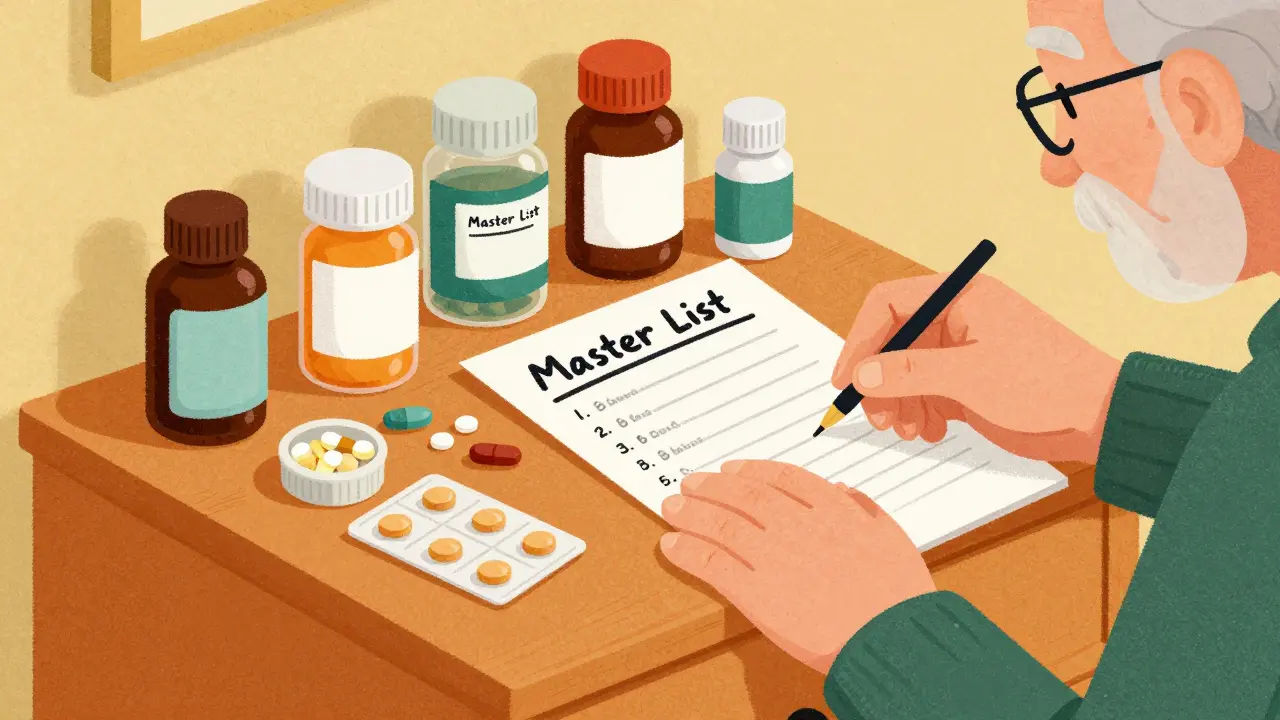
- Keep a "Master List": Carry a list of everything you take, including the exact dose and frequency. Don't forget the "natural" stuff-St. John's Wort and Ginkgo Biloba are famous for messing with prescription meds.
- The Two-Hour Rule: If a supplement or food interferes with a drug's absorption (like calcium with thyroid meds), taking them at least two hours apart can often solve the problem.
- Ask Specific Questions: Instead of asking "Are these safe?", ask "Does this medication affect how my liver processes other drugs?" or "Are there specific foods I must avoid while on this?"
If you're curious about a specific combo, professional tools like the Medscape Drug Interaction Checker or the FDA's Drug Interaction Knowledgebase (DIKB) provide clinically validated data. However, always verify these findings with your doctor before changing your dose.
Can herbal supplements cause drug interactions?
Yes, absolutely. Many people assume "natural" means "safe," but herbal products contain active chemicals. For example, St. John's Wort can speed up the CYP3A4 enzyme in your liver, causing other medications to be cleared from your body too quickly, which makes them ineffective. Always treat a supplement like a drug when checking for interactions.
Why does grapefruit juice specifically cause problems?
Grapefruit contains compounds called furanocoumarins. These compounds block the CYP3A4 enzymes in your intestines. Since these enzymes are supposed to break down some of the medication before it hits your bloodstream, blocking them causes a massive spike in the amount of drug that actually enters your system, leading to potential toxicity.
What should I do if I suspect a drug interaction?
If you notice new or unusual symptoms after starting a new medication or supplement, contact your healthcare provider immediately. Do not stop taking a prescription medication abruptly without medical guidance, as this can cause withdrawal or rebound effects. Document your symptoms and the timing of when you took each medication to help your doctor diagnose the issue.
Are all drug interactions dangerous?
Not all of them. Some are "minor" and only require a slight dose adjustment. Others are "significant" and need close monitoring. However, some are "contraindicated," meaning the risk is so high that the two substances should never be used together under any circumstances. Your pharmacist can tell you which category a specific interaction falls into.
Can my genetics affect how I react to drug interactions?
Yes. This is the field of pharmacogenomics. Some people have genetic variations in their CYP450 enzymes that make them "ultra-rapid metabolizers" or "poor metabolizers." This means a standard dose of a drug might be ineffective for one person but toxic for another, regardless of other drugs they are taking.

Doug DeMarco
April 12, 2026 AT 05:46This is super helpful stuff! Always better to be safe than sorry when it comes to the meds we take. 💊 Just a heads up for everyone, if you're not sure about a supplement, just shoot a quick message to your pharmacist, they're usually awesome and happy to help! 😊
Simon Jenkins
April 12, 2026 AT 06:30Oh, for heaven's sake, the sheer ignorance of the general public regarding CYP450 enzymes is absolutely staggering! It's practically a tragedy that we have to spell this out in such basic terms, but I suppose some people simply cannot be bothered to read a medical journal. The lack of basic biochemical literacy in this country is a total catastrophe! I find it utterly exhausting to exist in a world where people think "natural" is a synonym for "safe" while they blindly ingest substances that could potentially shut down their liver. Absolutely preposterous!
emmanuel okafor
April 13, 2026 AT 20:57nature has its own way of balance but the body is a fragile thing
Rakesh Tiwari
April 14, 2026 AT 12:36Oh wonderful, another guide telling us to trust the system that's already failing. I'm sure the pharmacists are just thrilled to have one more list to ignore while they push more pills on the elderly. Truly a miracle of modern medicine.
Camille Sebello
April 15, 2026 AT 19:39I've had this happen...!! My doctor missed it...!! It was terrifying...!!
Julie Bella
April 15, 2026 AT 21:00Omg Camille you totaly shouldve sued that doctor!! 😱 Some people just dont care about thier patients its just wrong!! I actuly think we need more laws to make sure doctors dont mess up like that!! Its a moral failur!! 😡
Sarina Montano
April 17, 2026 AT 10:11To add a little more flavor to the discussion, it's worth mentioning that the "two-hour rule" varies depending on the drug's half-life and how it's absorbed. Some chelating agents or high-fiber foods can create a sort of molecular net in the gut that traps meds before they can even hit the bloodstream, which is a different beast than liver enzyme inhibition. It's a fascinating, albeit scary, dance of chemistry happening in our bellies every day.
danny Gaming
April 18, 2026 AT 19:28typical gov propoganda tellin u to trust the pharmacy chain’s computers lol’ they just want u on the hook for life
Will Gray
April 19, 2026 AT 01:11Exactly. This is all just a distraction from the real issue. Why are we focusing on grapefruit juice when the pharmaceutical complex is designing these drugs to be intentionally unstable to keep us dependent? It's a calculated move to ensure the"fragmented care" remains fragmented so no one sees the full pattern of systemic control. The elites love it when we're too sick to question the agenda.
Franklin Anthony
April 19, 2026 AT 05:49totally agree with the vibe here buddy but lets remember that most docs are just following the script they were given by big pharma lol its a wild world out there just keep your eyes open and trust your gut
Chad Miller
April 19, 2026 AT 10:53this is way to long i dont have time to read all this stuff just tell me what not to take lol
kalpana Nepal
April 21, 2026 AT 04:00The pride of a nation is in the health of its people and the western ways of medicine are often just greed masked as science.
Emily Wheeler
April 22, 2026 AT 23:40I really feel that we can all approach this with a sense of community support because while the medical system is indeed flawed, there is such a beautiful opportunity for us to help each other by sharing our personal journeys with medication management, and if we just slow down and think about how our bodies are interconnected with the environment and the chemicals we introduce, we might find a more holistic way to navigate these risks together without feeling so much fear, because knowledge is truly the bridge to a healthier and more conscious existence for everyone involved in this struggle.