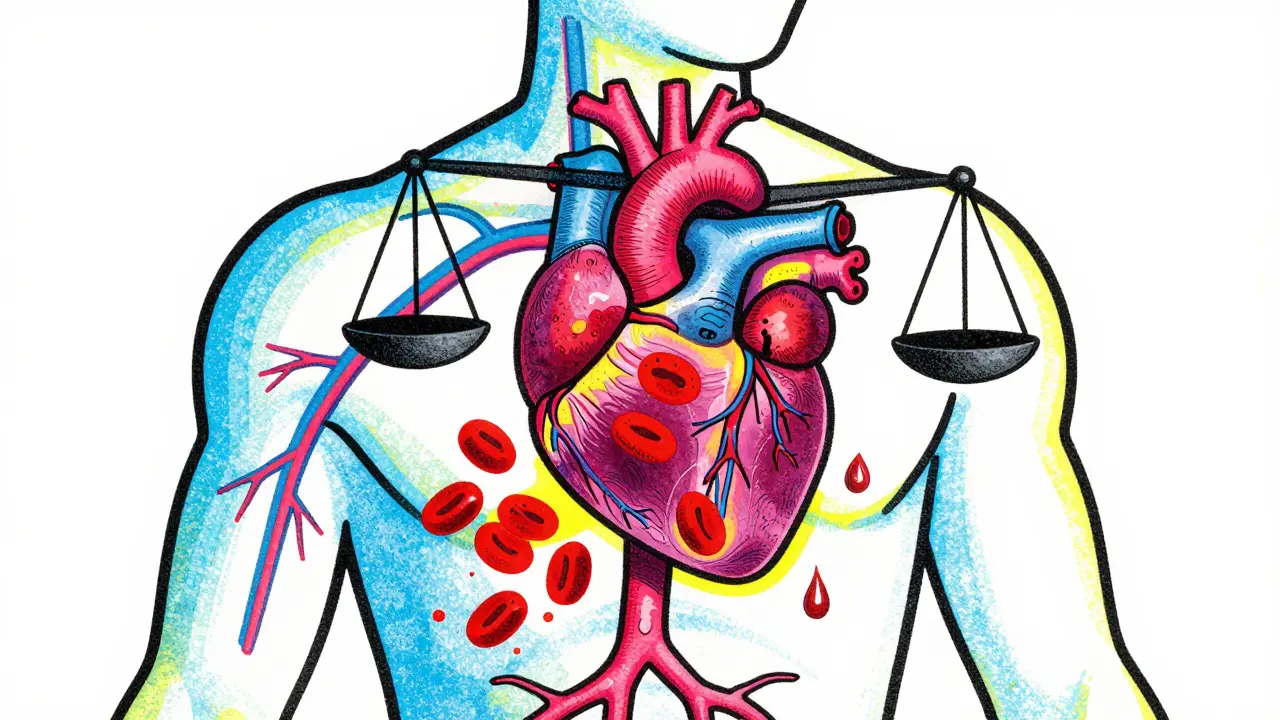
When you catch a severe respiratory infection, your body reacts in ways that go far beyond a cough or fever. One of the most dangerous hidden risks is a condition called hypercoagulability, where your blood becomes too prone to clotting. This creates a tricky situation for people already taking blood thinners, also known as anticoagulants. If you are managing a condition like atrial fibrillation or recovering from a previous clot, adding a new infection treatment to the mix can turn a standard prescription into a safety hazard. The stakes are high because the same drugs that prevent life-threatening clots can suddenly cause dangerous bleeding if they interact with antiviral medications.
Understanding this balance is critical for anyone navigating a respiratory illness while on medication. The medical landscape has shifted significantly since the early days of the pandemic. We now know that treating the infection and managing the blood thinner requires a coordinated strategy. Without it, patients face a dual risk: clots forming in the lungs or severe hemorrhage from the digestive tract. This guide breaks down exactly how these interactions happen, which drugs are involved, and what protocols doctors use to keep patients safe.
The Clotting Connection in Respiratory Infections
Respiratory infections, particularly those caused by SARS-CoV-2 the virus responsible for the COVID-19 pandemic, trigger a specific response in the body. The virus damages the lining of blood vessels, which prompts the immune system to release inflammatory markers. These markers signal the blood to clot more aggressively. Research indicates that in critical cases, diffuse microthrombi-tiny clots-form in the lung vasculature in approximately 70% of patients. This is why hospitals often administer therapeutic-intensity anticoagulation rather than just a low prophylactic dose for severe illness.
This phenomenon was first clearly documented in early 2020, but the understanding has deepened since then. The American Society of Hematology published draft guidelines in 2021 recommending that patients with acute illness receive stronger anticoagulation. The logic is straightforward: the infection drives the clotting, so you need a stronger countermeasure. However, this increases the baseline risk of bleeding. When you introduce new medications to treat the virus, you are altering the chemical environment in your bloodstream. This is where the interaction between infection treatment and blood thinners becomes complex.
Types of Anticoagulants and Their Profiles
Not all blood thinners work the same way, and this difference dictates how they interact with other drugs. The two main categories are Vitamin K antagonists and Direct Oral Anticoagulants (DOACs). Warfarin a vitamin K antagonist requiring regular INR monitoring has been used for decades. It requires frequent blood tests to check the INR level, which measures how long it takes for blood to clot. While it is predictable, it is sensitive to diet and other medications. If your INR gets too high, you risk bleeding; too low, and you risk clotting.
On the other hand, DOACs like Apixaban a direct oral anticoagulant commonly used for stroke prevention, Rivaroxaban a direct oral anticoagulant often prescribed for DVT and PE, and Dabigatran a direct thrombin inhibitor used in anticoagulation therapy are newer and do not require routine blood monitoring. They are popular because they are convenient. However, they rely heavily on specific enzymes in the liver to break them down. This reliance on metabolic pathways is the root of most interaction issues. When another drug blocks or speeds up these enzymes, the level of anticoagulant in your blood can spike or drop dangerously.
| Drug Class | Common Examples | Monitoring Requirement | Interaction Risk Level |
|---|---|---|---|
| Vitamin K Antagonist | Warfarin | Regular INR checks | High (Diet and Drug interactions) |
| DOAC (Factor Xa Inhibitor) | Apixaban, Rivaroxaban | None routine | Very High (CYP3A4/P-gp inhibitors) |
| DOAC (Thrombin Inhibitor) | Dabigatran | None routine | High (P-gp inhibitors) |
| Injectable Anticoagulant | Enoxaparin | Anti-Xa levels (if needed) | Low (Minimal metabolic interaction) |
The Antiviral Clash: Mechanisms of Interaction
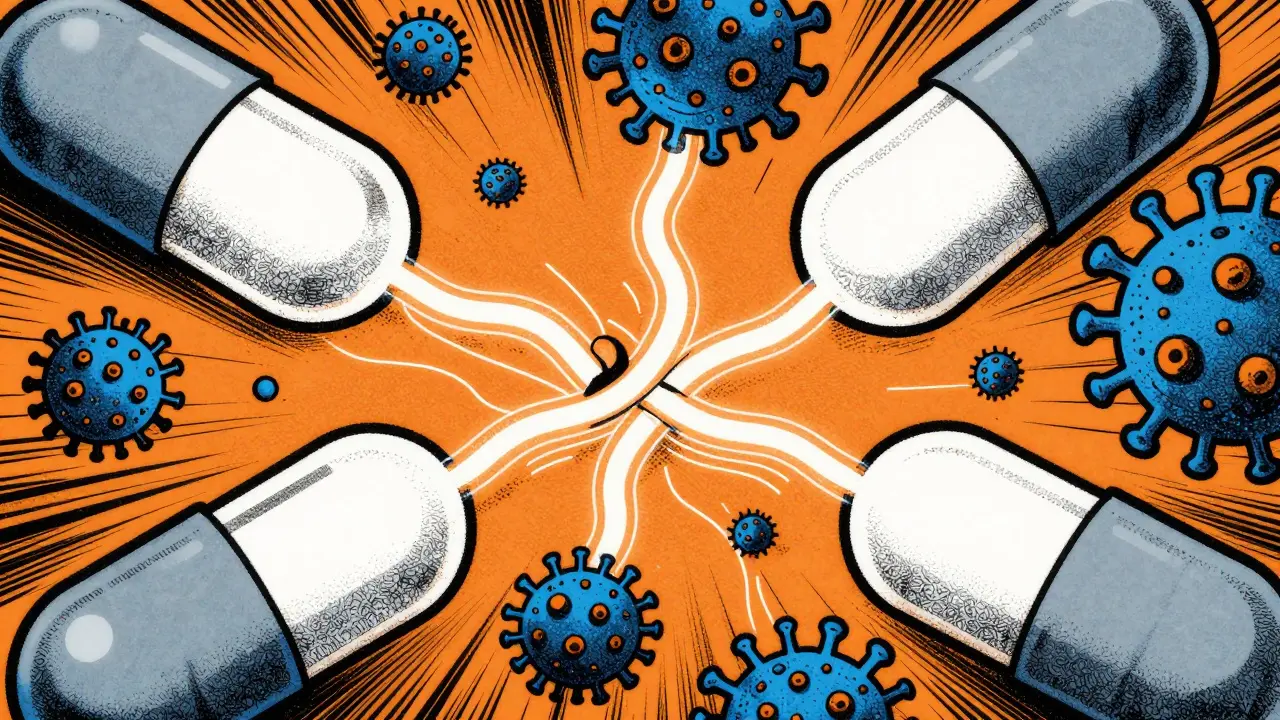
The most significant interactions arise from antiviral medications used to treat respiratory infections. A prime example is Paxlovid an antiviral medication containing nirmatrelvir and ritonavir. It contains a component called ritonavir, which is a potent inhibitor of the CYP3A4 enzyme. This enzyme is responsible for breaking down many DOACs. When you take Paxlovid, it essentially shuts down the enzyme that clears the blood thinner from your system. A 2022 study documented that 100% of patients who continued DOACs while on certain antivirals had markedly increased serum levels of the anticoagulant.
This creates a scenario where the blood thinner stays in your body too long, leading to toxic levels. Conversely, other drugs like dexamethasone, which is used for severe inflammation, act as inducers. They speed up the enzyme, causing the blood thinner to be cleared too quickly. This reduces the anticoagulant effect by up to 50%, leaving you unprotected against clots. It is a double-edged sword where the treatment for the infection can either cause bleeding or allow a clot to form.
Real-World Risks and Clinical Data
The statistics from the pandemic era highlight the severity of this issue. A meta-analysis published in JAMA Internal Medicine in 2022 looked at 27 studies involving over 22,000 patients. They found bleeding rates between 3.5% and 15% and thrombotic events between 4.8% and 16.5% in hospitalized patients. These are not rare occurrences. In community settings, pharmacists reported that 63% encountered at least one significant interaction monthly during the peak of the pandemic. One real-world case involved a patient who continued full-dose rivaroxaban during Paxlovid treatment and subsequently experienced gastrointestinal bleeding, requiring hospitalization and blood transfusions.
There is also a divergence in how different regions handle this. The US Food and Drug Administration and the European Medicines Agency have issued slightly different guidance. For instance, regarding dabigatran and ritonavir-containing drugs, US guidelines often recommend complete avoidance if kidney function is impaired. In contrast, European guidelines might permit careful use with dose adjustments. This creates confusion for patients traveling or accessing information from different sources. Approximately 25% of the elderly anticoagulated population falls into a kidney function range where these guidelines clash, making personalized medical advice essential.
Management Strategies for Safety
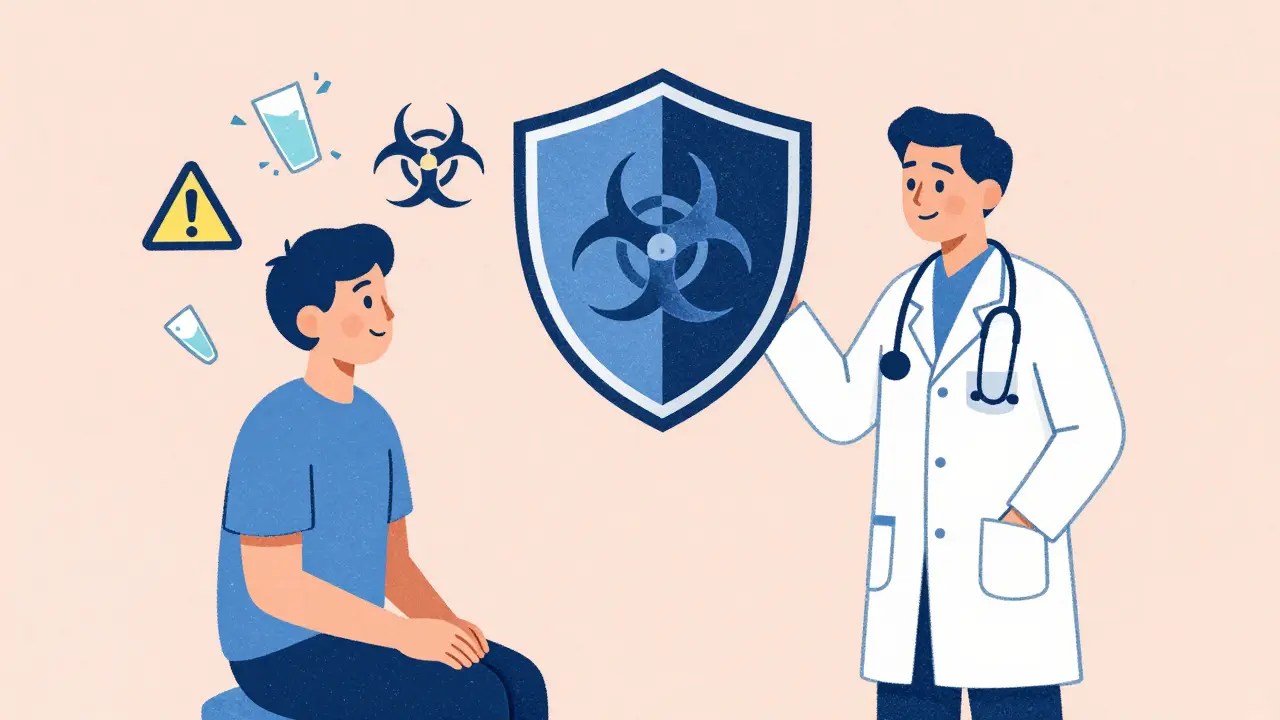
Managing these interactions requires a proactive protocol rather than waiting for symptoms to appear. The American Society of Health-System Pharmacists recommends specific steps for patients on apixaban or rivaroxaban who need Paxlovid. The standard approach is to hold the anticoagulant for the 5-day treatment period and resume it 2 days after completion. For patients with a high risk of clotting, doctors might use bridging therapy. This involves switching to a short-acting injectable anticoagulant like Enoxaparin a low-molecular-weight heparin used for anticoagulation bridging during the antiviral course. This drug does not rely on the same liver enzymes, so it avoids the interaction.
For those on dabigatran with good kidney function, the strategy differs. You might administer the dabigatran at least 12 hours before or after the Paxlovid dose. The dose is often reduced to 75 mg twice daily during the treatment. Monitoring is also intensified. Instead of checking levels once a year, doctors may check anti-Xa levels daily during the treatment to ensure the blood is not too thin or too thick. This requires coordination between your primary care doctor, cardiologist, and pharmacist.
Monitoring and Future Developments
As we move further into the post-pandemic era, the tools for managing these risks are improving. The FDA issued a safety communication in July 2023 warning about the increased bleeding risk with concomitant use of Paxlovid and DOACs. They cited nearly 150 reported cases of major bleeding within a six-month window. To address this, researchers are developing machine learning models to predict interaction severity. A study in Nature Medicine showed a model with nearly 90% accuracy in predicting these risks based on patient records.
Additionally, the pharmaceutical industry is working on next-generation antivirals that do not inhibit the CYP3A4 enzyme. Pfizer, for example, has successors in trials that show minimal interaction potential. This could resolve many of the current challenges within the next few years. Until then, the responsibility lies with the healthcare team to review every prescription. If you are prescribed a new medication for a respiratory infection, you must inform the prescriber about your blood thinners immediately. The cost of managing these interactions is also rising, with projections suggesting annual healthcare costs will reach $1.2 billion in the US by 2025 due to these complications.
Can I take blood thinners if I have the flu?
Yes, but you need to monitor for dehydration and fever, which can affect how your body processes medication. If you are prescribed antiviral medication, you must check for interactions with your specific blood thinner.
Does Paxlovid interact with Warfarin?
Warfarin may be co-administered with Paxlovid, but it requires close monitoring of your INR levels. The interaction is less severe than with DOACs, but your doctor may need to adjust your dose temporarily.
What are the signs of bleeding while on anticoagulants?
Watch for unusual bruising, blood in your urine or stool, nosebleeds that won't stop, or severe headaches. If you experience these symptoms while taking antivirals, seek medical attention immediately.
Should I stop my blood thinner before surgery?
This depends on your clotting risk and the type of surgery. Never stop your medication without consulting your doctor, as the risk of a stroke or clot can be life-threatening.
How long does it take for blood thinners to leave my system?
DOACs usually clear within 24 to 48 hours, while Warfarin can take several days to weeks to fully wash out. Your doctor will determine the safe window based on your kidney function and specific drug.




Mihir Patel
March 25, 2026 AT 12:18This whole situation is absolutely terrifying for people like me. I have been on warfarin for years and now I am scared to take anything. The thought of my blood turning to jelly or expoloding out of my nose is real. Doctors say it is safe but I do not trust the numbers. My cousin had a bad reaction last year during the flu season. He ended up in the hospital for weeks and it was a nightmare. You talk about protocols but protocols do not stop the pain. I feel like we are just guinea pigs in this giant experiment. The medication changes every few months and we have to adapt. It is exhausting trying to keep up with all the new rules. My heart races when I think about the pharamcist counter. The pharmacist looks at me like I am a problem to solve. They check the computer and tell me to wait. Waiting feels like dying slowly in a chair. I just want to be healthy without worrying about my veins. This article explains the science but not the fear. Fear is what keeps me up at night every single day.
Raphael Schwartz
March 26, 2026 AT 03:29Our doctors know best and we do not need foreign rules.
winnipeg whitegloves
March 26, 2026 AT 10:47Your anxiety paints a vivid picture of the struggle we all face. It is like walking a tightrope over a canyon of uncertainty. We need to hold hands and navigate this storm together. The medical landscape is indeed a shifting mosaic of data and care.
Marissa Staples
March 27, 2026 AT 12:20Life is just a series of balancing acts between risk and safety. We try to control the uncontrollable variables of our biology. It feels like playing chess with a deck of cards. The outcome is never truly in our hands.
Aaron Sims
March 27, 2026 AT 17:39Oh sure! Just play chess with cards! They tell us to trust them! But the watchers are blind! The system is rigged! We are just numbers in a ledger! Do not trust the guidelines!!
Stephen Alabi
March 28, 2026 AT 02:55It is imperative to note that the pharmacokinetics of dabigatran differ significantly from rivaroxaban in renal impairment scenarios. The text implies a uniformity that does not exist in clinical practice. One must consult the specific prescribing information for each agent. Generalizations can lead to severe adverse events.
Agbogla Bischof
March 29, 2026 AT 21:03That is a very valid point regarding the renal clearance rates. Anti-Xa monitoring is indeed crucial in those specific instances. We must ensure the dosage is adjusted according to the creatinine clearance. Safety protocols should always be prioritized above convenience.
Anil Arekar
March 30, 2026 AT 00:30It is essential that we maintain a respectful dialogue regarding these medical complexities. Every individual experiences the healthcare system differently based on their background. We should strive to support one another through these challenging times. Knowledge sharing is beneficial for the entire community.
Chris Crosson
March 30, 2026 AT 13:56I completely agree with that sentiment about community support. We need to look out for each other when dealing with these prescriptions. Sharing information helps everyone stay safe and informed.
Amber Gray
March 31, 2026 AT 13:21just take the meds and dont worry about it 🤷♀️
James Moreau
April 1, 2026 AT 01:58Understanding the mechanics behind the interactions is vital for safety. It helps to clarify the mechanics behind the interactions. The breakdown of the different drug classes is necessary.
Grace Kusta Nasralla
April 3, 2026 AT 00:32The silence between the words often holds the most weight in these discussions. We speak of safety but fear lurks in the shadows. Understanding is a quiet journey.