Imagine waking up with a racing heart, trembling hands, and a sense of dread that feels completely out of proportion to your day. For millions of people who have taken Benzodiazepines is a class of psychoactive drugs primarily used for the short-term treatment of anxiety, insomnia, seizures, and muscle spasms. Common brands include Xanax (alprazolam), Valium (diazepam), Ativan (lorazepam), and Klonopin (clonazepam). for months or years, this isn't just stress-it’s withdrawal. These medications are incredibly effective at calming the nervous system, but they also carry a heavy price: physical dependence. When you stop taking them abruptly, your brain doesn’t know how to regulate itself anymore. The result can be severe anxiety, insomnia, tremors, and in rare cases, life-threatening seizures.
The good news? You don’t have to suffer through this alone, and you certainly don’t have to stay on these meds forever if you want off. Benzodiazepine Tapering is the systematic, gradual reduction of benzodiazepine dosage over time to minimize withdrawal symptoms and safely discontinue use. Recent guidelines from major medical organizations, including a comprehensive Joint Clinical Practice Guideline published in 2024 by ten professional societies, emphasize that most patients can successfully taper off with the right support. It’s not about willpower; it’s about biology, pacing, and having a plan that respects how your body has adapted to the drug.
Why Tapering Matters More Than Ever
In 2022, approximately 30.6 million American adults used benzodiazepines, with nearly one-fifth using them long-term (more than 120 days). That’s a massive number of people navigating a system that hasn’t always been clear about how to get off these drugs safely. For years, doctors might prescribe them for sleep or panic attacks without a clear exit strategy. Then, when a patient wants to stop, they’re told to “just cut down.” But cutting cold turkey after long-term use is dangerous. Abrupt discontinuation carries a 20-40% risk of severe withdrawal symptoms, including seizures, especially with short-acting agents like alprazolam (Xanax).
This is why regulatory bodies like the FDA issued safety communications in 2019 requiring label changes to warn against sudden stops. The message is clear: your brain needs time to relearn how to produce its own GABA-the neurotransmitter responsible for calmness-without chemical assistance. Tapering isn’t optional if you’ve been on daily doses for more than a month; it’s essential for safety.
How Fast Should You Taper?
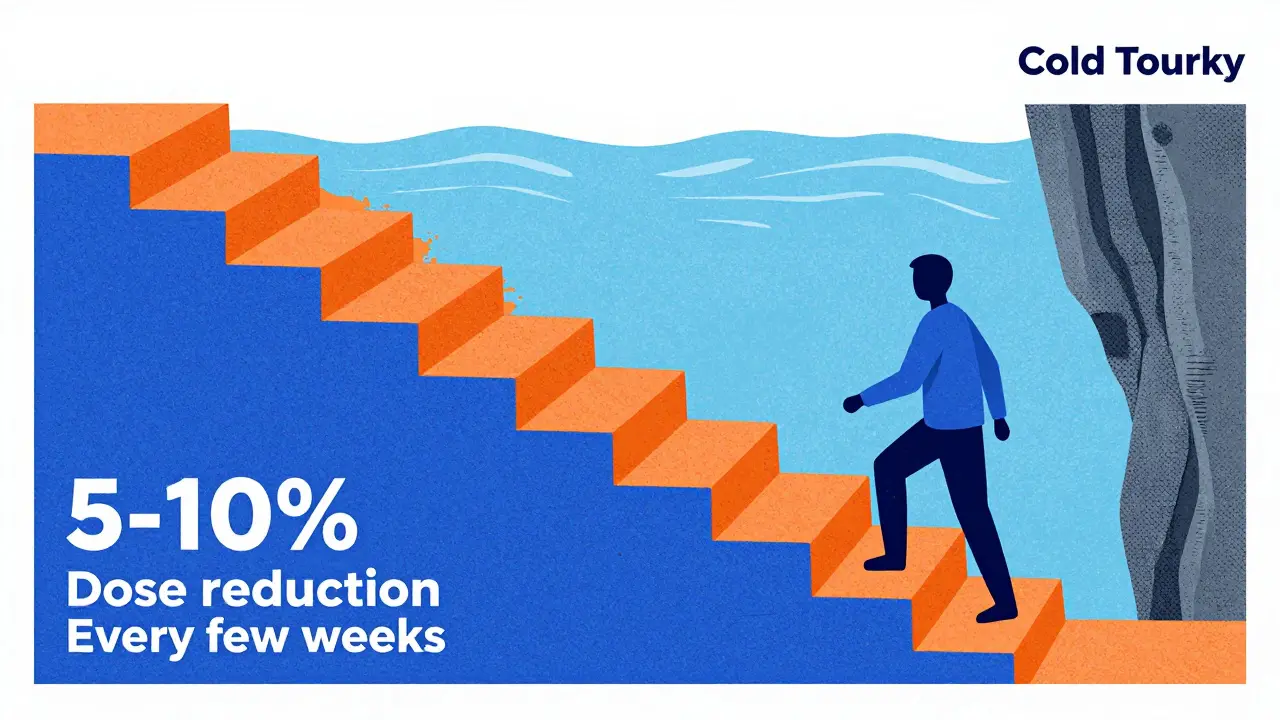
There’s no single speed that works for everyone, but there are evidence-based frameworks. The Joint Clinical Practice Guideline recommends starting with a 5-10% reduction in total daily dose every 2-4 weeks. This slow pace allows your nervous system to adjust incrementally. Think of it like lowering yourself into a pool rather than jumping in-you give your body time to acclimate to the new temperature.
The Oregon Health Authority provides specific duration recommendations based on how long you’ve been taking the medication:
- 2-8 weeks of use: Taper should last at least 2 weeks.
- 8 weeks to 6 months: Taper should last at least 4 weeks.
- 6 months to 1 year: Taper should last at least 8 weeks.
- More than 1 year: Taper should last 6-18 months.
If you’ve been on high doses for years, your taper might take closer to 18 months. And that’s okay. Some clinicians advocate for even slower tapers where the patient controls the pace, which can sometimes extend to two years. While some worry that longer tapers increase anxiety about the process itself, many patients report better outcomes when they feel in control and aren’t fighting severe rebound symptoms.
Three Main Approaches to Tapering
You generally have three technical options when planning your taper, depending on what medication you’re currently taking and your doctor’s preference:
- Continue with the same medication: If you’re on a long-acting benzo like clonazepam or diazepam, you may simply reduce the dose gradually. This avoids switching variables mid-process.
- Switch to a longer-acting equivalent: Many experts recommend switching to Diazepam is a long-acting benzodiazepine often used as the standard for cross-titration due to its predictable metabolism and availability in small tablet sizes. because it stays in your system longer, providing smoother blood levels and fewer peaks and troughs. For example, 1mg of alprazolam equals roughly 20mg of diazepam. This conversion allows for precise, tiny reductions that would be impossible with larger pills.
- Use adjunctive medications: In some cases, doctors may add non-benzo medications to help manage specific withdrawal symptoms like insomnia or muscle tension, though this is less common and requires careful monitoring.
| Original Medication | Equivalent Diazepam Dose | Half-Life |
|---|---|---|
| Alprazolam (Xanax) 1mg | 20mg Diazepam | Short (11 hours) |
| Lorazepam (Ativan) 1mg | 10mg Diazepam | Intermediate (14 hours) |
| Clonazepam (Klonopin) 0.5mg | 10mg Diazepam | Long (30+ hours) |
| Triazolam (Halcion) 0.25mg | Not typically tapered | Very Short (2 hours) |
Note that triazolam, with its extremely short half-life, rarely causes physical dependence and can often be stopped without a formal taper. However, if you’re on anything else, assume you need a plan.
Who Needs Extra Care During Tapering?
Some populations face higher risks and require more intensive support. Older adults, for instance, are particularly vulnerable. The Beers Criteria identifies benzodiazepines as potentially inappropriate for seniors due to increased risks of cognitive impairment, falls, and motor vehicle accidents. If you’re over 65, tapering is often prioritized unless there are compelling reasons to continue.
Other high-risk groups include:
- People with a history of substance use disorders.
- Those with traumatic brain injuries or cognitive impairments.
- Veterans with PTSD, where continued benzo use has been linked to reduced effectiveness of other treatments and higher mortality rates.
- Individuals taking multiple benzodiazepines or combining them with opioids or stimulants.
If any of these apply to you, your taper should involve a team approach-ideally including a psychiatrist, a primary care provider, and possibly a pharmacist or peer-support specialist who has lived experience with recovery.
Managing Withdrawal Symptoms Without Panic
Withdrawal isn’t just uncomfortable; it can feel terrifying. Symptoms often mirror the original anxiety or insomnia you were treating, leading many to believe they “need” the drug again. This is called anticipatory anxiety, and it’s one of the biggest hurdles. Here’s how to handle it:
- Track your symptoms: Keep a daily log of mood, sleep, and physical sensations. This helps distinguish between true medical issues and normal withdrawal fluctuations.
- Use CBT techniques: Cognitive Behavioral Therapy is highly effective during tapering. Learning to challenge catastrophic thoughts (“I’ll never sleep again”) reduces their power.
- Don’t bounce back: If you have a bad day, resist the urge to return to your previous dose. Instead, hold at your current level until symptoms stabilize, then resume tapering slowly.
- Build a support network: Tell trusted friends or family members what you’re going through. Isolation worsens anxiety.
Research shows that when cognitive behavioral therapy is provided alongside medical tapering, successful discontinuation rates jump to 68.3%, compared to just 42.1% with medical management alone. Combining psychological tools with pharmacological adjustments gives you the best shot at lasting freedom from dependence.

Practical Steps to Start Your Taper
Before you make your first dose reduction, lay the groundwork:
- Choose one prescriber and one pharmacy: This prevents confusion, accidental double-dosing, or diversion. Consistency is key.
- Evaluate co-occurring conditions: Treat underlying depression, trauma, or chronic pain separately so they don’t derail your taper.
- Get a complete history: Share all past drug and alcohol use with your provider. Honesty ensures safer planning.
- Schedule regular check-ins: Weekly or bi-weekly appointments allow your doctor to adjust the pace based on real-time feedback.
- Limit dispensing frequency: Ask for prescriptions to be filled once every 1-2 weeks to reinforce structure and prevent hoarding.
Documentation matters too. Keep copies of your taper schedule, symptom logs, and any changes made. This creates a clear record of progress and protects both you and your provider.
What Does the Future Hold?
The landscape of benzodiazepine care is shifting rapidly. As of 2024, 28 U.S. states now require mandatory tapering plans for prescriptions exceeding 90 days. The Department of Veterans Affairs implemented mandatory protocols in 2020, resulting in a 23.7% drop in long-term benzo prescriptions among veterans by 2023. Digital health tools are emerging too-the NIH is funding studies on mobile apps that provide real-time symptom tracking and personalized taper adjustments, expected to roll out by mid-2026.
Industry analysts predict a 35% increase in demand for tapering specialists by 2026 as healthcare systems recognize that structured discontinuation improves long-term outcomes and reduces malpractice risks. Structured tapering protocols are becoming the standard of care, driven by regulation, evidence, and patient advocacy.
Can I taper off benzodiazepines on my own?
It is strongly discouraged to taper off benzodiazepines without medical supervision. Withdrawal can cause severe symptoms like seizures, psychosis, or intense rebound anxiety. A healthcare provider can create a personalized schedule, monitor for complications, and adjust the pace if needed. Always consult your doctor before making any changes to your medication regimen.
How long does benzodiazepine tapering usually take?
Taper duration depends on how long you’ve been taking the medication and the dose. Generally, tapers last anywhere from 2 weeks to 18 months. Those who have used benzodiazepines for more than a year typically require 6-18 months. Slower tapers are often safer and more comfortable, allowing your brain chemistry to stabilize gradually.
What are the most common withdrawal symptoms?
Common symptoms include anxiety, insomnia, irritability, muscle tension, tremors, sweating, and perceptual disturbances like heightened sensitivity to light or sound. In severe cases, especially with abrupt cessation, seizures or hallucinations can occur. Most symptoms peak within the first few weeks after a dose reduction and then subside as your body adjusts.
Is it safe to switch from Xanax to Valium for tapering?
Yes, switching from short-acting alprazolam (Xanax) to long-acting diazepam (Valium) is a common and recommended strategy. Diazepam has a longer half-life, which means it leaves the body more slowly, reducing the intensity of withdrawal peaks. Conversion tables exist to calculate equivalent doses, but this switch must be done under medical guidance to ensure accuracy and safety.
Will I ever feel normal again after stopping benzodiazepines?
Most people do recover fully after completing a proper taper. While withdrawal symptoms can be challenging, they are temporary. Over time, your brain regains its ability to regulate GABA naturally. Many patients report improved mental clarity, better emotional resilience, and enhanced quality of life once they are completely off the medication. Patience and support are key during the recovery phase.
Are there alternatives to benzodiazepines for anxiety?
Yes, several alternatives exist. Selective Serotonin Reuptake Inhibitors (SSRIs) and Serotonin-Norepinephrine Reuptake Inhibitors (SNRIs) are first-line treatments for chronic anxiety. Cognitive Behavioral Therapy (CBT) is highly effective for managing anxiety triggers. Other options include hydroxyzine, buspirone, or certain anticonvulsants, depending on individual needs. Discuss these options with your psychiatrist to find the best fit for your situation.