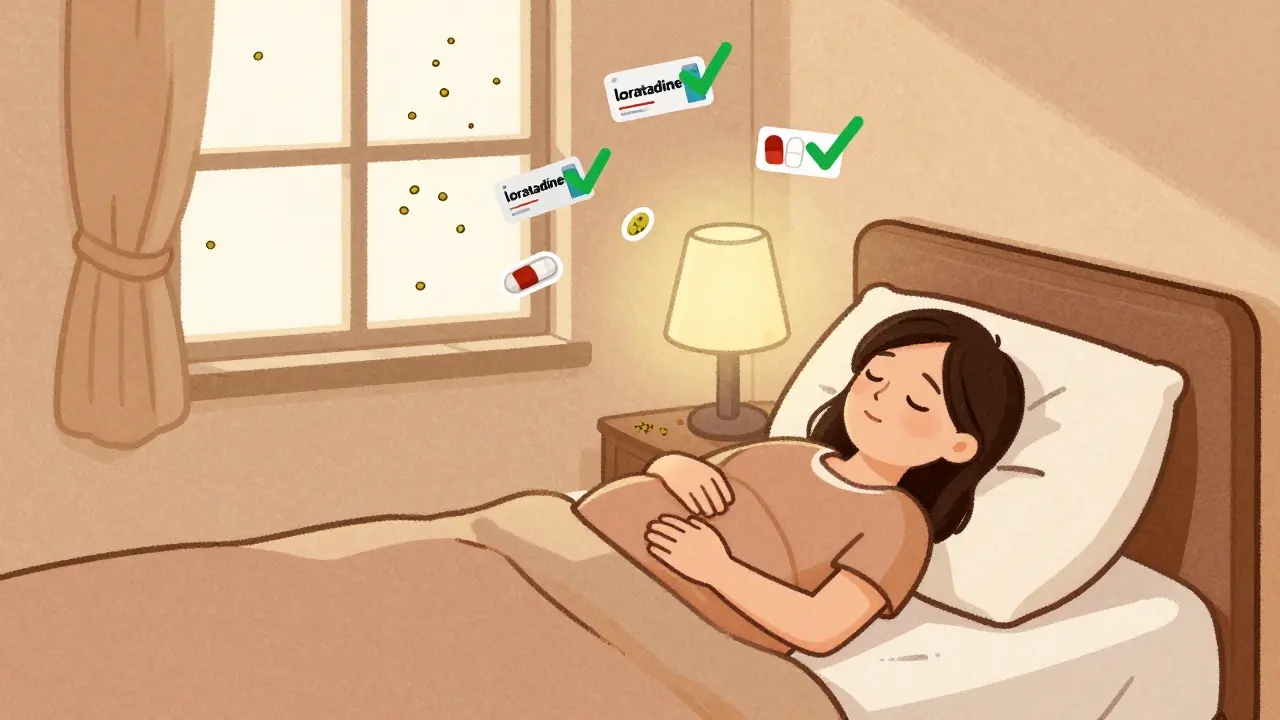
Pregnancy Antihistamine Safety Checker
Check Your Antihistamine Safety
Your Safe Options
Recommended:
Avoid:
Non-Medication Options
Consider these alternatives before using medication:
- Saline nasal rinse daily
- Keep windows closed during high pollen seasons
- Wash bedding in hot water weekly
- Use HEPA filters in bedroom
These methods reduce medication need and are safe during all trimesters.
When you’re pregnant and your nose is stuffed up, your eyes are itchy, and you can’t sleep because of hives, the last thing you want is to suffer in silence. But the moment you reach for that bottle of allergy pills, a question pops up: is this safe for my baby? You’re not alone. Thousands of pregnant people face this same dilemma every year. The good news? There are options. The tricky part? Knowing which ones actually work without putting your baby at risk.
First-Generation vs. Second-Generation Antihistamines: The Big Difference
Not all antihistamines are the same. They’re split into two main groups, and the difference matters a lot during pregnancy.First-generation antihistamines - like chlorpheniramine (ChlorTrimeton) and diphenhydramine (Benadryl) - have been around for decades. They work well, but they make you sleepy. That’s because they cross the blood-brain barrier. For some pregnant people, that drowsiness is a relief - if you’re exhausted from insomnia caused by allergies, a little sleep might be worth it. But if you’re driving, working, or caring for other kids, that drowsiness can be dangerous.
Second-generation antihistamines - like loratadine (Claritin), cetirizine (Zyrtec), and fexofenadine (Allegra) - were designed to avoid that drowsiness. They barely enter the brain, so you stay alert. That’s a big plus. But because they’re newer, people worry more about long-term safety. The truth? The data we have now is reassuring. Large studies haven’t found a clear link between these drugs and birth defects.
Chlorpheniramine is often the go-to first-gen choice among doctors because it’s been used safely since the 1950s. Diphenhydramine works too, but it’s shorter-acting and can cause more drowsiness. If you’re choosing between them, chlorpheniramine usually wins for consistency.
What the Experts Say About Safety
Major medical groups agree on one thing: untreated severe allergies can be risky. If you can’t eat because your nose is blocked, or you’re too itchy to sleep, or your asthma flares up, that stress and lack of oxygen can affect your baby too.The American College of Obstetricians and Gynecologists (ACOG) updated its guidance in March 2025 and says chlorpheniramine and dexchlorpheniramine are safe options. For newer drugs like loratadine and cetirizine, they say they “may also be safe” - meaning the evidence isn’t perfect, but it’s strong enough to support use when needed.
The Mayo Clinic recommends loratadine and cetirizine as first-line choices for mild allergy symptoms during pregnancy. Why? Because decades of data show no increase in birth defects. The American Academy of Family Physicians (AAFP) backs this up, giving both first- and second-generation antihistamines an evidence rating of B - meaning “benefits likely outweigh risks.”
The CDC analyzed over 14 antihistamines across thousands of pregnancies and found no consistent pattern of birth defects. One small study hinted at a possible link between hydroxyzine and heart defects, but that was based on only seven cases. That’s not enough to say it’s dangerous - just not enough to say it’s completely risk-free. So most doctors avoid hydroxyzine during pregnancy.
Which Antihistamines Are Recommended?
Here’s what most doctors in Australia, the U.S., and Europe actually recommend:- Loratadine (Claritin, Alavert) - Non-sedating, taken once daily. Best for mild seasonal allergies. Over 10,000 pregnancies studied with no increased risk of major birth defects.
- Cetirizine (Zyrtec) - Also non-sedating for most people. A few report mild drowsiness, but it’s rare. One of the most studied antihistamines in pregnancy.
- Chlorpheniramine (ChlorTrimeton) - Sedating, but the most proven safety record. Often used if other options don’t work or if sleep is the goal.
- Fexofenadine (Allegra) - Less studied than loratadine or cetirizine, but no red flags so far. Often used as an alternative if one doesn’t work.
There’s no single “best” choice. It depends on your symptoms, how you react to the drug, and whether you can tolerate drowsiness. If you’ve used loratadine before pregnancy and it worked well, there’s no reason to switch.

What to Avoid - Especially in the First Trimester
Some medications are off-limits, and one of the biggest is pseudoephedrine. It’s the decongestant in many cold and allergy combos like Sudafed.The ACOG says do not use pseudoephedrine in the first trimester. Studies show a small but real increase in abdominal wall defects - like gastroschisis - when it’s taken early in pregnancy. Even if you’re just taking it for a few days, the risk is there.
After the first trimester? It might be okay for some women without high blood pressure, but only under a doctor’s supervision. The Mayo Clinic says if you must use it, stick to 30-60 mg every 4-6 hours, no more than 240 mg a day. But even then, avoid it if you can.
Also avoid combination products that include pseudoephedrine, dextromethorphan, or phenylephrine unless your doctor specifically approves them. Many OTC allergy pills mix antihistamines with decongestants - read the label carefully.
When to Try Something Else - Nasal Sprays and Non-Medication Options
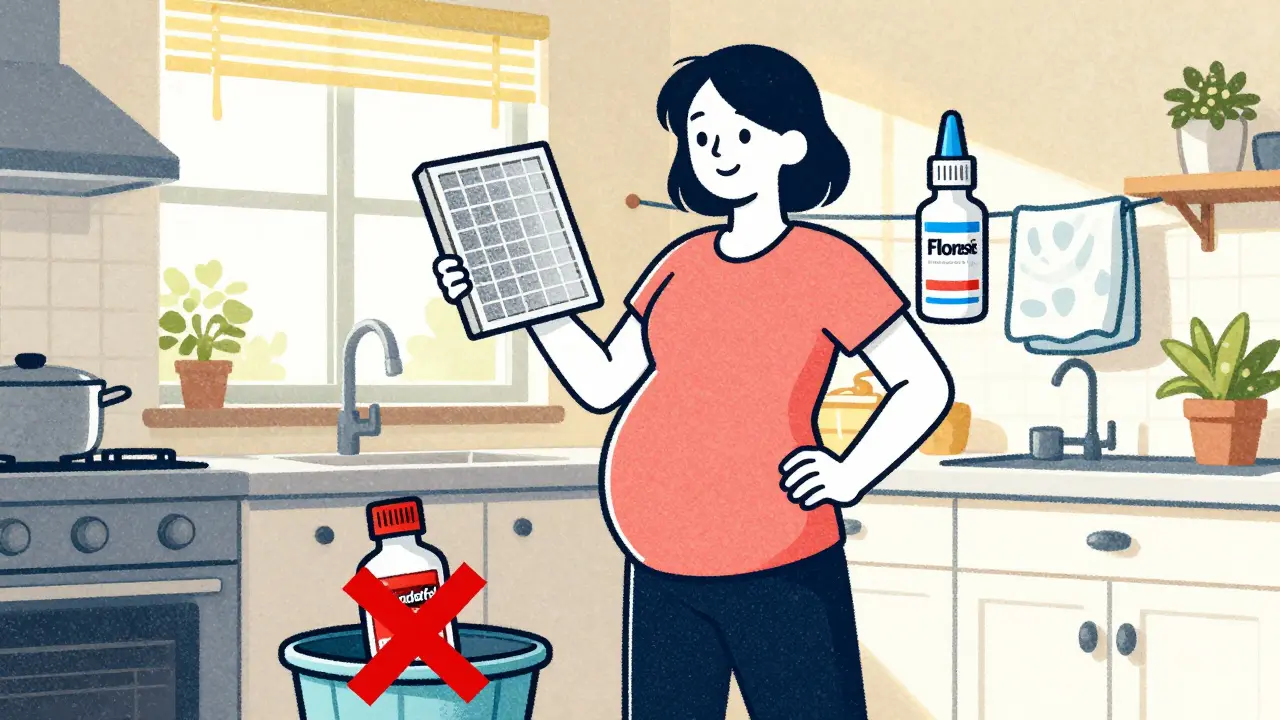
Sometimes, you don’t need pills at all.Corticosteroid nasal sprays like budesonide (Rhinocort), fluticasone (Flonase), and mometasone (Nasonex) are often more effective than oral antihistamines for nasal symptoms. And here’s the kicker: they’re considered safe in all trimesters. Why? Because they act locally. Very little enters your bloodstream, so even less reaches the baby.
For itchy skin or eczema, topical treatments like moisturizers, oatmeal baths, and low-strength hydrocortisone cream can help without any systemic exposure.
Non-drug strategies matter too:
- Use a saline nasal rinse (neti pot or squeeze bottle) daily to clear allergens.
- Keep windows closed during high pollen seasons.
- Wash bedding in hot water weekly to kill dust mites.
- Use HEPA filters in your bedroom.
- Try wearing sunglasses outside to block pollen from your eyes.
These won’t fix everything, but they reduce how much medicine you need.
How to Decide What’s Right for You
There’s no one-size-fits-all answer. Here’s how to think about it:- How bad are your symptoms? If you’re just sneezing once in a while, try non-drug methods first. If you’re waking up gasping for air or can’t eat, you need treatment.
- What’s your history? Did you take loratadine before and it worked? Stick with it. Did diphenhydramine make you too groggy? Skip it.
- Which trimester are you in? First trimester? Stick to the most proven options: chlorpheniramine, loratadine, cetirizine. Avoid anything new or untested.
- Are you on other meds? Some antihistamines interact with prenatal vitamins or antidepressants. Talk to your doctor.
Always check with your OB-GYN or midwife before starting anything - even if it’s “just” an over-the-counter pill. They know your history, your risks, and what’s safest for you.
What About Long-Term Effects?
You might wonder: “Will this affect my child later?”Right now, there’s no solid evidence that antihistamines taken during pregnancy cause learning problems, behavioral issues, or developmental delays. But long-term studies are still limited. Most research only looks at birth defects - not how kids grow up.
That’s why experts recommend using the lowest effective dose for the shortest time needed. If you only need one pill a week for hay fever, don’t take it every day. If your symptoms are worse in spring, stop after the season ends.
Future research will focus on newer antihistamines like levocetirizine and desloratadine - but for now, we don’t have enough data to recommend them over the older, better-studied options.
Bottom Line: You Don’t Have to Suffer
Pregnancy isn’t the time to tough it out. Allergies can be exhausting, painful, and stressful - and stress affects your baby just as much as a sneeze does.The safest approach? Start with non-drug fixes. If those aren’t enough, talk to your doctor about loratadine or cetirizine. If you need something stronger, chlorpheniramine is a solid, well-tested option. Avoid decongestants like pseudoephedrine, especially early on.
And remember - your doctor isn’t judging you for wanting relief. They’ve seen this before. They want you to feel better. The goal isn’t to avoid all medication. It’s to choose the right one, at the right time, in the right dose.
With the right plan, you can breathe easy - and so can your baby.





Henriette Barrows
December 31, 2025 AT 04:47I was so scared to take anything during my first trimester, but I ended up on loratadine after my allergies turned into a full-blown nightmare. No drowsiness, no panic attacks over every sneeze. I’m 28 weeks now and still taking it - my OB said it’s one of the most studied. You’re not alone in this fear.
It’s okay to want to breathe normally again.
Alex Ronald
January 1, 2026 AT 06:29Chlorpheniramine saved me when nothing else worked. I’m a nurse and I’ve seen the data - it’s been used since the 50s with zero red flags. The drowsiness? Yeah, it’s rough, but if you’re up at 3 AM because your sinuses are clogged, sleep is a gift. Just take it at night. And skip the combo pills - pseudoephedrine is a hard no in the first trimester. Trust the guidelines, not the Amazon reviews.
Teresa Rodriguez leon
January 1, 2026 AT 08:56Everyone’s so quick to say ‘just use nasal spray’ like it’s magic. Have you ever tried to rinse your nose when you’re 30 weeks pregnant and your sinuses feel like they’re filled with concrete? Saline doesn’t fix anything. You need something that works. And if you’re going to tell me to ‘try natural remedies,’ I’m going to scream.
Manan Pandya
January 2, 2026 AT 02:37The evidence supporting loratadine and cetirizine is robust, with multiple cohort studies and meta-analyses demonstrating no statistically significant increase in major congenital anomalies. The ACOG and AAFP recommendations are grounded in Class B evidence, meaning benefit outweighs risk based on observational data. For patients with persistent allergic rhinitis, the physiological stress of uncontrolled symptoms may pose a greater fetal risk than pharmacologic intervention. Consultation with a maternal-fetal medicine specialist is advisable for complex cases.
Aliza Efraimov
January 2, 2026 AT 16:28I took Zyrtec all through my pregnancy and my daughter is now a thriving 5-year-old who does cartwheels in the living room. I cried the first time I took it because I was terrified I’d hurt her. But I couldn’t breathe. I couldn’t sleep. I couldn’t be the mom I wanted to be. If you’re reading this and you’re scared - I get it. But you deserve to feel human. You’re not being reckless. You’re being brave.
Take the pill. Breathe. You’ve got this.
Nisha Marwaha
January 2, 2026 AT 22:10From a pharmacovigilance standpoint, the teratogenic risk profile of second-generation antihistamines remains favorable, with a relative risk (RR) of 1.02 (95% CI: 0.89–1.17) for structural anomalies based on the MotherToBaby registry. The placental transfer coefficient for cetirizine is approximately 0.18, indicating minimal fetal exposure. Corticosteroid nasal sprays exhibit negligible systemic absorption (<5%) due to first-pass metabolism and local action. Non-pharmacological modalities, including nasal irrigation and HEPA filtration, reduce allergen load by up to 70% in controlled environments - adjunctive measures that synergize with pharmacotherapy.
Paige Shipe
January 3, 2026 AT 16:10My OB told me not to take anything. So I didn’t. And guess what? I suffered. I cried every night. I lost weight because I couldn’t eat. My husband said I was being dramatic. Well, I’m not dramatic - I’m pregnant and allergic. And now I’m mad that no one told me it was okay to take Claritin. I’m 34 weeks. I just started. And I’m not sorry.
And if you’re going to say ‘just use a neti pot,’ I’m blocking you.
Tamar Dunlop
January 4, 2026 AT 10:19It is my profound belief that the maternal imperative to seek relief from debilitating allergic symptoms is not only understandable but ethically justified. The weight of scientific consensus, as articulated by the American College of Obstetricians and Gynecologists, supports the judicious use of loratadine and cetirizine as first-line agents. Furthermore, the implementation of non-pharmacological adjuncts - such as environmental allergen reduction and nasal saline irrigation - represents a paradigm of integrative, patient-centered care. One must not conflate caution with capitulation to suffering.
David Chase
January 5, 2026 AT 18:49OH MY GOD. YOU GUYS. I JUST READ THIS AND I’M CRYING. 😭 I TOOK BENADRYL FOR 3 MONTHS BECAUSE I WAS TOO SCARED OF ZYRTEC. I WAS SO STRESSED I THOUGHT I WAS GOING TO LOSE THE BABY. THEN I FOUND OUT IT WAS FINE. I’M SO RELIEVED. 🤯 I’M TELLING EVERY PREGNANT WOMAN I KNOW. DON’T BE A HERO. TAKE THE PILLS. YOUR BABY WANTS YOU TO BREATHE. 🇺🇸🇺🇸🇺🇸
Emma Duquemin
January 7, 2026 AT 13:37Let me tell you what happened when I didn’t listen to my doctor and tried ‘natural remedies’ - I ended up in the ER with a sinus infection and a fetal heart rate that was dipping. No, honey, your chamomile tea won’t unclog your sinuses. Your lavender oil won’t stop your eyes from swelling shut. Your ‘immune-boosting’ smoothie won’t fix pollen allergies. The truth? Sometimes you need a pill. And that’s not weakness - it’s wisdom.
I took Zyrtec. I slept. I laughed. I ate. I lived. And now my kid is 2 and still calls me ‘the sneeze queen.’
You’re not broken. You’re pregnant. And you deserve to feel human.