Rural Telehealth Side Effect Monitoring Tool
This tool helps assess potential medication side effects and recommends the appropriate telehealth response protocol based on severity and available technology.
Patient Assessment
Severity Level
Recommended Response Time
Telehealth Monitoring Protocol
Technology Requirements
Important Note:
This tool provides general guidance based on common telehealth protocols. It does not replace professional medical advice. If you experience severe symptoms like difficulty breathing, chest pain, or severe bleeding, call emergency services immediately rather than using telehealth.
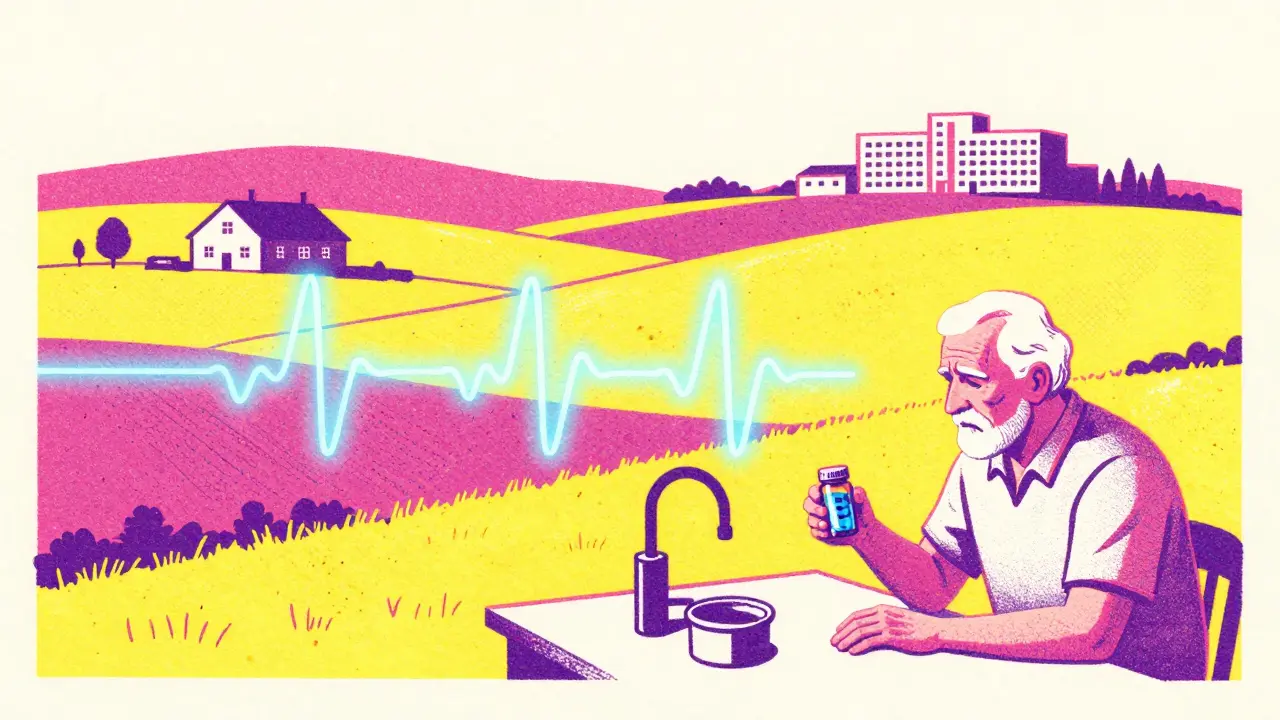
Imagine taking a life-saving medication that also carries a risk of severe side effects. Now imagine living two hours from the nearest specialist who can check if those side effects are becoming dangerous. For millions of people in rural areas, this is not a hypothetical scenario-it is their daily reality. Telehealth is the use of electronic information and telecommunications technologies to support long-distance clinical health care, patient and professional health-related education, public health and health administration. It has become a lifeline for these patients, bridging the gap between isolation and safety.
The stakes are high. According to the National Rural Health Association, approximately 60 million Americans live in rural areas with limited access to timely healthcare. Since 2010, 120 rural hospitals have closed, leaving many communities without local emergency services or specialists. The Food and Drug Administration defines adverse drug reactions as noxious and unintended responses to medicinal products. A 2020 analysis by Health Affairs found that rural patients experience 23% higher rates of preventable adverse drug events compared to their urban counterparts. This disparity demands a smarter approach to monitoring.
Why Rural Patients Are at Higher Risk
Rural populations face unique challenges when it comes to medication safety. The distance to care is just one factor. Many rural residents rely on medications for chronic conditions like hypertension, diabetes, and mental health disorders. These drugs often require regular monitoring to ensure they are working correctly and not causing harm. For example, anticoagulants (blood thinners) need frequent INR checks to prevent bleeding or clotting risks. Psychiatric medications can cause tremors, weight changes, or metabolic issues that need early detection.
The American Hospital Association reported that nearly 80% of rural telehealth visits were for mental health conditions. A 2021 study in JAMA Psychiatry noted that up to 70% of psychiatric patients experience side effects. Without easy access to a provider, these symptoms can go unnoticed until they become emergencies. Telehealth strategies for monitoring side effects allow providers to catch these issues early, reducing hospital transfers by approximately 40%, according to Dr. Wilbur Hitt, a rural physician cited in the Rural Health Information Hub’s 2023 report.
Core Technologies in Remote Patient Monitoring
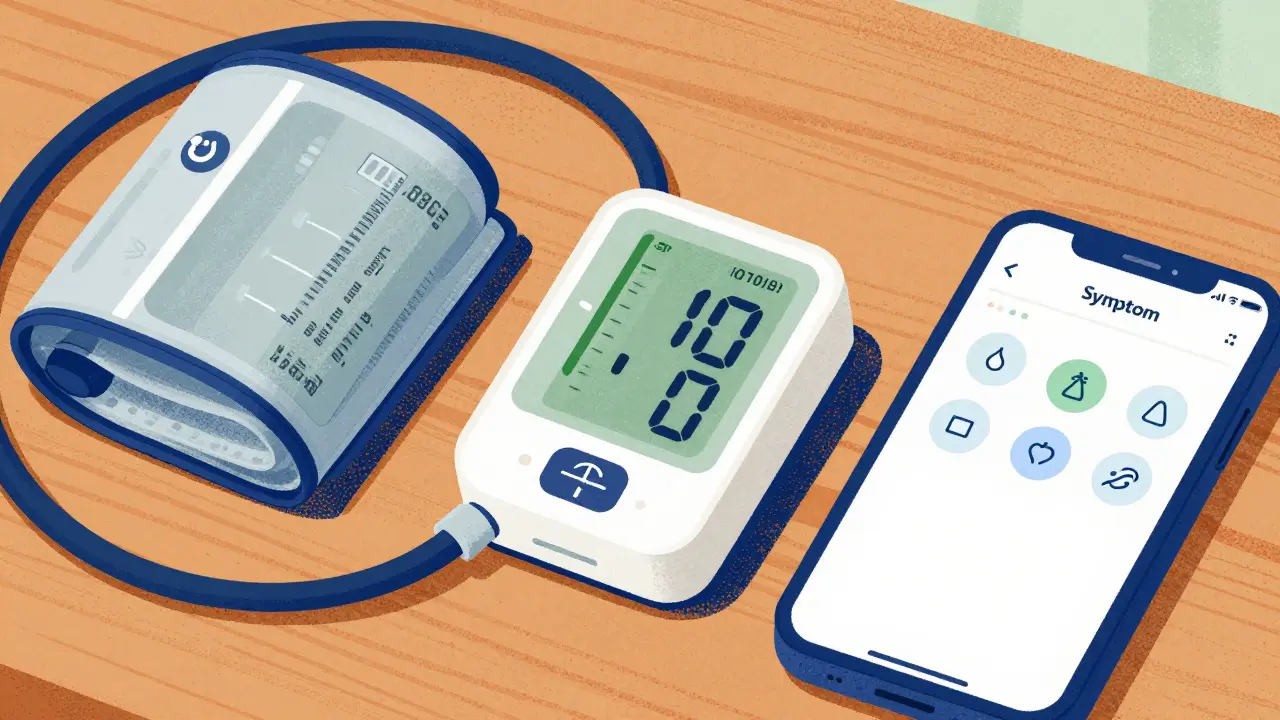
Effective telehealth monitoring relies on a mix of hardware, software, and connectivity. Remote Patient Monitoring (RPM) platforms enable real-time tracking of vital signs. Devices like blood pressure cuffs and heart rate monitors sync with apps to send data directly to healthcare providers. Industry-standard accuracy is crucial here: FDA-cleared devices typically offer ±3% accuracy for blood pressure and ±2 beats per minute for heart rate.
Medication adherence is another critical component. Smart pill dispensers, such as those from Hero Health, can detect missed doses with 85% accuracy, according to a 2021 study in the Annals of Internal Medicine. Symptom reporting applications also play a key role. A 2022 validation study in the Journal of Telemedicine and Telecare showed that digital symptom reports had 78% concordance with in-person clinical assessments. This means what patients type into an app is largely consistent with what a doctor would observe face-to-face.
| Tool Type | Primary Function | Accuracy/Reliability | Key Benefit |
|---|---|---|---|
| Vital Sign Monitors | Track BP, HR, Glucose | ±3% BP, ±2 BPM HR | Real-time physiological data |
| Smart Pill Dispensers | Detect missed doses | 85% accuracy | Improves adherence tracking |
| Symptom Apps | Patient-reported outcomes | 78% concordance | Captures subjective feelings |
| Video Platforms | Visual assessment | Dependent on bandwidth | Allows visual inspection (e.g., rashes, tremors) |
Overcoming Connectivity and Access Barriers
Technology is only useful if patients can use it. One of the biggest hurdles in rural areas is internet access. The Federal Communications Commission’s 2023 Broadband Deployment Report states that 28% of rural Americans lack broadband meeting federal standards. Video calls require stable connections; poor quality can lead to missed diagnoses. A resident in West Virginia complained about poor video quality during an antidepressant check-in, preventing their provider from seeing tremors-a significant side effect.
To address this, successful programs often adopt hybrid models. Audio-only monitoring is increasingly accepted. The 2023 CONNECT for Health Act expanded Medicare coverage for audio-only visits, which are used by 58% of rural seniors. Additionally, asynchronous monitoring-where patients upload data or messages that providers review later-is gaining traction. CMS announced in January 2024 expanded reimbursement for this method, paying up to $27 per day. This flexibility helps patients with spotty internet stay connected to care.
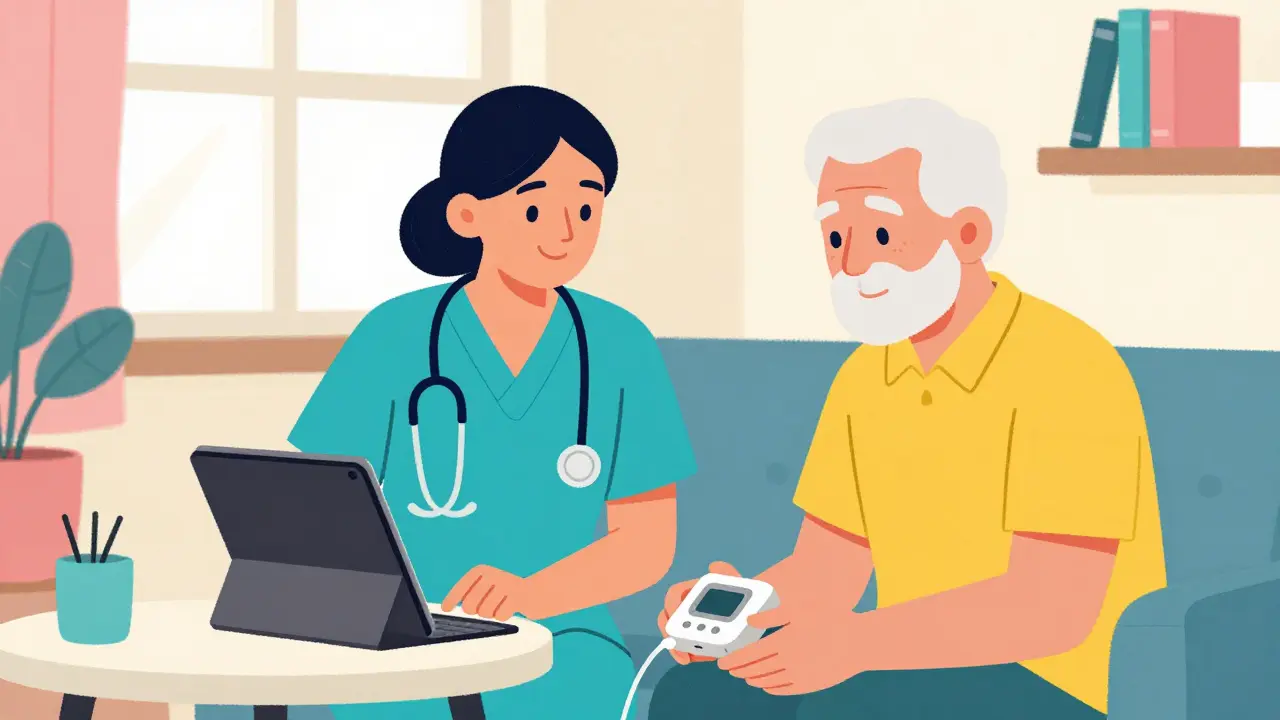
Digital literacy is another barrier. Pew Research Center findings indicate that 34% of rural seniors aged 65+ struggle with technology. The Rural Health Clinics Association reports that 68% of patients using telehealth for side effect monitoring need at least two training sessions to become proficient. Older adults, on average, need 3.2 sessions. Nurse navigators spend about 47 minutes per patient during initial setup, ensuring they know how to operate devices and apps. Patience and repeated instruction are essential.
Clinical Protocols for Effective Monitoring
Monitoring side effects isn’t just about collecting data; it’s about acting on it. Effective telehealth programs implement tiered response protocols. Immediate escalation is reserved for critical side effects like anaphylaxis symptoms or severe bleeding. Moderate concerns, such as persistent nausea or dizziness, trigger a 24-hour follow-up. Minor issues, like mild headaches, may warrant a 72-hour response. This structure ensures resources are focused where they are needed most.
Integration with Electronic Health Records (EHRs) is vital. About 76% of successful programs use systems like Epic or Cerner to ensure that data from RPM devices flows directly into the patient’s medical record. This allows providers to see trends over time rather than isolated snapshots. Multilingual support is also crucial, available in 87% of successful programs, to accommodate diverse rural populations.
Pharmacists play a growing role in these teams. The American Medical Association’s 2024 policy recommendations emphasize integrating pharmacists into telehealth monitoring. A study from Vanderbilt University Medical Center showed a 43% reduction in severe side effects when pharmacists led monitoring efforts. Their expertise in drug interactions and dosage adjustments complements physicians’ diagnostic skills.
Challenges and Limitations of Virtual Care
While telehealth offers many benefits, it is not a perfect substitute for in-person care. Physical exams provide tactile feedback that screens cannot replicate. An estimated 22% of potential adverse reactions require physical touch to detect, such as swelling in limbs or skin texture changes. Providers must be transparent about these limitations and schedule in-person visits when necessary.
Reimbursement inconsistencies also pose a threat. While CMS pays $51 per 20 minutes of remote monitoring time, only 63% of private insurers follow this model. This financial uncertainty makes it hard for rural clinics to sustain programs. Furthermore, staffing shortages affect 78% of rural clinics, limiting their ability to manage high volumes of remote data. The paradox identified by Dr. Cornaggia in a 2023 JAMA Network Open article highlights another issue: as urban hospitals expand telehealth services, rural hospital margins decrease by approximately 8%. This threatens the local infrastructure needed for comprehensive care.
Best Practices for Implementation
For healthcare providers looking to implement telehealth side effect monitoring, several best practices emerge from successful programs. First, start with high-risk medications. Anticoagulants, antihypertensives, and psychotropic drugs account for 68% of high-risk medication use in rural populations. Focusing on these yields the highest return on investment in terms of safety.
Second, invest in patient education. Use plain language and visual aids. Provide printed guides alongside digital instructions. Offer multiple channels for support, including phone lines for tech help. Third, establish clear communication protocols. Define who responds to alerts and how quickly. Ensure patients know what to expect and how to reach help in an emergency.
Finally, leverage partnerships. Collaborate with local pharmacies, community centers, and libraries to provide tech support and internet access. The University of Mississippi Medical Center’s program, established in 2019, achieved a 92% patient retention rate by combining Bluetooth-enabled INR monitors with weekly pharmacist video consultations and strong community ties.
What types of side effects can be monitored via telehealth?
Telehealth can effectively monitor side effects that manifest through vital sign changes (e.g., elevated blood pressure, rapid heart rate), patient-reported symptoms (e.g., nausea, fatigue, mood changes), and observable physical signs via video (e.g., tremors, rashes). However, side effects requiring tactile assessment, such as deep tissue swelling or specific skin textures, may still require in-person evaluation.
How accurate are remote patient monitoring devices?
FDA-cleared remote monitoring devices are highly accurate. Blood pressure monitors typically have an accuracy of ±3%, and heart rate monitors are within ±2 beats per minute. Smart pill dispensers detect missed doses with 85% accuracy. These metrics make them reliable tools for tracking medication safety when used correctly.
Is telehealth covered by insurance for rural patients?
Coverage varies. Medicare covers remote patient monitoring services, including audio-only visits under the 2023 CONNECT for Health Act. CMS reimburses $51 per 20 minutes for monitoring time. However, only 63% of private insurers follow similar models. Patients should check with their specific providers and insurance plans to understand their coverage details.
What should I do if my internet connection is poor?
If your internet is unreliable, ask your provider about audio-only visits or asynchronous monitoring options. You can also upload data from devices when you have better connectivity. Some programs partner with local libraries or community centers that offer free Wi-Fi and tech support for health appointments.
How can I prepare for my first telehealth side effect check-in?
Ensure your devices are charged and synced with the app. Have a list of current medications and any new symptoms ready. Test your camera and microphone beforehand. If you’re unsure how to use the technology, request a training session from your care coordinator. Clear lighting and a quiet space will also help your provider see and hear you clearly.