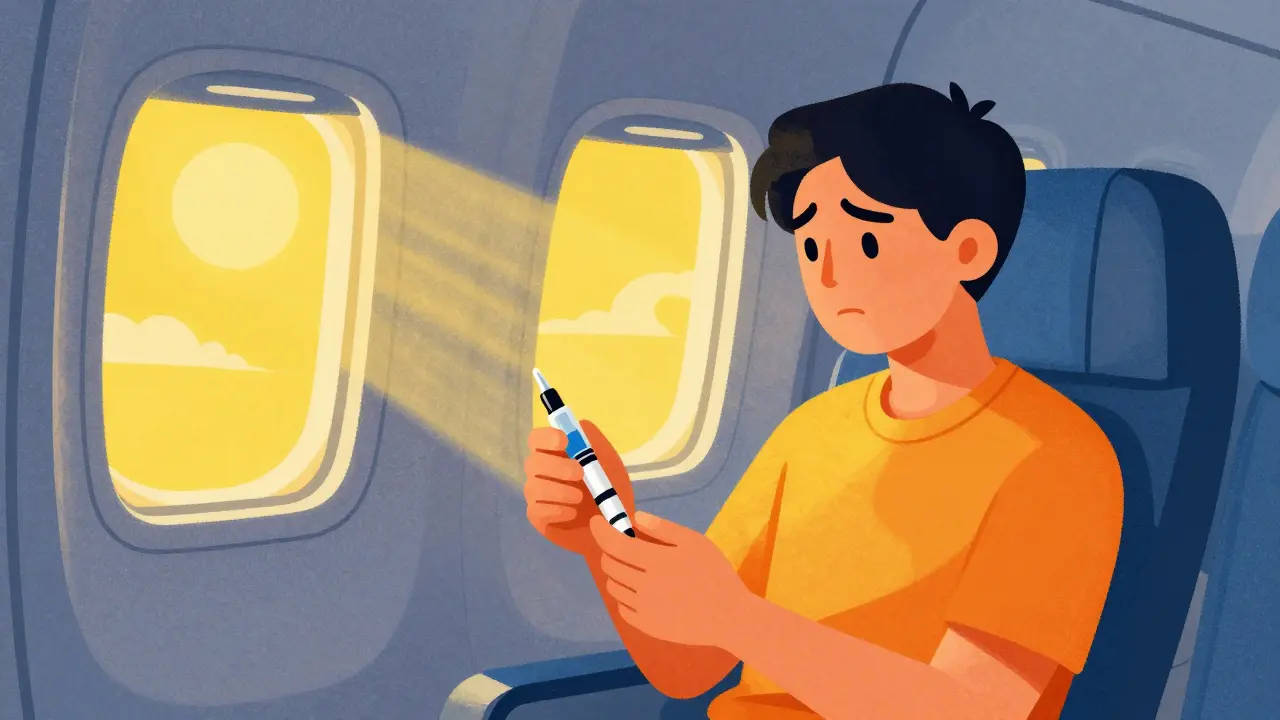
Imagine sitting in a window seat on a twelve-hour flight to Tokyo. The sun is beating down on the plane's fuselage, and you can feel the heat radiating through the glass. You reach for your insulin is a hormone used to treat diabetes by regulating blood sugar levels pen, but something feels off. Is it too warm? Did it freeze during takeoff? This isn't just anxiety; it’s a medical reality. If your medication has been exposed to extreme temperatures, it may no longer work, leading to dangerous spikes in blood sugar or other health complications.
Traveling with temperature-sensitive medications like insulin and GLP-1 agonists (such as Ozempic) requires more than just tossing them in your carry-on. The cabin environment is unpredictable, and security checkpoints add another layer of complexity. This guide breaks down exactly how to keep your meds safe, what gear actually works, and how to navigate airport security without hassle.
The Temperature Danger Zone
To protect your medication, you first need to understand its limits. According to the American Diabetes Association is a nonprofit organization dedicated to preventing and curing diabetes (ADA), insulin starts to degrade when exposed to temperatures above 86°F (30°C). If it drops below 32°F (0°C), it freezes. Freezing is catastrophic because it destroys the protein structure of the insulin, rendering it useless permanently. Even if it thaws out, you cannot use it.
Here is the breakdown you need to memorize:
- Unopened Insulin: Must be stored between 36°F and 46°F (2°C-8°C). Think refrigerator cold.
- In-Use Insulin: Can stay at room temperature (59°F-86°F or 15°C-30°C) for up to 28 days. Some newer formulations, like Insulin Degludec is a long-acting basal insulin analog, last up to 56 days at room temp.
- Biologics (e.g., Ozempic): Require refrigeration until first use. Once opened, they generally have a shorter window at room temperature, often around 56 days depending on the specific drug.
The danger on planes comes from two extremes. First, the cargo hold. Never check your meds. Temperatures in the hold can plummet to -40°F (-40°C) at cruising altitude. Second, the cabin. While the FAA mandates cabin temps between 65°F and 75°F (18°C-24°C), localized areas near windows or in overhead bins can spike to 90°F+ (32°C+) due to direct sunlight or proximity to the aircraft skin. Dr. Anne Peters, a diabetes expert, notes that placing insulin in the exterior pocket of an overhead bin is one of the most common mistakes travelers make.
Choosing the Right Storage Gear
Not all cooling methods are created equal. Using a standard ice pack directly against your vial is risky. A 2022 study by the University of Colorado found that 23% of insulin samples froze when placed within just 0.4 inches (1 cm) of a standard ice pack. You need a buffer zone.
Here are the top-rated solutions based on independent testing and user feedback:
| Product Type | Duration | Pros | Cons |
|---|---|---|---|
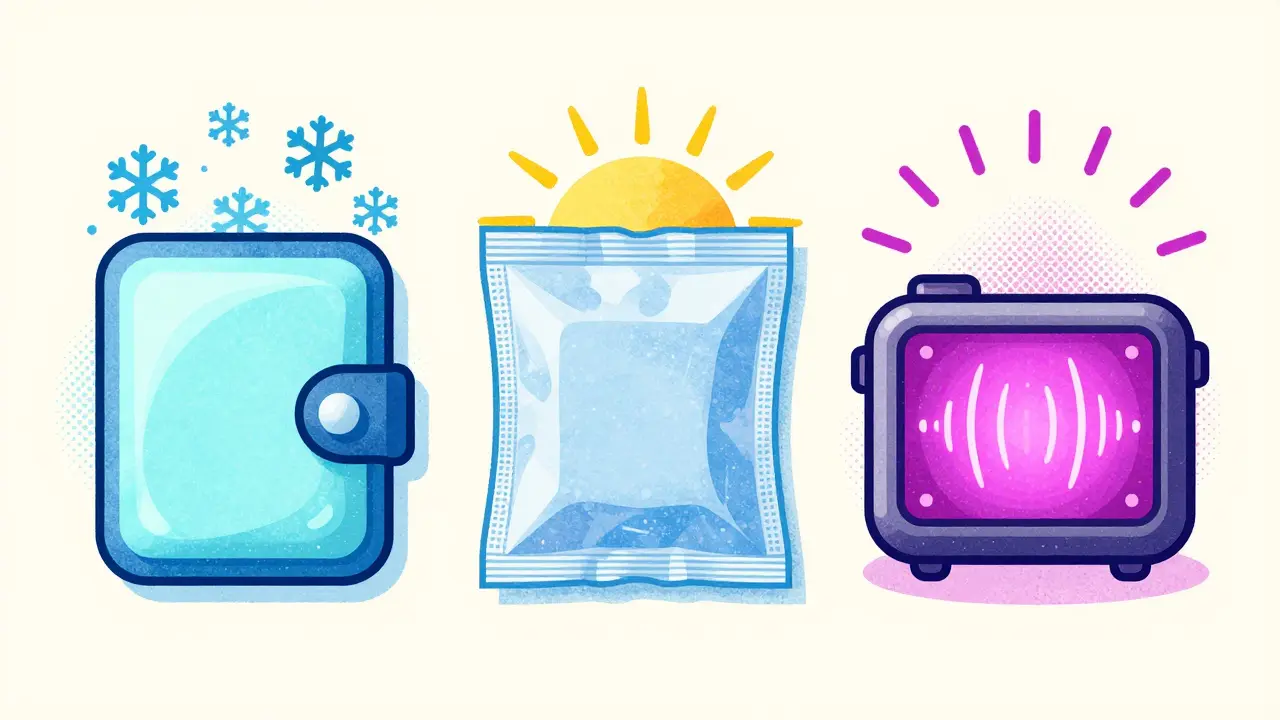
| Water-Activated Wallets (e.g., FRÍO) is portable cooling devices activated by water | Up to 45 hours | No ice needed, TSA-friendly, lightweight | Requires 15 mins activation time |
| Phase-Change Packs (e.g., BreezyPack Pro) is reusable gel packs that maintain specific temperatures | Up to 72 hours | High stability, reusable | Must be frozen beforehand, heavier |
| Smart Cases (e.g., TempMed Smart Case) is electronic cases with Bluetooth temperature monitoring | Varies by battery | Real-time alerts via app | Higher cost, requires charging |
| Traditional Cooler Bag + Ice | 8-12 hours | Cheap, widely available | High risk of freezing, leaks possible |
The FRÍO Wallet is a popular water-activated cooling wallet for medication is currently a favorite among travelers because it doesn’t require pre-freezing and passes through security easily. It maintains safe temperatures for 45 hours even in 104°F (40°C) environments. For those who prefer tech, the TempMed Smart Case is an FDA-approved smart case for medication storage offers peace of mind by alerting you if temps exceed 82°F (28°C).
Navigating Airport Security (TSA Guidelines)
Security checkpoints can be stressful, but you have rights. The Transportation Security Administration (TSA) allows medically necessary liquids, gels, and aerosols in reasonable quantities exceeding 3.4 ounces. This includes ice packs and cooling containers required for your medication.
However, "allowed" doesn't always mean "smooth." Data shows that thousands of travelers face delays annually due to improper documentation. Here is how to avoid becoming a statistic:
- Get a Doctor’s Letter: Carry a letter dated within the last six months stating your medical necessity for the medication and the cooling method. This significantly speeds up screening.
- Keep Original Packaging: Do not transfer pills or pens into unlabeled bags. Keep pharmacy labels visible. TSA agents are trained to look for these identifiers.
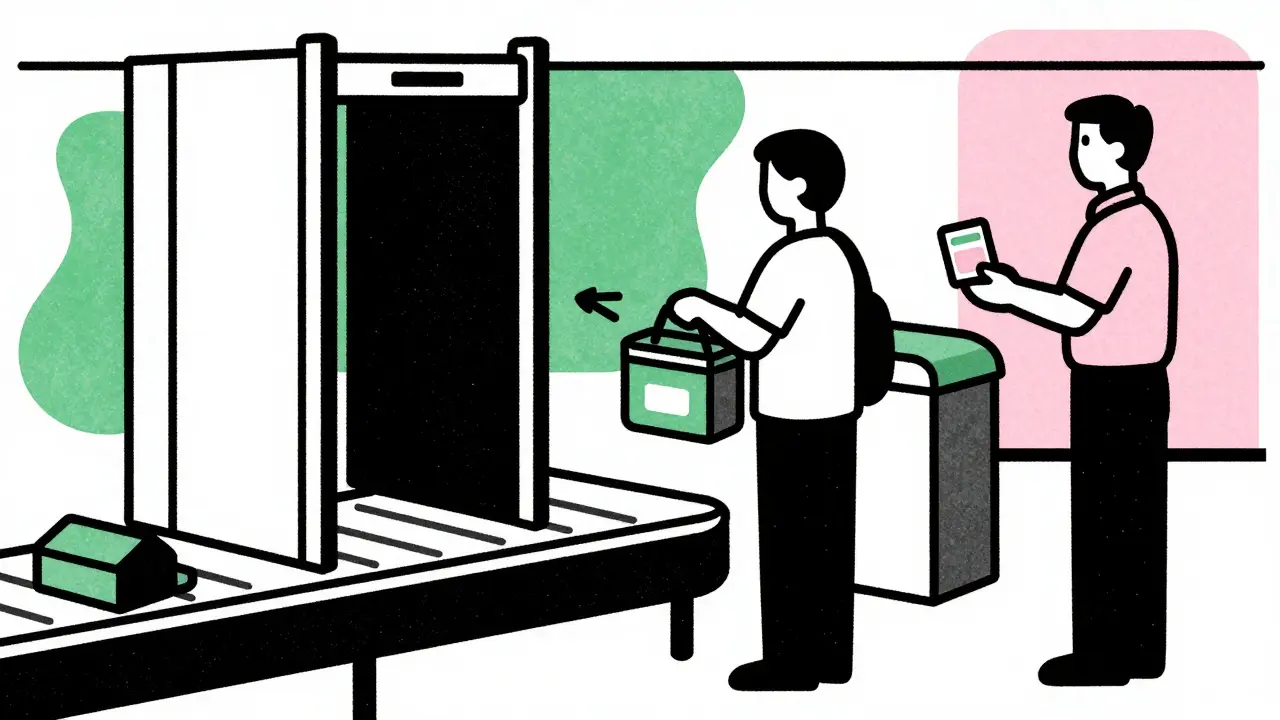
- Separate Your Meds: When you hit the checkpoint, remove your medication and cooling devices from your bag and place them in a separate bin. Inform the officer immediately: "I have medically necessary liquid medication and ice packs."
- Digital Backups: Save a photo of your prescription and doctor’s letter on your phone. If your physical papers get lost, this helps verify your needs.
Remember, you can request a private screening if you are uncomfortable discussing your condition publicly. You also have the right to request that your medication not go through X-ray machines, though most modern scanners are considered safe for insulin. If you’re unsure, ask for a visual inspection instead.
Onboard Strategies: Where to Put Your Meds
Once you’re seated, where do you put your insulin? The answer is counterintuitive for many: not in the overhead bin.
Overhead bins, especially those near the windows or exterior walls, can become ovens. Studies show temperature excursions in 41% of overhead bin placements. Instead, use the seat-back pocket in front of you. This area stays closer to the cabin’s average temperature of 68°F-75°F (20°C-24°C). Keep your cooling wallet there, away from direct airflow from vents.
If you are using a pump or Continuous Glucose Monitor (CGM), leave them attached. The European Association for the Study of Diabetes (EASD) advises keeping CGMs on during flights. However, if you cross more than three time zones, you may need to adjust your basal rates manually. Consult your endocrinologist before flying to create a plan for eastward vs. westward travel. Eastward travel often requires a slight dose reduction for long-acting insulins, while westward travel might require a small increase.
Pre-Flight Preparation Checklist
Don’t wait until you’re at the gate. Proper preparation starts days before your trip.
- Calculate Dosage Needs: The CDC recommends carrying at least 200% of your expected usage. Delays happen. If you think you need 10 doses, bring 20.
- Pre-Cool Your Gear: If using phase-change packs, freeze them 24 hours in advance. If using a fridge, chill your unopened insulin to 50°F (10°C) before packing it into your travel cooler.
- Test Your Tech: If using a smart case or thermometer, ensure batteries are charged and apps are updated.
- Inspect Before Flight: Check your insulin for clarity. If it looks cloudy (when it should be clear) or clumpy, do not use it. Replace it before you board.
What to Do If Things Go Wrong
Despite best efforts, accidents happen. If you suspect your insulin was frozen or overheated:
- Do Not Use It: Err on the side of caution. Using degraded insulin can lead to hyperglycemia.
- Contact Local Pharmacy: If you’re abroad, know the name of your medication in the local language. Have your insurance card ready. Many major airports have pharmacies or clinics.
- Monitor Blood Sugar Closely: Check your glucose levels more frequently than usual. Be prepared for fluctuations.
- Seek Medical Help: If you experience symptoms of high blood sugar (extreme thirst, frequent urination, confusion), seek immediate medical attention.
Traveling with diabetes or requiring biologics is manageable with the right tools and knowledge. By understanding temperature thresholds, choosing reliable cooling gear, and navigating security with confidence, you can focus on your destination rather than your medication.
Can I put my insulin in the checked luggage?
No, never check your insulin or biologics. The cargo hold temperatures can drop to -40°F (-40°C), which will freeze and destroy your medication. Always keep temperature-sensitive meds in your carry-on baggage.
How long can insulin stay at room temperature on a plane?
Most in-use insulin can remain stable at room temperature (up to 86°F/30°C) for up to 28 days. However, if the cabin gets hotter than 86°F, degradation begins quickly. For long flights, use a cooling wallet to maintain a safer range between 59°F-72°F (15°C-22°C).
Will TSA allow ice packs in my carry-on?
Yes. TSA allows medically necessary ice packs and cooling containers in carry-on bags, even if they are frozen solid. They are exempt from the 3.4-ounce liquid rule. Declare them at security and present your doctor’s letter if requested.
What is the best way to store Ozempic while traveling?
Unopened Ozempic must be refrigerated (36°F-46°F). Once used, it can be kept at room temperature for up to 56 days. For flights, use a water-activated cooling wallet or a phase-change material container to keep it cool without freezing it.
Should I adjust my insulin dosage when crossing time zones?
If you cross more than three time zones, consult your doctor beforehand. Generally, eastward travel may require a slight reduction in long-acting insulin doses, while westward travel might require a small increase. Always monitor your blood sugar closely during transitions.