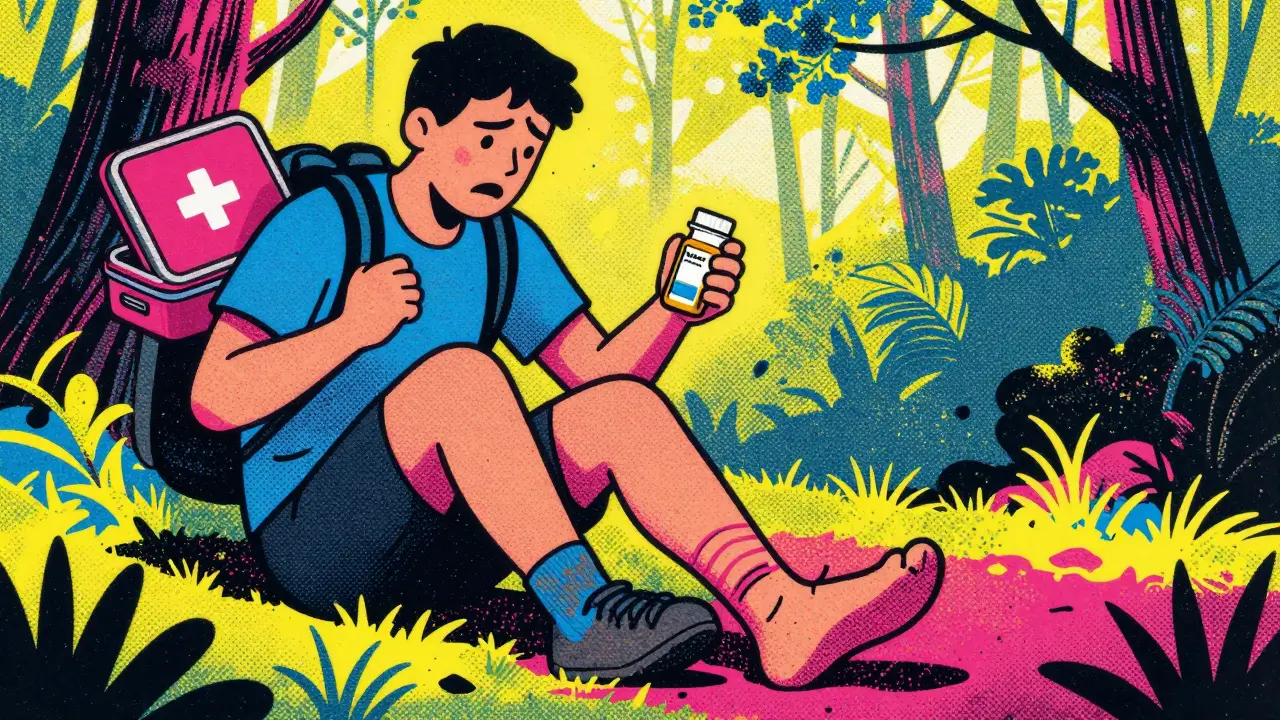
Picture this: You’re hiking in the hinterlands near Brisbane, and someone twists their ankle badly. You reach for the ibuprofen in your kit, only to realize it expired two years ago. Do you pop it? Or do you dig out an antiseptic wipe that’s been sitting in a hot car since last summer? It’s a stressful moment, and guessing wrong can mean the difference between a minor inconvenience and a serious health risk.
Most of us treat our first-aid kits are essential household supplies containing bandages, pain relievers, and antiseptics like fire extinguishers-we pack them once and hope they work when needed. But unlike a fire extinguisher, over-the-counter (OTC) medications are drugs available without a prescription that degrade chemically over time don’t sit still. They break down. Some lose potency slowly; others turn dangerous or ineffective almost immediately after their expiration date passes.
The good news? You don’t need to toss everything the day the date hits. The bad news? You definitely shouldn’t keep everything forever. Knowing which items are safe to use slightly past their prime-and which ones could get you hurt-comes down to understanding how different drug types behave. Let’s break down exactly what stays stable, what fails fast, and how to manage your stash so you’re never caught off guard.
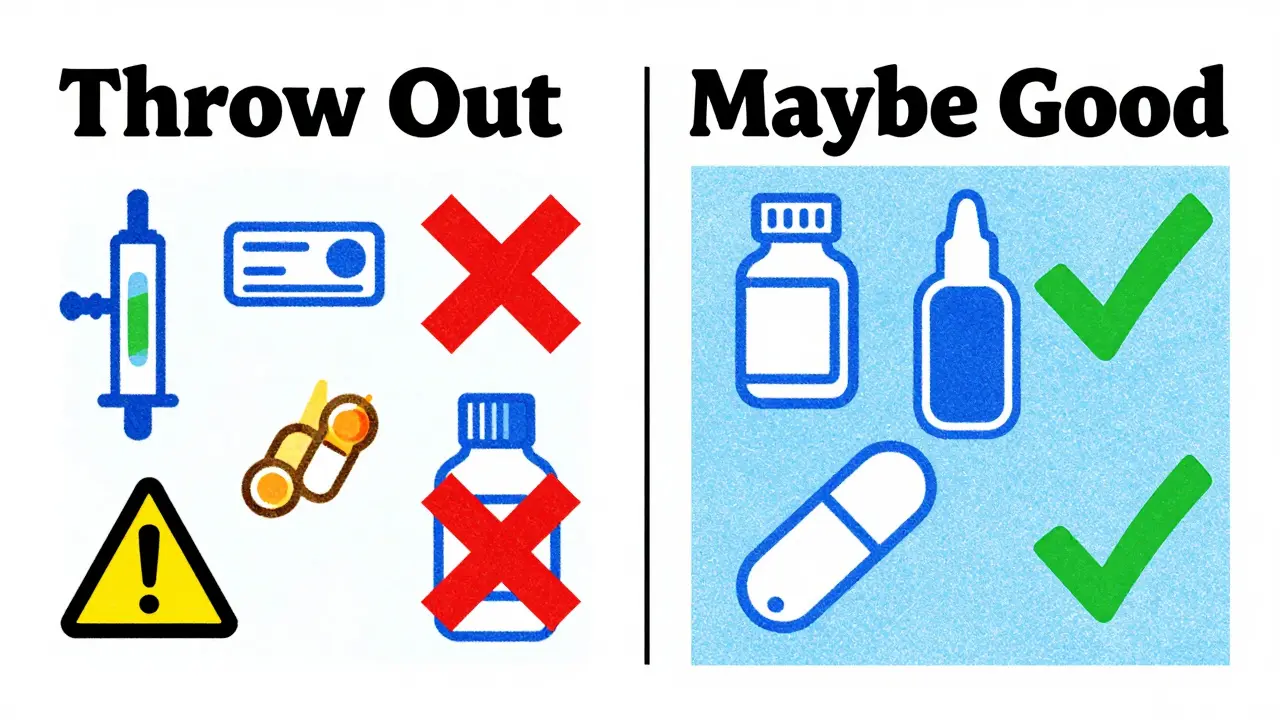
The "Throw It Out Immediately" List
Not all expired meds are created equal. Some medications are critical for life-saving interventions, and even a small drop in potency can be catastrophic. These are the items where the expiration date is not a suggestion-it’s a hard stop.
- Epinephrine auto-injectors are emergency devices delivering adrenaline for severe allergic reactions: If you have an EpiPen or similar device, replace it before it expires. Studies show these can lose 20-30% of their potency within just six months of expiration. In an anaphylactic shock situation, that missing dose could be fatal. Never gamble with epinephrine.
- Nitroglycerin tablets are sublingual medication used to relieve chest pain from angina: Once opened, these oxidize rapidly. They typically need replacing every 3-6 months regardless of the printed date on the bottle. If the tablet doesn’t fizz or tingle under your tongue, it’s useless.
- Liquid antibiotics: Whether it’s a suspension for ear infections or topical ointments, liquids degrade faster than solids. A 2023 FDA analysis found that hydrocortisone cream lost sterility and developed bacterial contamination in nearly half of samples tested six months past expiration. Using contaminated cream on a wound introduces new bacteria instead of healing the injury.
- Eye drops and ear drops: Sterility is key here. Preservatives break down, allowing microbes to grow. What was meant to soothe irritation can become a source of infection.
If you see any of these on your shelf, check the date today. If it’s close, set a reminder. If it’s passed, dispose of them properly at a pharmacy take-back program.
The "Maybe Still Good" Category
This is where things get nuanced. Solid-dose medications like tablets and capsules are surprisingly resilient. Research from the U.S. Department of Defense’s Shelf Life Extension Program showed that 80% of tested solid medications retained at least 90% of their potency up to 15 years past expiration-if stored perfectly.
But “perfect storage” is rare in most homes. Here’s what generally holds up:
- Pain relievers: Ibuprofen, acetaminophen, and aspirin tend to remain effective for 1-2 years past their expiration date if kept in original containers away from heat and moisture. A 2022 study from UCSF confirmed aspirin maintains 90-95% potency under ideal conditions.
- Antihistamines: Diphenhydramine (Benadryl) retains about 85% efficacy for roughly 18 months post-expiration. It might not knock out allergies as quickly, but it’s unlikely to cause harm.
- Oral rehydration salts: These simple powder mixes are very stable. Unless the packet is damaged or wet, they’ll likely work long after the date.
However, there’s a catch. While these drugs rarely become toxic, they do become less effective. Taking an expired antibiotic for a minor infection might suppress symptoms without killing the bacteria, potentially leading to resistance or a more serious illness later. As Dr. Michael Reissig, a clinical pharmacist, notes, sub-potent antibiotics are risky because they fail to fully treat infections.
Storage Conditions Matter More Than Dates
You can have a fresh batch of meds, but if you store them poorly, they expire prematurely. Where you keep your kit makes a massive difference.
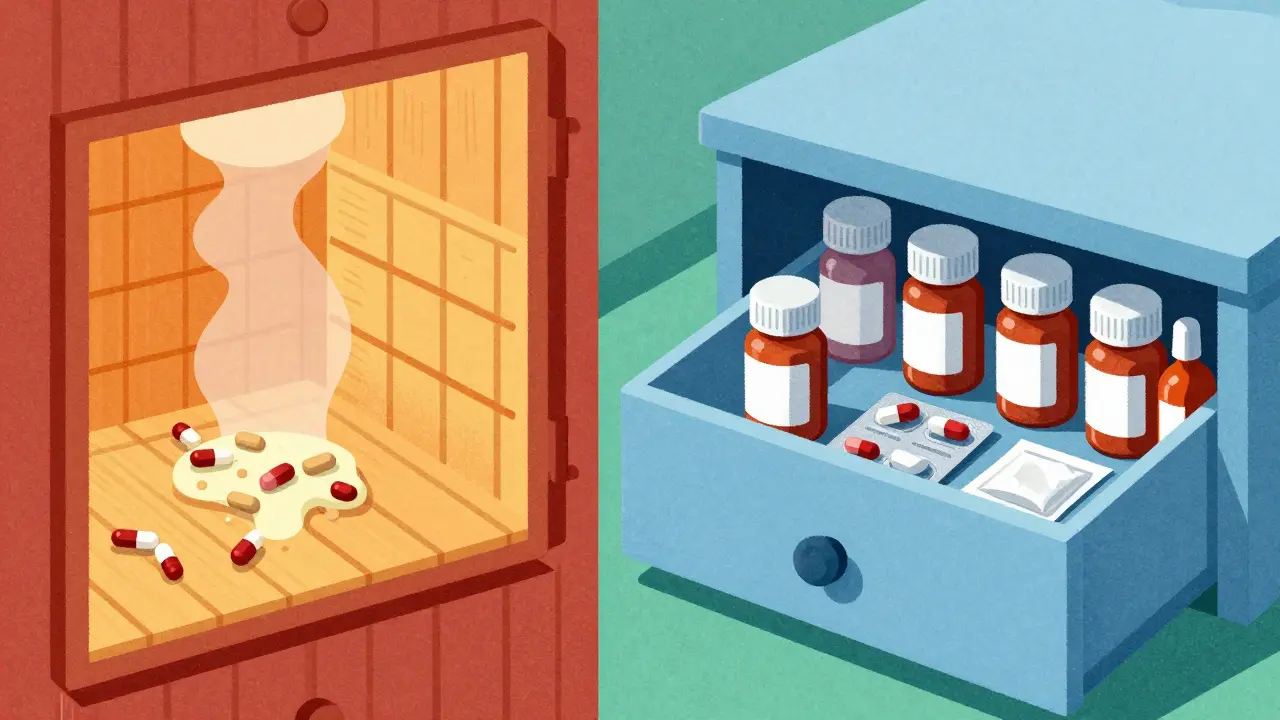
A 2022 Johns Hopkins study highlighted a stark contrast: medications stored in bathroom cabinets (average 75% humidity, 28°C/82°F) lost potency 40% faster than those kept in bedroom drawers (45% humidity, 22°C/72°F). Bathrooms are humid saunas. Cars are ovens. Both are terrible places for medicine.
To maximize shelf life:
- Keep meds in their original containers with desiccant packets intact.
- Store in a cool, dry place-like a closet or drawer-not in the kitchen cabinet above the stove or the glove box of your car.
- Never transfer pills to generic pill organizers unless you’re taking them daily. Repackaged meds lose protection from light and moisture, cutting their effective life by 35-50%.
If your kit has been left in a hot vehicle during summer, assume the contents are compromised, especially liquids and creams.
Physical Signs of Degradation
Sometimes, you don’t need a calendar to know a med is bad. Your eyes and nose can tell you.
Check for these red flags:
- Discoloration: Tablets turning yellow, brown, or spotted.
- Odor changes: Aspirin should smell faintly acidic. If it smells like vinegar or nothing at all, it’s broken down into salicylic acid and acetic acid-less effective and potentially irritating.
- Texture changes: Capsules sticking together, crumbling, or feeling sticky.
- Liquid separation: Suspensions that won’t mix back together after shaking.
- Crystallization: Sugar-based syrups forming crystals indicate chemical change.
If any of these signs appear, toss the item immediately, regardless of the expiration date.
Building a Maintenance Routine
Managing expired meds isn’t a one-time task. It’s part of home maintenance, like changing smoke detector batteries. The American Red Cross recommends a simple four-step process:
- Quarterly visual inspection: Look for physical changes, discoloration, or damage to packaging.
- Biannual date check: Every six months, go through your kit and note expiration dates.
- Immediate replacement protocol: Replace emergency meds (epinephrine, nitroglycerin) 30 days before they expire.
- Annual overhaul: Once a year, completely restock your kit. Buy new items with future dates and discard old ones.
Pro tip: Write the purchase date or expected expiry on the outside of the box with a marker. This saves you from digging through bottles every time.
| Medication Type | Stability After Expiry | Action |
|---|---|---|
| Epinephrine Auto-Injectors | Very Low (loses 20-30% in 6 months) | Replace immediately upon expiry |
| Nitroglycerin Tablets | Low (oxidizes in 3-6 months after opening) | Replace every 3-6 months |
| Liquid Antibiotics/Creams | Low (risk of contamination) | Toss at expiry |
| Ibuprofen/Acetaminophen | Moderate-High (90%+ for 1-2 years) | Use cautiously for minor issues; replace annually |
| Diphenhydramine | Moderate (85% for ~18 months) | Acceptable for short-term use past date |
| Hydrogen Peroxide | Very Low (effective only 30 days after opening) | Discard 30 days after first use |
Disposal Done Right
Don’t flush medications down the toilet unless instructed to do so (only a few specific drugs require this due to environmental toxicity). Instead, use local take-back programs. In Australia, many pharmacies participate in pharmaceutical waste collection schemes. Check with your local pharmacy or council for drop-off points. Mixing meds with unpalatable substances like coffee grounds or cat litter in sealed bags is an alternative if no take-back option exists, preventing accidental ingestion by children or pets.
Can expired ibuprofen make me sick?
It’s unlikely to cause direct toxicity, but it may be less effective at reducing pain or inflammation. The main risk is relying on it for significant relief when it can’t deliver, delaying proper treatment.
How long does hydrogen peroxide last after opening?
Only about 30 days. Once opened, it begins breaking down into water and oxygen, losing its antiseptic properties quickly. Mark the opening date on the bottle.
Is it safe to use expired eye drops?
No. Preservatives degrade, increasing the risk of bacterial growth. Using contaminated eye drops can lead to serious eye infections. Always replace eye drops at their expiration date.
Why do bathroom-stored meds expire faster?
Bathrooms have high humidity and temperature fluctuations from showers. Moisture accelerates chemical breakdown in tablets and creams, reducing potency significantly compared to cooler, drier storage areas.
Should I replace my entire first-aid kit yearly?
Yes. An annual review ensures all items are within date and physically intact. It’s easier to maintain readiness by doing one thorough check rather than trying to track individual items constantly.