
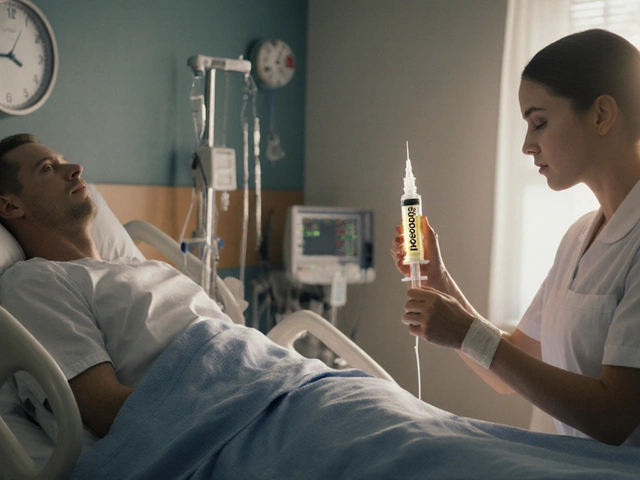
When a nurse walks into a patient’s room to give an IV push of insulin, they don’t just grab the vial and go. They pause. They check. They wait for a second person. Why? Because one mistake with this drug can kill someone in minutes. That’s not fear-it’s fact. High-alert medications are drugs that, when used incorrectly, have a high chance of causing serious harm or death. It doesn’t matter if the error is rare. When it happens, the outcome is often catastrophic. That’s why hospitals don’t just rely on one person to verify these meds. They require an independent double check.
What Makes a Medication ‘High-Alert’?
A high-alert medication isn’t defined by how often it’s used, but by how dangerous it is when misused. Think of it like a loaded gun: you don’t handle it carelessly, even if you use it every day. The Institute for Safe Medication Practices (ISMP) updates its official list every two years. The latest version, released in January 2024, lists 19 categories of high-alert medications used in hospitals. These aren’t just ‘strong’ drugs-they’re drugs with a narrow window between a safe dose and a lethal one.
Some of the most dangerous include:
- Insulin (especially IV infusions and pushes)
- Potassium chloride concentrate (1 mEq/mL and higher)
- Neuromuscular blocking agents (like succinylcholine)
- IV heparin (including flushes over 100 units/mL)
- Chemotherapeutic agents
- Injectable narcotic patient-controlled analgesia (PCA) pumps
- Total parenteral nutrition (TPN) and lipid infusions
- Direct thrombin inhibitors (like argatroban)
- Sodium chloride solutions above 0.9%
These drugs aren’t dangerous because they’re rare. In fact, insulin is given thousands of times a day in hospitals. But if you give 10 units instead of 1, or if you push potassium chloride too fast, you can stop a heart. That’s why the safety protocol isn’t optional-it’s life-or-death.
What Exactly Is an Independent Double Check?
An independent double check isn’t two people standing side-by-side nodding at each other. It’s not one person reading the label while the other glances at the screen. It’s not even two nurses checking the same thing at the same time. That’s called a ‘simultaneous check,’ and studies show it catches only 32% of errors.
True independent double check means two licensed clinicians-usually a nurse and another nurse, or a nurse and a pharmacist-check the medication alone, apart from each other. They don’t talk. They don’t look at each other’s work. They each verify five key things:
- Right patient: Two forms of ID-name and date of birth, not just room number.
- Right medication: The name on the vial matches the electronic order exactly.
- Right dose: The concentration and volume are correct. Did someone misread ‘10 units’ as ‘100 units’? That’s a common error.
- Right route: Is this meant to be IV, IM, or subcutaneous? Giving insulin IM instead of SC can cause hypoglycemia within 20 minutes.
- Right time: Is it due now? Is it part of a sliding scale? Is it being given too soon after the last dose?
After both people have checked independently, they compare results. If there’s a mismatch, they stop. They don’t guess. They don’t assume. They investigate. This process is documented in the electronic medication administration record (eMAR) with both signatures. In the Veterans Health Administration, this is mandated by Directive 1195, updated October 2024. Other systems like Providence Health and WVU Medicine have similar rules.
Which Medications Actually Need a Double Check?
Not every high-alert medication requires a double check in every setting. That’s a key point many hospitals get wrong. The ISMP says bluntly: ‘Manual independent double checks are not always the optimal error-reduction strategy.’ Overusing them makes people lazy. They start checking just to check.
Top institutions now use a risk-based approach. Here’s what most leading hospitals require double checks for:
- IV insulin infusions and pushes
- IV heparin infusions (not just flushes)
- Chemotherapy (all forms)
- Neuromuscular blockers (unless given by an anesthesiologist)
- Potassium chloride concentrate (1 mEq/mL and above)
- Injectable PCA pumps
- TPN and lipid infusions
- Concentrated sodium chloride above 0.9%
Some hospitals, like those following VHA guidelines, require double checks for all high-alert meds. Others, like Providence Health, only require it for specific items listed on the MAR. The difference? One is blanket policy. The other is smart strategy. The latter works better because staff stay alert when they know it’s only for the most dangerous drugs.

Why Double Checks Often Fail
Here’s the uncomfortable truth: many double checks don’t work. Why? Because they’re done wrong. A 2017 study in the Journal of Patient Safety found that when nurses checked together instead of independently, they missed 68% of errors. In one ICU, a nurse gave 100 units of insulin instead of 10. The second nurse saw the vial, saw the label, and said, ‘Looks right.’ They didn’t calculate. They didn’t question. They just signed off.
Common failures:
- ‘Check’ means signing a box, not verifying the math.
- The second person repeats what the first person says-‘Yeah, that’s the right dose.’
- Staff rush during shift changes or emergencies.
- They skip checks for ‘stable’ patients-even though 40% of insulin errors happen in non-critical units.
- No training on how to do it right.
At Johns Hopkins Hospital, IV heparin errors dropped from 12.7% to 2.3% after they retrained staff on true independent checks. Nurses initially complained it added 2-3 minutes per dose. But after six months, they admitted: ‘I’ve caught three near-misses. I’d rather be late than wrong.’
How to Get It Right: A Practical Guide
If your hospital is trying to improve, here’s what works:
- Start with data. Look at your error logs. Which drugs caused the most harm? Focus there first.
- Write clear rules. Don’t say ‘double check all high-alert meds.’ Say: ‘IV insulin, potassium chloride concentrate, and neuromuscular blockers require independent double check before administration.’
- Train like it matters. Don’t do a 10-minute PowerPoint. Run a 2-hour hands-on session. Use real vials. Use fake orders. Make them calculate doses. Test them. Require 95% pass rate.
- Build time into the workflow. At Mayo Clinic, staffing models include 2-3 minutes per double check. No one gets penalized for taking the time.
- Use technology. Smart pumps that flag high-alert drugs and auto-calculate doses cut errors by 63%. When paired with human checks, they’re unbeatable.
- Audit regularly. Pull eMAR records. Watch for ‘simultaneous’ signatures. If two nurses sign within 15 seconds of each other, investigate.
One hospital in Brisbane started requiring double checks only for insulin and heparin. Within six months, near-misses dropped by 70%. They didn’t add staff. They didn’t buy new tech. They just did the check right.

What’s Changing in 2025?
Regulations are tightening. The Joint Commission’s 2024 National Patient Safety Goal requires hospitals to identify high-alert meds and prove they have safeguards in place. CMS says if you don’t, you risk losing funding. The FDA’s Safe Use Initiative is pushing for stronger controls on insulin, opioids, and anticoagulants.
Technology is catching up. Sixty-five percent of large hospitals now use smart pumps that talk to eMAR systems. AI-assisted verification tools are in pilot at 12% of academic centers. But here’s the catch: machines don’t catch everything. A nurse once caught a mismatch because the patient’s weight was entered as 150 kg instead of 50 kg. The system didn’t flag it. The nurse did.
The future isn’t replacing humans. It’s using humans where it matters most. The most dangerous drugs still need two sets of eyes. But now, those eyes are better trained, better supported, and better protected by tech.
Final Thought: It’s Not About Compliance. It’s About Care.
Double checks aren’t paperwork. They’re not a box to tick. They’re the last line of defense between a patient and disaster. You don’t do them because the policy says so. You do them because someone’s life depends on it.
One nurse in a Reddit thread wrote: ‘I’ve caught three errors in six months. I’ve seen 12 rushed checks that missed them. I’m not going back.’ That’s the mindset every team needs. Not because it’s required. But because it’s right.
What are the most common high-alert medications that require double checks?
The most common high-alert medications requiring independent double checks include IV insulin, potassium chloride concentrate (1 mEq/mL and above), IV heparin (especially infusions), neuromuscular blocking agents, chemotherapy drugs, and injectable narcotic PCA pumps. These are consistently listed by the Institute for Safe Medication Practices (ISMP) and mandated by major health systems like the Veterans Health Administration and Providence Health.
What’s the difference between a double check and an independent double check?
A regular double check often means two people check together, which can lead to confirmation bias. An independent double check requires two licensed clinicians to verify the medication separately, without talking or seeing each other’s work. Only after both have completed their checks do they compare results. This reduces errors by up to 95%, compared to just 32% for simultaneous checks.
Do all hospitals require double checks for the same medications?
No. While the ISMP provides a national list, each hospital sets its own policy based on risk. Some require double checks for all 19 high-alert categories. Others focus only on the highest-risk drugs like insulin, heparin, and chemotherapy. The most effective systems use data to target only the most dangerous medications and processes, avoiding overuse.
Can technology replace the need for double checks?
Technology like smart pumps and eMAR systems can reduce errors significantly, but they don’t eliminate the need for human verification. Smart pumps can catch dosing mistakes, but they can’t detect if the wrong patient is being treated or if the drug is contraindicated. Human checks are still essential for context, clinical judgment, and catching non-technical errors.
What happens if a second person isn’t available during an emergency?
In emergencies like cardiac arrest, the priority is immediate life-saving action. Most hospitals have protocols allowing single verification for high-alert meds in urgent situations, but only after documenting the emergency and performing a double check as soon as possible afterward. Some systems use pre-filled syringes or automated dispensing cabinets to reduce risk during code situations.
How do you train staff to do proper independent double checks?
Effective training includes hands-on simulations using real vials and orders, with scenarios designed to mimic common errors. Staff must learn to calculate doses independently, verify all five rights, and avoid verbal confirmation. Competency assessments are required, with passing rates of 95% or higher. Annual refreshers and audits ensure skills are maintained. Hospitals like Cleveland Clinic use 2-hour modules with real-life case reviews.
Why do some nurses resist doing double checks?
Many nurses feel double checks slow them down, especially during busy shifts or staffing shortages. Some see them as bureaucratic. Others have been trained poorly and think a quick glance counts. Resistance drops when leadership shows real results-like fewer errors, fewer near-misses, and fewer patient injuries. When nurses see that a double check saved a life, they become the strongest advocates.
Martin Spedding
December 18, 2025 AT 05:02Salome Perez
December 18, 2025 AT 17:57At my hospital in Nairobi, we adapted this for low-resource settings: we used color-coded vials, local health workers as second verifiers, and oral confirmation in Swahili to avoid misreading English labels. The key isn’t the tech-it’s the discipline. And yes, it slows things down. But slower than a funeral?
Jessica Salgado
December 20, 2025 AT 04:00Sachin Bhorde
December 21, 2025 AT 01:55Evelyn Vélez Mejía
December 21, 2025 AT 19:14When the second nurse pauses-when she looks at the vial and then at the chart and then at the patient’s face before signing-she is not performing a task. She is bearing witness. And in that moment, she becomes the conscience of the system.
Sam Clark
December 21, 2025 AT 19:17Jane Wei
December 23, 2025 AT 17:02Naomi Lopez
December 23, 2025 AT 21:56Kent Peterson
December 25, 2025 AT 21:09Victoria Rogers
December 26, 2025 AT 19:29Josh Potter
December 26, 2025 AT 20:05Virginia Seitz
December 27, 2025 AT 01:00Evelyn Vélez Mejía
December 28, 2025 AT 19:32Sam Clark
December 29, 2025 AT 02:47