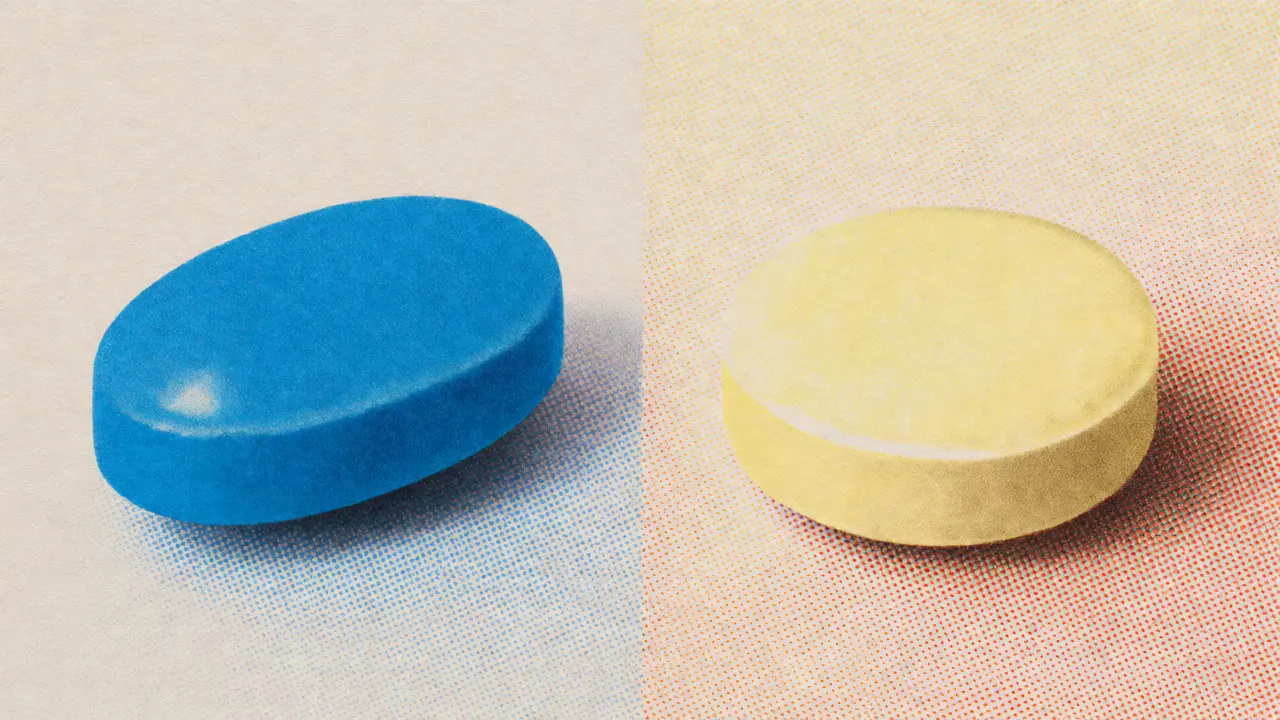
You open the pharmacy bag, and the pill looks different. It’s a different color, maybe a slightly different shape, and the imprint code is unfamiliar. You pause. Does this mean it works differently? Will it absorb into your bloodstream at the same speed as the expensive brand-name version you used to take? This is one of the most common questions patients ask pharmacists, and for good reason. We tend to equate appearance with quality. But when it comes to generic drugs, medications that are copies of brand-name drugs with the same active ingredients, strength, dosage form, and route of administration, the visual differences are legally required, not a sign of inferiority.
The real question isn’t about what the pill looks like; it’s about how it behaves inside your body. Specifically, we need to look at absorption rates. How fast does the drug get into your blood? How much of it actually makes it there? The short answer is that regulatory bodies like the FDA (U.S. Food and Drug Administration) enforce strict rules to ensure generics match their brand-name counterparts almost perfectly. But "almost" is doing a lot of heavy lifting in that sentence. Let’s break down exactly how these standards work, why the numbers might scare you if you don’t understand them, and what the data actually says about clinical outcomes.
The Core Standard: Bioequivalence
To approve a generic drug, manufacturers must prove bioequivalence. This is a scientific term meaning the generic delivers the same amount of active ingredient into a patient's bloodstream in the same amount of time as the brand-name drug. Think of it as a race. If the brand-name drug is the runner, the generic must finish the course at roughly the same pace and cross the finish line with the same energy reserves. If the generic absorbs too slowly, it might not reach therapeutic levels quickly enough. If it absorbs too fast, it could cause side effects due to a sudden spike in concentration.
The FDA doesn’t just guess or rely on lab tests alone. They require human trials. Typically, these studies involve 24 to 36 healthy volunteers who take both the generic and the brand-name drug in random order, with a washout period in between so the first dose clears their system completely. Researchers then track two critical metrics:
- AUC (Area Under the Curve): This measures the total exposure of the drug over time. It tells us the extent of absorption-how much drug actually made it into the system.
- Cmax (Maximum Concentration): This tracks the highest peak level of the drug in the blood. It tells us the rate of absorption-how quickly it hits its peak.
For a generic to be approved, the statistical analysis of these two metrics must fall within a specific window compared to the brand name. This is where the famous "80-125% rule" comes into play, but it’s often misunderstood.
Decoding the 80-125% Rule
You’ve probably heard that generics can vary by up to 20% less or 25% more than the brand name. That sounds like a huge gap. Imagine if your car’s fuel efficiency varied by 25% every time you filled up. You’d be frustrated. But here’s the catch: the 80-125% range refers to the 90% confidence interval of the ratio of geometric means, not the actual average difference in absorption.
Let’s simplify that. When scientists analyze the data from those 24-36 volunteers, they calculate an average absorption rate for the generic and compare it to the brand. Because human biology varies, they can’t just say "the averages are close." They have to be statistically sure. So, they create a confidence interval-a range where they are 90% confident the true average lies. For approval, this entire statistical range must sit comfortably between 80% and 125% of the brand’s performance.
| Parameter | What It Measures | Regulatory Limit (FDA) | Tighter Limit (Narrow Therapeutic Index) |
|---|---|---|---|
| AUC | Total drug exposure (Extent of absorption) | 80-125% | 90-111% |
| Cmax | Peak concentration (Rate of absorption) | 80-125% | 80-125% |
Because the confidence interval has to fit entirely within that window, the actual average difference is usually tiny. Data from over 2,000 bioequivalence studies submitted to the FDA shows that the average difference in absorption between generic and brand-name medicines is only about 3.5%. In nearly 98% of cases, the difference is less than 10%. So, while the legal allowance is wide, the practical reality is remarkably tight.
Why Do Generics Look Different?
If the drug inside is virtually identical, why does the outside change? U.S. trademark laws prohibit generic drugs from looking exactly like the brand-name product. This prevents consumer confusion and protects the brand’s identity. So, while the active ingredient, dosage, and safety profile are matched, the inactive ingredients-like fillers, binders, and dyes-can differ.
These inactive ingredients affect how the pill dissolves in your stomach, known as the dissolution rate. A study published in the Journal of Pharmaceutical Sciences found that 54% of tested generic products showed significantly different dissolution rates at 120 minutes compared to their branded counterparts. For example, some generics dissolved faster, while others were slower. However, the FDA maintains that as long as the in vivo (in the body) bioequivalence criteria are met, these lab-based dissolution differences don’t translate to clinically meaningful changes in how the drug works for the patient.

Narrow Therapeutic Index Drugs: The Exception
Not all drugs are created equal. Some medications have a "narrow therapeutic index," meaning the difference between a helpful dose and a toxic dose is very small. Examples include warfarin (blood thinner), digoxin (heart medication), and phenytoin (anti-seizure).
For these sensitive drugs, the stakes are higher. A slight variation in absorption could lead to toxicity or treatment failure. Recognizing this, the FDA requires tighter bioequivalence limits for narrow therapeutic index drugs. While standard generics allow for an 80-125% range, narrow therapeutic index drugs often require the AUC to fall within 90-111%. This ensures even greater consistency for patients who can’t tolerate fluctuations in blood levels.
If you’re taking one of these medications, your doctor might be more cautious about switching brands. They may recommend sticking with the same manufacturer to avoid any potential variability, even if it falls within the approved range.
What the Real-World Data Says
Patient anecdotes often paint a different picture than clinical trials. Online forums are full of stories about people feeling worse after switching to generics. A review of 1,247 user reviews on Drugs.com found that 12% reported perceived differences in effectiveness, with levothyroxine (thyroid hormone) and bupropion (antidepressant) being frequent complaints.
But do these perceptions hold up under scrutiny? A 2023 meta-analysis in JAMA Internal Medicine reviewed 47 studies involving nearly 10,000 patients. It found no significant difference in clinical outcomes between generic and brand-name cardiovascular drugs. Similarly, the FDA has documented only 12 cases of potential therapeutic inequivalence among more than 14,000 generic drugs approved between 2008 and 2023. That’s a failure rate of 0.08%.
Experts suggest that many perceived differences stem from the nocebo effect-expecting a problem and thus experiencing one-or minor adjustments in inactive ingredients that might affect tolerability without affecting efficacy. Dr. Tsourounis, a clinical pharmacy specialist, notes that there’s generally no pharmacological reason for these impacts, pointing instead to psychological factors or myths about generics.
How to Navigate Generic Substitution
Generics account for 90% of prescriptions filled in the U.S. but only 23% of total drug spending. This massive shift saves the healthcare system billions annually. But how do you ensure you’re getting a high-quality generic?
- Check the Orange Book: The FDA publishes the Orange Book, which lists therapeutic equivalence ratings. Look for an "A" rating, which indicates the drug is considered therapeutically equivalent. Avoid "B" rated drugs unless your doctor specifically approves them, as these have documented bioequivalence issues.
- Talk to Your Pharmacist: Pharmacists are your best resource for understanding local availability and manufacturer consistency. If you notice a change in how a new batch of pills feels, tell them. They can check if the manufacturer changed.
- Monitor Sensitive Meds: If you take narrow therapeutic index drugs, ask your doctor if they prefer a specific manufacturer. Consistency matters more here than cost savings.
It’s also worth noting that variability exists not just between brand and generic, but between different generic manufacturers and even between batches from the same company. This is normal manufacturing variance, kept in check by ongoing quality control. If you switch pharmacies, you might get a different manufacturer. This shouldn’t affect your health, but it’s good to be aware of.
The Future of Bioequivalence
Regulatory standards aren’t static. The FDA is currently exploring ways to modernize bioequivalence testing using modeling and simulation. This could reduce the need for human trials for certain complex drugs, speeding up approvals while maintaining rigor. Additionally, new guidance for complex generics like inhalers and topical creams is being developed to address their unique delivery mechanisms.
As of 2026, the framework remains robust. The European Medicines Agency uses identical standards to the FDA, ensuring global consistency. Japan’s PMDA requires slightly tighter limits for some classes, but the core principle holds: generics must perform like the brand.
So, next time you pick up a prescription, don’t let the different color fool you. The science behind generic absorption rates is rigorous, transparent, and backed by decades of data. The pill might look different, but it works the same.
Can generic drugs vary by up to 25% in absorption?
This is a common misconception. The 80-125% range refers to the 90% confidence interval for the ratio of geometric means, not the actual average difference. In practice, the average difference in absorption between generics and brand-name drugs is typically around 3.5%, with most variations falling well within 10%.
Why do generic pills look different from brand-name pills?
U.S. trademark laws prevent generic drugs from having the same appearance (color, shape, size) as brand-name drugs to protect brand identity. These visual differences are caused by inactive ingredients like dyes and fillers, which do not affect the therapeutic performance of the active ingredient.
Are all generic drugs equally safe and effective?
The FDA assigns therapeutic equivalence ratings. "A" rated generics are considered therapeutically equivalent to the brand. "B" rated generics may have bioequivalence issues and are generally not automatically substituted. Always check the FDA Orange Book or ask your pharmacist for the rating of your specific medication.
Do I need to worry about switching generic manufacturers?
For most drugs, switching manufacturers is safe because all approved generics meet the same strict bioequivalence standards. However, for narrow therapeutic index drugs (like warfarin or digoxin), doctors may prefer consistency. If you feel a difference, consult your pharmacist to see if the manufacturer changed.
What happens if a generic drug fails post-market surveillance?
The FDA continuously monitors generic drugs through adverse event reporting. Between 2008 and 2023, only 12 cases of potential therapeutic inequivalence were identified out of over 14,000 approved generics. If issues arise, the FDA can require additional testing or withdraw the drug from the market.



Adam Viruet
September 4, 2026 AT 09:31Whatever.
Just another way for the FDA to pat themselves on the back while Big Pharma keeps its profits up, right? I mean, sure, the numbers look pretty in that table, but do they really test every single batch with the same rigor as the original trials? Doubt it. It’s all smoke and mirrors designed to make us feel like we’re getting a bargain when we’re actually just guinea pigs for cheaper manufacturing processes. The color change is a feature, not a bug, because if it looked the same, we’d know it was the same pill and stop paying for the brand name marketing. Simple economics disguised as science. Don’t believe everything you read in these overly detailed articles.
Jeremy Westcott
September 5, 2026 AT 20:41You think they care about our bloodstreams? Ha! They care about the bottom line. The "inactive ingredients" are where the real magic happens, or rather, where the real manipulation occurs. Why do you think they change the fillers? To alter how your body processes it just enough to keep you guessing. And don't get me started on the dissolution rates mentioned in the article. 54% variance in lab tests? That's not close; that's chaos theory in a pill bottle. The FDA sets the bar low so more companies can pass, flooding the market with sub-par knockoffs. We are being fed placebo-adjacent chemicals while they harvest our data. Wake up!
Amanda SF
September 6, 2026 AT 07:09This explanation is fundamentally flawed and demonstrates a profound misunderstanding of pharmacokinetics. The author attempts to simplify complex statistical concepts into digestible bites, but in doing so, they strip away the critical nuances that define true therapeutic equivalence. One cannot simply dismiss the nocebo effect as mere psychology when biological responses are inherently subjective and multifactorial. Furthermore, the reliance on aggregate data from thousands of studies obscures individual patient variability, which is the cornerstone of personalized medicine. It is intellectually lazy to suggest that a 3.5% average difference equates to clinical irrelevance for every single human physiology. This article serves only to placate the masses who wish to avoid the inconvenience of reading primary literature.
Neil Martin
September 6, 2026 AT 14:59The conflation of bioequivalence with therapeutic equivalence is a persistent error in public discourse. While the AUC and Cmax metrics provide a robust framework for assessing absorption kinetics, they fail to account for inter-individual variability in metabolic enzymes such as CYP450 isoforms. Consequently, a generic drug may meet regulatory standards in a healthy volunteer cohort yet exhibit significant deviations in a polymetabolic patient population. Moreover, the dissolution rate discrepancies highlighted in the Journal of Pharmaceutical Sciences suggest that excipient compatibility plays a non-negligible role in drug release profiles, particularly for poorly soluble compounds. Therefore, the assertion that generics perform identically is an oversimplification that ignores the stochastic nature of human biology.
Kim Pender
September 7, 2026 AT 12:05my mom switched her blood pressure meds last month and said she felt dizzy. maybe it's nothing but i don't trust the new pills. feels different.
Neil Sahli
September 8, 2026 AT 19:49Oh, fantastic! Another day, another reason to doubt modern medicine! Because clearly, the millions of people taking generics aren't living proof that this stuff works. But hey, let's ignore the billions saved and the access provided to those who couldn't afford the brand name. How about we celebrate the fact that science has figured out how to replicate molecules accurately instead of spiraling into paranoia? Your anxiety isn't helping anyone, especially not your wallet. Smile more, worry less, and take your generic pill like a champ!
Pramay Dattani
September 10, 2026 AT 13:27India makes most of these generis anyway!! We have the best quality control in the world, better than US even. You Americans complain too much. If it was made here you would praise it blindly. Stop crying over small differences. The science is solid. We export to whole world. You should be grateful we send you cheap medicine. Without Indian pharma you would be dead or poor. Deal with it.