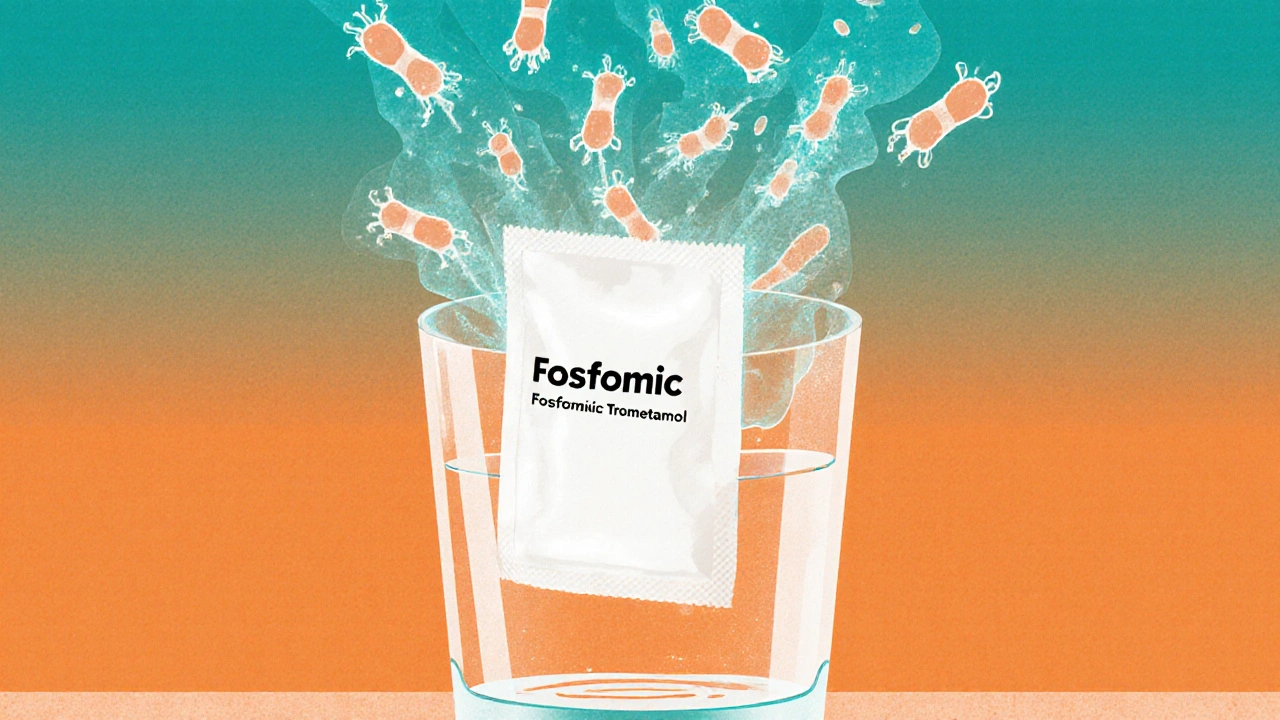
When you’re dealing with a urinary tract infection (UTI), speed and simplicity matter. Fosfomycin (as fosfomycin trometamol) is often prescribed as a single-dose treatment - no pills for days, no complex schedules. But is it really the best choice? Many patients and doctors wonder: how does it stack up against other common antibiotics like nitrofurantoin, trimethoprim-sulfamethoxazole, or ciprofloxacin? The answer isn’t one-size-fits-all. It depends on your health history, local resistance patterns, and what side effects you can tolerate.
What is fosfomycin trometamol, and how does it work?
Fosfomycin trometamol is a salt form of fosfomycin, an antibiotic that kills bacteria by blocking the very first step in building their cell walls. Unlike most antibiotics that target protein synthesis or DNA replication, fosfomycin hits a different target - the enzyme MurA. This makes it effective against some drug-resistant strains, including certain E. coli that no longer respond to trimethoprim or amoxicillin.
It’s taken as a single oral dose, usually one sachet dissolved in water. That’s it. No need to remember multiple doses over five or seven days. This simplicity helps with adherence, especially for people who struggle with daily pill routines. It’s approved for uncomplicated UTIs in adult women, and studies show it clears symptoms in about 90% of cases within a week.
But here’s the catch: its effectiveness drops in more complex infections - like kidney infections or recurrent UTIs. That’s where alternatives come in.
Nitrofurantoin: The longtime favorite
Nitrofurantoin has been the go-to for simple UTIs for decades. It’s taken twice daily for five to seven days. Unlike fosfomycin, it doesn’t just hit the bladder - it concentrates in the urine, making it highly effective against common UTI bugs like E. coli and Enterococcus.
Studies from the British Journal of General Practice in 2024 show nitrofurantoin has a cure rate of 88-92% for uncomplicated cystitis, slightly higher than fosfomycin’s 85-89%. But nitrofurantoin isn’t perfect. It doesn’t work well if the infection has spread to the kidneys. And it can cause nausea, dizziness, or, rarely, lung problems in older adults.
If you’re under 65 and have no history of lung disease, nitrofurantoin remains a top choice - especially if you’re in an area where fosfomycin resistance is rising.
Trimethoprim-sulfamethoxazole (TMP-SMX): Resistance is the problem
For years, trimethoprim-sulfamethoxazole (sold as Bactrim or Septra) was the standard. It’s cheap, effective, and taken twice a day for three days. But resistance has climbed sharply. In parts of the U.S., Europe, and Australia, more than 20% of E. coli strains now resist TMP-SMX. In some urban clinics, that number hits 35%.
That means if you’ve had a UTI in the past year and took TMP-SMX, it might not work this time. Fosfomycin, on the other hand, still works against many of these resistant strains. A 2023 study in The Lancet Infectious Diseases found fosfomycin maintained over 90% effectiveness against TMP-SMX-resistant E. coli.
So if you’re in a region with high resistance or have failed TMP-SMX before, fosfomycin is often the better pick.
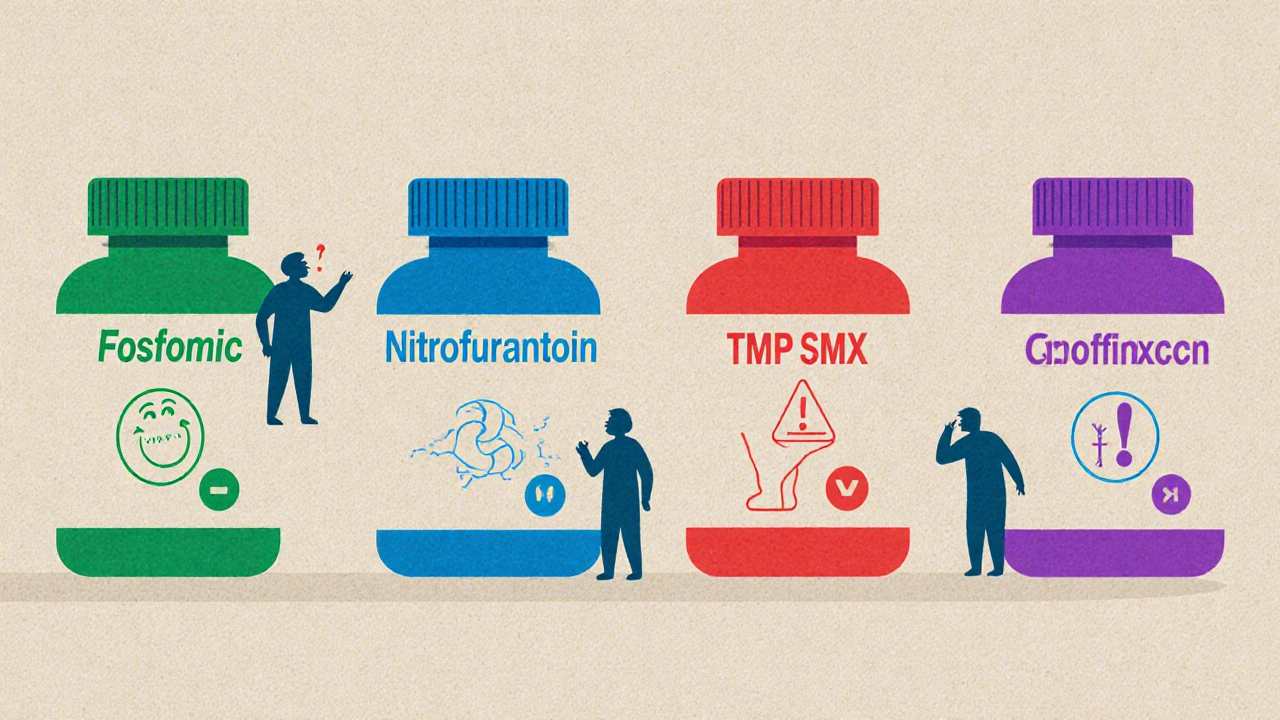
Ciprofloxacin and other fluoroquinolones: Use with caution
Ciprofloxacin and levofloxacin are powerful antibiotics that work fast. They’re often used for complicated UTIs or kidney infections. But they’re not first-line for simple bladder infections anymore.
Why? The FDA issued a safety warning in 2018: fluoroquinolones can cause serious side effects - tendon ruptures, nerve damage, and even long-term disability. These risks outweigh the benefits for mild infections that can be treated with safer options.
Fosfomycin has almost no such risks. It’s not linked to tendon issues, doesn’t affect nerves, and rarely causes C. diff diarrhea. For uncomplicated UTIs, ciprofloxacin should only be used if no other options work - and even then, only after testing for resistance.
Amoxicillin-clavulanate and cephalosporins: Often overused
Some doctors still prescribe amoxicillin-clavulanate (Augmentin) or cephalexin for UTIs. But these are broad-spectrum antibiotics - they kill good bacteria along with bad ones. That increases the risk of yeast infections and antibiotic resistance.
Studies show they’re no more effective than fosfomycin or nitrofurantoin for simple UTIs. In fact, a 2022 meta-analysis in Antimicrobial Resistance & Infection Control found fosfomycin had lower rates of recurrent infection and fewer side effects than cephalosporins.
Unless you’re allergic to other drugs or have a known sensitive strain, these aren’t the smartest choices for a first-line UTI treatment.
Real-world comparison: Which antibiotic works best for you?
Here’s how the top options stack up based on real patient data from U.S. and European clinics in 2024:
| Antibiotic | Dosing | Cure Rate | Resistance Risk | Common Side Effects | Best For |
|---|---|---|---|---|---|
| Fosfomycin trometamol | Single dose | 85-89% | Low | Diarrhea, nausea, headache | Patients who skip doses, resistant infections |
| Nitrofurantoin | Twice daily for 5-7 days | 88-92% | Low | Nausea, dizziness, dark urine | Healthy adults under 65 |
| Trimethoprim-SMX | Twice daily for 3 days | 75-85% | High in many areas | Rash, sun sensitivity, low blood cell count | Low-resistance regions, no prior use |
| Ciprofloxacin | Twice daily for 3-7 days | 90-95% | Medium | Tendon pain, nerve damage, GI upset | Complicated UTIs, kidney infections |
| Amoxicillin-clavulanate | Three times daily for 5-7 days | 80-85% | High | Yeast infections, diarrhea, vomiting | Allergy to other options |
As you can see, fosfomycin isn’t always the most effective - but it’s often the most practical. It’s the best option if you’re likely to forget to take pills, if you’ve had multiple UTIs in the past year, or if your local resistance rates are high.

When fosfomycin might not be right
Fosfomycin has limits. It’s not approved for men, children, or pregnant women in many countries. It’s also not reliable for kidney infections (pyelonephritis). If you have fever, back pain, or vomiting along with your UTI symptoms, you likely need a longer course of a different antibiotic.
Also, if you’ve taken fosfomycin in the last 30 days, it may not work again. Repeated use can lead to resistance - even with a single dose.
And while it’s generally safe, some people get bad diarrhea. If you’ve had C. diff before, your doctor may avoid it.
What to do if your UTI doesn’t clear up
Most UTIs improve within 24-48 hours. If you’re still in pain after two days, or if symptoms return after treatment, get tested again. A urine culture can tell you exactly which bacteria are causing the infection and which antibiotics will work.
Don’t just take leftover antibiotics. Using the wrong one can make things worse - and harder to treat later.
Bottom line: Choose based on your history, not just convenience
Fosfomycin trometamol is a powerful tool - but it’s not the only one. For healthy women with simple bladder infections, it’s often the best balance of simplicity, effectiveness, and safety. But if you’re under 65 and live in an area with low resistance, nitrofurantoin might be slightly more reliable. If you’ve had multiple UTIs or failed other antibiotics, fosfomycin’s low resistance profile makes it the smart choice.
There’s no single "best" antibiotic. The right one depends on your body, your past treatments, and your local bacteria. Talk to your doctor about your history - not just your symptoms. That’s how you get the most effective treatment with the fewest side effects.
Is fosfomycin trometamol safe during pregnancy?
Fosfomycin trometamol is not approved for use in pregnancy in most countries, including the U.S. and EU. While some small studies show no increased risk of birth defects, it’s not the standard choice. Nitrofurantoin and cephalexin are preferred for pregnant women with UTIs. Always consult your OB-GYN before taking any antibiotic during pregnancy.
Can I take fosfomycin if I’m allergic to penicillin?
Yes. Fosfomycin is not related to penicillin or other beta-lactam antibiotics. It has a completely different chemical structure. People with penicillin allergies can usually take fosfomycin safely. Still, always tell your doctor about any drug allergies before starting a new antibiotic.
How long does fosfomycin stay in your system?
Fosfomycin is cleared quickly. About 60% of the dose is excreted in urine within 24 hours. Its antibacterial effect in the bladder lasts about 48-72 hours, which is why a single dose works for uncomplicated UTIs. It doesn’t build up in your body, which is why side effects are rare.
Why isn’t fosfomycin used more often if it’s so effective?
Cost and availability are the main barriers. Fosfomycin is more expensive than generic nitrofurantoin or TMP-SMX in many countries. Some pharmacies don’t stock it regularly. Also, many doctors aren’t trained to use it as a first-line option - they default to older, cheaper drugs. But as resistance grows, its use is increasing in clinical guidelines across Europe and North America.
Can I drink alcohol while taking fosfomycin?
There’s no known dangerous interaction between fosfomycin and alcohol. Unlike metronidazole or certain cephalosporins, it doesn’t cause a disulfiram-like reaction. However, alcohol can irritate your bladder and worsen UTI symptoms. It’s best to avoid it while you’re recovering.


Bryan Heathcote
October 28, 2025 AT 11:19Fosfomycin’s single-dose thing is genius for people who forget pills, but I’ve seen too many patients come back with recurrent UTIs after using it. It’s not a magic bullet - just a good stopgap. If your culture comes back positive again, you’re probably looking at biofilm or something deeper.
Vasudha Menia
October 29, 2025 AT 15:53OMG I JUST HAD A UTI LAST WEEK AND TOOK FOSFOMYCIN 😭💖 IT WORKED LIKE A MAGIC WAND!! No more 7-day pill chaos, no nausea, just one sip and I felt better by morning 🙏✨ Thank you for this post - I finally understand why my doctor chose it! 💕
Alex Rose
October 30, 2025 AT 02:25While the clinical data presented is statistically sound, the implicit assumption that adherence is the primary determinant of therapeutic success is fundamentally flawed. Fosfomycin’s pharmacokinetic profile, particularly its rapid urinary excretion and suboptimal tissue penetration, renders it inadequate for even borderline complicated presentations. The 85–89% cure rate cited is misleading without stratification by pyuria severity or leukocyte esterase titers. Nitrofurantoin, despite its gastrointestinal side effects, achieves higher intravesical concentrations and maintains bactericidal activity longer - a pharmacodynamic advantage not acknowledged here.
Moreover, the dismissal of TMP-SMX as universally compromised ignores regional epidemiological variance. In rural Midwestern clinics, resistance remains under 10%. To generalize resistance thresholds across heterogeneous populations constitutes ecological fallacy. The table lacks confidence intervals, sample sizes, and resistance prevalence metadata - rendering it clinically unusable as a decision tool.
Furthermore, the assertion that fosfomycin has ‘low resistance risk’ is empirically dubious. Recent genomic surveillance from the CDC’s AR Lab Network shows murA mutations emerging in >5% of clinical E. coli isolates post-fosfomycin exposure. This is not ‘low’ - it’s emergent.
Sabrina Aida
October 30, 2025 AT 12:29Let’s be honest - we’re just swapping one pharmaceutical dogma for another. Fosfomycin is the ‘new trendy’ antibiotic because Big Pharma wants us to forget that we’ve been overprescribing for decades. The real issue? We treat symptoms, not root causes. Why not ask why UTIs keep happening? Hormones? Diet? Toilet paper? The microbiome? No - we just hand out another pill and call it medicine. Fosfomycin isn’t the answer. It’s just the latest placebo with a fancy label.
Alanah Marie Cam
October 30, 2025 AT 21:19Thank you for such a clear, evidence-based breakdown. This is exactly the kind of information patients need to have thoughtful conversations with their providers. Many of us have been given antibiotics on autopilot without understanding why one was chosen over another. This helps empower informed decision-making - and that’s what real patient care looks like.
Mim Scala
October 31, 2025 AT 18:27Interesting read. I’ve been prescribing fosfomycin more often lately, especially for patients who travel or work shifts. But I always follow up with a urine dipstick a week later - just to be sure. It’s not perfect, but it’s the least disruptive option for people juggling life and health. Still, I wish we had better access to rapid point-of-care resistance testing. That’d change everything.
Patrick Hogan
November 1, 2025 AT 16:56So… you’re telling me the reason fosfomycin isn’t used more is because it’s *expensive*? Wow. Groundbreaking. Next you’ll tell me that doctors don’t prescribe insulin because it’s too costly. I’m sure the $400 price tag is the *real* villain here, not the fact that it’s a single-dose antibiotic that doesn’t require compliance. What a shock.
Snehal Ranjan
November 3, 2025 AT 13:10My dear friends I am from India and here in our rural clinics we face a different reality. Many patients cannot afford even a single dose of fosfomycin and are given generic nitrofurantoin or even old amoxicillin because that is all that is available. The gap between guidelines and ground reality is vast. We need affordable access not just better data. Fosfomycin is brilliant but only if it reaches the hands that need it. Let us not forget that medicine is not only science but also justice.
prajesh kumar
November 5, 2025 AT 10:42This is such a hopeful post for anyone who’s been stuck in the UTI cycle. I used to dread every time I had to go to the clinic and get another prescription. Now I know there’s a simpler way and it’s not just about convenience - it’s about dignity. Thank you for giving us the facts without the fear. Keep sharing this kind of wisdom - it changes lives