
Finishing cancer treatment is a huge milestone, but it often comes with a confusing question: What happens now? For many, the transition from the intense, daily focus of oncology to the slower pace of primary care can feel like falling through a gap. This is why a Survivorship Care Plan is no longer just a "nice-to-have" document-it is a critical roadmap. It turns a mountain of complex medical data into a clear set of instructions for both you and your doctors, ensuring that no follow-up test is missed and every late effect is monitored.
What Exactly is a Survivorship Care Plan?
At its core, a Survivorship Care Plan is a detailed record of your cancer history combined with a personalized strategy for your future health. The Institute of Medicine (now the National Academy of Medicine) defines it as a tool to optimize care coordination and prevent patients from getting "lost in transition." It serves as a formal bridge between your oncology specialists and your primary care provider (PCP), ensuring your general doctor knows exactly what happened during your treatment and what to look for in the years ahead.
Without this plan, care becomes fragmented. Research shows that a staggering 68% of primary care physicians feel unprepared to manage the long-term needs of cancer survivors without specific guidance. When a plan is in place, survivors are 37% more likely to receive the correct follow-up care according to medical guidelines.
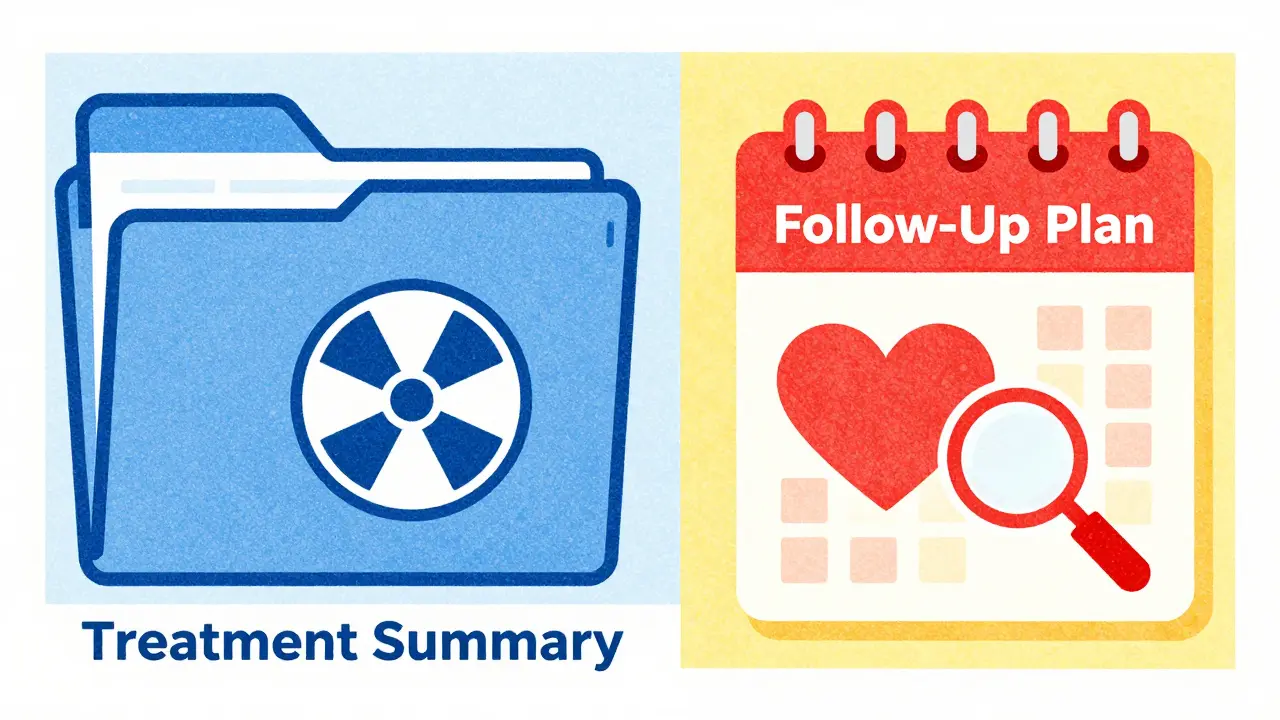
The Two Pillars of Your Plan: Treatment Summary and Follow-Up
A complete plan isn't just a letter from your oncologist; it must contain two distinct, detailed sections. If you are reviewing your plan, check that both of these elements are present.
1. The Treatment Summary
This is the "what happened" section. It is a technical archive of your journey that includes:
- Diagnosis Details: The exact date of diagnosis, the specific type of cancer, its location, the stage, and the histology (the cell type).
- Surgical History: The specific procedures performed and the dates they occurred.
- Radiation Therapy: The site of radiation, the total dose delivered, and the type of radiation used.
- Systemic Therapies: Detailed regimens of chemotherapy or biotherapy, including the specific drugs, dosages, and the number of cycles completed.
- Provider Contacts: Names and contact information for every specialist involved in your care.
2. The Follow-Up Plan
This is the "what's next" section. It moves from the past to the future, focusing on:
- Surveillance Schedule: A clear calendar of when you need follow-up visits and which specific tests (like CT scans or blood work) are required to check for recurrence.
- Screening Requirements: Adjusted screening schedules. For example, a survivor of Hodgkin lymphoma who received chest radiation may need annual mammograms starting eight years post-treatment.
- Late Effect Monitoring: A list of potential long-term side effects based on the specific drugs or radiation you received.
- Health Promotion: Concrete advice on diet, weight-bearing exercise, and smoking cessation to reduce the risk of secondary cancers.
| Feature | Treatment Summary (The Past) | Follow-Up Plan (The Future) |
|---|---|---|
| Primary Purpose | Documentation of medical history | Preventative health and surveillance |
| Key Data Points | Drug doses, radiation sites, histology | Visit dates, screening intervals, risk factors |
| User Benefit | Provides accurate history for new doctors | Reduces anxiety by providing a clear schedule |
| Clinical Goal | Ensures data accuracy | Early detection of recurrence or late effects |
Managing Late Effects: The Hidden Challenges
Treatment doesn't always end when the last infusion stops. Late effects are health problems that occur months or even years after your cancer treatment has finished. These aren't just "side effects"; they are often permanent changes to how your body functions.
The Children's Oncology Group (COG) provides a gold standard for this, tracking 72 distinct late effects across 15 different organ systems. While their guidelines are for pediatric survivors, the principle applies to adults: your risk is tied to the dose and type of treatment you had.
For example, if you received a high dose of anthracyclines (a common chemotherapy), your plan might trigger an echocardiogram every five years to monitor for heart failure. Radiation to the chest can increase the risk of lung or heart issues decades later. Because these effects can be subtle, your plan should list the specific "red flags" you need to watch for and which specialist (like a cardiologist or endocrinologist) should be monitoring them.
How to Actually Use Your Plan in the Real World
A piece of paper in a drawer doesn't save lives; active use does. Interestingly, studies show that only 41% of survivors actually bring their care plan to their primary care visits. To get the most value out of your Survivorship Care Plan, you need to be the driver of the process.
Start by scheduling a "transition appointment" with your primary care doctor. Instead of just saying, "I'm done with treatment," hand them the plan. Use the document to ask specific questions: "My plan says I need a specific blood test every six months for two years; can we put those on the calendar now?" or "Since I had radiation in this area, what specific symptoms should I report to you immediately?"
If your care center uses digital platforms like OncoLife, leverage these tools. Digital plans are often more accurate and easier to update as you move between different healthcare systems. If you don't have a digital version, keep a physical binder with the plan at the front and all your pathology and imaging reports behind it.
The Future of Survivorship: Precision and AI
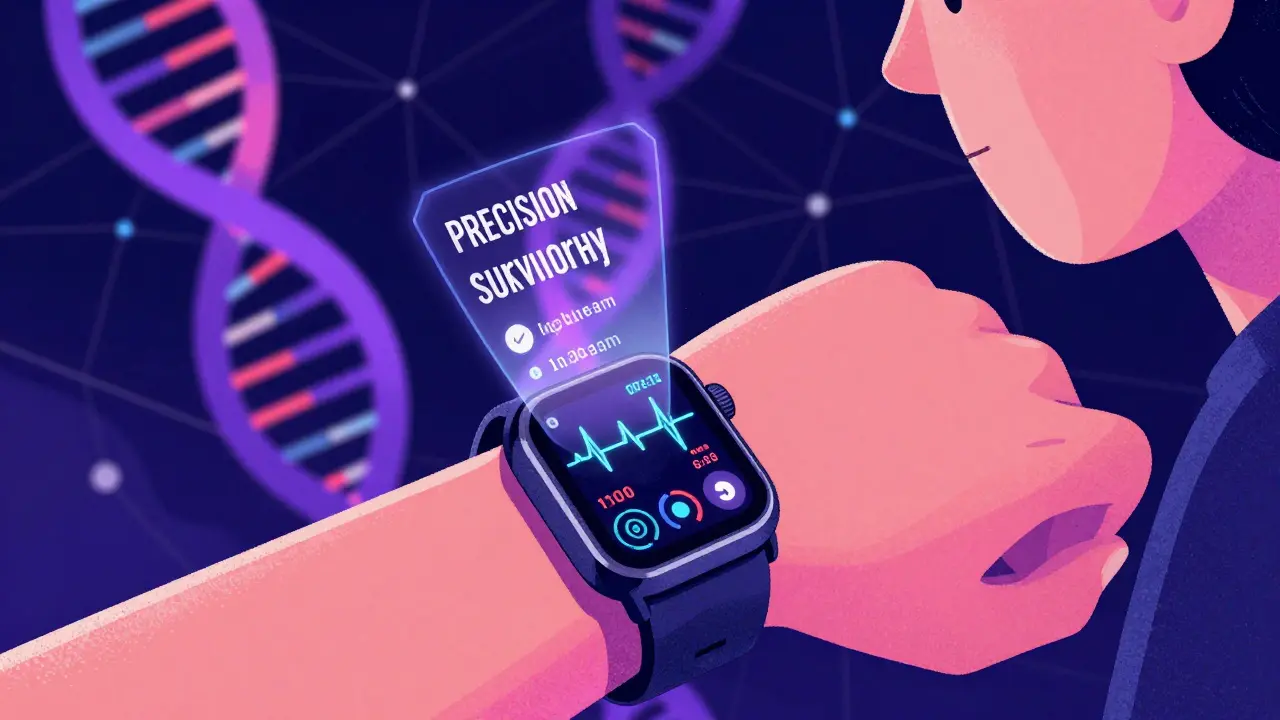
The way we handle survivorship is shifting from a "one-size-fits-all" checklist to risk-adapted care. We are entering an era of precision survivorship where your plan isn't just based on your cancer type, but on your unique genetic makeup.
Some leading centers are now integrating polygenic risk scores into plans to predict the likelihood of secondary cancers. Even more impressive is the use of AI to predict cardiac complications after radiation with up to 84% accuracy. This means that in the near future, your follow-up plan won't just say "see a doctor every year," but will tell your doctor exactly which tests to run based on your specific risk profile.
We are also seeing the rise of wearable technology integration. Imagine a plan that syncs with a smartwatch to monitor heart rate variability or activity levels, alerting your care team if a late effect is beginning to manifest in real-time. While this is still in the pilot phases, the goal is to move from reactive care (treating a problem once it appears) to proactive monitoring.
What should I do if my doctor hasn't offered me a survivorship plan?
You should advocate for one. Ask your oncology team specifically for a "Survivorship Care Plan" that includes both a treatment summary and a follow-up schedule. If they don't have a formal template, ask them to provide a written summary of your chemotherapy doses, radiation sites, and a list of recommended screenings for the next five years. You can then share this document with your primary care physician.
How often should my survivorship plan be updated?
Your plan is a living document. It should be reviewed and updated at every major transition point-such as moving from active treatment to surveillance, or when you move to a new primary care provider. Ideally, your doctor should review it during your annual check-up to ensure the screening intervals are still appropriate based on your current health status.
Does a survivorship plan replace my regular check-ups?
No, it enhances them. Your regular check-ups focus on general health (like blood pressure and cholesterol), while the survivorship plan adds a layer of specialized surveillance. It ensures that your general doctor is performing the correct screenings for a cancer survivor, which may differ from the standard guidelines for the general population.
What are some examples of 'late effects' I should look for?
Late effects vary wildly depending on treatment. Common examples include early menopause or infertility from certain chemotherapies, heart muscle weakness (cardiotoxicity) from anthracyclines, or lymphedema (swelling) after lymph node removal. Some survivors also experience "chemo brain" (cognitive impairment) or chronic fatigue that persists for years. Your plan should list the specific ones relevant to your treatment.
Who is responsible for coordinating the care in the plan?
While the oncology team creates the plan, the responsibility for coordination is often shared. Ideally, you have a designated "point of contact" or care coordinator. However, in most cases, the survivor becomes the primary manager of the plan, bringing it to appointments and ensuring the primary care provider is following the recommended schedule. Don't be afraid to be your own advocate.
Next Steps for Your Recovery Journey
If you've just finished treatment, your first priority is to secure your documentation. Don't leave the clinic without a clear understanding of who your primary point of contact is for the next twelve months. If you feel overwhelmed by the technical language in your treatment summary, ask your nurse or navigator to help you translate the "medical speak" into plain English.
For those who have been in survivorship for a few years, now is the time to audit your plan. Are you still getting the screenings recommended? Have you noticed any new symptoms that might be a late effect? Schedule a specific "survivorship review" appointment with your doctor to update your roadmap for the years ahead. Remember, the goal isn't just to survive, but to thrive with a clear, manageable plan for your long-term health.



Darius Prorok
April 10, 2026 AT 13:15Everyone knows that PCPs are usually clueless about oncology.
jack hunter
April 11, 2026 AT 07:12the idea that a piece of paper can solve the existential dread of recurrence is just laughable. medicine wants us to believe in these roadmaps so we feel safe but the real truth is just randomness and chaos anyway.
Stephen Luce
April 12, 2026 AT 20:05It's really scary to feel like you're just a number once the active treatment stops. That transition to primary care can feel so lonely and abrupt, but having a plan to hold onto makes a huge difference in feeling seen and supported.
Danielle Kelley
April 14, 2026 AT 00:56Of course they want to put your data into "AI" systems now. It's just another way for big pharma and the government to track your biological markers in real-time and decide when you're "useful" or not. Don't let them sync your heart rate to a cloud server unless you want them owning your literal heartbeat!
Windy Phillips
April 14, 2026 AT 17:39It is simply tragic... truly tragic... that some people cannot manage to bring a single piece of paper to an appointment!!! One would think that basic organization would be a priority when your life is on the line, but apparently, that is too much to ask of some... regardless...
Kathleen Painter
April 15, 2026 AT 12:57I think it's so important to remember that everyone's journey with healing is different, and while a structured plan is a wonderful tool for many, we should also hold space for those who find the medicalization of their recovery to be a bit too clinical or overwhelming. Maybe we can look at these plans not as a strict set of rules, but as a gentle guide that we can adapt to our own emotional needs as we move forward into this new phase of life, because the mental health aspect of survivorship is often just as critical as the physical screenings and the blood work, and we should all feel empowered to ask for the kind of support that actually resonates with our individual spirit.
Christopher Cooper
April 15, 2026 AT 18:47The mention of polygenic risk scores is fascinating! It's a huge leap forward to move toward a more personalized approach. I wonder if this will eventually lead to a world where we can predict late effects before they even happen, allowing for preventative interventions that are tailored specifically to our DNA.
shelley wales
April 17, 2026 AT 07:27You've got this! Just taking that first step to ask for your records is a huge win. It's all about taking back control of your own health, and you deserve to feel confident and safe in your recovery journey.
Timothy Burroughs
April 17, 2026 AT 22:47Americans are getting soft with these little checklists let the doctors do their jobs without needing a map for every single step it is a joke how we treat medicine these days