Opioid Itching Assessment Tool
How to Use This Tool
This tool helps determine if your itching is opioid-induced and suggests the most effective treatment options based on the article content.
Answer the questions below to identify your symptoms and get personalized recommendations.
Symptom Assessment
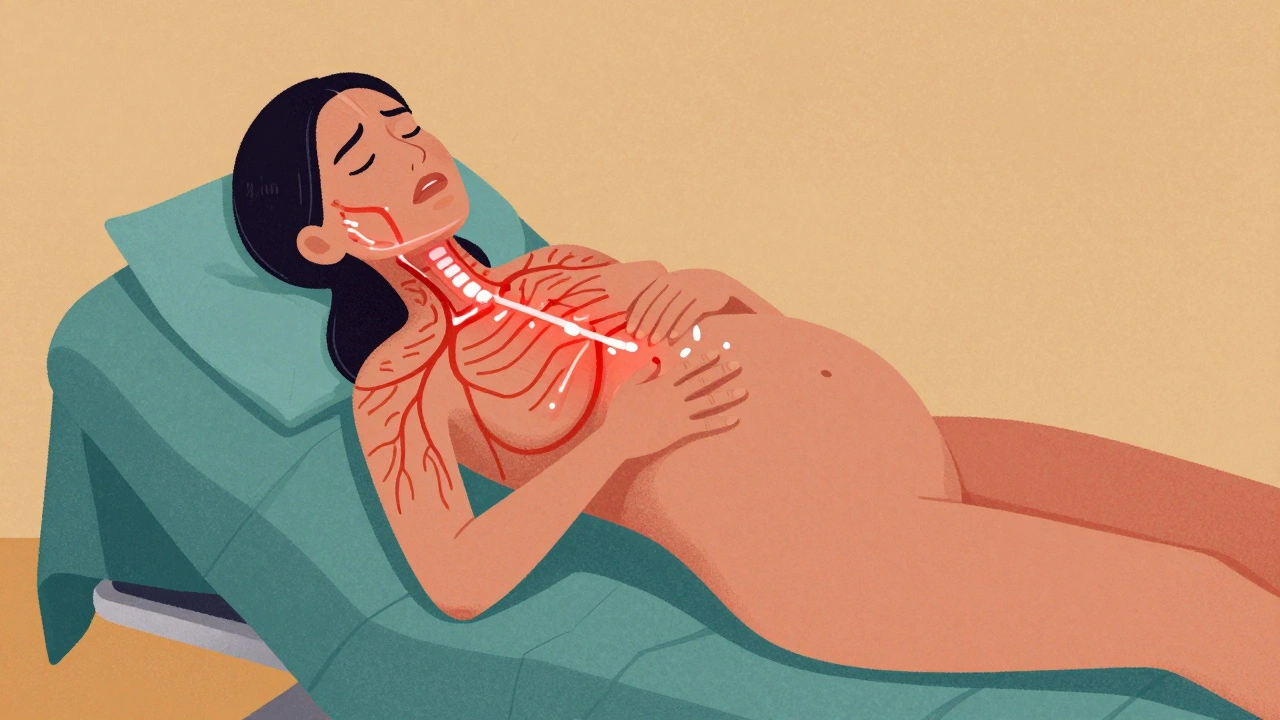
When you take an opioid for pain-whether it’s morphine after surgery or fentanyl during labor-you expect relief. You don’t expect to feel like fire ants are crawling under your skin. Yet, opioid-induced itching happens to up to 100% of people who get spinal or epidural morphine. It’s not an allergy. It’s not dry skin. And antihistamines like Benadryl often don’t help. This isn’t a rare side effect-it’s one of the most common, misunderstood, and under-treated problems in modern pain management.
Why Does Opioid Itching Happen?
For decades, doctors thought opioid itching was just histamine release-like an allergic reaction. Morphine, codeine, and meperidine were blamed for triggering mast cells in the skin to dump histamine, causing itch and sometimes hives. But that explanation doesn’t hold up anymore.
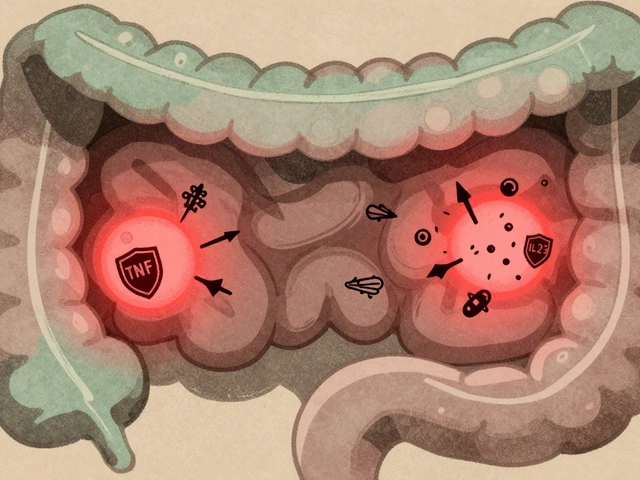
Modern research shows two separate pathways are at work. One involves histamine, but only in a small number of cases, mostly when patients develop visible hives. The real culprit for most people is direct activation of nerve fibers in the spinal cord and skin. These nerves, called TRPV1-expressing dorsal root ganglion neurons, get turned on by opioids binding to mu opioid receptors (MOR). It’s like flipping a switch that says "itch," not "pain."
Studies using selective MOR agonists like DAMGO showed that itch could be triggered even when mast cells were blocked. And when researchers used resiniferatoxin to silence those specific nerve fibers, the itching disappeared. That’s why antihistamines fail so often-they’re treating the wrong problem.
Where Does It Happen-and Why?
Opioid itching doesn’t show up randomly. It’s almost always on the face, nose, chest, and upper back. Why there? Because that’s where the highest concentration of mu opioid receptors is located in the peripheral nervous system. The more opioid you get directly into your spinal fluid (intrathecal), the worse the itch. Up to 90% of patients getting spinal morphine for a C-section report severe itching. IV morphine causes it in 30-50%. Oral opioids? Only 10-30%.
It hits fast, too. Within 15 to 30 minutes after an IV dose, patients start scratching. After spinal injection, it can be even quicker. Nurses in post-anesthesia units see it daily. One nurse practitioner in Brisbane reported that 8 out of 10 mothers getting spinal morphine after cesarean delivery need something for itching within the hour.
Why Antihistamines Don’t Work (Most of the Time)
Diphenhydramine (Benadryl), hydroxyzine, cetirizine-these are still handed out like candy in hospitals. But the data says they’re mostly useless for opioid-induced itching. Clinical reviews show success rates of only 20-30%. Why? Because they block histamine receptors, and histamine isn’t the main driver.
There’s one exception: if the patient develops hives or flushing along with the itch, then histamine might be involved. In those cases, antihistamines can help. But for the majority of patients-those just scratching their face and chest with no rash-antihistamines are a waste of time and cause drowsiness, which makes recovery harder.
What Actually Works?
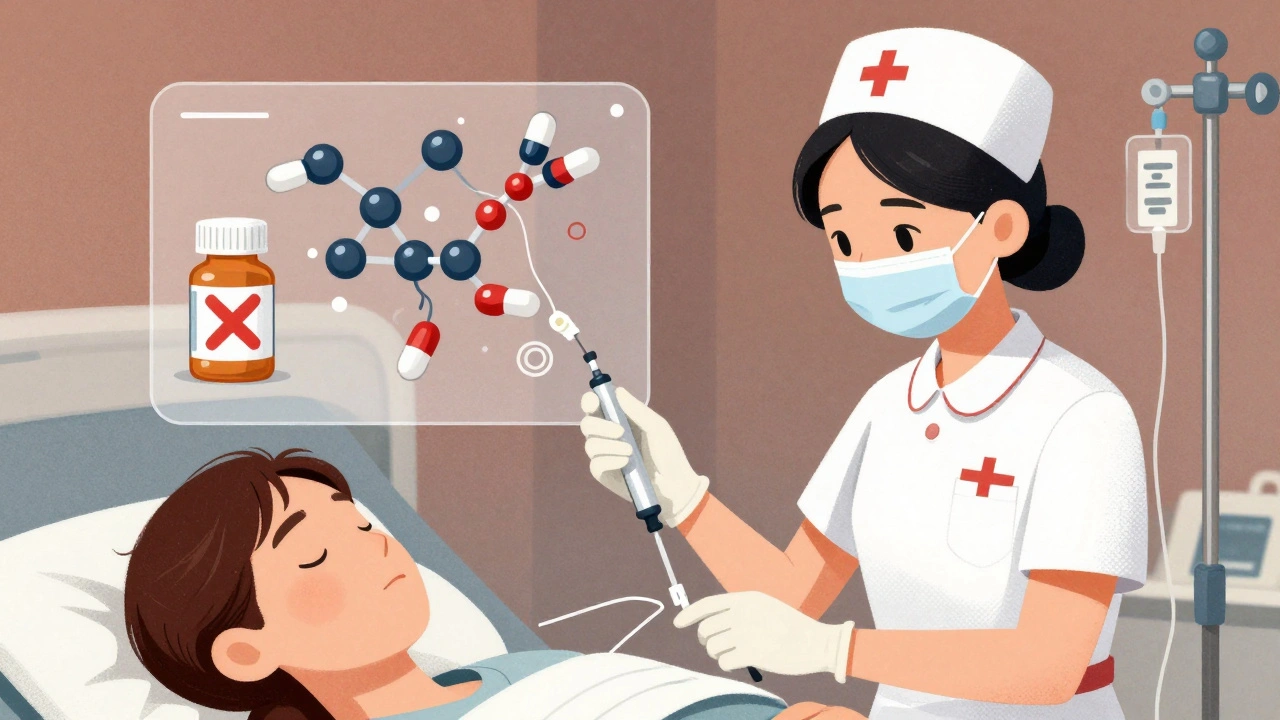
The best treatments don’t target histamine. They target the opioid system itself.
- Naloxone (0.25 mcg/kg/min IV infusion): Reduces itching by 60-80% without touching pain relief. It’s a mu receptor blocker that works locally in the spinal cord. Used correctly, it keeps pain under control while stopping the itch.
- Nalbuphine (5-10 mg IV): A mixed mu antagonist/kappa agonist. Works in under 5 minutes. Reduces itching scores by 85%. It’s become the go-to in many hospitals because it doesn’t make patients sleepy like Benadryl does.
- Butorphanol (1-2 mg IV): Another kappa agonist. In one study, it dropped itching scores from 8.2 to 2.1 on a 10-point scale in post-C-section patients.
- Naltrexone (1.2 mg IV): Also blocks mu receptors. Works well but requires careful dosing to avoid reversing pain control.
- Lidocaine (1.5 mg/kg IV): A non-opioid option. About 70% effective. But it needs cardiac monitoring because it can affect heart rhythm.
Among these, nalbuphine is the most practical. It’s fast, safe, doesn’t interfere with pain relief, and doesn’t cause sedation. Many postpartum units now keep it on hand as a first-line treatment.
The Real Cost of Ignoring It
This isn’t just an annoyance. It’s a quality-of-life killer.
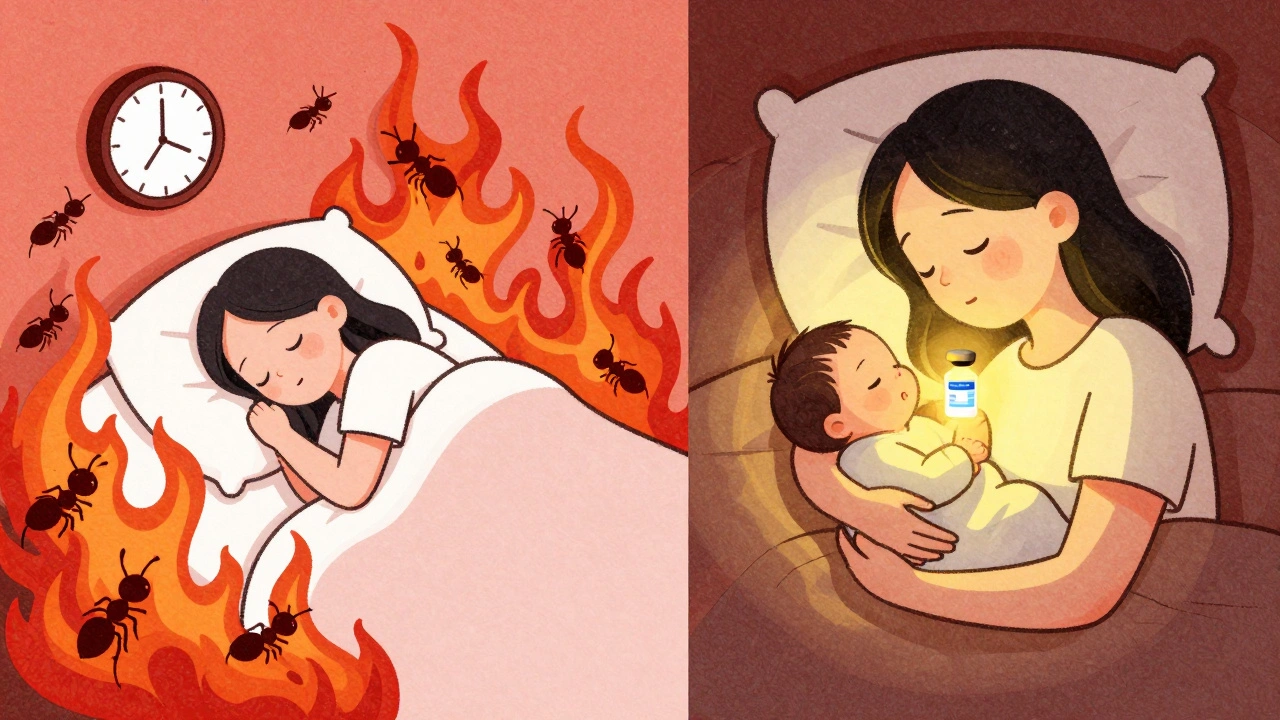
In postpartum forums, 78% of mothers said opioid itching was "severely disruptive" to bonding with their newborn. Over 65% got less than 4 hours of sleep per night because they couldn’t stop scratching. One woman wrote: "I held my baby for 20 minutes, then had to put her down because I was shaking from the itch. I felt like a failure."
In chronic pain communities, 22% of people quit opioids entirely because of the itching. "I’d rather have pain than feel like fire ants are crawling under my skin 24/7," said one user on a support site. That’s not just discomfort-it’s a reason people avoid life-saving pain control.
And doctors still misdiagnose it. About 32% of cases are mistaken for anaphylaxis. That leads to unnecessary epinephrine, IV fluids, and panic. The difference? Anaphylaxis causes swelling, low blood pressure, and breathing trouble. Opioid itching doesn’t. It’s just itch-intense, localized, and confined to the face and upper body.
What Hospitals Are Doing About It
Forward-thinking hospitals now have protocols. The University of Copenhagen created a "Pruritus First Response Algorithm" that tells nurses exactly what to do: assess location and timing, rule out allergy, then give nalbuphine if it’s opioid-induced. They cut rescue medication use by 40%.
The American Society of Anesthesiologists released a toolkit in late 2022 with dosing calculators for naloxone infusions that keep pain relief intact while slashing itching. But adoption is slow. Only 37% of U.S. hospitals have formal guidelines. Academic centers? 68%. That gap is dangerous.
Obstetrics departments see 3.2 times more itching than orthopedic units-not because they’re doing something wrong, but because they use more spinal opioids. That’s why maternity wards need these protocols most.
What’s Coming Next
Research is moving fast. A new drug called CR845 (difelikefalin), a peripherally restricted kappa agonist, showed 65% itch reduction in Phase II trials without any brain side effects. It’s not approved yet, but it’s the future.
By 2028, experts predict 75% of major hospitals will use mu antagonist/kappa agonist combos as standard care. That means nalbuphine and similar drugs will become routine-not just for emergencies, but as part of the opioid order itself.
Meanwhile, some new studies are reviving histamine’s role. A July 2023 paper found serum tryptase (a mast cell marker) rose with itch severity in 68% of morphine patients. That doesn’t mean histamine causes it-it might just be a side effect. But it adds complexity. For now, the strongest evidence still points to neural pathways, not mast cells.
What You Can Do
If you’re scheduled for surgery or labor and know you’ll get opioids:
- Ask: "Will I get itching? What will you give me if I do?"
- Don’t assume Benadryl is the answer. Ask about nalbuphine or low-dose naloxone.
- Know the signs: If the itch is only on your face, chest, or upper back and starts within 30 minutes, it’s likely opioid-induced-not an allergy.
- Report it early. Waiting makes it harder to control.
If you’re a clinician: Stop giving antihistamines as first-line. Start using nalbuphine. Train your team. Document the location and timing. It’s not just about comfort-it’s about keeping patients on the pain relief they need.
Is opioid-induced itching an allergic reaction?
No. True allergic reactions to opioids cause hives, swelling, low blood pressure, or trouble breathing. Opioid-induced itching is usually limited to the face, nose, chest, and upper back, with no rash or systemic symptoms. It’s caused by direct nerve activation, not immune system response. Giving epinephrine for this type of itching is unnecessary and potentially harmful.
Why doesn’t Benadryl work for opioid itching?
Benadryl blocks histamine, but histamine isn’t the main cause of opioid itching. Most of the itch comes from opioids activating nerve fibers in the spinal cord and skin-not from mast cells releasing histamine. Studies show Benadryl only helps 20-30% of patients. It also causes drowsiness, which slows recovery. Nalbuphine or low-dose naloxone work better and faster.
Can I take an antihistamine with nalbuphine?
It’s not necessary, but it won’t hurt. If you have a history of allergies or develop hives along with itching, adding an antihistamine may help with the hives. But for the itch itself, nalbuphine or naloxone is the real solution. Don’t delay those treatments waiting for antihistamines to work.
How long does opioid itching last?
Without treatment, it usually lasts 2 to 6 hours after a single dose, depending on the opioid used. Morphine lasts longer than fentanyl. With treatment, itching drops within 5 to 15 minutes after nalbuphine or naloxone. The key is treating it early-waiting makes it harder to control and increases distress.
Will I always get itching if I use opioids?
No. It depends on the route and dose. Oral opioids cause itching in only 10-30% of people. IV opioids cause it in 30-50%. But spinal or epidural morphine causes it in 70-100%. Your risk goes up with higher doses and direct spinal delivery. Some people are just more sensitive. If you’ve had it before, you’re more likely to get it again.
Is there a long-term solution for chronic opioid users who get itching?
For chronic pain patients, switching to opioids that cause less itching-like oxycodone or hydromorphone-can help. But the most promising option is the new drug CR845 (difelikefalin), which targets peripheral kappa receptors and reduces itching without affecting pain relief. It’s in late-stage trials and may be available within the next few years. Until then, low-dose nalbuphine or naltrexone can be used cautiously under supervision.
bobby chandra
December 3, 2025 AT 19:28Opioid-induced itching isn't just annoying-it's a systemic failure in pain management. We've been treating a neurological glitch like it's a skin rash for decades. The fact that hospitals still hand out Benadryl like it's candy while patients scratch their faces raw? That's not negligence-it's institutional laziness. Nalbuphine should be in every post-op protocol, not tucked away in some pharmacy drawer labeled 'for emergencies only.' We know what works. We just refuse to use it.
Archie singh
December 5, 2025 AT 01:37Chloe Madison
December 5, 2025 AT 13:24As a nurse who's seen this firsthand-this post is a game-changer. I used to feel helpless watching new moms sob from itching after C-sections while we gave them Benadryl that made them too drowsy to hold their babies. Then we started using nalbuphine. Within minutes, they're smiling, bonding, crying happy tears. It's not magic-it's science. And if your hospital doesn't have a pruritus protocol, ask for one. Advocate. You deserve pain relief without the torture.
Vincent Soldja
December 6, 2025 AT 20:37Makenzie Keely
December 6, 2025 AT 23:37Let me just say-this is the most important post I've read in years. 🙌 I'm a postpartum doula, and I’ve held so many women who were too itchy to even look at their newborns. One woman told me, 'I feel like I'm being eaten alive from the inside.' And we gave her Benadryl. Again. I cried after I left. This isn't just about comfort-it's about dignity. We need to train every nurse, every anesthesiologist, every resident. Print this out. Tape it to the wall. Make it mandatory. Nalbuphine isn't a 'nice-to-have'-it's a human right.
Francine Phillips
December 7, 2025 AT 04:23Albert Essel
December 9, 2025 AT 00:18I appreciate how thoroughly this breaks down the science. For years I thought I was just 'sensitive' to opioids. Turns out my nervous system was just doing its job-misfiring. The part about TRPV1 neurons and spinal pathways makes so much sense. I'm glad someone finally put this in plain language. If only more docs read this before writing prescriptions. We need better education, not just better drugs.
Charles Moore
December 10, 2025 AT 09:03Coming from Ireland, I can confirm this is a global blind spot. Our maternity units still default to antihistamines. I once had a colleague insist a patient was having an allergic reaction because she scratched her nose-turns out it was spinal morphine. We nearly activated a code blue. This isn't just a US problem. We need international guidelines. The science is clear. Let's stop pretending it's an allergy. Let's stop making patients suffer because we're too slow to update our habits.
Gavin Boyne
December 10, 2025 AT 16:33Oh, so now we're going to treat a side effect by adding another opioid? Brilliant. Let's just keep layering drugs on top of drugs until we turn every patient into a walking pharmacopeia. Next thing you know, we'll be giving patients nalbuphine to counteract the nalbuphine we gave them to stop the itching from the morphine. Meanwhile, the real issue? We're overprescribing opioids in the first place. Maybe if we stopped treating pain like a vending machine, we wouldn't need this whole circus. But hey, at least the pharmaceutical reps are happy.
Rashmin Patel
December 12, 2025 AT 04:54As someone from India where pain management is still stuck in the 1990s, this is a revelation. We don't even have nalbuphine in most rural hospitals-just morphine and diphenhydramine. I showed this to my med school professor and he laughed and said, 'We don't have the luxury of fancy drugs.' But that's the problem-we think we can't afford the right treatment because we don't understand the cost of the wrong one. Imagine a mother who can't bond with her baby because she's too itchy. That's not a medical cost-that's a societal loss. We need advocacy, not just access. Let's start with training nurses. They're the ones who see this every day.
sagar bhute
December 13, 2025 AT 12:21Cindy Lopez
December 14, 2025 AT 10:53James Kerr
December 14, 2025 AT 15:11My mom had this after her hip surgery. She said it felt like her skin was full of tiny spiders. We asked for Benadryl. Nothing. Then the nurse gave her something else-didn't know the name-but within 10 minutes she was holding my hand and crying because she could finally relax. I didn't know what it was then. Now I do. Thanks for writing this. I'm sharing it with everyone I know. 💙