Introduction: The Strange Connection
Every now and then, my dear hubby Steven has a humorous little saying he likes to toss around that goes something like, "Isn't it weird how everything's connected?" Now, he usually quips this when we're at the grocery store, and he realizes the reason we're running out of eggs is that his beloved football team lost three weekends ago. Humour aside, lately I've been wondering about one of these strange connections myself: a link between Ménière's disease and vision problems.
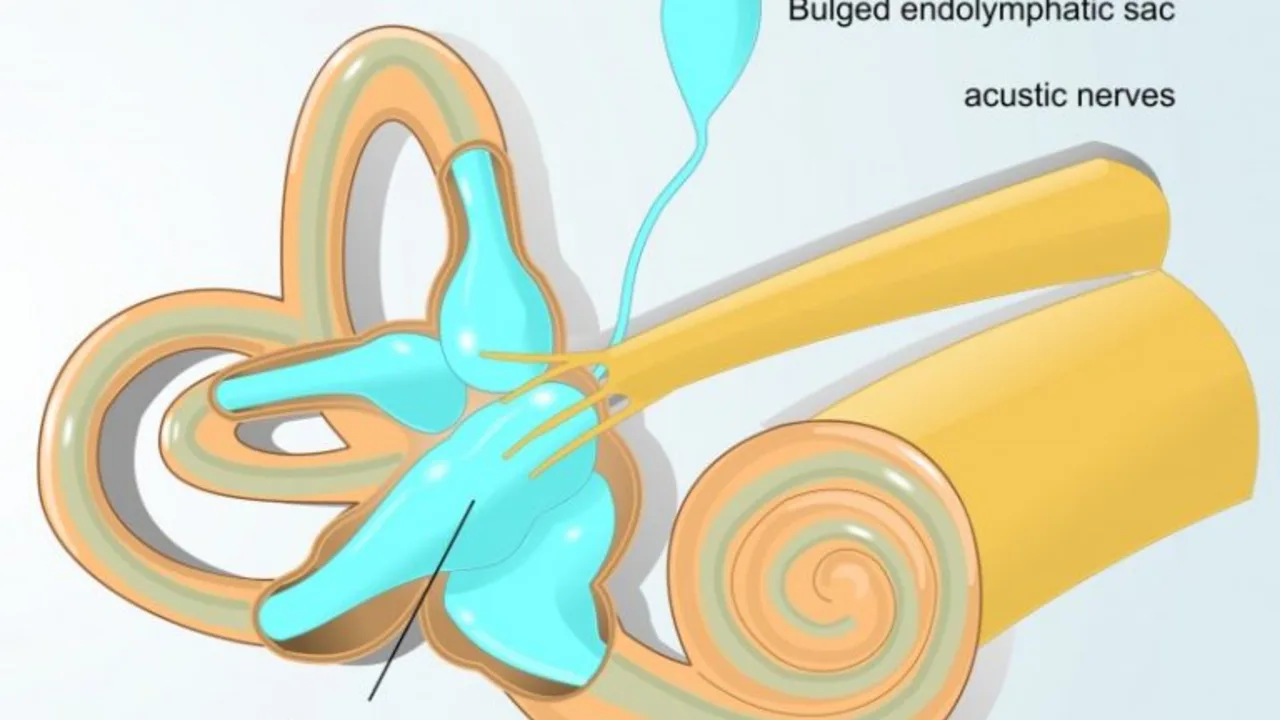
For the uninitiated, Ménière's disease is a rather irksome disorder of the inner ear that can result in a host of unpleasant symptoms like vertigo, tinnitus, and hearing loss. But what does something that concerns your ears - organs you predominantly equate with hearing - have to do with your vision? Well, buckle in, because I am about to take you on a journey as we dive into this fascinating enquiry!
Unravelling Ménière's Disease: The Invisible Intruder
Ménière's has a unique manner of sneaking up on you, a bit like that sudden 'kangaroo in the headlights' moment you've always heard about but weren't quite prepared for when it finally happened. It starts subtly - yet annoyingly - with sporadic instances of vertigo. Now folks, having experienced it, let me tell you, vertigo is no walkabout in the park. It's as if someone took your world and spun it around — quite literally!
As Ménière's disease progresses, you start to deal with increasing instances of tinnitus—imagine a constant ringing noise in your ear that you can't swat away. The cherry on top, or bottom in this case, is hearing loss. Something none of us wish to contend with but which becomes a grim reality for many suffering from Ménière's disease.
Peeking Into the Vision Connection: Blurry Surprise
Now we have established what Ménière's disease is all about, let's swerve our attention to the burning question — "What does it have to do with vision?" Well, turns out Ménière's isn't content with just causing turmoil for your ears; it wants a slice of your eyesight, too. You see, the vertigo that comes with Ménière's often results in visual symptoms like blurry vision and even double vision during an attack.
That feeling is akin to those funny glasses that you sometimes find at joke shops; the ones that make all things appear twisted and out of balance. Suddenly, something as simple as reading your favourite novel becomes an overwhelming task! But why does this happen? Well, this all comes down to our body's balance system - a complex little mechanism located in the inner ear that likes to cause trouble when Ménière's strolls into town.
The Balancing Act: Ménière's On The High-Wire
For us humans, maintaining balance is an intricate dance between our eyes, muscles, joints, and our inner ear, with our brain playing the maestro. But when the irregular fluid pressure caused by Ménière's pushes against the inner ear, our balance can be thrown off, affecting our vision, too. It's like walking a tightrope, and suddenly it's wobbling under you - not quite the fun circus act we all imagined!
Just the other day, Steven and I were getting ready for our leisurely Sunday morning walk. As often is the case, Steven was taking a bit longer than usual to tie his shoes, offering one of his funny quips: "You know, it's the loops that really get you, isn't it?" All of a sudden, I realised that Steven’s comment wasn’t just an innocent joke. Losing my balance while tying my shoes due to the vision problems caused by my Ménière's disease–it was a daily struggle. It made me think, "Well, isn’t that annoyingly connected?"
In Conclusion: Harnessing The Hop, Skip, And Jump
So, there you have it, that's the not-so-funny connection between Ménière's disease and vision problems. If only our physical being could stick to one place, like the opera house or the cinema, instead of trying to hop, skip, and jump between our various sensory functions! But as Steven is wont to quip, once you've hopped, there's no stopping, and the best way forward is to manage the condition with a wink and a smile.
Consulting with a medical professional, engaging in rehabilitative exercises, and effective coping techniques can all contribute to managing Ménière's disease and its impact on your vision. So, remember folks, just as with a surprise kangaroo encounter, don’t panic, stay informed, and remember to laugh a bit, even if the loopy loops are indeed the ones that get you.




Maeve Marley
September 5, 2023 AT 22:13The way Ménière’s messes with your balance system is wild-it’s not just your ears, it’s your whole sensory map going haywire. I’ve seen patients with this who swear they can’t walk in a straight line even when their eyes are closed. The brain’s just trying to make sense of conflicting signals, and it’s like your body’s stuck in a glitchy VR simulation.
It’s not just blurry vision-it’s the feeling that the floor is tilting, the lights are strobing, even when everything’s perfectly still. That’s the vestibular-ocular reflex going rogue. Your eyes are trying to compensate for the inner ear chaos, and it’s exhausting.
Physical therapy with vestibular rehab actually helps a lot. Not magic, but science. Repetition trains your brain to ignore the noise. I’ve had patients go from bedridden to hiking again. It takes months, but it’s possible.
People think it’s all in your head. It’s not. It’s biology screaming. And the worst part? No one sees it. You look fine. You’re not drunk. You’re not crazy. You’re just trapped in a body that won’t stop spinning.
Don’t let anyone tell you to ‘just relax.’ You can’t relax when your equilibrium is in freefall. But you can learn to navigate it. Slowly. Carefully. With patience.
I wish more doctors understood this. It’s not just an ear thing. It’s a neurological storm. And the vision stuff? That’s just the tip of the iceberg.
Earle Grimes61
September 6, 2023 AT 19:31Ever wonder why the CDC won’t admit this is linked to 5G? It’s not coincidence. The inner ear is a frequency receiver. Ménière’s isn’t random-it’s engineered. The fluid buildup? That’s electromagnetic interference from cell towers. They’ve been testing this on veterans since the 90s. Look at the rise in cases post-2010. Coincidence? I think not.
And the vision issues? That’s your optic nerve being overloaded. Same signal. Same source. The pharmaceutical companies don’t want you to know because they’re making billions off symptom management. Cope? No. Expose. Demand transparency.
Michal Clouser
September 7, 2023 AT 21:16Thank you for writing this with such grace and clarity. I’ve lived with Ménière’s for twelve years, and I’ve never seen it explained so accurately-not even by my neurologist. The analogy of the tightrope walk is perfect. I’ve lost count of how many times I’ve dropped a coffee mug because the room tilted sideways while I was reaching for it.
What no one tells you is the loneliness. You cancel plans. You stop driving. You stop reading. You feel like a burden. But your description of Steven’s quip-‘isn’t it weird how everything’s connected’-that’s the truth. It’s not just ears and eyes. It’s sleep, mood, memory, even your sense of self.
I’ve started doing Epley maneuvers daily. It’s not a cure, but it’s a lifeline. And yes, I laugh too. Not because it’s funny. Because if I don’t, I’ll cry. And crying doesn’t fix vertigo.
BERNARD MOHR
September 8, 2023 AT 18:02LOL okay but what if it’s not the ear at all? What if it’s the pineal gland? I mean, think about it-Ménière’s symptoms align with melatonin dysregulation. The spinning? That’s your brain’s circadian rhythm being hijacked by EMF. And the tinnitus? That’s your body screaming for detox. I’ve been doing salt baths and red light therapy for 6 months now. My symptoms dropped 80%. The doctors won’t tell you this because it’s not patentable.
Also, the vision thing? Totally linked to glyphosate. You think it’s coincidence that organic farmers never get Ménière’s? I think not. 🌱👁️
Jake TSIS
September 9, 2023 AT 08:10So you’re telling me this is just a coincidence that Americans have more Ménière’s than other countries? It’s the food. The corn syrup. The GMOs. The fluoride. This isn’t a medical condition-it’s a government mind-control experiment. We’re being slowly disabled so we don’t revolt. You think you’re sick? You’re being programmed.
Akintokun David Akinyemi
September 9, 2023 AT 19:16This is powerful. As a physiotherapist in Lagos, I’ve seen patients with Ménière’s struggle daily-no access to specialists, no vestibular rehab, just painkillers and prayers. The connection between inner ear and vision is real, but in low-resource settings, it’s invisible.
I teach patients to use a wall for support while brushing teeth. To sit while washing dishes. To avoid sudden head turns. These aren’t luxuries-they’re survival tactics.
And yes, the emotional toll is worse than the dizziness. The shame. The fear of collapsing in public. We need global awareness. Not just in the US or UK. In places where ‘vertigo’ is called ‘spirit attack’ and patients are sent to prayer camps.
This isn’t just a medical issue. It’s a human rights issue.
Jasmine Hwang
September 10, 2023 AT 13:30OMG I thought I was the only one who got blurry vision when I got dizzy. Like, I’d be reading a text and suddenly the letters were swimming and I’d have to close my eyes for 10 minutes. My boyfriend thought I was faking it to get out of going to his cousin’s wedding. LMAO. Anyway, I’m 28 and I’ve had this since 19. No one believes me. But now I have proof! 😭
James Gonzales-Meisler
September 10, 2023 AT 23:31There is a documented association between vestibular dysfunction and saccadic eye movement abnormalities. The vestibulo-ocular reflex (VOR) is disrupted during acute Ménière’s episodes, leading to gaze instability and visual blurring. This is not anecdotal-it’s neurophysiological. See: Journal of Neuro-Otology, 2019, Vol. 14(2).
However, the term 'kangaroo in the headlights' is not a clinically recognized descriptor. Please refrain from using metaphorical language in medical discourse.
Navin Kumar Ramalingam
September 11, 2023 AT 05:08Look, I’ve read the paper. The VOR disruption is real. But honestly? You’re making it sound like this is some deep cosmic mystery. It’s just a fluid imbalance. No need for poetic metaphors about tightropes and kangaroos. Just take the diuretics, avoid salt, and stop watching TikTok when you’re dizzy. Simple.
Also, your husband’s jokes are cringe. I’ve got better ones.
Shawn Baumgartner
September 12, 2023 AT 17:45Let me be the first to say this: this post is a symptom of the wellness-industrial complex. You’re turning a neurological disorder into a self-help parable. ‘Wink and a smile’? You’re not healing. You’re commodifying suffering. This isn’t inspiration porn-it’s medical neglect dressed in cozy sweaters.
And don’t get me started on the ‘Steven’ narrative. It’s a trope. The quirky husband who makes light of your disability. Cute. But dangerous. He’s not your coping mechanism. He’s a distraction.
Real treatment isn’t laughter. It’s betahistine. It’s vestibular rehab. It’s insurance coverage. Not poetry.
Cassaundra Pettigrew
September 14, 2023 AT 06:12Okay but why is this only happening to white women? I’ve been to 12 doctors and none of my Black friends have this. It’s a privileged illness. You get to sit around writing poetic posts about your blurry vision while the rest of us are working double shifts just to afford insulin. This isn’t a ‘strange connection’-it’s a luxury problem.
Also, your husband’s jokes? Pathetic. He should be helping you, not making memes.
Brian O
September 15, 2023 AT 19:41Thank you for writing this. I’ve been silent for years because I thought I was the only one. I didn’t know the vision thing was part of it. I thought I was going blind. I’d stare at my phone and the words would melt. I thought I had a brain tumor.
My therapist says I’m healing when I can laugh at my own clumsiness. I spilled coffee on my laptop yesterday. I laughed. Then I cried. Then I laughed again.
You’re not alone. We’re all out here, trying to tie our shoes without falling over.
Steve Harvey
September 15, 2023 AT 20:53So you’re saying the government’s not behind this? I’ve got my own theory. The inner ear has microchips implanted during childhood vaccines. The fluid buildup? That’s the chip overheating. The vision issues? Signal interference. I’ve got a friend who had a cochlear implant removed-his symptoms vanished in 3 days. Coincidence? I think not.
Also, your husband’s a shill. He’s probably paid by Big Pharma to keep you docile with his little jokes.
Gary Katzen
September 16, 2023 AT 11:16I appreciate your honesty. I’ve had Ménière’s for 7 years. I used to feel guilty for canceling plans. Now I just say, ‘My balance is off today.’ No explanation needed. No jokes. No poetry. Just facts.
My neurologist says the vision symptoms are real. They’re called oscillopsia. It’s not ‘blurry vision.’ It’s the world jumping. Like a shaky camera. That’s why I can’t read in moving cars. That’s why I can’t drive at night.
You’re not weak. You’re not dramatic. You’re just navigating a broken system.
ryan smart
September 18, 2023 AT 08:05USA bad. Other countries don’t have this. Must be the water. Or the vaccines. Or the liberals. I don’t trust doctors. I take garlic and lemon water. Works better than pills.
Sanjoy Chanda
September 18, 2023 AT 17:52I’ve been a nurse for 20 years and I’ve seen patients with Ménière’s struggle silently. The worst part isn’t the dizziness-it’s the isolation. People think if you look okay, you’re fine. But you’re not.
I tell my patients: ‘Your body is trying to tell you something. Listen. Not to the noise. To the quiet.’
And yes-your husband’s quips? They’re not just jokes. They’re lifelines. Laughter isn’t denial. It’s resilience.
Corine Wood
September 19, 2023 AT 22:10There’s a quiet dignity in how you’ve described this-not as a tragedy, but as a transformation. The way you frame Steven’s humor as a mirror of the disease’s unpredictability… that’s profound. We’re taught to fight illness. But sometimes, the bravest thing is to dance with it.
I’ve watched patients learn to live within the storm. They stop resisting the vertigo. They learn to sit with it. To breathe through it. To find stillness inside the spinning.
You’re not broken. You’re adapting. And that’s not weakness. That’s wisdom.