
Genotype 3 Chronic Hepatitis C isn't just another medical term; it's a real challenge for those diagnosed with it. This form of the virus is known to be more aggressive than others, often leading to faster liver damage. Now, while there are effective treatments out there, they can come with their own set of hurdles, especially side effects that some find hard to bear.
Here's where herbal supplements step in. Imagine having a natural ally that might ease some of your symptoms or even boost your liver's resilience. Interested? Well, before you dive headfirst into the herbal world, it's crucial to know which ones might actually help you. Milk thistle, for instance, is often touted for liver health. But does it really help, or is it just a bunch of hearsay?
We'll break down the science behind these herbs, how they might work in harmony with traditional meds, and what you should watch out for. Because let's face it, not everything natural is automatically safe. Stick around as we explore how to make these potent plants a beneficial part of your health journey.
- Understanding Genotype 3 Hepatitis C
- Traditional Treatments and Their Challenges
- Herbal Supplements: An Overview
- Benefits and Risks of Popular Herbs
- Tips for Integrating Herbal Remedies Safely
Understanding Genotype 3 Hepatitis C
So, what’s the deal with Genotype 3 Hepatitis C? Well, it's one of the several types of the hepatitis C virus, each varying a bit in how they behave and respond to treatment. Genotype 3 stands out because it can be more aggressive in damaging the liver and might come with its own set of challenges compared to other genotypes.
One thing most folks don't realize is that this genotype is associated with a faster rate of liver scarring, leading to cirrhosis. Plus, some research suggests that those with Genotype 3 might have a slightly harder time responding to certain antiviral treatments compared to others, like Genotype 1.
Prevalence and Global Impact
This genotype isn’t equally spread across the globe. It’s actually more common in countries like India and Southeast Asia. In fact, it's estimated that about 30% of people with hepatitis C in some parts of the world have Genotype 3. Meanwhile, in places like North America, it's less common.
Challenges in Treatment
While there are medicines available that can significantly reduce the virus in the body and improve liver function, these treatments aren't always a walk in the park. Some folks experience side effects like fatigue and nausea, which can be hard to manage, and sadly, not everyone responds to treatment in the same way.
| Region | Prevalence of Genotype 3 |
|---|---|
| India | 30% |
| Southeast Asia | 25% |
| North America | 10% |
Knowing this, it makes sense why some turn to alternative options like herbal supplements to support their treatment. But remember, while herbs can offer support, they’re not a substitute for the real deal. Always have that conversation with your doc before adding anything new to your treatment plan.
Traditional Treatments and Their Challenges
When it comes to treating genotype 3 hepatitis C, traditional medical options have come a long way but aren't without their hurdles. One of the primary treatments involves antiviral drugs, often grouped under direct-acting antivirals (DAAs). These medications specifically target the hepatitis C virus, working to block its replication inside the body.
Direct-Acting Antivirals: The Go-To Solution
DAAs have revolutionized treatment, offering a success cure rate over 90%. However, side effects are a reality for many. Common issues include fatigue and nausea, which can seriously affect a person’s day-to-day life, making it difficult to maintain a normal routine.
Challenges in Accessibility and Adherence
Cost is another tough nut to crack. Not everyone can afford these treatments. Without insurance, the price tag on DAAs is high, leaving some patients searching for alternatives. Even for those who have access, sticking to the treatment regimen is key, and that's sometimes another struggle. Missing doses can lead to treatment failure, which nobody wants.
Interferon and Ribavirin: The Old Guard
Before DAAs, treatments like interferon and ribavirin were more common. These drugs are notorious for their harsh side effects. Imagine dealing with flu-like symptoms, depression, and even anemia while trying to fight off the virus.
The evolution of treatments is ongoing, but the challenges in affordability, adherence, and managing side effects remain critical concerns. Understanding these helps highlight why many are curious about herbal supplements, hoping for relief or additional support in managing their chronic hepatitis C.
Herbal Supplements: An Overview
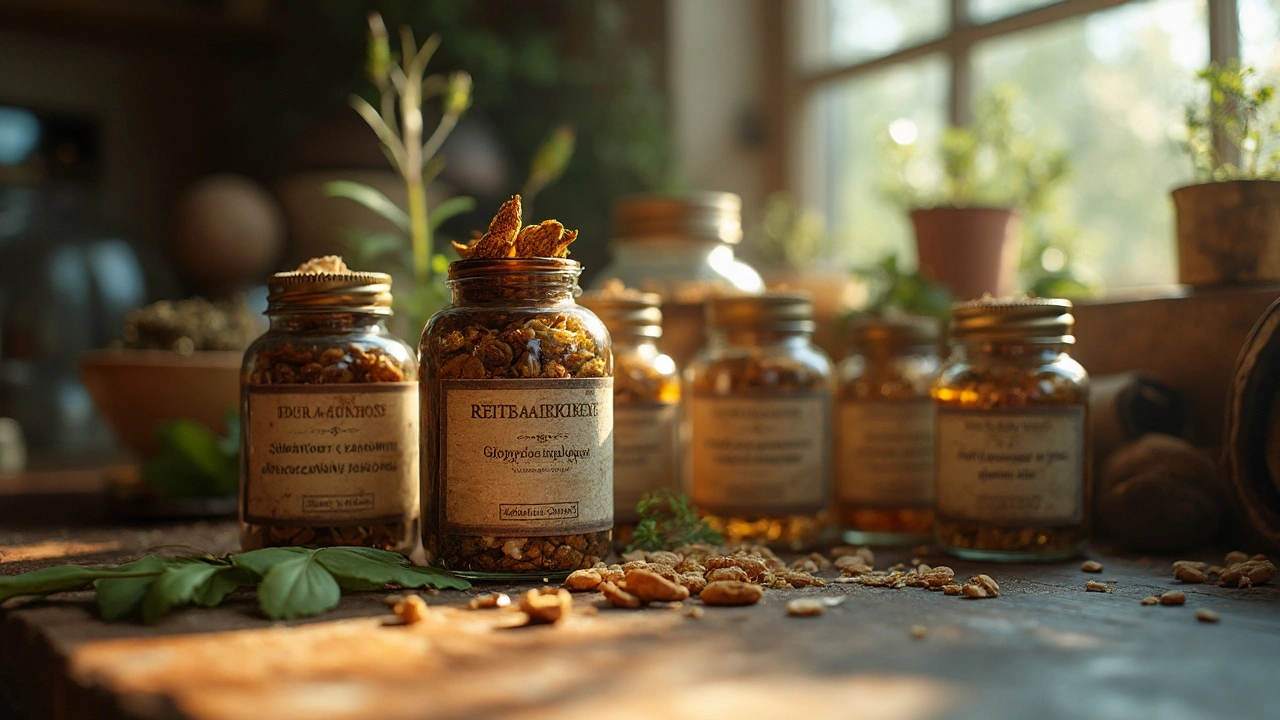
When tackling genotype 3 hepatitis C, some folks start looking beyond the usual meds and set their sights on herbal supplements. Sounds intriguing, right? Well, these natural remedies have been stirring up interest, mainly because they might offer some extra relief without the side effects that often tag along with standard treatments.
First up, let's talk milk thistle. This one's practically a celebrity in liver health! Known scientifically as Silybum marianum, it's often praised for potentially guarding liver cells against toxins. People have used it for ages, hoping to enhance liver function. But remember, while some studies suggest benefits, it's not a miracle cure.
What's the Deal with Turmeric?
Another herb stepping into the spotlight is turmeric. Its active ingredient, curcumin, boasts anti-inflammatory properties that might help reduce liver inflammation. A few studies show it might be beneficial for general liver health, but more research is definitely needed.
Exploring Ayurvedic Herbs
And then there's the Ayurvedic angle. Herbs like guduchi and amla have their fans too. They're believed to promote liver health and improve overall well-being. Though traditional in Eastern medicine, Western science is still catching up to fully validate these effects.
- Milk Thistle: Might protect liver cells.
- Turmeric: Known for anti-inflammatory properties.
- Guduchi & Amla: Promoted in Ayurvedic medicine for liver health.
But hold on—before you raid the health store, it's crucial to talk to your doctor. Just because something's natural doesn't mean it won't mess with your meds or health. A medical pro can help you choose what's safest and most effective for your situation. So, while herbal supplements can be a helpful addition, they should never be the whole story.
Benefits and Risks of Popular Herbs
When it comes to managing genotype 3 chronic hepatitis C, herbal supplements can be both a friend and a foe. In this section, we're zeroing in on three of the most talked-about herbs: milk thistle, licorice root, and ginger. Each of these has unique properties that could be beneficial or, if misused, risky.
Milk Thistle: The Liver's Friend?
Milk thistle is like the celebrity in the herbal supplement world. It's often mentioned for its liver-protecting properties, mainly due to a compound called silymarin. Many folks with liver issues swear by it because it may help reduce liver inflammation and damage.
- Benefits: Studies suggest it can help improve liver function tests, which is great news for someone battling hepatitis C.
- Risks: Side effects are generally mild but include stomach upset and possible allergic reactions. So, it's not a one-size-fits-all solution.
Licorice Root: Sweet, But Safe?
Licorice root isn’t just good for flavoring candy. In some traditional medicines, it's used for its anti-inflammatory benefits. For those dealing with chronic hepatitis C, some believe it could be a helpful ally.
- Benefits: It might help reduce liver inflammation and improve overall liver health.
- Risks: In high doses, it can lead to problems like high blood pressure and a drop in potassium levels. Yikes! Consultation with a doctor is a must.
Ginger: More Than a Spice
Ginger's reputation as a digestive aid is well-known, but what's less talked about is how its anti-inflammatory properties might support liver health.
- Benefits: It might help reduce nausea related to hepatitis C treatment and support overall digestion.
- Risks: For most, it's safe, but it can cause heartburn or interact with certain medications. Always worth double-checking with your healthcare provider.
But here's the kicker: Though these herbs can be beneficial, relying solely on them without combining with prescribed treatments isn’t advised. A study once showed that combining milk thistle with conventional meds did improve some patients' liver enzyme levels.
Genotype 3 hepatitis C requires a multi-faceted approach. Herbs can add value, but they're just one piece of the puzzle, and knowing the pros and cons helps ensure they become a valuable part of your strategy.

Tips for Integrating Herbal Remedies Safely
So, you're intrigued by herbal supplements and ready to give them a shot alongside your treatment for Genotype 3 Hepatitis C. That's awesome! But, let's make sure you're doing it safely. Here are some practical tips to get you started without any hiccups.
1. Consult with Your Doctor
Before you incorporate any new supplement, especially one targeting liver health, have a chat with your healthcare provider. They're the experts who know your medical history and can identify any potential interactions with your current treatment.
2. Research and Choose Wisely
Not all herbs are created equal. Make sure to choose reputable brands that provide clear information about their sourcing and quality. Look for certifications or seals that indicate a trusted third-party has tested the product.
3. Take it Slow
When starting a new supplement, less is more. Begin with a smaller dose, see how your body responds, and gradually increase if needed. This approach helps monitor any adverse effects that may arise.
4. Be Aware of Side Effects
Even though herbal remedies are natural, they can still cause side effects or allergic reactions. Keep an eye on how you're feeling and report any unusual symptoms to your doctor. Milk thistle, for instance, is generally safe, but some people might experience mild digestive issues.
5. Keep Track
Monitor the changes in your health by keeping a journal. Document which supplements you're taking, in what dosages, and any effects you notice over time. This record will be invaluable during follow-up appointments with your doctor.
6. Complement, Don't Replace
Herbal remedies should complement, not replace, the treatment your doctor prescribes for chronic Hepatitis C. They can be an extra layer of support, but they're not a substitute for standard medical care.
Remember, the goal is to support your journey to better health, not compromise it. With these tips, you'll be well-equipped to harness the potential of herbal supplements safely.




Akintokun David Akinyemi
February 14, 2025 AT 05:59Milk thistle ain't magic, but silymarin's got real hepatoprotective mechanisms - Nrf2 pathway activation, glutathione upregulation, and inhibition of TNF-alpha-mediated apoptosis. I've seen patients on DAAs with ALT/AST drops after 8 weeks of standardized extract (70-80% silymarin, 200mg TID). Not a cure, but a solid adjuvant.
Just don't skip the viral load monitoring. Herbal hype without lab tracking is just placebo with extra steps. Also, watch for CYP3A4 interactions - some DAAs are metabolized through that. Talk to your hepatologist before stacking.
And yeah, Genotype 3 is nastier - higher steatosis rates, faster fibrosis progression. That’s why combo approaches matter. You're not choosing between pharma and herbs. You're optimizing the ecosystem.
Jasmine Hwang
February 15, 2025 AT 23:52herbal stuff is just expensive tea for people who dont wanna take real medicine 😭
Maeve Marley
February 17, 2025 AT 13:20Look, I get why people turn to herbs - the side effects of DAAs are brutal, and not everyone has insurance or the mental bandwidth to deal with 12 weeks of nausea and brain fog.
I’ve worked with folks in rural Ireland who travel 3 hours just to get a script, and then they’re stuck choosing between rent and meds. So when they find something like milk thistle that helps them sleep better or reduces that constant liver ache? It’s not pseudoscience - it’s survival.
But yeah, you gotta be smart. I always tell my clients: track your labs, use third-party tested brands (NSF or USP certified), and never go full alt-med and ditch the antivirals. Herbs are the spice, not the main course. And ginger? Honestly, if it cuts the nausea, go for it. Just don’t chug 100g of raw root and wonder why your stomach’s on fire.
James Gonzales-Meisler
February 18, 2025 AT 10:04"Herbal supplements step in" - this entire article is riddled with vague, unsupported assertions. "May help," "some studies suggest," "believed to promote" - these are not evidence-based claims. The only herb with even marginal clinical relevance is milk thistle, and even its efficacy is inconsistent across RCTs. The rest is anecdotal fluff wrapped in Ayurvedic branding.
Additionally, the article fails to mention that silymarin has poor bioavailability without phosphatidylcholine complexes - yet no product labels disclose this. Readers are being misled into thinking all "milk thistle" supplements are equal. That’s irresponsible.
And why is turmeric mentioned without noting that curcumin is virtually unabsorbable without piperine? And piperine inhibits CYP3A4 - which directly interferes with sofosbuvir metabolism. This isn’t helpful. It’s dangerous.
Navin Kumar Ramalingam
February 18, 2025 AT 15:12Look, everyone’s running to milk thistle like it’s the holy grail. But if you’re from India, you know amla and guduchi have been used for centuries. You think Western science is the only valid framework? That’s colonial thinking.
My uncle had genotype 3, took DAAs for 12 weeks, still had elevated ALT. Then he started amla juice + turmeric paste - 3 months later, his fibroscan improved. Coincidence? Maybe. But why do you dismiss tradition just because it doesn’t fit your RCT checklist?
Also, DAAs cost $80k in the US. In Kerala, people use herbs because they have to. That’s not ignorance - that’s adaptation.
Shawn Baumgartner
February 20, 2025 AT 08:51Let’s be brutally honest: this article is a glorified affiliate marketing post disguised as medical advice.
You mention milk thistle, turmeric, licorice - all of which have been studied in vitro or in 10-patient pilot trials - and then act like they’re on par with glecaprevir/pibrentasvir. That’s not just misleading, it’s criminal. People with genotype 3 have a 30% higher risk of HCC progression. You’re telling them to sip tea instead of taking a 95% cure rate regimen?
And the "tips for safe integration" section? Pathetic. "Talk to your doctor" - yeah, sure, but what if your doctor doesn’t know anything about herbs? What if they’re just a pill-pusher with zero training in phytotherapy? You’re creating a false sense of safety.
Herbs are not "supportive." They’re unregulated, inconsistent, and potentially hepatotoxic if contaminated or dosed wrong. And you know what? The FDA doesn’t even regulate them like drugs. So when someone ends up with acute liver failure because they mixed licorice root with ribavirin? Who’s liable? You? The supplement brand? The placebo effect?
This isn’t wellness. This is negligence wrapped in a sage-scented bow.