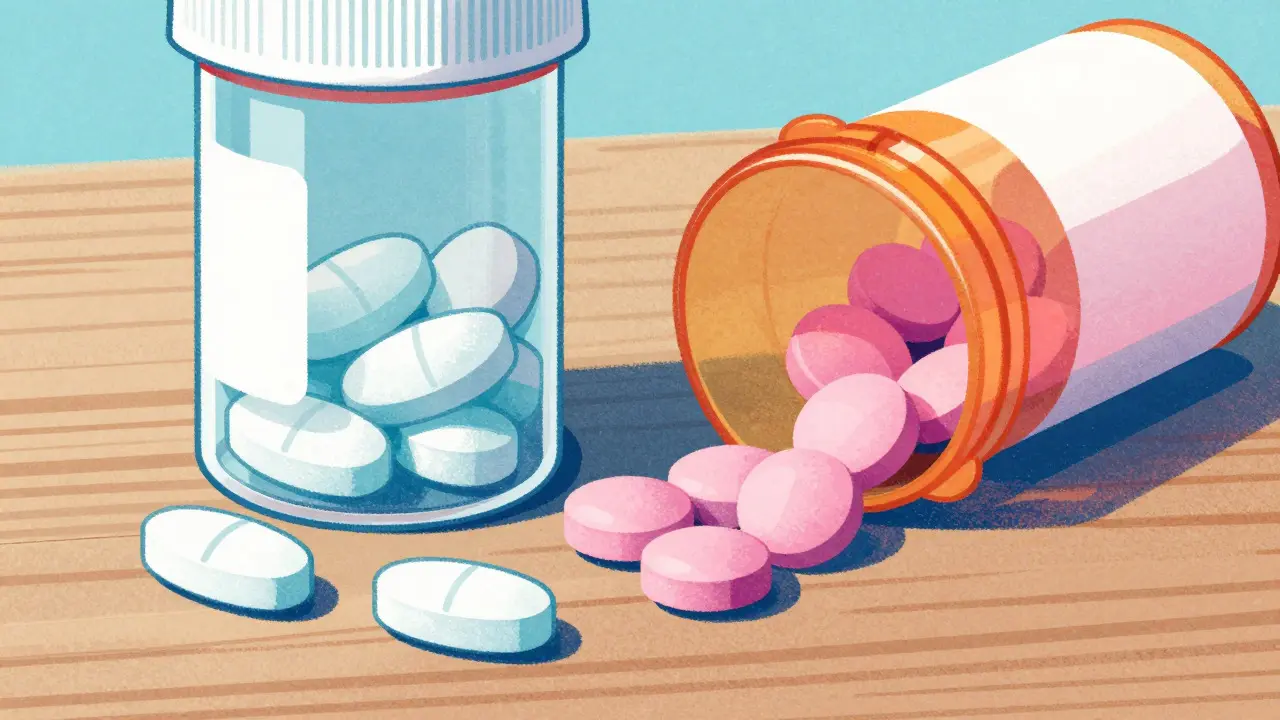
Have you ever opened a new prescription bottle and felt a knot in your stomach because the pills looked completely different from what you were used to? Maybe they’re a different color, or smaller, or shaped like a diamond instead of a circle. It’s a common panic. You might wonder if the pharmacy made a mistake, or worse, if this new version will work as well as the old one.
The short answer is usually yes, it works just fine. But understanding why pills look different-and how to trust the manufacturer-is key to sticking with your treatment plan without unnecessary anxiety. This guide breaks down exactly how generic drugs are regulated, how to identify them, and when you actually need to worry about switching manufacturers.
Why Do Generic Pills Look So Different?
It helps to understand that Generic Drugs are medications that contain the same active ingredients as brand-name drugs but are sold under different names and often at lower prices. The law requires these generics to be therapeutically equivalent to their brand-name counterparts. This means they must have the same active ingredient, strength, dosage form (like a tablet or capsule), and route of administration (like oral ingestion).
However, the law does not require them to look identical. In fact, trademark laws often prevent generic manufacturers from making their pills look exactly like the brand-name version. If a generic pill looked exactly like the brand, it could confuse patients into thinking they received the expensive brand product. As a result, manufacturers change the inactive ingredients-the binders, fillers, and dyes that hold the pill together. These changes lead to variations in color, shape, size, and even taste.
According to a 2020 study published in Nature Scientific Reports, color differences occur in 78% of cases, shape variations in 65%, and size differences in 42%. So, if your blood pressure medication went from a white oval to a pink round tablet, that’s normal. It’s the packaging of the medicine, not the medicine itself, that has changed.
Understanding Bioequivalence: The Science Behind the Swap
You might ask, "If the inactive ingredients are different, how do we know it works the same way?" The answer lies in a concept called Bioequivalence, which is a measure of the rate and extent to which the active ingredient becomes available at the site of drug action.
To get approved by the U.S. Food and Drug Administration (FDA), a generic manufacturer must prove that their drug performs similarly to the brand-name drug in the body. They do this through rigorous studies involving healthy volunteers. The FDA requires that the generic’s absorption profile falls within a specific statistical range-typically an 80-125% confidence interval compared to the brand.
A landmark FDA study analyzing over 2,000 bioequivalence studies found that the average difference in absorption between generic and brand-name drugs was only 3.5%. To put that in perspective, the variation between two different batches of the *same* brand-name drug can sometimes be larger than the difference between the brand and its generic counterpart. For most people, this tiny margin of difference is clinically irrelevant.
| Feature | Brand-Name Drug | Generic Drug |
|---|---|---|
| Active Ingredient | Specific chemical compound | Identical chemical compound |
| Inactive Ingredients | Proprietary mix (binders, dyes) | Different mix (often cheaper/safer alternatives) |
| Pill Appearance | Unique shape/color for branding | Varies by manufacturer; cannot mimic brand |
| Bioequivalence Standard | N/A (Reference Listed Drug) | Must match brand within 80-125% range |
| Cost | High (covers R&D and marketing) | Low (no initial R&D costs required) |

How to Identify Your Medication Safely
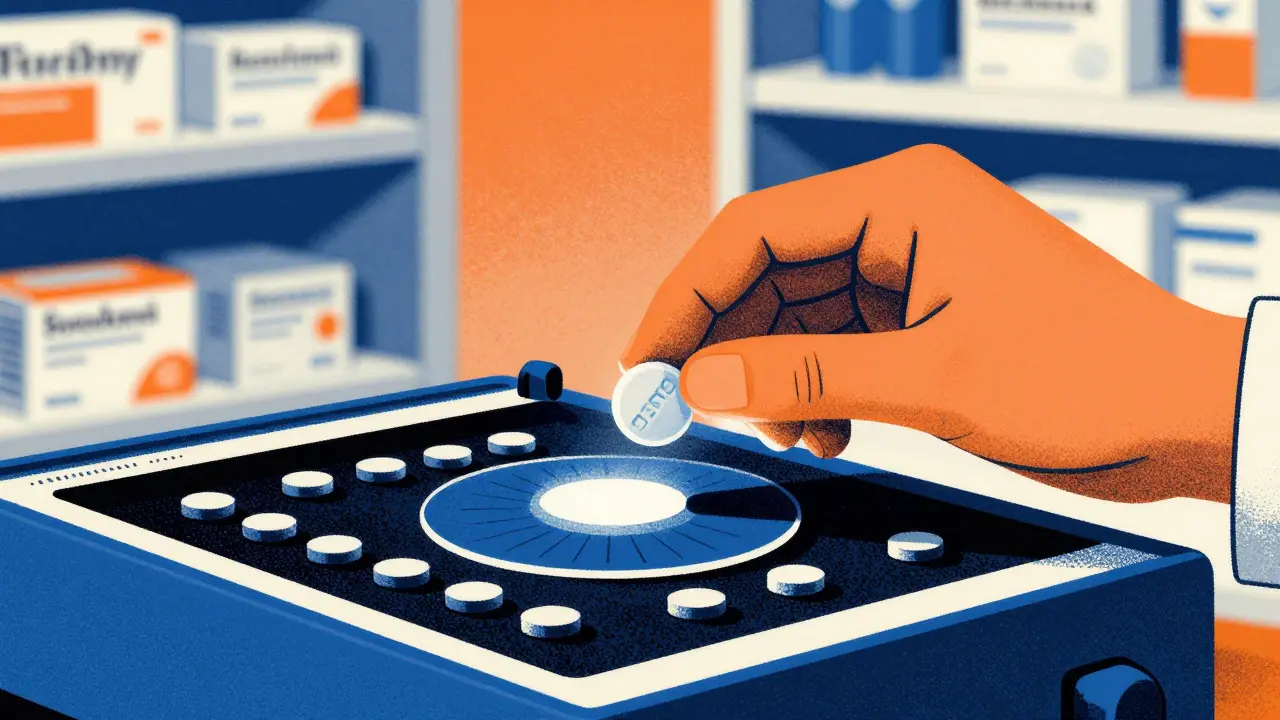
Even though appearances change, every prescription pill in the United States must have a unique identifier. This is mandated by the Federal Food, Drug, and Cosmetic Act. You will find letters, numbers, or symbols imprinted on one or both sides of the tablet. These imprints act like a fingerprint for the drug.
If you are unsure about a pill, don’t guess. Use the resources available to you:
- Pill Imprint Checkers: Websites and apps like the Drugs.com Pill Identifier allow you to search by shape, color, and imprint code. With over 12 million monthly users, these tools are designed specifically to help patients verify their medications.
- The FDA Orange Book: Officially known as the Approved Drug Products with Therapeutic Equivalence Evaluations, this database lists all approved generic drugs. Pharmacists use it daily to determine if a generic is interchangeable with a brand.
- National Drug Code (NDC): Every box and bottle has an NDC number. This 10-digit code identifies the labeler, product, and package size. If you call your pharmacist and provide this number, they can tell you exactly which manufacturer produced your current supply.
Keep in mind that over-the-counter supplements do not always follow these strict imprint rules, so identification is trickier for vitamins and herbal remedies. Always keep your original packaging for non-prescription items.
Evaluating Generic Manufacturers
Not all generic manufacturers are created equal in terms of market presence, though they all meet the same FDA standards. The industry is dominated by a few large players. Teva Pharmaceutical Industries, headquartered in Israel, is the world’s largest generic manufacturer. Other major companies include Viatris (formed from the merger of Mylan and Pfizer’s upjohn unit) and Sandoz, a spin-off from Novartis.
When comparing manufacturers, consider these factors:
- Market Share and Stability: Large manufacturers like Teva or Viatris have robust supply chains. Smaller manufacturers might be more susceptible to production delays or shortages. In 2023, the FDA reported nearly 300 active drug shortages, many involving generics from smaller producers.
- Complex Generics: Some drugs are harder to make, such as inhalers, injectables, or extended-release tablets. Companies specializing in these "complex generics," like Hikma Pharmaceuticals, invest heavily in specific technology. If you take a complex medication, the manufacturer’s expertise matters more.
- Quality Control Records: While rare, manufacturing defects happen. The FDA inspects facilities regularly. You can check the FDA’s establishment registration data to see if a specific facility has had recent warning letters or compliance issues, though this information is technical and best interpreted by a pharmacist.
For most standard medications, the specific manufacturer doesn’t impact efficacy. However, if you notice a consistent issue with one brand of generic (like stomach upset due to a specific filler), you can ask your doctor to write "Dispense As Written" (DAW) on the prescription. This prevents the pharmacist from substituting a different manufacturer’s version.
When Should You Worry About Switching?
For the vast majority of conditions-high blood pressure, cholesterol, diabetes, and infections-switching between generic manufacturers is safe and effective. A comprehensive review by the European Medicines Agency analyzed nearly 10 million patients and found no clinically significant differences in effectiveness for cardiovascular medications.
However, there is a small category of drugs known as Narrow Therapeutic Index (NTI) drugs. These medications have a very small window between a therapeutic dose and a toxic dose. Examples include warfarin (blood thinner), levothyroxine (thyroid hormone), and certain anti-seizure medications like phenytoin.
For NTI drugs, the FDA tightens the bioequivalence range to 90-111%. Even so, minor variations in absorption can matter for sensitive individuals. The American Medical Association recommends maintaining the same generic manufacturer for NTI drugs unless medically necessary. If you are on one of these medications and your pharmacy switches suppliers, monitor your symptoms closely and consult your doctor. Blood tests may be needed to ensure your levels remain stable.
Practical Steps for Patients
Don’t let pill appearance anxiety stop you from taking your medication. Here is a simple checklist to manage generic substitutions smoothly:
- Check the Label: When you pick up a new prescription, compare the name on the bottle to your previous one. The generic name (e.g., Lisinopril) should be the same, even if the brand name changes.
- Ask Questions: If the pill looks drastically different, ask your pharmacist. They can explain why the change occurred and confirm it is the correct medication.
- Use One Pharmacy: Sticking to a single pharmacy increases the likelihood that they will order from the same manufacturer, reducing unexpected appearance changes.
- Report Side Effects: If you feel different after a switch, note it. Sometimes, a specific inactive ingredient causes mild allergies or digestive issues. Your doctor can prescribe a different generic brand that uses alternative fillers.
Remember, generics account for 90% of prescriptions in the U.S. while costing significantly less. By understanding how they work and how to identify them, you can save money without sacrificing health outcomes.
Is it safe to switch between different generic manufacturers?
Yes, for most medications, it is safe. All generic manufacturers must meet strict FDA bioequivalence standards, ensuring the drug works the same way in your body. However, for Narrow Therapeutic Index (NTI) drugs like thyroid medication or blood thinners, consistency with one manufacturer is preferred to avoid minor fluctuations in drug levels.
Why does my generic pill look different from last month's?
Pharmacies often switch suppliers based on price, availability, or contract changes. Since trademark laws prevent generics from looking like the brand-name drug, each manufacturer uses different colors, shapes, and sizes. The active ingredient remains the same, but the inactive fillers and dyes differ, changing the appearance.
How can I identify a generic pill if I lose the bottle?
Look for the imprint code (letters or numbers) on the pill. Use a reliable online tool like the Drugs.com Pill Identifier or the FDA’s National Drug Code directory. Enter the shape, color, and imprint to identify the drug. Note that this method works best for prescription medications, as supplements have less standardized markings.
Are some generic manufacturers better than others?
All approved generics meet the same safety and efficacy standards. However, larger manufacturers like Teva or Viatris may have more consistent supply chains and fewer shortages. For complex drugs like inhalers, specialized manufacturers with specific expertise might offer better performance. Quality control records can also vary, so checking for recent FDA warnings on specific facilities is a good practice for cautious patients.
What should I do if I suspect a generic isn't working?
First, verify that you are taking the medication correctly. Then, contact your doctor. They may order blood tests to check drug levels, especially for NTI medications. If a specific generic formulation causes side effects due to inactive ingredients, your doctor can write "Dispense As Written" to lock in a specific manufacturer or switch you back to the brand-name drug if medically justified.