
Imagine spending millions on a shipment of active pharmaceutical ingredients (APIs), only to have U.S. Customs hold it at the border for months because a regulator decided your factory’s paperwork wasn’t perfect. This isn’t a hypothetical nightmare; it’s the reality for thousands of global drug manufacturers facing FDA Import Alerts. These are enforcement tools that allow the U.S. Food and Drug Administration to detain products without even opening the box, based solely on past violations or perceived risks.
The stakes got incredibly high in late 2025 when the FDA launched a targeted crackdown on GLP-1 drugs-the blockbuster weight-loss medications like semaglutide and tirzepatide. If you’re in pharma supply chains, understanding how these alerts work is no longer optional; it’s essential for survival. Let’s break down exactly how this system blocks non-compliant manufacturers and what you need to do to stay off the bad list.
What Exactly Is an FDA Import Alert?
An Import Alert is essentially a red flag raised by the FDA against specific foreign facilities or product types. When an alert is issued, the agency assumes future shipments from that source are unsafe or misbranded until proven otherwise. This triggers Detention Without Physical Examination (DWPE), meaning customs officers don’t need to inspect the goods physically to stop them. They just look at the label and the manufacturer’s history.
This system, part of the PREDICT program established in 1995, relies on risk assessment. The FDA evaluates over 150 data points, including previous inspection failures, refusal rates, and importer compliance records. If a facility has a pattern of issues, every single shipment becomes suspect. For example, as of late 2025, there were approximately 238 active Import Alerts across all product categories. For pharmaceuticals, this means a manufacturer can lose access to the U.S. market overnight if their quality controls slip.
The GLP-1 Crackdown: A Case Study in Enforcement
The most dramatic recent application of Import Alerts involves the booming GLP-1 market. In September 2025, the FDA issued Import Alert 66-80, specifically targeting APIs for drugs like semaglutide and tirzepatide. Why? Because the surge in demand led to a flood of unapproved, potentially contaminated products entering the country.
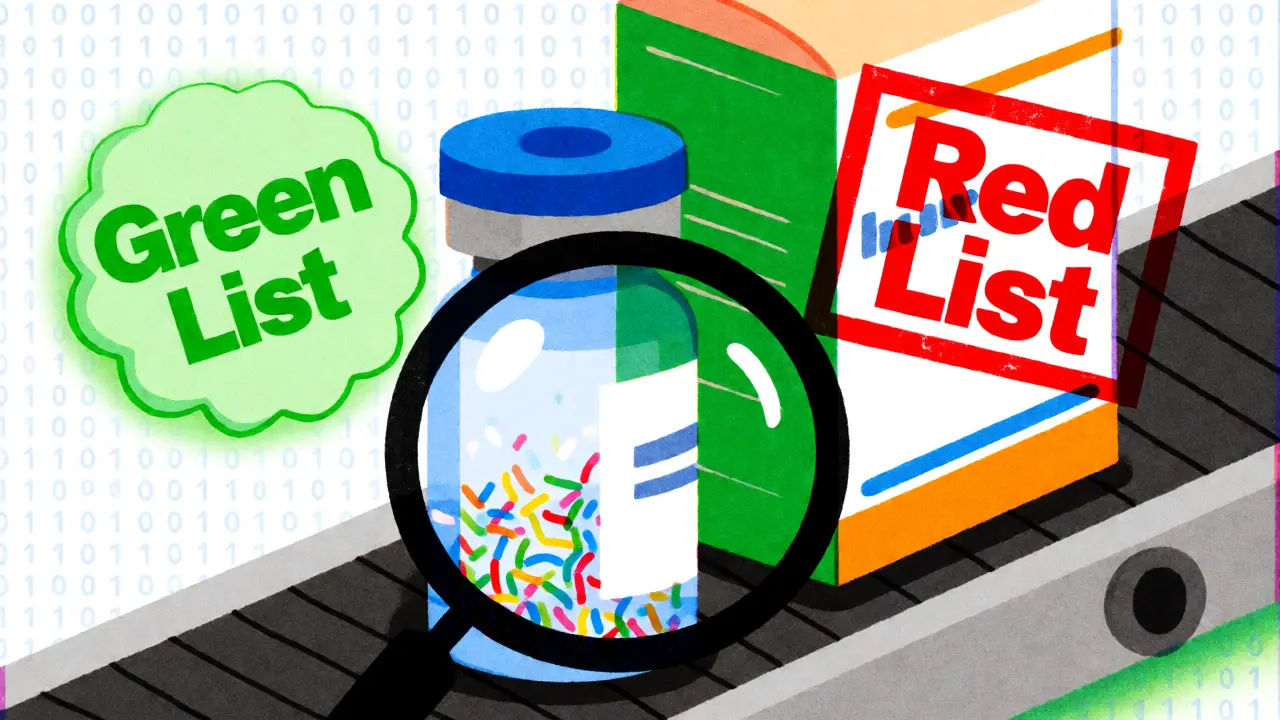
The FDA introduced a "Green List" initiative here. Only manufacturers on this approved list could ship GLP-1 APIs freely. Everyone else faced automatic detention. The results were immediate and brutal. Refusal rates for non-Green List shipments hit 98.7%. That means nearly every package arriving from an unlisted factory was stopped. By October 2025, U.S. Customs and Border Protection reported $1.84 billion in refused shipments related to these drugs.
This wasn’t just about paperwork errors. The American Association of Pharmaceutical Scientists found that 68.4% of refused shipments actually contained impurities exceeding international safety thresholds. But another 22.1% failed simply due to documentation gaps, highlighting how strict the scrutiny has become.
How the Color-Coded System Works
Unlike some countries that use a simple blacklist, the FDA uses a graduated color-coded system to manage risk. Understanding where your facility falls determines your operational freedom.
| Status Level | Description | Inspection Requirement | Clearance Rate |
|---|---|---|---|
| Green List | Manufacturer deemed compliant with rigorous standards. | Exempt from routine physical examination. | 99.2% |
| Yellow List | Facility with minor or historical issues under monitoring. | Subject to DWPE; requires proof of correction. | Variable/Low |
| Red List | Facility with severe or repeated violations. | Automatic detention; high barrier to entry. | <1.3% |
Getting onto the Green List is tough. It requires passing FDA-recognized third-party audits, which cost between $45,000 and $68,000 per facility. You also need comprehensive stability testing across different temperature zones and full supply chain mapping down to Tier 3 suppliers. Once you’re on the Red List, getting off takes an average of 11.7 months. That’s nearly a year of lost revenue while you try to prove you’ve fixed your problems.
The Financial Hit: What Happens When Goods Are Detained?
Time is money, but in pharmaceutical logistics, time is also shelf life. When a shipment is detained under DWPE, it sits at the port of entry. The importer must submit a corrective action plan, Certificates of Analysis, and audit reports to get released. If the FDA rejects the evidence, the goods must be exported or destroyed within 90 days.
The financial penalties are steep. Under federal regulations, liquidated damages can reach three times the commercial value of the goods. Consider a case study from Frier Levitt attorneys: a single shipment valued at $900,000 resulted in potential penalties exceeding $2.7 million. For smaller generic manufacturers, one bad batch can wipe out quarterly profits. Viatris, a major generic drug maker, reported a $417 million revenue impact in Q3 2025 directly linked to these import restrictions.
Why Indian Manufacturers Bear the Brunt
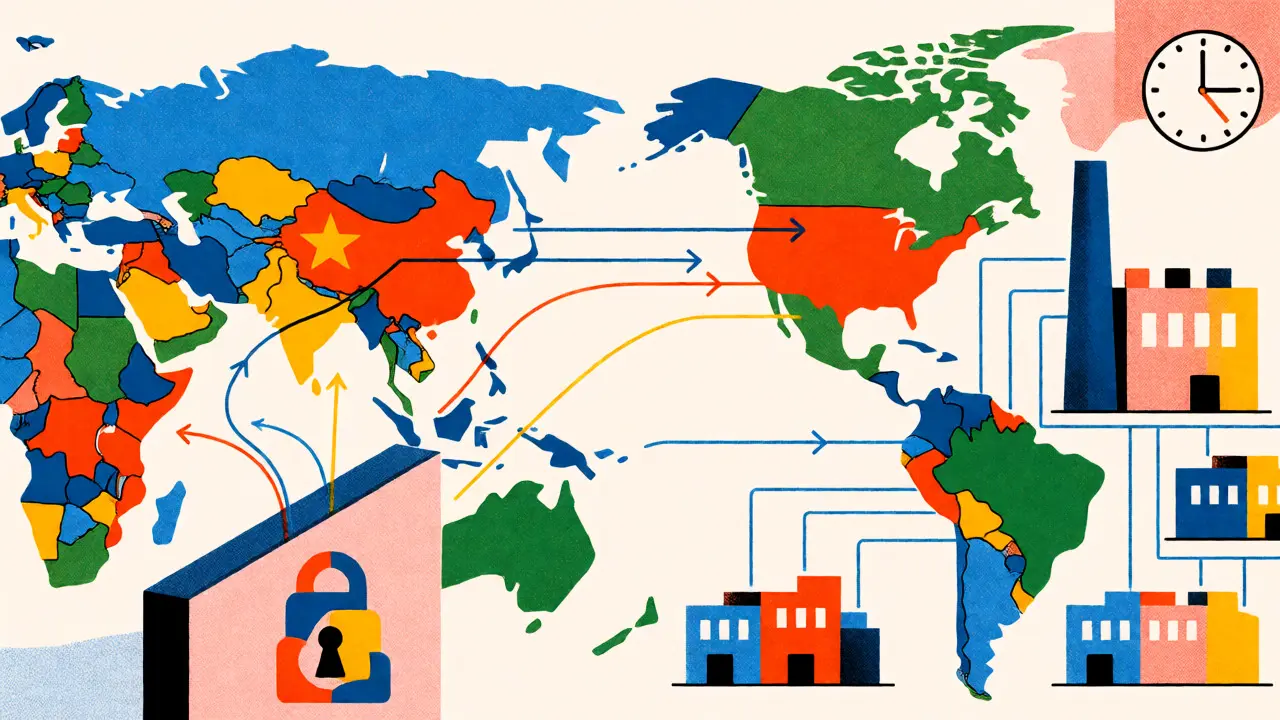
If you look at the data, the impact isn’t evenly distributed. Of the 89 facilities affected by the GLP-1 Import Alert, 73 were located in India. That’s 82% of the total. China accounted for 10%, and Europe for less than 8%. This concentration reflects the global outsourcing trends in API production, but it also highlights specific regulatory gaps.
Many Indian facilities rely on ISO certifications, which aren’t automatically recognized by the FDA for import purposes. One supplier noted losing $1.2 million in 72 hours because their auditor wasn’t FDA-recognized, despite holding valid ISO 9001 certification. This mismatch between international standards and U.S. expectations creates significant friction for exporters who assume global certification equals U.S. access.
How to Avoid Being Blocked: Practical Steps
So, how do you keep your drugs flowing into the U.S.? It comes down to proactive compliance rather than reactive firefighting. Here is what successful manufacturers are doing:
- Invest in Third-Party Audits: Don’t wait for the FDA to visit. Hire auditors who are already recognized by the agency. Video evidence of corrective actions has an 87.4% approval rate for removing alerts, compared to just 42.1% for document-only submissions.
- Digital Traceability: Implement blockchain or similar systems to track batches from raw material to final API. Pfizer achieved a 99.8% Green List acceptance rate after deploying such networks across its suppliers.
- Pre-Shipment Testing: Conduct independent testing for impurities before shipping. Many refusals happen because contaminants exceed ICH Q3D thresholds, which are stricter than some local standards.
- Documentation Hygiene: Ensure Certificates of Analysis match the exact format required by the FDA. Nearly 42% of initial rejections stem from formatting errors, not actual product defects.
The FDA recently sped up processing for facilities using accredited auditors, cutting approval timelines from 90 to 45 days. This is a clear signal: show us you’re serious about quality, and we’ll make it easier for you.
The Global Ripple Effect
The U.S. doesn’t operate in a vacuum. Other regulators are watching. The European Medicines Agency (EMA) announced plans to adopt similar API screening protocols by mid-2026. China’s National Medical Products Administration (NMPA) now mandates FDA-equivalent certifications for exporters starting January 2026. This means a manufacturer blocked in the U.S. might soon face hurdles in Europe and Asia too.
Consolidation is accelerating. Big players are buying up smaller, compliant manufacturers to secure their supply chains. Catalent’s acquisition of Novasep’s peptide business for $980 million was partly driven by the need to meet these new import requirements. If you’re a small manufacturer, partnering with larger entities that have Green List status might be your best route to market.
Can I appeal an FDA Import Alert decision?
Yes, but it’s a rigorous process. You must submit a petition to the FDA Office of Compliance demonstrating that the root causes of previous violations have been corrected. This typically requires a comprehensive facility inspection, root cause analysis, and verification of three consecutive compliant shipments. Success often depends on providing video evidence of corrective actions.
How long does it take to remove a facility from an Import Alert?
On average, removal takes 11.7 months, though the range varies widely from 4.2 to 28.6 months depending on the severity of violations and the speed of remediation. Expedited processing is available for facilities with FDA-recognized accredited third-party auditors, reducing timelines to roughly 45 days.
Does ISO certification guarantee FDA clearance?
No. While ISO 9001 is a good baseline, the FDA requires specific adherence to Current Good Manufacturing Practice (CGMP) regulations. An auditor must be FDA-recognized for their findings to carry weight in import decisions. Relying solely on general ISO certs without FDA-specific validation is a common cause for detention.
What happens to drugs detained at the border?
If the importer cannot provide sufficient evidence of compliance, the goods must be either exported back to the origin country or destroyed within 90 days. Failure to comply can result in liquidated damages, which may amount to three times the commercial value of the shipment.
Are other countries following the FDA's lead?
Yes. The European Medicines Agency is adopting similar API screening protocols by 2026, and China’s NMPA has implemented mandatory FDA-equivalent facility certifications for exporters. This suggests a global trend toward stricter, harmonized import controls for high-risk pharmaceutical ingredients.




Neil Martin
September 3, 2026 AT 19:55It is frankly absurd that the FDA relies on such archaic, binary enforcement mechanisms like DWPE instead of investing in real-time supply chain transparency. The reliance on retrospective data points creates a massive friction coefficient for compliant entities while failing to actually mitigate risk at the source. We are seeing a systemic failure in regulatory interoperability where ISO certifications are treated as irrelevant noise rather than valid quality assurance proxies. This bureaucratic inertia is stifling innovation and driving up costs for the end consumer who ultimately bears the brunt of these inefficiencies.
Pramay Dattani
September 4, 2026 AT 17:24Stop blaming India!! Our facilities are world class and we produce more generic meds than any other country. The FDA just wants to protect their own lazy companies. 73 out of 89 alerts? That is because they target us specifically. It is unfair discrimination against developing nations. We follow GMP rules but they ignore our audits because they want control over the global market. Total bias.
Jenn Bell
September 5, 2026 AT 13:27I think it’s important to remember that safety comes first, even if the process feels harsh right now. Many of these manufacturers are adapting quickly and finding ways to meet the new standards. It might be tough initially, but long-term consistency in quality benefits everyone involved. Let's stay positive about the potential for better global health outcomes.
Neil Sahli
September 6, 2026 AT 16:32Oh wow, another day, another billion dollars lost to paperwork errors! What a fantastic way to spend your Q3 budget, right? Just sitting around waiting for a guy with a clipboard to decide if your $900k shipment is 'pretty good' or 'trash.' Love how the system rewards those who can afford the fancy auditors and punishes everyone else. Truly inspiring efficiency!
Eric Schultze
September 7, 2026 AT 11:45The narrative that this is purely about quality control is a convenient fiction designed to mask protectionist agendas. By creating an opaque Green List system, the FDA effectively grants itself discretionary power to pick winners and losers without judicial oversight. The correlation between political pressure from domestic pharma lobbies and the timing of Import Alert 66-80 is too strong to ignore. We must scrutinize the underlying motives before accepting the official rationale.
Mary Tait
September 7, 2026 AT 18:52The United States has every right to enforce its own standards rigorously. If foreign manufacturers cannot meet our stringent CGMP requirements, then they should not expect unrestricted access to our market. It is not discrimination; it is due diligence. American patients deserve assurance that their medications are safe, and that assurance requires strict verification protocols regardless of where the drug originates.
Kimberley Odish
September 8, 2026 AT 17:10This analysis lacks critical depth regarding the actual root causes of non-compliance. You gloss over the fact that many Indian facilities suffer from fundamental infrastructural deficits that no amount of paperwork can fix. The focus on 'documentation hygiene' is a distraction from the core issue: inconsistent manufacturing processes. Until these facilities invest in tangible capital improvements, they will continue to fail inspections. Blaming the regulator is easier than fixing the factory floor.
Jim Bisesi
September 10, 2026 AT 05:37ugh... so much drama for a logistics post...
Louis Tarro
September 11, 2026 AT 22:02I feel your pain, truly. It is heartbreaking to see such valuable resources tied up in bureaucratic limbo. However, perhaps there is an opportunity here for collaboration. If smaller manufacturers could pool resources for shared auditing services, the financial burden might become more manageable. We need to support each other through this transition period rather than letting fear drive us apart.
Shu Chowdhury
September 13, 2026 AT 07:21interesting perspective on the green list. seems like a high barrier to entry though. i wonder if the cost savings from faster clearance outweigh the audit fees in the long run
Amy B
September 14, 2026 AT 15:02Wait, hold up. Did anyone else catch the part about video evidence having an 87% approval rate? That is wild. I always thought inspectors were skeptical of anything digital, but apparently showing them the cleaning crew scrubbing the floors on tape works wonders. Who knew visual proof was the golden ticket? Makes me wonder why we aren't doing this for food imports too. Totally fascinating stuff.
Evelyn Reed
September 14, 2026 AT 21:25the shift towards blockchain traceability is inevitable. pfizer's 99.8% acceptance rate speaks volumes. it removes the human error element entirely. smart move by the big players to lock down their supply chains early. small guys gonna struggle unless they partner up. simple economics really
Somnath Thombre
September 15, 2026 AT 01:48Hey folks, don't get too discouraged! The FDA speeding up processing for accredited auditors is a huge win. It shows they want to work with us, not against us. We just need to adapt to the new rules. Stay motivated, keep improving quality, and we will bounce back stronger than ever. Teamwork makes the dream work!
Adam Viruet
September 15, 2026 AT 10:19Actually,, if you look closely,, the data suggests that the 'Green List' is just a pay-to-play scheme for large corporations.,, Small manufacturers simply cannot afford the $68k audit fee,, so they are excluded by design,, not by merit.,, The system is rigged,, plain and simple.,,