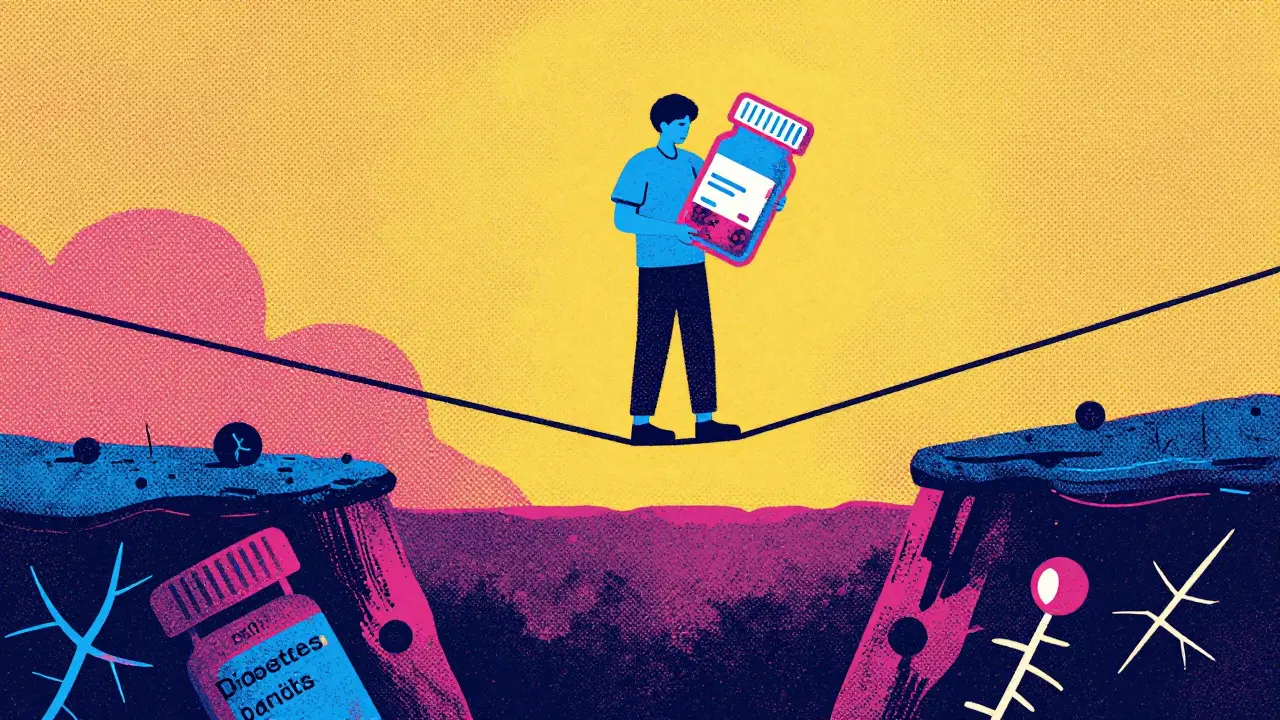
For decades, if your asthma was severe enough to keep you from living a normal life, doctors reached for one specific tool: Oral Corticosteroids (OCS) is a class of potent anti-inflammatory drugs taken by mouth, commonly known as prednisone or prednisolone, used to suppress immune responses and reduce airway swelling. It worked. It opened the lungs. But it came with a price tag that most patients didn't see until years later-weight gain, diabetes, bone fractures, and mood swings. Today, we know better. The medical community has shifted away from viewing OCS as a permanent solution, recognizing instead what many patients call a "necessary evil." If you are managing severe asthma, understanding how to step off this chemical tightrope is not just about comfort; it is about long-term survival.
The Hidden Cost of the "Safety Net"
We often think of steroids as cheap medicine because the pills themselves cost very little. That is a dangerous illusion. While the pharmacy bill might be low, the biological and economic toll is staggering. A 2025 study published in Frontiers in Allergy revealed that 93% of patients with severe asthma suffer complications directly linked to their steroid dependence or dosage. These aren't minor side effects. We are talking about osteoporosis, glaucoma, cardiovascular disease, and adrenal insufficiency.
Consider the economics. In Italy, researchers calculated that the annual cost of treating OCS-related adverse effects for an asthma patient is approximately €1,960 per person. That is nearly double the cost for non-asthma patients taking steroids. This creates what experts call "shadow costs"-hidden expenses that arise from delayed health consequences. You save money on the pill today, but you pay for the hip fracture or the diabetes management tomorrow. Furthermore, long-term OCS use is associated with a higher mortality risk compared to non-use. The goal isn't just to breathe easier; it's to live longer without systemic damage.
Biologics: The Game Changer for Type 2 Inflammation
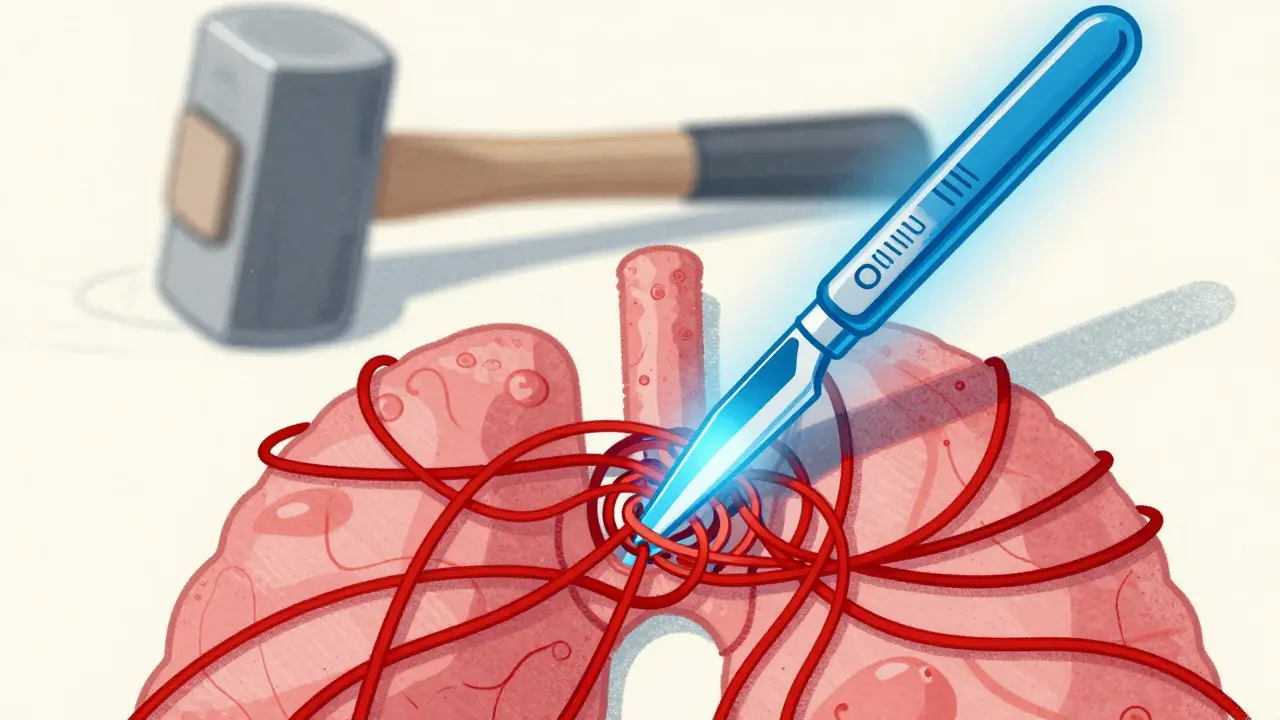
If OCS is the blunt instrument, biologics are the precision scalpel. For roughly 50-70% of severe asthma cases, the root cause is Type 2 Inflammation is an immune response driven by specific cytokines like interleukin-4 (IL-4), IL-5, and IL-13, leading to eosinophilic inflammation in the airways. Instead of suppressing the entire immune system like steroids do, biologics target these specific inflammatory pathways. There are currently six licensed biologic agents for asthma:
- Omalizumab: Targets IgE antibodies.
- Mepolizumab: Targets IL-5.
- Reslizumab: Targets IL-5.
- Benralizumab: Targets IL-5 receptor.
- Dupilumab: Targets IL-4 and IL-13 receptors.
- Tezepelumab: Targets TSLP (thymic stromal lymphopoietin).
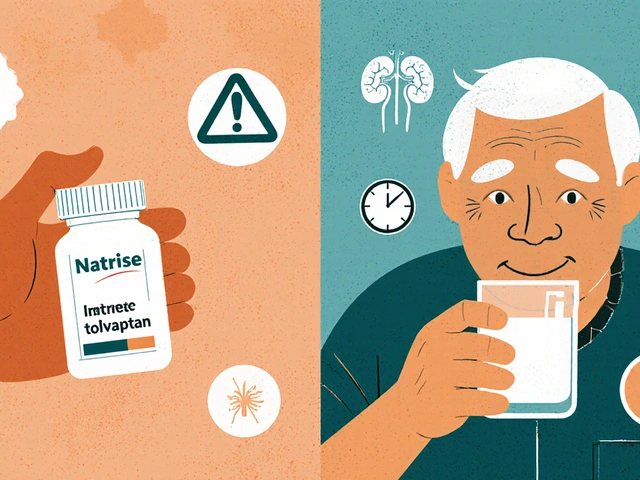
The data supporting these drugs is compelling. A pivotal study involving 106 Italian adults with uncontrolled asthma showed that switching to Mepolizumab is a monoclonal antibody injection that reduces eosinophils, a type of white blood cell involved in allergic reactions and asthma inflammation. dramatically changed outcomes. The percentage of patients dependent on corticosteroids dropped from 79.2% to 31.1%. Those who still needed some steroids saw their daily dose decrease by an average of 4.7 mg. More importantly, exacerbation rates plummeted from 4.1 to 0.8 per year, and hospitalizations fell from 0.4 to 0.06. Dupilumab is a biologic therapy that blocks IL-4 and IL-13 signaling, effective for both asthma and eczema, significantly reducing steroid need. has shown similar efficacy, confirmed by reviews from the American Academy of Family Physicians (AAFP). These aren't just numbers; they represent fewer emergency room visits and more stable lives.
| Feature | Oral Corticosteroids (OCS) | Biologic Agents |
|---|---|---|
| Mechanism | Broad immune suppression | Targeted inhibition of specific inflammatory pathways (e.g., IL-5, IgE) |
| Side Effect Profile | High risk: Diabetes, osteoporosis, weight gain, adrenal insufficiency | Lower systemic risk: Injection site reactions, rare hypersensitivity |
| Administration | Oral tablets | Subcutaneous injection or intravenous infusion |
| Cost Structure | Low upfront drug cost; high long-term "shadow costs" from complications | High upfront drug cost; lower long-term healthcare utilization costs |
| Eligibility | All severe asthma patients | Patients with confirmed Type 2 inflammation biomarkers |
Bronchial Thermoplasty: When Meds Aren't Enough
Not everyone responds to biologics, or perhaps your insurance doesn't cover them yet. In those cases, there is another alternative: Bronchial Thermoplasty is a bronchoscopic procedure using radiofrequency energy to reduce the amount of smooth muscle in the airways, limiting their ability to constrict.. This is not a medication but a procedure. During the treatment, a doctor uses a catheter to deliver controlled heat to the airway walls. This reduces the amount of smooth muscle tissue, which means the airways have less capacity to tighten during an asthma attack.
It is important to manage expectations here. Bronchial thermoplasty is reserved for severe asthma that hasn't responded to optimal medical therapy. The AAFP notes that while it modestly improves quality of life and lowers acute exacerbation rates over time, it actually increases asthma morbidity in the six weeks immediately following each treatment session. Patients often experience worse symptoms temporarily as the body heals. It is a trade-off: short-term discomfort for potential long-term stability. It is not a first-line option, but for the right candidate, it can be a lifeline when other doors close.
The Danger of "Necessary Evil": Tapering Safely
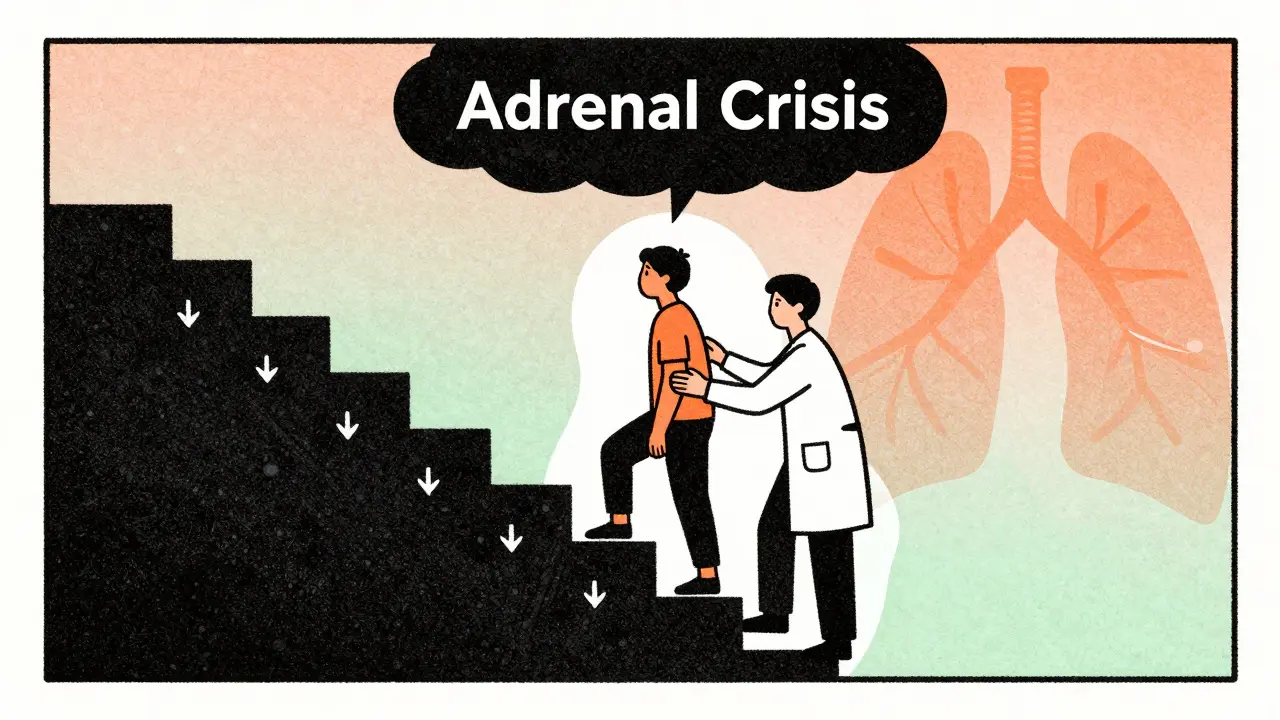
Here is where things get tricky. You cannot simply stop taking oral steroids cold turkey. Your adrenal glands may have stopped producing natural cortisol because the synthetic steroids were doing the job. Suddenly removing them can lead to adrenal crisis, a life-threatening condition. The Global Initiative for Asthma (GINA) guidelines specify that short-term OCS use for acute exacerbations should last only 3-5 days for children and 5-7 days for adults. Long-term maintenance doses should be ≤7.5 mg/day and reserved as a last resort.
However, real-world practice is messy. Many patients are stuck on higher doses for months or even years. Dr. Cameron Santoro’s 2024 analysis highlights an urgent need for clear tapering guidelines. The EOS Network agrees, stating that while biologics help patients reduce or stop OCS, more guidance is needed on how to taper safely. A typical safe taper might involve reducing the dose by 1-2.5 mg every 1-2 weeks, but this must be personalized based on your body's response. Work closely with your pulmonologist. Do not adjust your dose on your own.
Why Vitamin D Isn't the Magic Bullet
In the search for alternatives, many patients turn to supplements. Specifically, Vitamin D. It makes sense logically: Vitamin D supports immune function, and deficiency is common. However, a 2021 AAFP review found that high-dose Vitamin D3 added to standard asthma treatment did not prevent treatment failure or exacerbations in vitamin D-deficient adults. While maintaining healthy Vitamin D levels is good for general bone health (especially since steroids weaken bones), relying on it to replace steroids or biologics is ineffective. Don't waste money on mega-doses expecting them to control your asthma.
Navigating Access and Affordability
The biggest barrier to switching from OCS to biologics is often cost. Biologics are expensive. However, the economic argument is shifting. As noted earlier, the "shadow costs" of steroids are high. In June 2024, three major inhaler manufacturers announced caps on out-of-pocket costs at $35 monthly for commercially insured individuals. While this is progress, it excludes those on public insurance and doesn't fully solve the affordability crisis for all. Advocacy groups continue to push for broader access. Remember that reduced hospitalizations and fewer ER visits often make the case for insurers to approve these therapies. Ask your doctor to help document the economic and clinical necessity of switching.
Can I switch from oral steroids to biologics immediately?
No, you should never stop oral steroids abruptly due to the risk of adrenal crisis. Switching involves a careful, supervised tapering process. Your doctor will likely start the biologic therapy first to ensure it is working, then gradually reduce your steroid dose over weeks or months while monitoring your lung function and symptoms.
How do I know if I have Type 2 inflammation?
Your doctor can test for biomarkers such as eosinophil count in your blood or sputum, or measure Fractional Exhaled Nitric Oxide (FeNO). High levels of these markers indicate Type 2 inflammation, making you a strong candidate for biologics like mepolizumab or dupilumab.
Are biologics covered by insurance?
Coverage varies by region and insurer. In many countries, including Australia and parts of the US, biologics are covered for severe asthma after failing high-dose inhaled corticosteroids and LABAs. Prior authorization is usually required, proving that you have tried and failed other treatments.
What are the side effects of biologics?
Biologics generally have fewer systemic side effects than oral steroids. Common issues include injection site reactions (redness, itching) or mild headaches. Rarely, serious allergic reactions can occur. They do not typically cause weight gain, diabetes, or bone loss.
Is bronchial thermoplasty permanent?
Yes, the reduction in airway smooth muscle is permanent. However, it does not cure asthma. It limits the severity of constriction. Most patients still need to use rescue inhalers and possibly maintenance medications, but the frequency of severe attacks often decreases significantly.


Aswin Ashokan
May 31, 2026 AT 00:53typical western medicine pushing expensive injections while ignoring root causes. in india we manage this with diet and yoga not these chemical crutches. the system is broken.
William Storm
May 31, 2026 AT 21:41One must consider the ontological weight of such pharmaceutical interventions; they are, quite frankly, a manifestation of late-stage capitalist decay. The 'shadow costs' mentioned are merely the visible tip of an iceberg of systemic inefficiency. It is rather pretentious to assume that biology can be so neatly categorized into 'Type 2' inflammation without acknowledging the holistic chaos of human existence. Moreover, the reliance on biologics suggests a failure of individual willpower to adapt to environmental stressors. One wonders if the authors have considered the philosophical implications of outsourcing one's immune response to a monoclonal antibody. It is a slippery slope toward medicalized dependency. The economic argument is also deeply flawed when viewed through the lens of long-term societal health. We are trading immediate relief for future vulnerability. This is not progress; it is a palliative measure for a diseased society. The data presented is selective at best. Where are the studies on long-term psychological impacts? The article ignores the existential dread of being tied to a biotech company for life. It is a fascinating, albeit depressing, read.
Wendy Engelmann
June 2, 2026 AT 06:28i think its really brave to share this info. i know someone who struggled with steroids for years and it was hard watching them suffer. hope more people find relief with new options
Lisa Thomas
June 3, 2026 AT 04:32this is scary stuff !! i never realized how bad steroids could be long term 😱 thanks for sharing this important info everyone needs to know their rights and options !
Nicholas Bowling
June 4, 2026 AT 08:18oh great another article telling me im doing it wrong. i love my prednisone it keeps me alive and happy. who cares about side effects if you can breathe right now? typical doom and gloom posting. nobody asked for your opinion on tapering protocols. leave us alone.
Jay Foreman
June 4, 2026 AT 14:54Look, I get the science, but let's talk about the real issue here: access. It's morally bankrupt that insurance companies decide who gets to live pain-free based on their ability to pay. I've seen friends go bankrupt trying to afford these biologics. The system is rigged against the sick. We need universal coverage, not just fancy drugs. Until then, this information is useless to half the population. It's a privilege to choose your treatment path. And don't get me started on the vitamin D myth-busting part-people are desperate for hope, and you're taking that away too. It's cold-hearted. But hey, at least the rich can buy their way out of asthma. Shocking, I know.
Cathy N
June 4, 2026 AT 16:05interesting points about the cost. i wonder if public insurance will ever catch up. seems like a lot of red tape involved in getting approved for biologics
Adelaide Motata
June 4, 2026 AT 22:00honestly this is all bs. ive been on steroids for 10 years and im fine. doctors are just scared of liability. why would u switch to something that costs thousands? sounds like a scam to me. stop listening to big pharma propaganda.
Mike Crump
June 6, 2026 AT 02:53Hey folks! Let's dive into this together. It's wild how much has changed in asthma management, isn't it? I remember when inhalers were the only game in town. Now we've got these amazing targeted therapies. It's like going from a sledgehammer to a scalpel. I'd love to hear from anyone who's made the switch to biologics. What was your experience like? Did you feel different after the first dose? Also, Mike here, always down to chat about health tech. Let's support each other in navigating this complex healthcare landscape. Knowledge is power, right?
Samantha Arbuckle
June 7, 2026 AT 12:58love this breakdown 🌟 it gives me hope for better days ahead. thank you for educating us on the hidden costs 💪 stay strong everyone!
Stephanie Francis
June 8, 2026 AT 23:15This is unacceptable that patients are left to navigate this alone. The lack of clear guidelines is negligent. Doctors must prioritize patient safety over convenience. We demand better standards of care immediately. This cannot continue.
Jonathan Paul
June 10, 2026 AT 21:39so ur saying vitamins dont work lol. whatever. i take 5000iu daily and feel great. maybe its placebo but who cares. also why do u care what i put in my body? mind your own business. this whole post is full of fear mongering. relax.
Roderick Gooden
June 11, 2026 AT 18:54I completely agree with the sentiment expressed regarding the complexity of tapering protocols, which is a subject that has been debated extensively in clinical circles for many years, and it is evident that the current guidelines provided by GINA are somewhat ambiguous in their practical application for patients who have been on high doses for extended periods, leading to a situation where physicians are often forced to make subjective decisions based on limited evidence, which can result in inconsistent outcomes for patients who are desperately seeking relief from the debilitating side effects of long-term corticosteroid use, and it is crucial that we acknowledge the psychological burden placed upon these individuals as they navigate the uncertain terrain of reducing their medication dosage, a process that is fraught with anxiety and fear of exacerbation, thereby necessitating a more robust support system that includes both medical and psychological resources to ensure a successful transition to alternative therapies such as biologics or bronchial thermoplasty, which offer promising avenues for improving quality of life while minimizing systemic toxicity, although the financial barriers remain a significant obstacle for many patients, particularly those without adequate insurance coverage, thus highlighting the urgent need for policy reforms that address both clinical and economic aspects of severe asthma management.
ANGELA CHINENYE
June 12, 2026 AT 05:44As a nurse, I see this daily. Please consult your doctor before changing anything. Safety first. Do not stop meds abruptly. Follow the tapering schedule strictly. Monitor for signs of adrenal insufficiency. Stay informed but cautious. Trust the process.
Aishwarya Thankachan
June 13, 2026 AT 16:04OMG yes!! 🙌 finally someone explains the biomarkers properly. FeNO testing is key 🔑. If ur eosinophils r high u NEED dupilumab. Stop wasting time on steroids. Its 2024 ppl wake up 🧠💥 #AsthmaWarrior