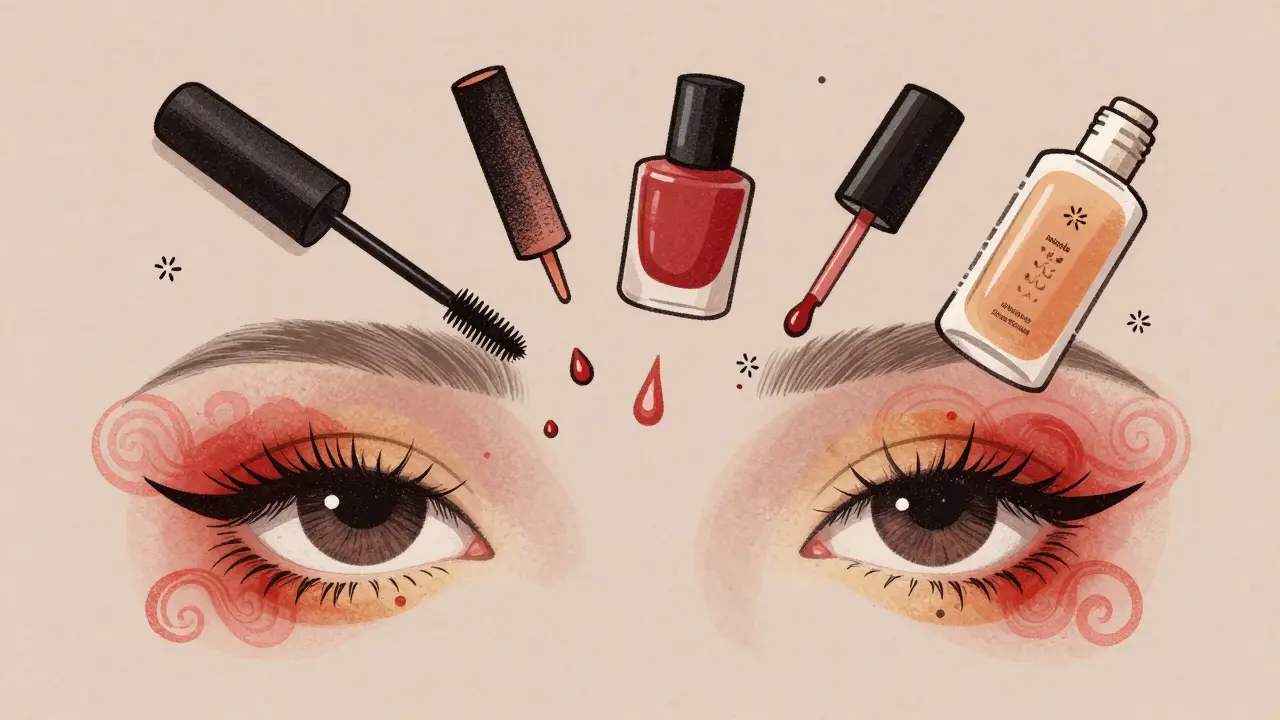
The skin around your eyes is the thinnest on your entire body-just 0.55 millimeters thick. That’s why even tiny amounts of allergens in your makeup, shampoo, or nail polish can trigger a nasty reaction: redness, swelling, itching, and flaking that won’t go away. If you’ve been told it’s just dry skin or stress, but your eyelids keep flaring up, you’re not imagining it. You likely have eyelid dermatitis, and the cause is probably something you’re using every day.
Why Your Eyelids Are So Sensitive
Your eyelids aren’t just thin-they’re exposed. Every time you touch your face, apply mascara, wash your hair, or even pick up your phone, you’re transferring chemicals to this delicate area. Unlike other parts of your skin, eyelids don’t have much natural protection. They’re not shielded by hair, sweat glands are sparse, and the skin folds trap allergens instead of letting them wash away. This makes them a magnet for allergic contact dermatitis (ACD), which causes about 74% of all eyelid dermatitis cases. It’s not irritation from harsh soap-it’s your immune system reacting to something specific. And that reaction doesn’t show up right away. You might use a new eyeliner on Monday, and by Wednesday, your lids are swollen and burning. That delay is why so many people think it’s something else: a bad night’s sleep, allergies, or even an eye infection.The Top 7 Cosmetic Allergens Hiding in Your Routine
Most people assume the problem is their foundation or concealer. But the real culprits are often hidden in products you don’t even think of as eye-related. Here’s what’s actually triggering reactions, based on a 2021 NIH study of over 200 patients:- Nickel (28.7% of cases): Found in cheap eyeshadow palettes, eyelash curlers, and even some mascara wands. Magnetic eyelashes? They often contain nickel alloys.
- Shellac (21.4%): The gel polish in your nails. When you touch your face after a manicure, you’re transferring it directly to your eyelids.
- Preservatives (18.9%): Methylisothiazolinone, parabens, and formaldehyde releasers are in almost every cream, serum, and shampoo. Even "natural" brands use them to prevent mold.
- Topical antibiotics (15.3%): Neomycin and bacitracin are common in over-the-counter eye drops and ointments. Many people don’t realize these can cause allergies too.
- Fragrances (14.6%): "Unscented" doesn’t mean fragrance-free. Many products use masking fragrances that still trigger reactions.
- Acrylates (12.1%): Used in waterproof mascara, long-wear eyeliner, and gel nail polishes. These are becoming more common as cosmetics get "smudge-proof."
- Surfactants (9.8%): Found in cleansers and makeup removers. Sodium lauryl sulfate can be harsh enough to break down the skin barrier around your eyes.
Why Patch Testing Isn’t Optional
If you’ve tried switching brands and nothing helps, you need patch testing. This isn’t a quick skin prick-it’s a 48-hour process where small amounts of 70+ potential allergens are taped to your back. You come back in two days, and the dermatologist checks for reactions. Clinical studies show that doctors who rely only on patient history guess the right trigger just 37% of the time. With patch testing, accuracy jumps to 95%. And it’s not just about your makeup. One patient from Mayo Clinic found her eyelid swelling disappeared after stopping nail polish-something she’d never connected to her eyes. The American Academy of Dermatology now recommends expanded patch panels that include ophthalmic-specific allergens, like those found in eye drops and lash adhesives. Without this, you’re just guessing.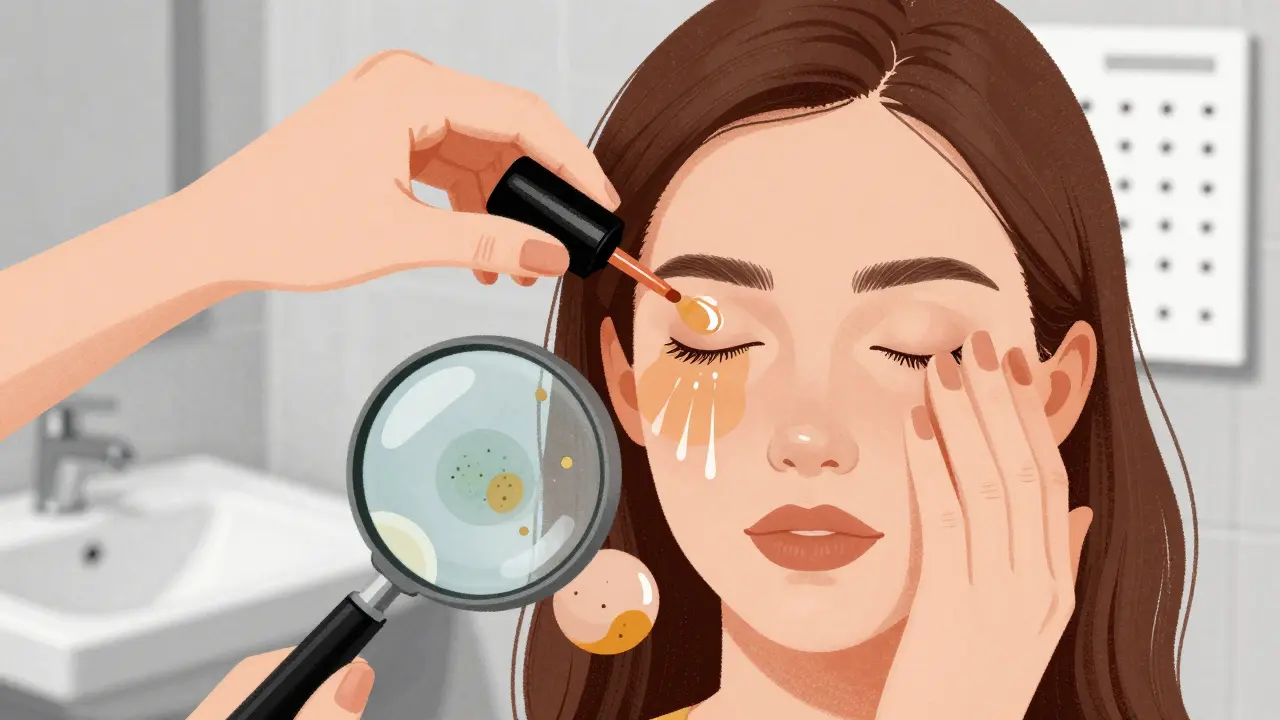
What Not to Do: The Steroid Mistake
It’s tempting to grab a hydrocortisone cream from the medicine cabinet. But here’s the danger: high-potency steroids can cause permanent damage if used on the eyelids. Dr. Anthony Mancini from Northwestern University warns that just 7-10 applications of strong corticosteroids can cause skin thinning, stretch marks, and even increased eye pressure-leading to glaucoma or cataracts. That’s why many dermatologists now prescribe low-potency options like Eysuvis 0.25%, the first FDA-approved steroid ointment specifically for eyelid dermatitis. It reduces inflammation without the same risks. Even "natural" remedies like coconut oil or tea tree oil can make things worse. They’re not sterile, and some contain botanical allergens. A 2023 JAMA Dermatology study found that 33% of "clean beauty" eye products contained hidden plant allergens like ragweed or chamomile.How to Fix It: A Realistic 3-Phase Plan
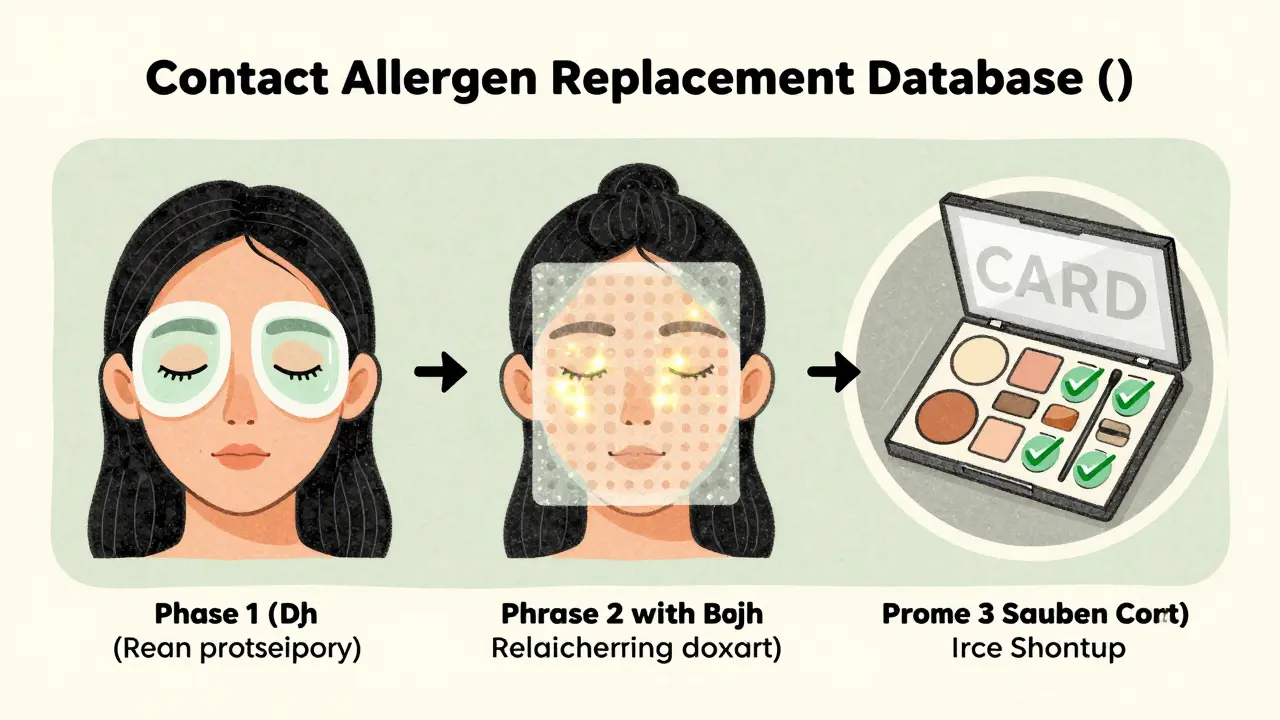
You can’t fix this overnight. But with a clear plan, most people see improvement in 1-2 weeks.- Phase 1: Stop Everything (Days 1-3)-Remove all eye makeup, face creams, and hair products. Use only plain water and a clean towel to wash your face. Avoid touching your eyes. If you must use something, stick to plain petroleum jelly (like Vaseline) as a barrier.
- Phase 2: Wait and Test (Days 4-14)-Schedule a patch test with a board-certified dermatologist. Don’t start new products yet. Keep your skin cool with damp, clean cloths. Avoid heat, steam, and rubbing.
- Phase 3: Avoid and Rebuild (Day 15+)-Once you know your triggers, use the Contact Allergen Replacement Database (CARD), updated monthly by the University of Louisville. It lists over 12,800 verified safe products-from cleansers to mascara-filtered by your specific allergens. Use the "Preservative Finder" app to scan ingredient labels. Look for INCI names like "methylisothiazolinone" or "formaldehyde," and avoid them.
Why You Keep Relapsing
Most people get better, then start using their old products again. That’s why 63% of patients in Cleveland Clinic’s 2023 survey saw symptoms return. The problem isn’t just direct contact-it’s transfer. If you wear nail polish and then rub your eyes, you’re applying shellac to your eyelids. If you use shampoo and don’t rinse your hands well, you’re transferring sulfates and fragrances. A 2023 study from Bennett & Bloom Eye Centers found that 71% of nail product-related eyelid cases involved women who didn’t realize their manicure was the cause.What’s Changing in 2026
The cosmetic industry is evolving. The EU now requires clearer labeling of fragrance allergens, and the FDA is pushing for better disclosure of preservatives in eye products. AI tools like DermAI Contact are being tested to predict allergens based on your symptoms before you even get to the clinic. But the biggest shift? More dermatologists and ophthalmologists are working together. Eye doctors used to treat eyelid rashes as if they were infections. Now, they’re referring patients to dermatologists for patch testing. This collaboration is expected to cut persistent cases by 25% by 2027.What to Do Next
If your eyelids are red, itchy, or flaky and nothing seems to help:- Stop using all eye and face products immediately.
- Write down everything you’ve used in the last 7 days-including shampoo, hand soap, and nail polish.
- Call a board-certified dermatologist and ask for patch testing for eyelid dermatitis.
- Download the "Preservative Finder" app and start checking labels.
- Use petroleum jelly as a barrier until you get answers.
Can eyelid dermatitis cause vision problems?
No, eyelid dermatitis itself doesn’t affect your vision. But if you use strong steroid creams on your eyelids for too long, it can raise pressure inside your eye and lead to glaucoma or cataracts. That’s why it’s critical to use only eye-safe treatments like Eysuvis 0.25% and avoid over-the-counter hydrocortisone without a doctor’s advice.
Is eyelid dermatitis contagious?
No, it’s not contagious. You can’t catch it from someone else. It’s an allergic reaction triggered by your own exposure to specific chemicals. Even if your partner has it, you won’t get it unless you’re exposed to the same allergens.
Can I still wear makeup after I recover?
Yes-but only if you know exactly what caused the reaction. Once patch testing identifies your triggers, you can safely use products that avoid those ingredients. Use the Contact Allergen Replacement Database (CARD) to find verified safe brands. Never go back to old products unless you’re certain they’re allergen-free.
Why do I still have symptoms after avoiding my makeup?
You might be exposed indirectly. Shampoos, conditioners, nail polish, hand sanitizers, and even phone screens can transfer allergens to your eyelids. If you’re still reacting, check your hair products and nail routine. Many people don’t realize their manicure is the real culprit.
Are "clean" or "natural" eye products safer?
Not necessarily. A 2023 study found that 33% of "natural" eye products contain hidden plant allergens like chamomile, ragweed, or yarrow-common triggers for people with sensitive skin. Just because a product says "organic" or "no chemicals" doesn’t mean it’s safe for your eyelids. Always check the ingredient list and patch test new products.
How long does it take to heal?
Most people see improvement within 1-2 weeks of avoiding the allergen. But full healing can take 3-6 weeks, especially if the skin has been inflamed for months. If symptoms persist beyond 6 weeks, you may need a different treatment or further testing for other triggers.
Can children get eyelid dermatitis from cosmetics?
Yes, though it’s less common. Children can react to face paints, glitter, sunscreen, or even shampoo used during bath time. If a child has persistent eyelid redness, avoid all cosmetics and consult a pediatric dermatologist. Patch testing is safe for children and often necessary to find the trigger.





Jodi Harding
January 17, 2026 AT 18:31This is why I stopped wearing mascara. Not because I’m fancy-because my eyelids looked like they’d been slapped with a red pepper paste. No one tells you your nail polish is the enemy. 😤
Tyler Myers
January 19, 2026 AT 14:23Let me guess-the FDA’s in bed with Big Cosmetics. They don’t want you to know that 90% of ‘natural’ products are just chemical cocktails with a hippie sticker. Patch testing? That’s just a money grab to keep dermatologists rich while you suffer. I’ve been using coconut oil for years-no issues. Until now. Coincidence? I think not.
Nishant Sonuley
January 20, 2026 AT 15:03Yo, I’m from India, and let me tell you-this isn’t just a Western problem. My cousin in Delhi got eyelid dermatitis from her ‘Ayurvedic’ eyeliner that had hidden nickel and fragrant oils. We thought it was ‘heat’ or ‘bad karma.’ Turns out, it’s just bad labeling. The global beauty industry is a mess. You think you’re being safe with ‘traditional’ products, but they’re just as toxic. The CARD database? That’s gold. I’ve been sharing it with my beauty school students. If you’re using anything on your face, check the INCI names. Even ‘pure’ neem oil can trigger reactions. We need more awareness-not just in the US, but everywhere. This isn’t vanity-it’s public health.
Andrew McLarren
January 21, 2026 AT 19:11Thank you for this meticulously researched and clinically grounded exposition. The conflation of irritation with allergy is pervasive and dangerous. The data on preservatives and acrylates is particularly compelling, and the emphasis on patch testing as a diagnostic imperative cannot be overstated. I have forwarded this to my dermatology department for inclusion in our patient education materials. The distinction between ‘unscented’ and ‘fragrance-free’ deserves broader regulatory attention. Well done.
Andrew Short
January 23, 2026 AT 18:42Of course you’re still reacting. You didn’t quit your shampoo. You didn’t stop touching your phone. You didn’t throw out your entire makeup collection. You’re just ‘trying’-that’s why you’re still suffering. This isn’t a hobby. It’s a medical emergency. Stop being lazy. Stop blaming ‘stress.’ You’re allergic to your own negligence.
christian Espinola
January 23, 2026 AT 21:02"Eysuvis 0.25%"? That’s a brand name. Where’s the clinical trial data? Who funded it? The FDA approves everything these days. And you say "clean beauty" has plant allergens? So what? That’s just nature being toxic. You’re all obsessed with chemicals, but ignore that plants have been poisoning people for centuries. Chamomile? It’s a weed. Ragweed? It’s pollen. You’re allergic to the Earth. Get a grip.
Chuck Dickson
January 24, 2026 AT 20:21You got this. Seriously. I went through this last year-red, flaky, can’t even blink without it burning. I thought I was doomed. But I did the 3-phase plan. Stopped everything. Got the patch test. Found out it was shellac from my nails. I haven’t worn polish since. My eyelids are back to normal. It’s not easy, but it’s worth it. You’re not broken. You just needed the right info. Go get tested. You’ve got this. 💪✨
Dayanara Villafuerte
January 25, 2026 AT 04:48OMG I thought I was the only one. 😭 I used that "natural" eyeliner from that Instagram influencer and my lids looked like a tomato had a baby on my face. Then I realized-my gel nails were the culprit. I quit polish. Now I use a cotton swab to wipe my phone screen. And yes, I cried. But now I’m free. 🙌 #EyelidDermatitisWarrior #ShellacIsTheDevil
Wendy Claughton
January 27, 2026 AT 02:34...I didn’t realize how much I touched my eyes until I stopped. Every time I brushed my hair, rubbed my nose, checked my phone... it was all transferring. I thought I was being careful. Turns out, I was just... moving. I’m still waiting on my patch test results. I’ve been using Vaseline like a security blanket. It’s quiet. It’s safe. It doesn’t judge. I’m not sure I’ll ever wear mascara again. But that’s okay. My eyes feel calm. That’s enough.