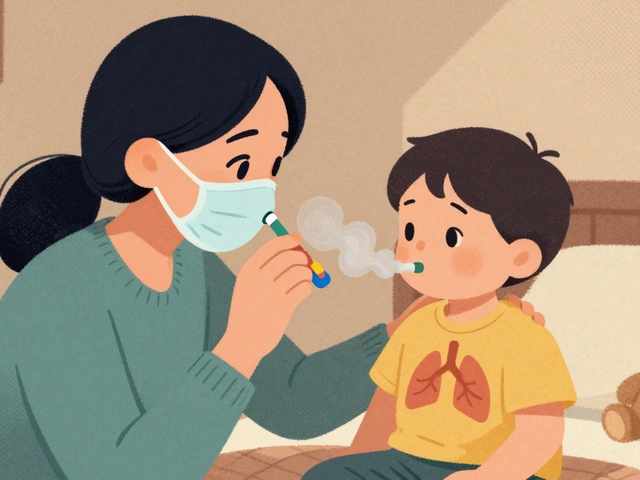
It’s hard to breathe. Your chest feels tight, and you’re wheezing. Is it an asthma flare-up, or is it something more serious like COPD (Chronic Obstructive Pulmonary Disease)? If you’ve ever struggled with shortness of breath, you know how terrifying that moment can be. But here’s the thing: while asthma and COPD share similar symptoms, they are two very different conditions with distinct causes, treatments, and long-term outlooks.
Mixing them up isn’t just confusing-it can lead to the wrong treatment plan. Asthma is often reversible and manageable with the right triggers identified. COPD, on the other hand, involves permanent lung damage that requires a different approach to slow its progression. Understanding the difference between these two respiratory diseases is crucial for getting the care you need.
The Core Difference: Reversible vs. Permanent Damage
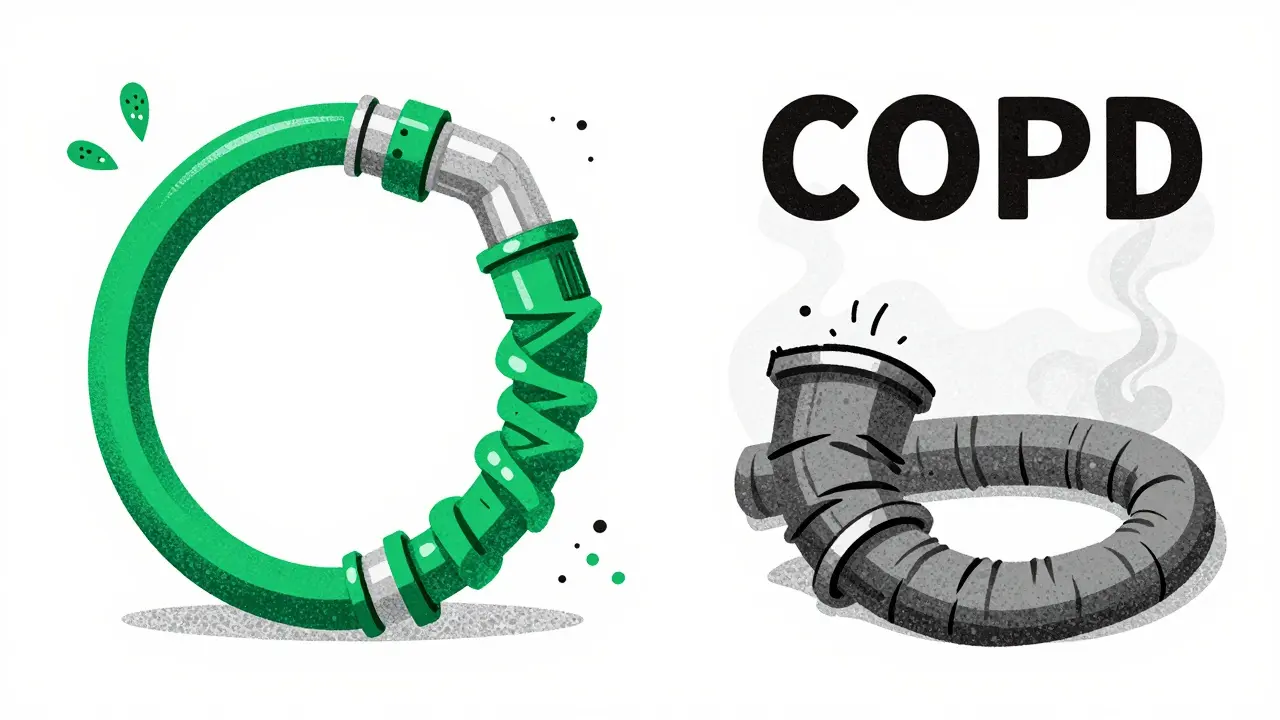
To understand why these conditions feel similar but act differently, we have to look at what’s happening inside your lungs. Think of your airways like garden hoses. In Asthma (a chronic inflammatory disorder of the airways characterized by hyperresponsiveness), the hose gets kinked or squeezed shut when triggered by allergens, cold air, or exercise. Once the trigger is gone or treated with medication, the hose opens back up. The airflow obstruction is largely reversible.
In COPD, however, the hose itself is damaged. The walls of the air sacs (alveoli) break down, losing their elasticity, or the airways become permanently narrowed due to chronic inflammation and mucus buildup. This results in persistent, irreversible airflow limitation. According to the Global Initiative for Chronic Obstructive Lung Disease (GOLD), this progressive nature means that even with treatment, the lung function loss cannot be fully reversed.
| Feature | Asthma | COPD |
|---|---|---|
| Onset Age | Often childhood or early adulthood | Usually after age 40 |
| Primary Cause | Allergies, genetics, environmental triggers | Smoking, long-term exposure to irritants |
| Airflow Obstruction | Reversible (opens up with meds) | Irreversible (permanent damage) |
| Symptom Pattern | Intermittent episodes | Constant, progressive worsening |
| Cough Type | Often dry | Productive (with phlegm/mucus) |
Spotting the Symptoms: What to Look For
Both conditions cause wheezing, shortness of breath, and chest tightness. So how do you tell them apart in daily life? It comes down to timing, triggers, and the type of cough.
Asthma symptoms tend to come and go. You might feel fine most of the time, then suddenly struggle to breathe after running, during allergy season, or around pets. About 68% of asthma patients experience symptom-free intervals between exacerbations. The cough associated with asthma is typically dry and may worsen at night or in the early morning.
COPD symptoms are constant and get worse over time. If you have COPD, you likely feel short of breath even when resting or doing light activities like walking across a room. Only 12% of COPD patients report significant symptom remission. A hallmark sign is a chronic productive cough-you’re bringing up phlegm or mucus regularly. In advanced cases, you might notice cyanosis, which is a bluish tint to the lips or fingernails due to low oxygen levels. This is rare in asthma but affects 41% of advanced COPD cases.
Risk Factors: Who Gets What?
Your history plays a huge role in determining which condition you might have. Asthma is strongly linked to allergies and genetics. About 50% of asthma cases are diagnosed before age 10, and 80% before age 30. If you have hay fever (allergic rhinitis) or eczema, your risk of asthma jumps significantly-65% of asthma patients also have allergic rhinitis.
COPD is overwhelmingly linked to smoking. Approximately 90% of COPD cases are attributable to cigarette smoking. It rarely shows up before age 40, with 92% of cases occurring in people over 45. Long-term exposure to secondhand smoke, chemical fumes, or dust in certain jobs can also contribute, but smoking remains the primary driver.
Diagnosis: How Doctors Tell Them Apart
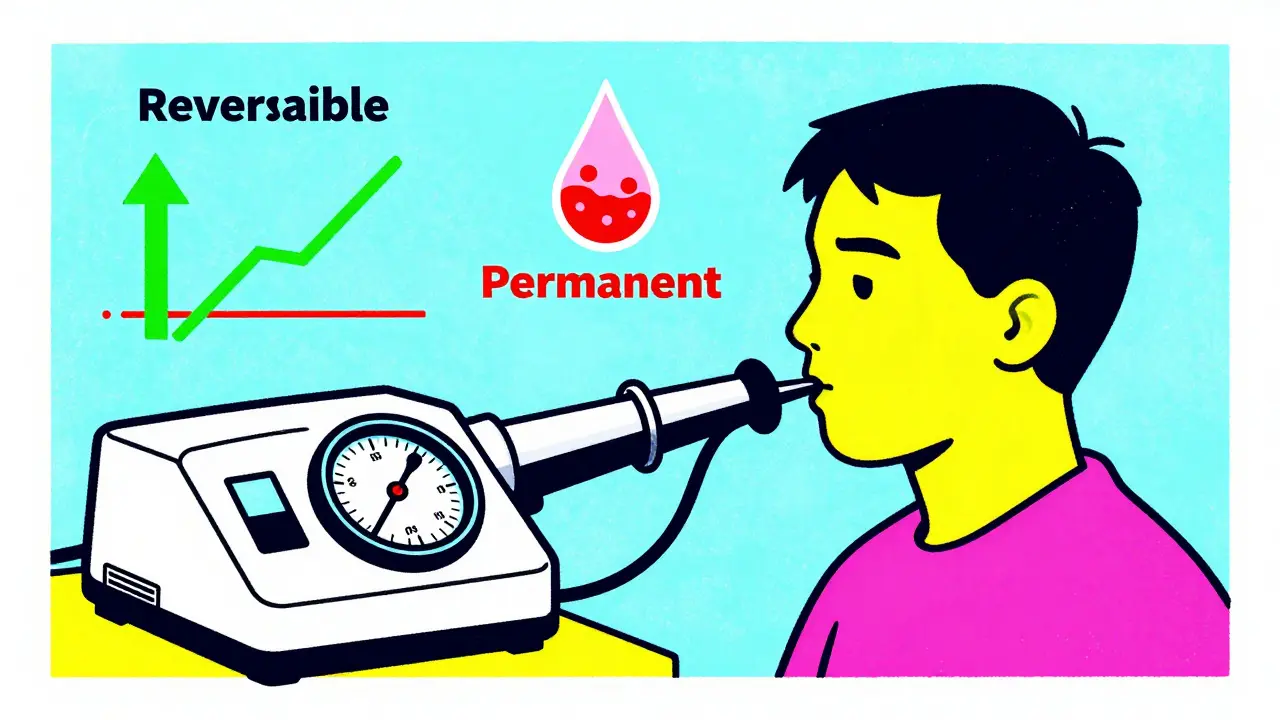
You can’t diagnose yourself based on symptoms alone. Doctors use specific tests to measure lung function and inflammation. The gold standard is spirometry, a breathing test where you blow into a machine to measure how much air you can exhale and how fast.
- Reversibility Test: After using a bronchodilator (a medicine that opens airways), asthma patients usually see a 12% or greater improvement in their forced expiratory volume (FEV1). COPD patients typically show less than 12% improvement because the damage is fixed.
- FeNO Testing: Fractional exhaled nitric oxide testing measures inflammation in the airways. Levels above 50 ppb suggest eosinophilic inflammation typical of asthma. COPD patients usually have levels below 25 ppb.
- Blood Eosinophils: High counts (above 300 cells/μL) point toward asthma or Asthma-COPD Overlap Syndrome (ACOS). Low counts (below 100 cells/μL) indicate pure COPD.
- CT Scans: High-resolution CT scans can reveal emphysematous changes (damaged air sacs) in 75% of COPD patients, but only 5% of asthma patients.
Misdiagnosis is common, especially in people over 40. Studies show that 30% of older adults with respiratory symptoms receive an incorrect initial diagnosis. That’s why seeing a pulmonologist for proper testing is essential.
Treatment Paths: Medications and Management
Because the underlying causes differ, so do the treatments. Using asthma medication for COPD won’t fix the problem, and vice versa.
Asthma Treatment: The goal is to control inflammation and prevent attacks. Most people start with short-acting beta-agonists (SABAs) like albuterol for quick relief during an attack. For persistent asthma, inhaled corticosteroids (ICS) are the mainstay to reduce airway swelling. Severe cases may require biologic therapies like omalizumab, which target specific immune responses.
COPD Treatment: Since the damage is permanent, the focus is on slowing progression and managing symptoms. Long-acting bronchodilators (LABAs and LAMAs) are first-line therapy to keep airways open throughout the day. Inhaled corticosteroids are added only if you have frequent exacerbations. Pulmonary rehabilitation-a program of exercise and education-is highly effective, improving walk distance by an average of 54 meters for COPD patients.
Quitting smoking is the single most important step for COPD patients. It can reduce the rate of disease progression by 50%. For asthma, avoiding triggers like pollen, dust mites, and cold air is key.

The Complication: Asthma-COPD Overlap Syndrome (ACOS)
Some people have features of both conditions. This is called Asthma-COPD Overlap Syndrome (ACOS), affecting 15-25% of patients with obstructive lung disease. These patients often have a history of smoking plus allergic tendencies. They tend to have more severe symptoms, higher exacerbation rates, and worse quality of life than those with either condition alone. Treating ACOS is complex and often requires a combination of asthma and COPD medications, such as triple therapy (LABA/LAMA/ICS).
Prognosis and Long-Term Outlook
With proper management, most people with asthma live normal, active lives. The 10-year survival rate for moderate asthma is 92%. Deaths from asthma have dropped to about 3,500 per year in the US due to better care.
COPD is more serious. It is the fourth leading cause of death in the United States, claiming approximately 152,000 lives annually. The 10-year survival rate for moderate COPD is 78%. However, early diagnosis and strict adherence to treatment plans can significantly improve quality of life and slow decline.
Can asthma turn into COPD?
Generally, no. Asthma does not directly turn into COPD. However, longstanding, poorly controlled asthma (over 20 years) can lead to fixed airflow limitation in 15-20% of cases, mimicking COPD. Additionally, if an asthmatic person smokes heavily, they can develop COPD independently or develop Asthma-COPD Overlap Syndrome (ACOS).
What is the best inhaler for COPD?
There is no single "best" inhaler, as treatment depends on severity. First-line therapy usually involves long-acting bronchodilators like LABAs (Long-Acting Beta-Agonists) or LAMAs (Long-Acting Muscarinic Antagonists). If you have frequent flare-ups, your doctor may add an inhaled corticosteroid (ICS). Always consult a pulmonologist for a personalized plan.
How do I know if my cough is asthma or COPD?
An asthma cough is typically dry and occurs intermittently, often at night or after exercise. A COPD cough is chronic and productive, meaning you cough up phlegm or mucus regularly. If your cough persists for weeks and produces mucus, especially if you are over 40 or have smoked, see a doctor immediately.
Is COPD curable?
No, COPD is not curable because the lung damage is irreversible. However, it is manageable. Quitting smoking, using prescribed medications, and participating in pulmonary rehabilitation can slow progression and improve quality of life significantly.
What triggers asthma attacks?
Common triggers include allergens like pollen (affecting 26.1% of sufferers), dust mites (22.8%), pet dander, mold, and physical activity (18.3%). Other triggers include cold air, respiratory infections, stress, and certain chemicals or strong odors.
Can non-smokers get COPD?
Yes, though it is less common. Non-smokers can develop COPD due to long-term exposure to secondhand smoke, occupational hazards (like coal dust or chemical fumes), indoor biomass fuel smoke, or genetic factors like alpha-1 antitrypsin deficiency.