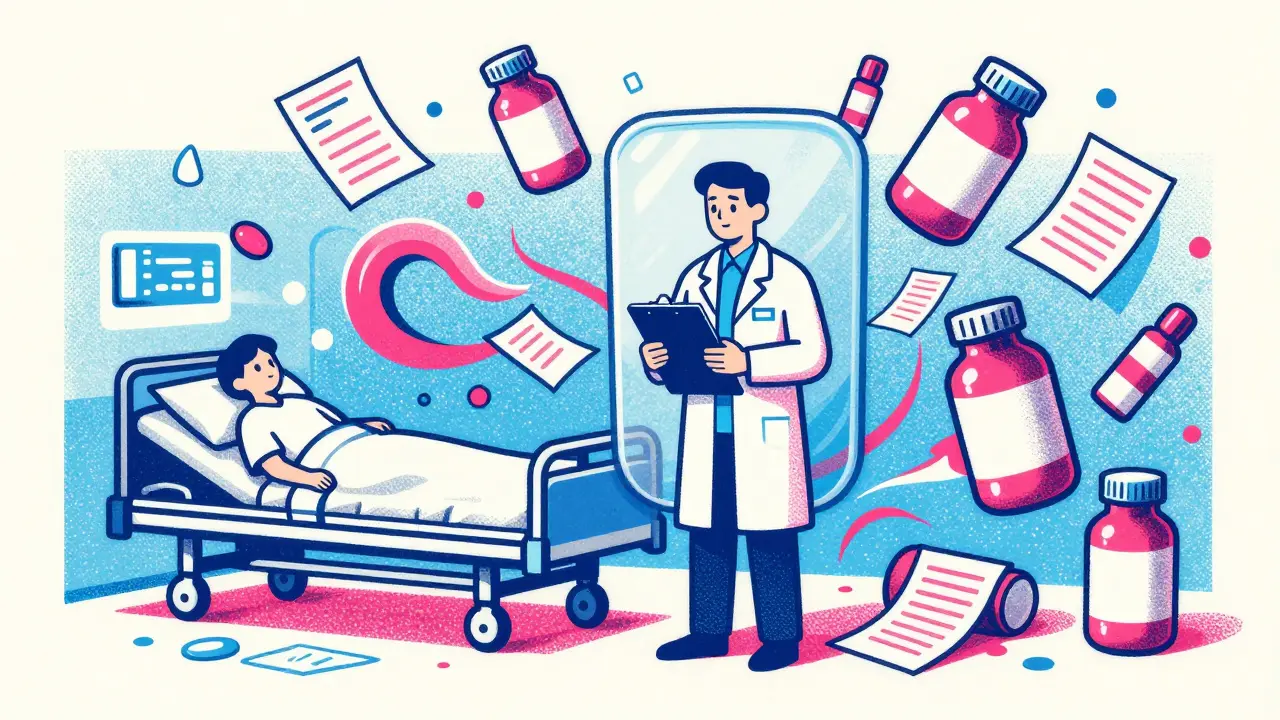
Medication errors during hospital transitions are not just administrative headaches; they are dangerous gaps in patient safety that cost lives and money. When a patient moves from the emergency department to a ward, or from a hospital to home, their medication list often gets scrambled. Pharmacist-led substitution programs are structured clinical services where pharmacists identify, evaluate, and implement therapeutic medication substitutions to optimize therapy and reduce adverse events. These programs have evolved from simple checklist tasks into sophisticated clinical interventions that save hospitals millions while keeping patients out of bed.
You might wonder why we need a specific program for this. The answer lies in the complexity of modern prescribing. With polypharmacy affecting nearly half of adults over 65, the risk of interaction spikes. Pharmacist-led substitution isn't just about swapping Brand A for Generic B. It is about therapeutic equivalence, formulary optimization, and deprescribing high-risk medications that no longer serve the patient. This article breaks down how these programs work, the hard data on their outcomes, and what it takes to implement them successfully in your facility.
The Core Problem: Why Medication Reconciliation Fails Without Pharmacists
Before understanding the solution, you need to see the failure mode. Traditional medication reconciliation, often led by nurses or physicians under time pressure, misses critical discrepancies. Studies show an average of 3.7 discrepancies per patient during standard triage processes. These aren't minor typos; they include missed doses, wrong strengths, and dangerous interactions.
The Joint Commission, the primary accrediting body for healthcare organizations in the United States, mandated medication reconciliation as a National Patient Safety Goal in 2006. Yet, without specialized pharmacist involvement, compliance remained low and error rates stayed high. The core issue is expertise. Physicians focus on diagnosis and acute treatment. Nurses manage care delivery. Only pharmacists possess the deep, granular knowledge of pharmacokinetics, drug-drug interactions, and therapeutic alternatives required to safely substitute one agent for another without compromising efficacy.
When pharmacists step in, the dynamic changes. They don't just record what the patient says they take; they verify it against electronic health records (EHRs), flag non-formulary items, and propose evidence-based substitutions. This proactive approach transforms medication management from a passive administrative task into an active clinical intervention.
Implementation Models: How to Structure Your Program
Setting up a pharmacist-led substitution program requires more than hiring a few extra staff. It demands a structured operational model. The most effective programs use a tiered staffing approach. You typically need dedicated medication reconciliation pharmacists supported by medication history technicians. In high-volume settings, the ratio often hits 1 pharmacist to 3-4 technicians.
Here is how successful programs operate:
- Staffing Mix: Two full-time pharmacy medication reconciliation technicians for weekday coverage, supplemented by part-time interns for weekends. One technician shift often covers the emergency department from 8:30 a.m. to noon before transitioning to floor units.
- Training Protocols: Technicians complete a minimum of two hours of didactic instruction plus five eight-hour supervised shifts. Competency assessments show 92.3% accuracy in medication history completion after this training.
- Workflow Integration: Pharmacists identify discrepancies between triage data and patient histories. The EHR flags non-formulary medications, triggering substitution protocols when formulary alternatives exist.
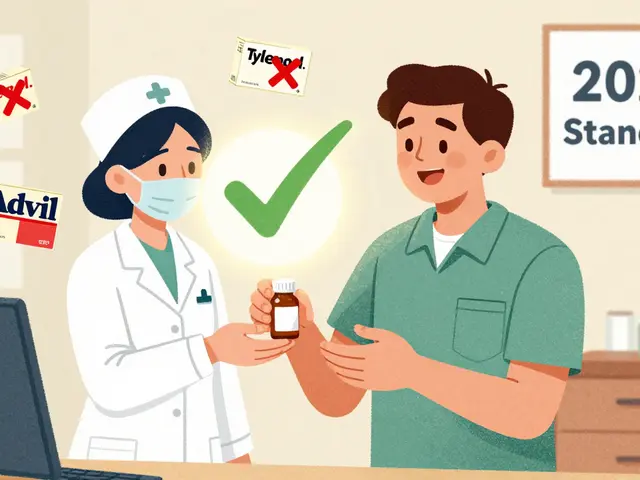
This structure ensures that pharmacists spend their time on clinical decision-making rather than data entry. By offloading the initial history collection to trained technicians, the pharmacist can focus on the high-value task: evaluating whether a substitution is safe and appropriate. For example, if a patient arrives with a non-formulary proton pump inhibitor, the pharmacist doesn't just reject it. They evaluate the indication, check for interactions, and substitute with a formulary equivalent that maintains acid suppression while reducing cost.

Outcomes: The Hard Data on Safety and Savings
If you are presenting this program to hospital administration, you need numbers. The data supporting pharmacist-led substitution is robust and compelling. Here is what the research shows:
| Metric | Improvement | Source Context |
|---|---|---|
| Adverse Drug Events (ADEs) | 49% Reduction | Multi-center trials (PMC10324798) |
| Complications | 29.7% Decrease | Clinical outcome studies |
| 30-Day Readmissions | 11% Average Reduction | Ranging from 5-22% depending on population |
| Cost Savings | $1,200-$3,500 per patient | Prevented hospitalizations and optimized regimens |
| Non-Formulary Substitution Rate | 68.4% Appropriately Substituted | Hospital system admission data |
The reduction in adverse drug events is the most significant finding. ADEs are costly and preventable. By catching errors at the point of admission, these programs stop problems before they start. The readmission data is equally powerful. Under the CMS Hospital Readmissions Reduction Program (HRRP), a Medicare initiative that penalizes hospitals with excess readmissions for certain conditions, hospitals implementing these programs saw 11.3% lower readmission penalties. That is direct financial relief for the institution.
High-risk populations benefit the most. Patients with polypharmacy, those over 65, and individuals with poor health literacy show the greatest improvement. In fact, CMS HRRP diagnosis patients experienced a 22% greater reduction in readmissions when pharmacy substitution services were included compared to standard care. This isn't just about convenience; it's about survival and quality of life.
Deprescribing: The Next Frontier in Substitution
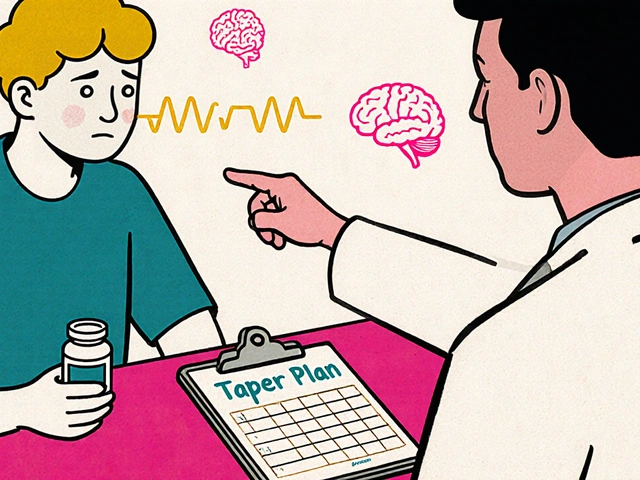
Substitution isn't always about replacing one drug with another. Sometimes, the best substitution is no drug at all. Deprescribing has become a critical component of these programs. High-risk medications, such as anticholinergics in elderly patients, contribute significantly to falls and cognitive decline.
Research highlights the impact here. Deprescribing protocols for anticholinergics showed a 41% reduction in falls (p=0.003). Similarly, stopping unnecessary proton pump inhibitors reduced C. difficile infections by 29% (p=0.01). However, deprescribing faces unique challenges. Physician acceptance rates for discontinuation recommendations hover around 30%, compared to higher acceptance for substitution. This gap exists because stopping a medication feels like removing a treatment, whereas substituting feels like optimizing it.
Successful programs address this through standardized communication protocols. Pharmacists don't just suggest stopping a drug; they provide a rationale based on current guidelines, potential harms, and monitoring plans. This collaborative approach builds trust with physicians and increases acceptance rates over time.

Barriers to Success: What Slows Implementation Down?
No program is perfect, and pharmacist-led substitution faces real-world hurdles. The biggest barrier is physician resistance. In 43% of academic medical centers, physicians push back against substitution recommendations. This often stems from a lack of awareness about the program's scope or concerns about continuity of care.
Time constraints are the second major issue. Comprehensive medication management takes about 67 minutes per patient hospitalization. In busy hospitals, finding this time is difficult. The solution? Leverage technology and support staff. AI-assisted medication history tools, currently piloted at 14 academic medical centers, reduce data collection time by 35%. This allows pharmacists to focus on the clinical analysis rather than the paperwork.
Reimbursement remains fragmented. Only 32 states have Medicaid programs that fully reimburse these services. Medicare Part D covers Medication Therapy Management (MTM) for 28.7 million beneficiaries, but administrative hurdles remain significant. Despite this, the market is growing. The U.S. medication reconciliation services market reached $1.87 billion in 2022, with pharmacist-led programs representing 67% of that share. As value-based care models expand, reimbursement structures are likely to catch up.
Future Trends: Digital Integration and Expanded Scope
The future of pharmacist-led substitution lies in digital integration. Electronic health records are becoming smarter, automatically flagging substitution opportunities and documenting rationale. The 2024 CMS Interoperability and Prior Authorization Proposal includes specific provisions for pharmacist-led substitution documentation, potentially increasing reimbursement rates by 18-22%.
We are also seeing expansion beyond acute care. Forty-two percent of skilled nursing facilities implemented pharmacist-led deprescribing programs by 2023, up from 18% in 2020. This shift reflects a broader understanding that medication safety is continuous, not confined to hospital walls. With 63% of Accountable Care Organizations (ACOs) now including pharmacist-led substitution metrics in their quality agreements, institutional commitment is strong.
However, rural settings lag behind. Only 22% of critical access hospitals have implemented comprehensive programs due to pharmacist shortages, compared to 89% in urban academic centers. Addressing this disparity will require telepharmacy solutions and remote verification protocols, ensuring that patients in underserved areas receive the same level of medication safety as those in major cities.
What is the difference between medication reconciliation and pharmacist-led substitution?
Medication reconciliation is the process of verifying a patient's medication list against their orders. Pharmacist-led substitution goes further by actively identifying opportunities to replace medications with safer, more cost-effective, or formulary-preferred alternatives. While reconciliation ensures accuracy, substitution optimizes therapy.
How much does a pharmacist-led substitution program cost to implement?
Initial costs include staffing (pharmacists and technicians), training, and EHR integration. However, these programs generate significant savings. Studies estimate cost savings of $1,200 to $3,500 per patient through prevented hospitalizations and optimized regimens. The return on investment typically becomes positive within the first year of implementation.
Can pharmacist-led substitution programs be used in outpatient settings?
Yes. While initially focused on hospital admissions, these programs are expanding to post-acute care, skilled nursing facilities, and community pharmacies. The principles remain the same: identifying discrepancies, optimizing therapy, and preventing adverse events during care transitions.
What are the most common reasons for physician resistance to substitution?
Physicians may resist due to concerns about continuity of care, lack of familiarity with alternative agents, or perceived loss of control over prescribing decisions. Successful programs address this through clear communication, evidence-based rationales, and collaborative decision-making frameworks.
How do AI tools improve pharmacist-led substitution programs?
AI tools automate data collection, reducing the time spent on medication history gathering by up to 35%. They also flag potential interactions and formulary issues faster than manual review, allowing pharmacists to focus on complex clinical decisions and patient counseling.