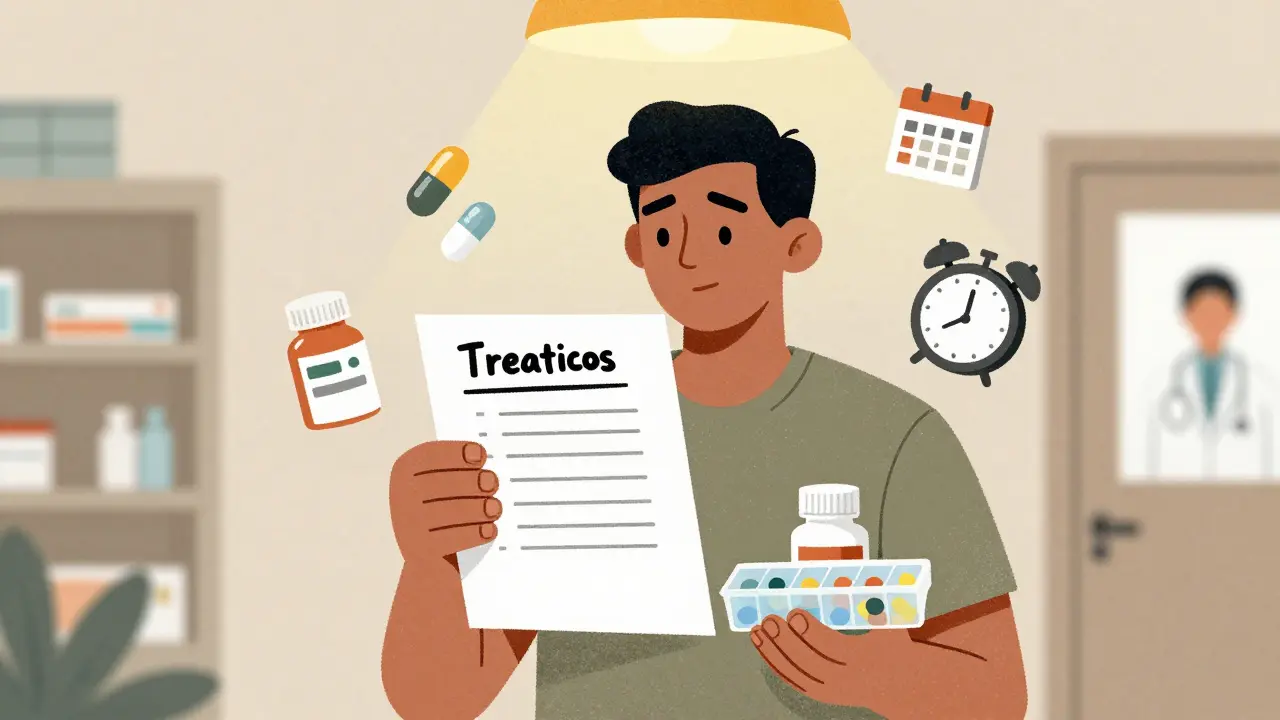
Every year, more than 1.3 million people in the U.S. end up in the emergency room because of problems with their medications. Many of these cases aren’t accidents-they’re preventable. Whether you’re taking one pill a day or five different medications, knowing how to use them safely isn’t optional. It’s essential.
Know Exactly What You’re Taking
It sounds simple, but how many of us can name all the drugs we’re on-and why we’re taking them? The FDA says you should ask your doctor or pharmacist eight key questions for every new prescription:- What’s the name of this drug (brand and generic)?
- What’s it supposed to do?
- How much should I take, and when?
- How long should I keep taking it?
- What should it look like? (Color, shape, markings)
- What side effects might I get?
- What should I avoid while taking it? (Food, alcohol, other meds)
- What happens if I miss a dose?
Don’t just take the bottle and go. If you can’t explain your medication’s purpose to someone else in your own words, you don’t know it well enough. Studies show patients who use the “teach-back” method-where the provider asks them to repeat instructions-are 40% more likely to take their meds correctly.
Keep a Living Medication List
Your medication list isn’t something you write once and forget. It needs to be updated every time you see a doctor, fill a new prescription, or start an over-the-counter pill, vitamin, or supplement. Why? Because 50% of medication errors happen during care transitions-like going from hospital to home, or switching doctors.Include everything:
- Prescription drugs (name, dose, frequency)
- Over-the-counter meds (ibuprofen, antacids, sleep aids)
- Vitamins and supplements (fish oil, magnesium, herbal teas)
- Topical creams or patches
Keep a physical copy in your wallet and a digital version on your phone. Bring it to every appointment-even if you think your doctor “already knows.” Only 32% of adults do this consistently. Don’t be in that group.
Watch Out for Look-Alike, Sound-Alike Drugs
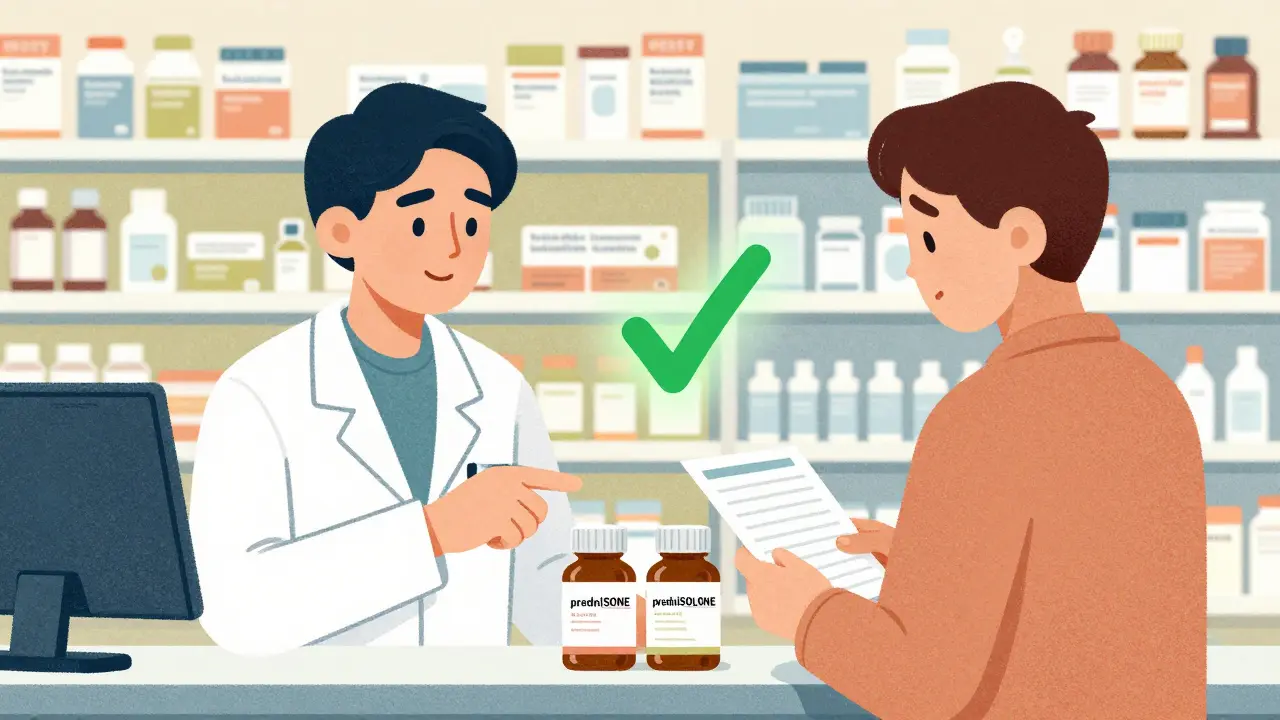
Glimepiride and glyburide. Prednisone and prednisolone. Hydroxyzine and hydralazine. These aren’t typos-they’re real drugs that sound or look almost identical. In community pharmacies, 62% of dispensing errors involve these kinds of mix-ups.Here’s how to protect yourself:
- Always check the label when you pick up your prescription. Does it match what your doctor told you?
- Compare the pill to your last refill. If the color, shape, or imprint changed without explanation, ask why.
- Ask your pharmacist to use Tall Man Lettering when they write out names-like predniSONE vs. predniSOLONE. This simple formatting trick has cut errors by 28% in places that use it.
One Reddit user shared how they took the wrong diabetes pill for three days before their blood sugar crashed. That’s not rare. It’s predictable-and preventable.
Follow the Five Rights of Medication Safety
Whether you’re giving yourself a pill or helping a loved one, stick to the Five Rights:- Right patient - Is this medicine for you? Double-check the name on the bottle.
- Right drug - Does it match your list?
- Right dose - Is it the exact amount prescribed? Never split pills unless approved.
- Right route - Is it meant to be swallowed, injected, applied to skin, or inhaled?
- Right time - Morning? With food? At bedtime? Timing matters.
Skipping even one of these steps can lead to harm. For example, taking blood pressure medicine at night instead of morning can cause dangerous drops in pressure while sleeping.
Don’t Guess. Don’t Skip. Don’t Stop.
Too many people adjust their meds on their own:- “I feel better, so I’ll stop the antibiotics.”
- “This makes me sleepy-I’ll take it only when I need it.”
- “The bottle says 30 pills, so I’ll stretch it to 45 days.”
That’s dangerous. The FDA says 23% of antibiotic treatment failures happen because people quit early. For blood thinners like warfarin, missing even one dose can raise your risk of stroke. For insulin or heart meds, skipping doses can land you in the hospital.
Never stop or change your dose without talking to your provider. If side effects are bad, call them. Don’t just quit.
Use Tools to Stay on Track
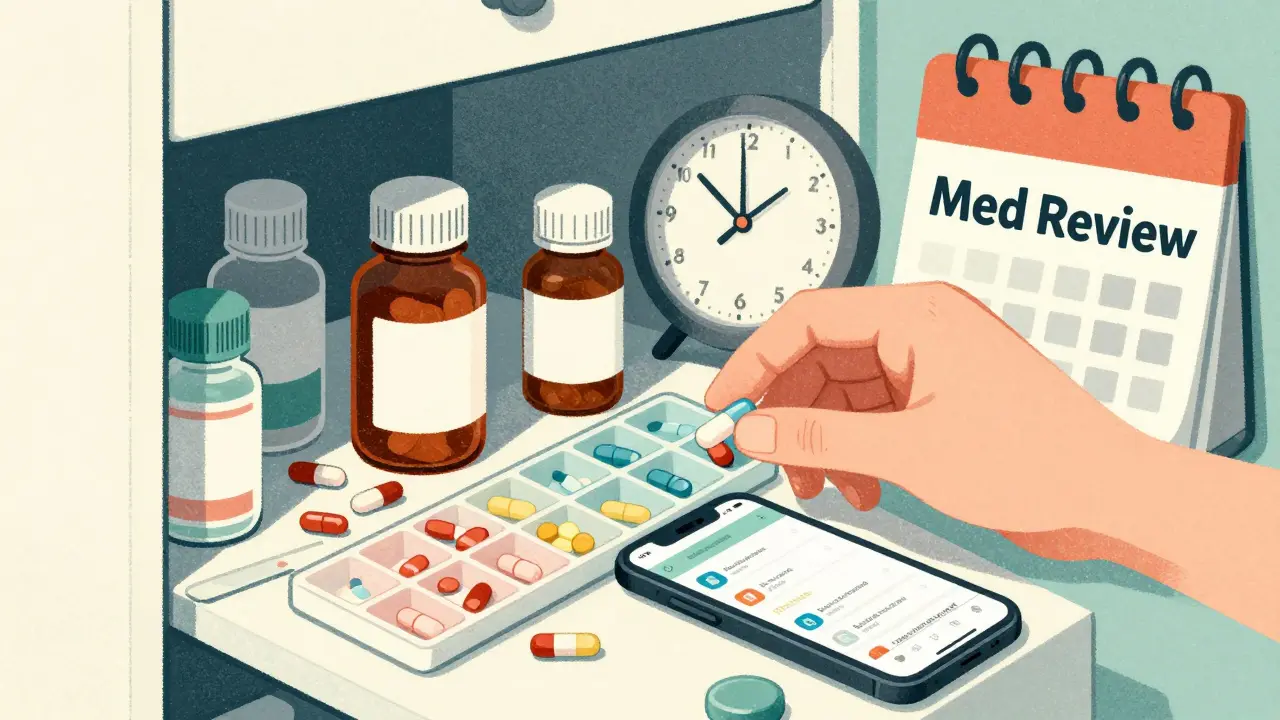
If you’re on multiple meds, your brain isn’t enough. Use tools:- Pill organizers - Daily or weekly trays with labeled compartments. Studies show they reduce errors by 35% in older adults.
- Smartphone alarms - Set multiple reminders for different pills. Label them clearly: “Blood pressure AM,” “Diabetes lunch.”
- Medication apps - The CDC launched a free mobile checklist in January 2024 that helps track doses, side effects, and refill dates.
- Pharmacist consultations - When you get a new prescription, ask your pharmacist for a quick review. Patients who do this have 27% fewer mistakes.
One study found it takes most people 3-5 visits to build a solid routine. For older adults, it can take over seven follow-ups to hit 90% adherence. Be patient. Build systems.
Clean Out Your Medicine Cabinet
Expired meds aren’t just useless-they’re risky. The Illinois Department of Health found that 38% of accidental poisonings in young children happen because of old pills left in cabinets.Do a medicine cabinet clean-out twice a year:
- Check expiration dates. Throw out anything expired.
- Look for pills that have changed color, smell, or texture.
- Dispose of unused antibiotics, painkillers, or sedatives properly. Don’t flush them. Take them to a pharmacy drop-off.
Keep only what you’re actively using. A cluttered cabinet invites mistakes.
Know the High-Risk Medications
Some drugs are more dangerous if used wrong. These are called “high-alert medications” and include:- Insulin
- Warfarin (blood thinner)
- Heparin (IV blood thinner)
- Intravenous oxytocin (used in labor)
- Opioid painkillers
These drugs account for 30% of all serious medication errors. If you’re on one, be extra careful. Ask your provider: “Is this a high-alert drug? What happens if I take too much or miss a dose?”
When in Doubt, Ask
Your pharmacist is your best ally. They’re trained to spot interactions, dosage errors, and confusing labels. Don’t wait until you’re confused or sick to reach out.Also, if you’re switching doctors, moving hospitals, or being discharged from the ER, ask: “Will my meds be reviewed?” Medication reconciliation-comparing what you’re taking to what’s ordered-is one of the most effective safety steps. When pharmacists do it, it cuts errors by 20-45%. When doctors do it alone, it’s only 12-25%.
Speak up. Say: “I want to make sure I’m not missing anything.”
It’s Not Just About Pills-It’s About Systems
Medication safety isn’t just about what you do. It’s about what your healthcare system does. Electronic records, barcode scanning, clinical decision alerts-all these help. But they’re not perfect. Only 41% of U.S. hospitals have full integration for high-alert drug alerts.That means you can’t rely on technology alone. You need to be your own safety net. Combine smart tools with personal vigilance. Use your list. Check your pills. Ask questions. Don’t assume someone else is watching.
Medication errors cost the U.S. system $42 billion a year. But behind every dollar is a person-someone who got sick, went to the ER, or worse, because a simple step was missed.
You don’t need to be a doctor to prevent that. You just need to be informed, organized, and willing to speak up.



Angel Tiestos lopez
January 14, 2026 AT 04:53Priyanka Kumari
January 15, 2026 AT 01:37Avneet Singh
January 17, 2026 AT 00:09Nelly Oruko
January 17, 2026 AT 10:55vishnu priyanka
January 18, 2026 AT 22:39Lethabo Phalafala
January 20, 2026 AT 21:59Lance Nickie
January 21, 2026 AT 06:58Milla Masliy
January 22, 2026 AT 14:30Damario Brown
January 22, 2026 AT 19:19sam abas
January 23, 2026 AT 11:40John Pope
January 23, 2026 AT 13:20Clay .Haeber
January 24, 2026 AT 21:54Alan Lin
January 26, 2026 AT 13:47